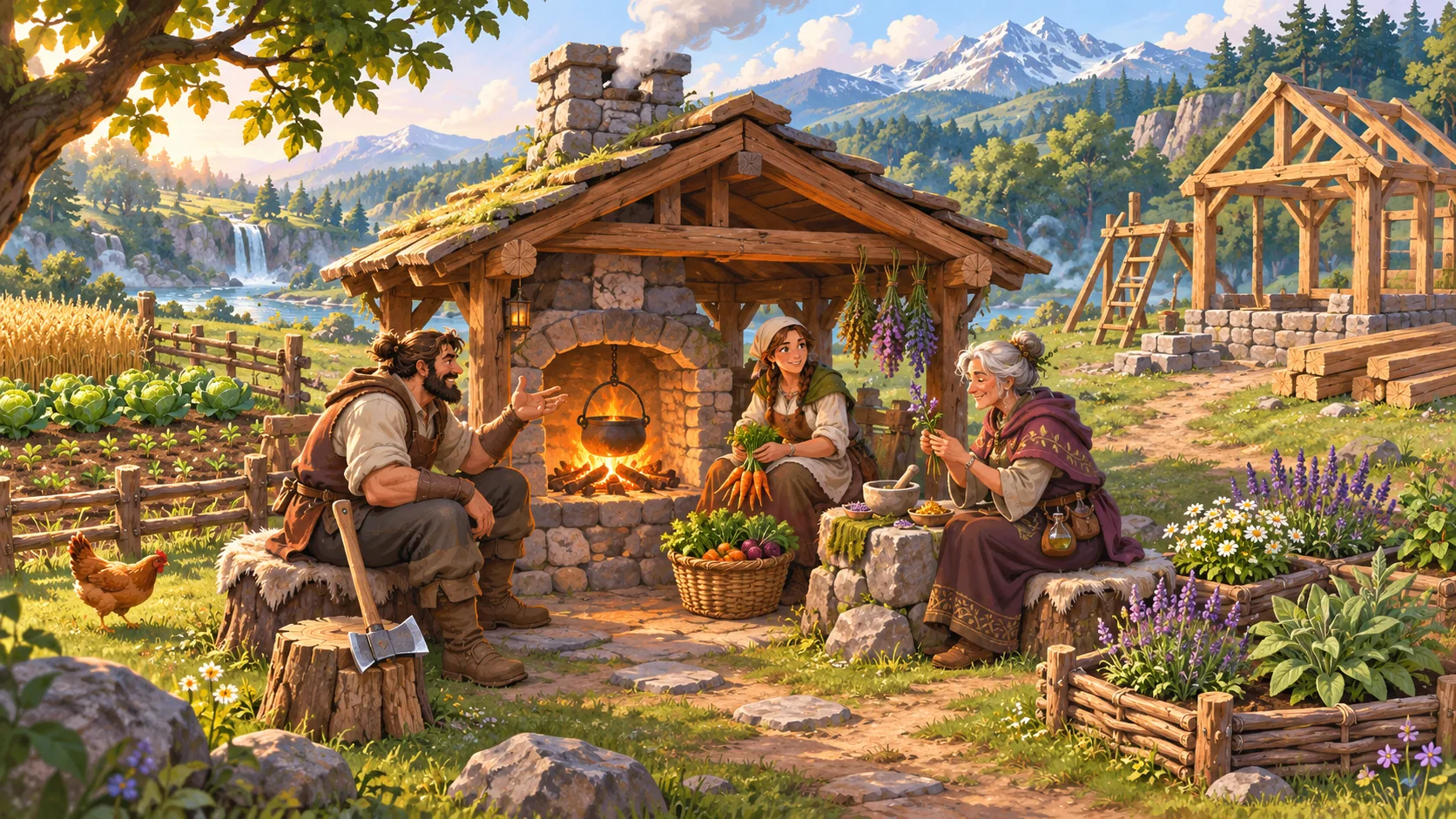
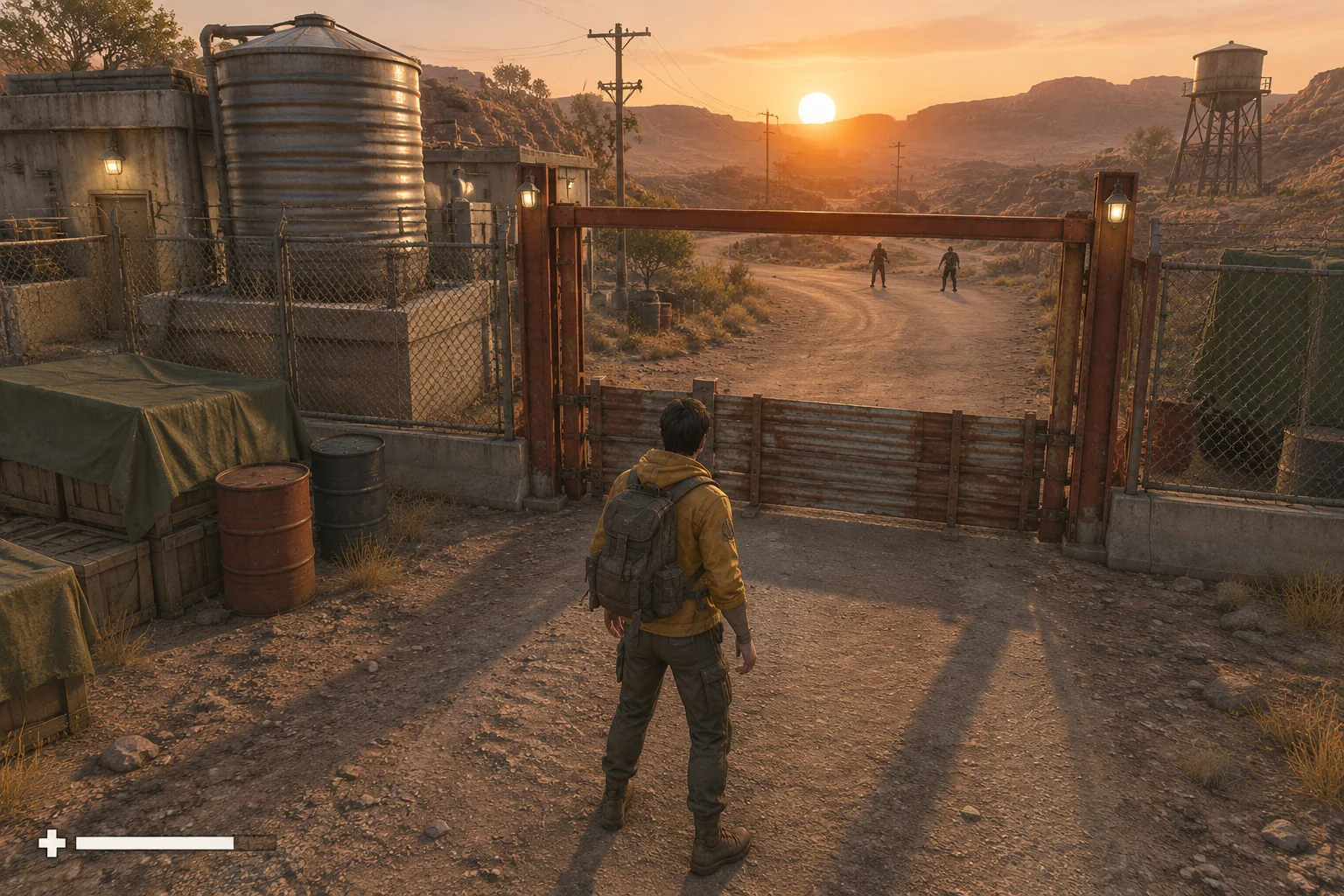
In fictional Breakwater Key, three players share a beach base during a two-day storm. Start with 2 food, base integrity 3 of 5, 4 timber, 2 herbs, and one injured player at 1 of 3 health. Each day, the scout gathers 4 food, the storm deals 2 base damage, the builder spends 2 timber to restore 3 integrity (up to 5), the medic spends 1 herb to restore 2 health (up to 3), and the team consumes 3 food. Keep the action order and values fixed. Report food, timber, herbs, base integrity, player health, and whether the team survives both days. The shared base turns each specialization into a contribution the whole group can see.
Give each specialization a visible base contribution
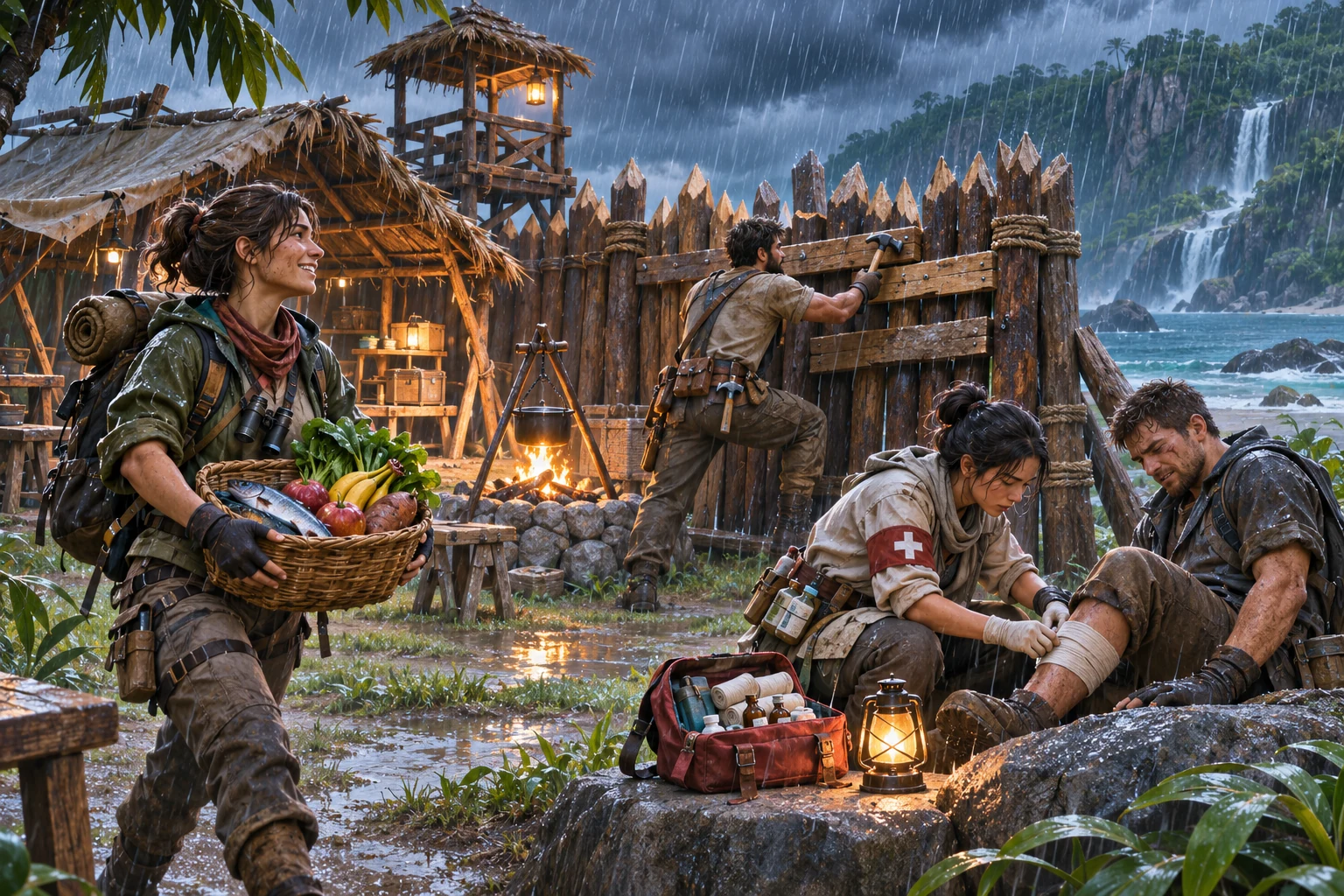
Assign three distinct roles: scout, builder, and medic. The scout brings 4 food into the shared store each day; the builder uses 2 timber to repair 3 base integrity after the storm; the medic uses 1 herb to restore 2 health to an injured teammate. Cap base integrity at 5 and player health at 3. Put the shared supplies and base status in one view so no role’s contribution disappears into a private inventory.
Initialize the test with 2 food, 3 of 5 base integrity, 4 timber, 2 herbs, and one player at 1 of 3 health. Each day the scout gathers before the team eats; the storm damages the base before the builder repairs it; the medic treats the injury. This explicit order makes the two-day balance reproducible.

Resolve the storm with fixed resource costs
On day one, the scout raises food from 2 to 6. The storm reduces base integrity from 3 to 1, then the builder spends 2 timber to restore 3, leaving integrity 4 and timber 2. The medic spends 1 herb to raise health from 1 to 3. The team eats 3 food, leaving 3. All players and the base remain safe for the next day.
On day two, the scout raises food from 3 to 7. Storm damage drops integrity from 4 to 2; the builder spends the last 2 timber to restore 3, capped at 5. The medic uses the final herb; health stays at its cap of 3. After the team consumes 3 food, 4 remain. Report these balances rather than describing the storm as simply survived.
Use missing-role controls to verify the loop
Run a no-scout control: the team begins day one with 2 food and needs 3 for the meal, so it cannot satisfy the shared ration cost. Run a no-builder control: after the first storm, integrity falls from 3 to 1, below the safe threshold of 2. Both controls fail for a specified reason, while the full-role run completes both days with integrity 5, food 4, and the injured player restored.
Record each role action, resource delta, health, and base state after every phase. The outcome is successful only if the team has at least 2 base integrity, enough food to pay each meal, and no player at zero health at the end of day two. Breakwater Key and all quantities are fictional; this deterministic test checks the stated co-op survival rules only.

Give the AI a fixed shared-base survival test
Create a co-op island survival scenario in fictional Breakwater Key with three roles: scout, builder, and medic. Start with 2 food, base integrity 3/5, 4 timber, 2 herbs, and one player at 1/3 health. For two days, the scout gathers 4 food, a storm deals 2 base damage, the builder spends 2 timber to restore 3 integrity (cap 5), the medic spends 1 herb to restore 2 health (cap 3), then the team consumes 3 food. Keep the order fixed. Include no-scout and no-builder controls. Report every balance and survival result.
Check the full-role run in order: day one food 2+4-3=3; base 3-2+3=4; timber 2; herbs 1; health 3. Day two food 3+4-3=4; base 4-2+3 capped at 5; timber 0; herbs 0; health 3. No-scout fails the first ration cost; no-builder leaves integrity at 1 after day-one storm, below the safe threshold of 2.
FAQ
How can player roles support a shared survival base?
Give each specialization a concrete resource or repair action that changes a shared meter. Keep supplies visible to the whole team and show the cost and result of each action. Then players can see how their role supports the shelter and the group’s next survival check.
How do I balance roles in a co-op survival game?
Set a clear daily threat, shared consumption, and limited supplies. Define what each role contributes and run controls with one action missing. If a missing role causes a measurable shortfall while the complete team succeeds, the specialization matters to the survival loop.
What should a survival prototype report each day?
Track shared food, building materials, medical supplies, base integrity, and player health after each phase. Include the event order and role actions. A daily ledger makes it possible to check whether the group survived because of coordination or because a resource balance was overlooked.