To make a base-defense survival game with AI, give the player one decision before dark and show what it changes after dark. Start with a scrap pile, one gate slot, and a base whose health carries over. If a player spends enough scrap to block the gate, the barrier should take the first hit. The next morning, the player should be able to see what the defense cost and what it saved.
Dry Creek Relay is a fictional pump-station prototype built around two nights. You can turn its rules into a build request and use the expected outcomes below to check your own prototype.
Make the gate the center of both phases
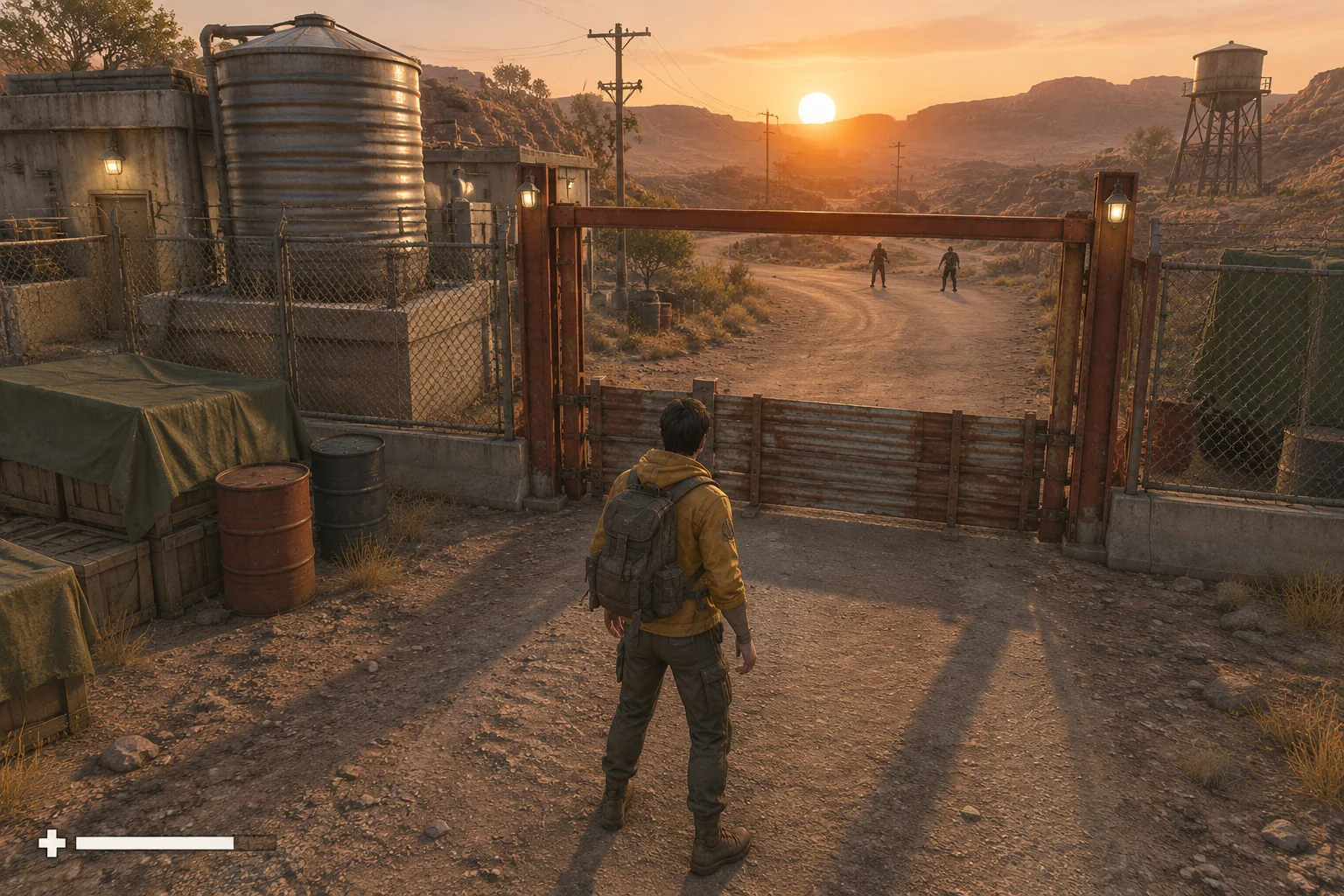
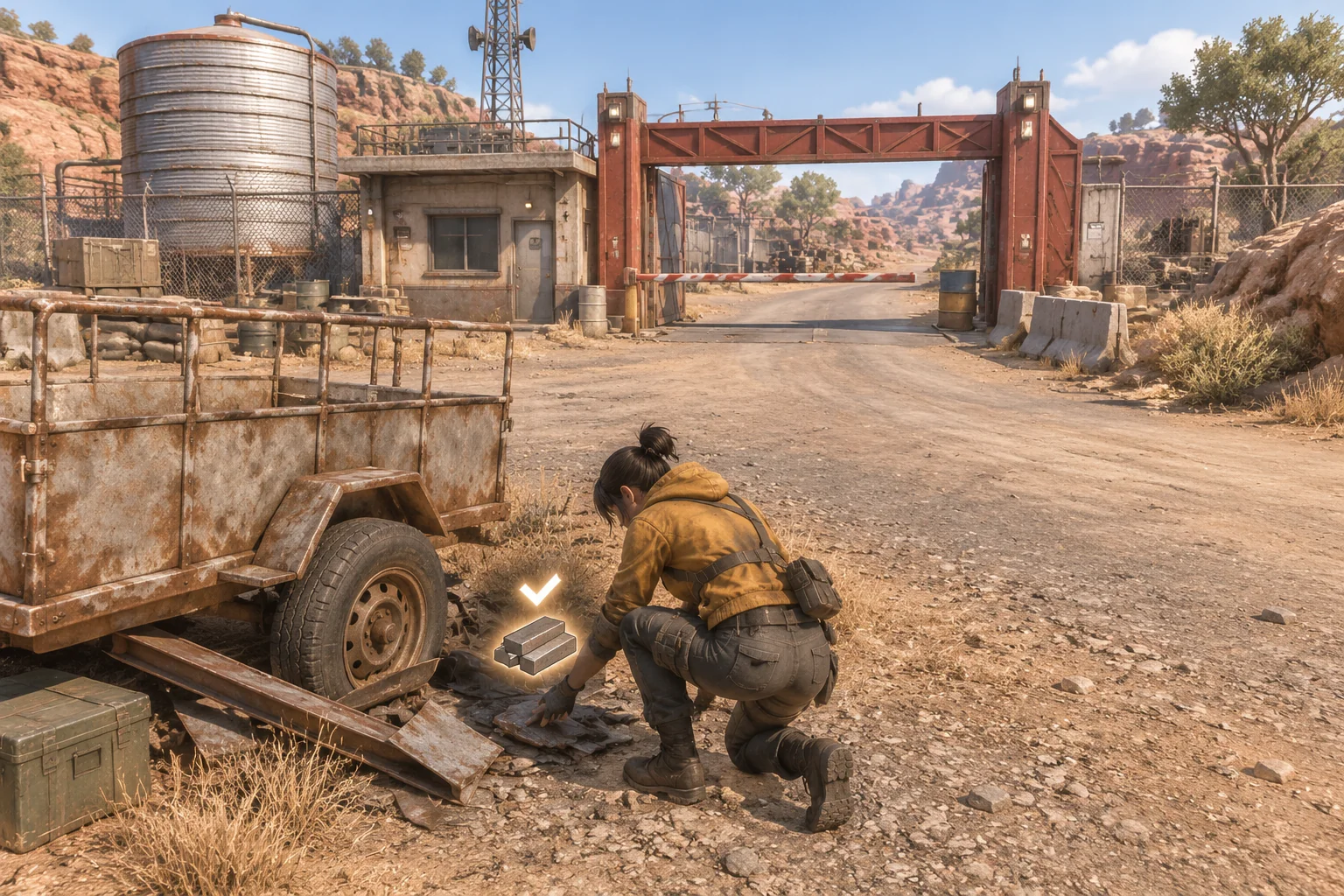
Give the pump station 4 health and put the only gate at the end of a short service road. Place the gate's build slot where the player can see it from the start. During the day, let them gather scrap and spend 2 to build a barrier in that slot. Start with 0 scrap and an empty slot. The first day has 2 scrap by the gate and 1 at a wrecked cart off the road. The second day has one pickup worth 1 scrap.
When the player chooses End Day, close gathering and building and start the wave for that night. Uncollected pickups expire, but collected scrap stays in the inventory. Use a button instead of a countdown in the first version so a tester can repeat the same route at their own pace. Leave the cart close enough to return without a search.
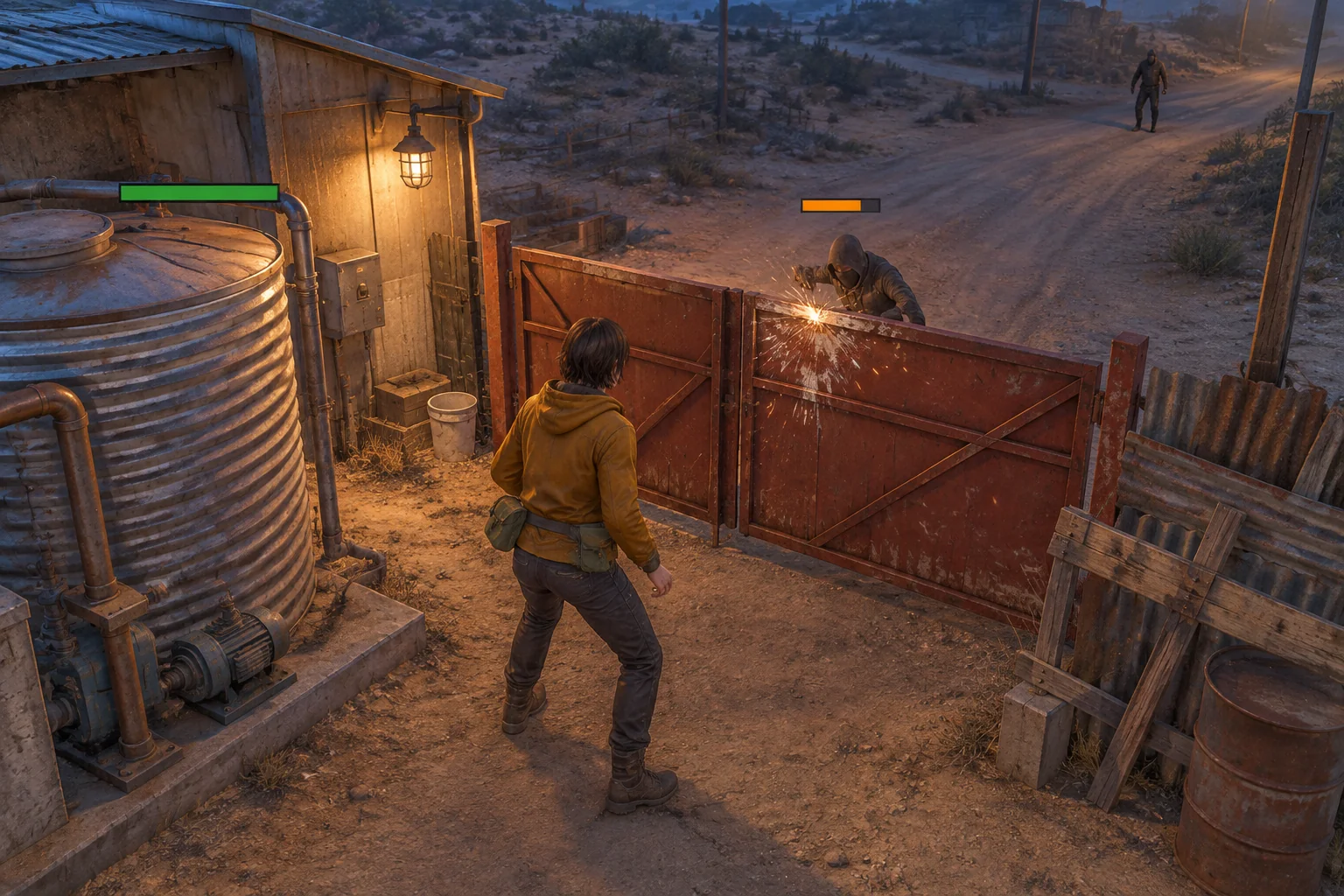
Send two raiders down the road on Night 1 and three on Night 2. Each raider lands one hit and leaves the encounter. Resolve each hit against the barrier if it stands, or against the station if the gate is open. A fresh barrier takes two hits and breaks after the second. The hit that breaks it has already been absorbed. A later hit against the open gate takes 1 base health. Carry surviving defenses and remaining health into the next day. Check for loss at 0 health before checking for victory at the end of Night 2.
Trace the route that pays for a second barrier
On both routes below, build on Day 1. Two hits break the barrier and leave the station at 4 health. The only difference is the cart. Collect it on Day 1 and you carry 1 scrap into Day 2, enough to reach the build cost when you pick up the new stack.
| Day 1 route | Scrap after first build | Day 2 scrap before building | Expected end of Night 2 |
|---|---|---|---|
| Collect both stacks | 3 − 2 = 1 | 1 + 1 = 2, enough to build | Barrier takes two hits, base takes one and wins with 3 health |
| Skip the cart | 2 − 2 = 0 | 0 + 1 = 1, too little to build | Base takes all three hits and wins with 1 health |
Try a third route that leaves the gate open both nights. The station should reach Day 2 with 2 health and fall on the second hit of Night 2. These three routes give you useful checkpoints even before you add a larger map. If the skip-cart route can build on Day 2, check whether the cart was counted despite being left untouched or whether the first build deducted the wrong amount.
Give the AI a small build request
SEELE supports starting a game project from a written idea. Use the prompt to specify the behavior you want, then use the route table to check the prototype you receive. A simple gate, scrap markers and a visible health meter are enough to test the rules. Keep scene art and additional enemy types for a later pass so you can see which change caused a new problem.
Create an original overhead browser prototype called Dry Creek Relay.
Use one fenced desert pump station, a single gate slot, and one approach lane.
Move with arrow keys or WASD. Use a visible prompt to collect a nearby stack.
Start on Day 1 with 4 base health, 0 scrap, and an empty gate slot.
Place one 2-scrap pickup by the gate and one 1-scrap pickup by the cart on Day 1.
On Day 2 place a single 1-scrap pickup. Each stack can be collected once.
During daytime, let the player build in the empty gate slot for 2 scrap.
Show why building is unavailable when scrap is short or the slot is full.
End Day starts the current wave once and disables gathering and building.
Remove unused pickups at nightfall. Carry scrap, base health, and any
standing barrier between days. Do not heal the base overnight.
Send two raiders on Night 1 and three on Night 2. Each arrives in sequence,
lands one hit, and leaves. Each hit removes one barrier durability if a
barrier stands. A fresh barrier has two durability. The hit that breaks it
does not spill over to base health. A hit on an open gate costs 1 base health.
At 0 base health, stop the wave and lose immediately. Otherwise start Day 2
after Night 1, or win after the last hit on Night 2.
Show the phase, scrap, base health, barrier condition, and remaining raiders.
Restart after either ending and restore the initial state, including pickups.
Use simple original assets and keep the camera fixed above the station.
Ask for movement, collection and construction first. Once the cart can contribute scrap exactly once, add the phase change and the first night. Duplicate wave starts are easier to spot when you know there should only be two hits. Add the second night and restart last, then check both routes end to end.
Test the phase boundary before adding difficulty
Watch the scrap count, barrier condition and base health separately. A gate impact should update one target. If both meters fall on the breaking hit, report the barrier's starting durability and both values after that hit. You can use the same evidence format as the brief-to-playable testing guide when you request a fix.
| Test action | Expected state |
|---|---|
| Try building with 1 scrap on Day 2 after skipping the cart | Reject the build and leave the slot empty and scrap at 1. |
| Press End Day twice on Day 1 with a fresh barrier | Only one two-raider wave starts. The first hit leaves one durability. The second breaks the barrier and leaves base health at 4. |
| Try collecting the cart scrap as Night 1 starts | After the phase changes, the pickup is gone and the scrap balance stays fixed. |
| Restart after a win and after a loss | Return to Day 1 with 0 scrap, 4 base health, an empty slot, two available pickups and no active raiders. |
Change one defense rule and rerun both routes
Suppose you want the cart detour to determine who survives. Try reducing fresh barriers from two durability to one while keeping the pickup values, build cost and waves the same. With either route, one of the two Night 1 hits now reaches the base, so Day 2 begins at 3 health. The full-collection route can still build a barrier and reach the end with 1 health. The skip-cart route faces three unblocked hits and reaches zero on the last one.
Run the same routes and record the hit where health reaches zero or the health remaining after the wave. If skipping the cart should leave a narrow path to victory, keep the original barrier rule for this setup. If the cart is meant to decide the outcome, the one-hit version gives you a concrete condition to test. In either version, a loss and a win should never appear together.
Frequently asked questions
Why give the prototype two nights?
The first night checks the build cost and the order of damage. The second lets a decision from the previous day change what the player can afford. Together, they test both the gate fight and the carryover that gives daytime scavenging a purpose.
Should unused scrap carry to the next day?
In this design, yes. Saving one scrap gives the player enough to rebuild after the next pickup. Keep the balance visible when the phase changes. Uncollected stacks expire at nightfall, so make that timing clear near the End Day control.
How can players tell what took the hit?
Give the barrier its own condition display near the gate and keep base health visible separately. When a hit breaks the barrier, show the break at the gate and leave the base meter steady. A later hit on the open gate should move the base meter.
What happens if base health reaches zero on the last hit?
Count it as a loss. Check base health immediately after each hit, then check for a cleared wave only if the base still stands. This order makes the ending predictable even if the last raider drops the base to zero while finishing the wave.
Start with one gate and one decision
Choose a material the player can carry, a gate they can return to, and a threat that arrives when daylight ends. Use the SEELE AI Survival Game Generator to start from your written rules. Before you add another gate or enemy type, run two routes from a fresh start and see whether what you carry into the second day changes what you can defend.