In fictional Tidemark, a damaged reef station begins with oxygen 3, nutrients 3, water clarity 2, and no loose biomass. Each cycle, a kelp bed consumes 2 nutrients and returns 3 oxygen plus 2 biomass. A shell filter consumes 2 biomass and returns 2 nutrients plus 2 clarity. After two connected cycles, the test should reach oxygen 9, nutrients 3, clarity 6, and biomass 0. Disconnecting the filter leaves biomass stranded and fails the restoration target. This guide turns that loop into a compact underwater survival prototype, keeps the player’s depth and oxygen visible, and checks the exact before-and-after state. All locations and values are fictional; the test verifies only these authored rules.
Define one resource loop that repairs the reef
Represent the station as a small network: nutrient reservoir to kelp bed, kelp bed to oxygen and biomass, biomass to shell filter, then filter output back to nutrients and water clarity. Keep the values explicit. The kelp consumes two nutrient units per cycle, creates three oxygen units and two biomass units; the shell filter consumes those two biomass units, returns two nutrients, and adds two clarity. The connection closes the nutrient loop while oxygen and clarity improve.
Start the test at oxygen 3, nutrients 3, clarity 2, and biomass 0. Run two cycles with both modules connected. Cycle one ends at oxygen 6, nutrients 3, clarity 4, biomass 0. Cycle two ends at oxygen 9, nutrients 3, clarity 6, biomass 0. Oxygen and clarity targets make recovery measurable, while the stable nutrient count demonstrates that the loop is not consuming its own input. Treat the station and values as fictional design data, not environmental measurements.

Make reconnection a survival decision
Give the player a short flooded maintenance route between the kelp bed and filter. The repair action spends one collected cable and one turn, then reconnects the biomass pipe. Before repair, show a broken-link icon and explain that biomass cannot reach the filter. The player must still monitor depth and oxygen while carrying the cable, so the loop repair competes with immediate survival needs instead of appearing as a free menu upgrade.
Once connected, freeze the cycle order: kelp output is produced first, then the filter processes that cycle’s biomass. Display each resource change in the station panel and in the world, such as clearer water around the filter outlet. Avoid letting the pipe be removed mid-cycle. A player can predict the next state, distinguish the repair’s effect from a random pickup, and decide whether the trip is worth the oxygen cost.

Compare the repaired loop with a broken-filter control
Run the same two-cycle case with the filter disconnected. Kelp still raises oxygen from 3 to 9, but biomass accumulates to 4, clarity stays at 2, and nutrients fall from 3 to -1 if the bed is allowed to consume both inputs. Clamp nutrients at zero and stop the second kelp cycle when it lacks two units; the resulting oxygen is 6, biomass is 2, and clarity remains 2. The control cannot meet oxygen 9 and clarity 6 together.
For the connected run, require oxygen at least 9, clarity at least 6, nutrients at least 3, and biomass no more than 0 after two cycles. Report every starting and ending value and whether the pipe was connected before the first cycle. The test should pass only for the closed loop. This gives the survival objective a visible world-restoration consequence while keeping the mechanic narrow enough to debug. Tidemark and all numeric outcomes are fictional; a local test checks only the rules stated here.
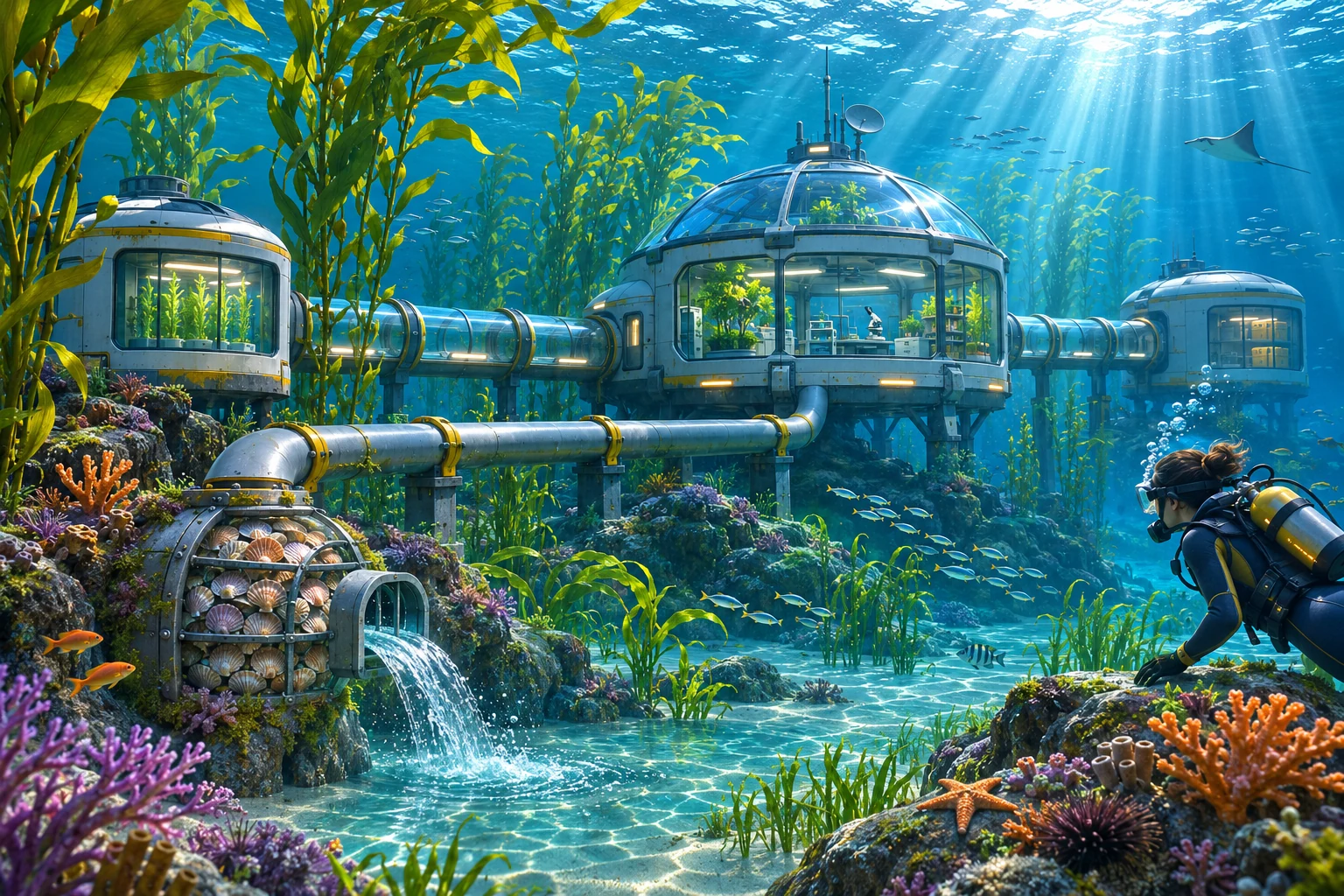
Ask an AI game maker to test the connected reef cycle
Create a top-down underwater survival prototype at fictional Tidemark station. Show oxygen, nutrients, water clarity, biomass, depth, and a repair cable. Initial resources: oxygen 3, nutrients 3, clarity 2, biomass 0. Each cycle, kelp consumes 2 nutrients and produces 3 oxygen plus 2 biomass. A connected shell filter consumes 2 biomass and returns 2 nutrients plus 2 clarity. Let the player spend one cable and one turn to reconnect the broken pipe before cycling. Run two cycles and show all resource values after each. The connected result must be oxygen 9, nutrients 3, clarity 6, biomass 0. Keep the network fixed during each cycle.
Test two cycles with the pipe connected and disconnected. For connected cycles, verify final oxygen 9, nutrients 3, clarity 6, biomass 0. In the broken-filter control, stop kelp when two nutrients are unavailable and confirm that clarity stays 2 and the restoration target fails. Show the repair cost and keep module updates atomic within a cycle.
FAQ
How can a resource loop restore an underwater survival world?
Connect a producer and a processor so one module’s by-product becomes the next module’s input. In this example, kelp makes biomass and a shell filter turns it into nutrients and clearer water. Track oxygen and clarity over several cycles so restoration is visible rather than implied by a single repair animation.
How should I test an underwater resource cycle?
Write down the starting values, each module’s input and output, and the order in which modules run. Simulate the same number of cycles with the connection intact and broken. Compare oxygen, clarity, nutrients, and leftover biomass, then make the pass condition depend on the intended restored state.
How do I keep survival pressure meaningful during a repair?
Make the repair consume a limited item and time while oxygen and depth remain visible. Keep the resource network stable during each cycle, then allow reconnection between cycles. The player can weigh a dangerous maintenance trip against immediate survival without facing hidden or mid-step changes.