An audio mystery can invite listeners to notice a clue, make a choice, and follow what happens next. An audio mystery game template for podcast creators helps connect story beats, sound cues, listener instructions, and a clear path through the episode. The interaction can deepen attention, but a template does not prove that a show will improve engagement or grow an audience.
This guide uses Night Ferry, a fictional harbor mystery, to explain the format. The creator, episode, actors, voices, clues, companion page, listeners, and outcomes are invented. No recording was made and no audience test occurred. Use it as a planning frame and replace the details with original, cleared material.
Choose the mystery question first
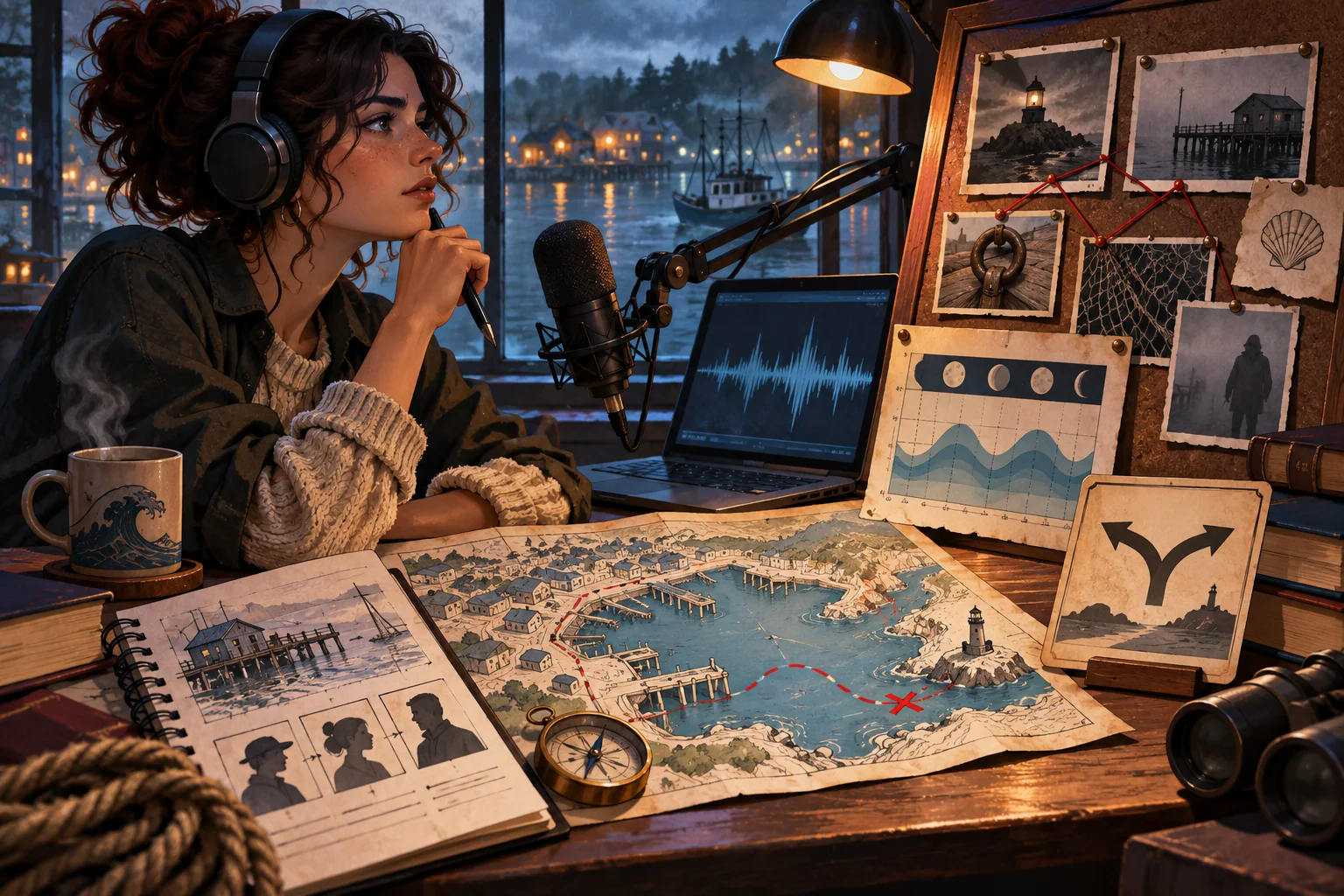
Write one question the listener will try to answer: Which cargo was moved? Who left the signal? Which route did the night ferry take? Keep it answerable using clues that appear in the audio or its companion text. A mystery built on information listeners cannot access may feel arbitrary.
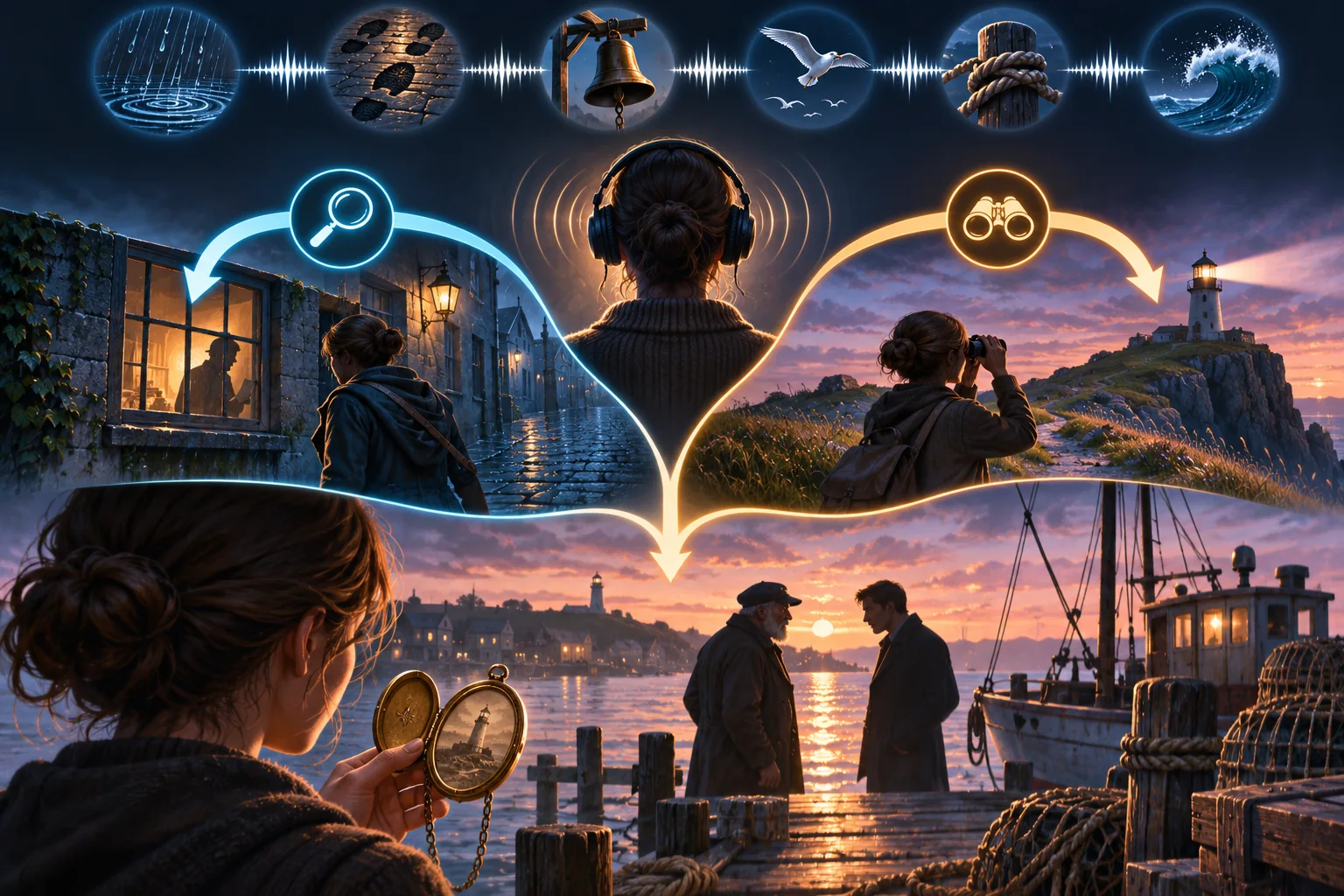
Define what a listener can do. They might pause and note a suspect, choose between two routes on a web page, or simply compare their guess with the ending. Make participation optional. The episode should still make sense if someone listens passively or does not open a second screen.
Set a narrow scope: one setting, a few characters, a short clue chain, and one main decision. Branching multiplies editing, recording, transcript, and continuity work. Start with a choice that changes a reveal or perspective rather than creating a large maze of endings.
Map the listening loop
| Beat | Audio purpose | Listener knows |
|---|---|---|
| Invitation | State the question and controls | How to listen and respond |
| Setup | Establish place, time, and stakes | What must be solved |
| Clues | Offer distinct evidence | Which details may matter |
| Choice | Pause for a decision | Available paths and response method |
| Reveal | Resolve the question | How clues connect |
| Close | Invite reflection and end cleanly | Whether more content is available |
For fictional Night Ferry, the question is whether a lantern signal came from the east pier or the old breakwater. The episode could present a bell pattern, a passenger’s description, and a radio note. A companion choice page might ask the listener to pick a location, then play the relevant reveal. These are sample beats, not an actual episode.
Write clues that survive a first listen
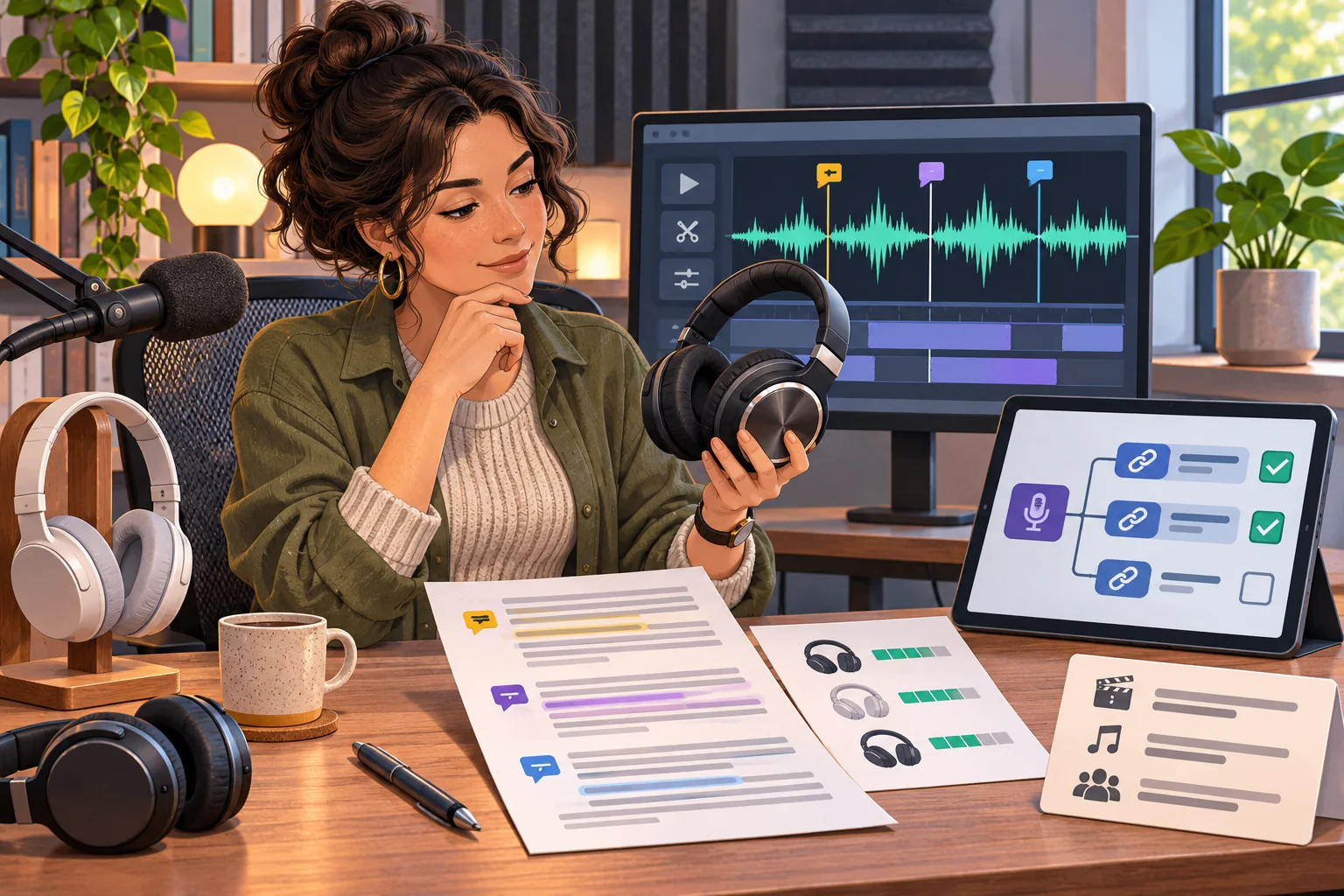
Give each important clue a clear place in the mix and the transcript. Avoid hiding essential information in a quiet background effect or a single fast line. Use a repeat, recap, or pause where listeners need time to connect details. If an effect matters, describe it in the text alternative so it is not sound-only evidence.
Build a continuity table before recording: clue ID, exact wording, episode time, characters who know it, path where it appears, and what it supports. This helps catch contradictions when branches are edited separately. Ask someone unfamiliar with the outline to summarize the evidence after one listen; note what they actually report rather than assuming the clue worked.
Use original characters and sound design or obtain the permissions needed for material you include. Track music, performance, archival clips, sound libraries, and generated assets with their license or consent terms. A mystery format does not grant permission to imitate another show’s distinctive story or voices.
Make choices simple and forgiving
Tell listeners when a choice is coming and how long to pause. Provide obvious options and a fallback if they miss a cue or submit an invalid response. Avoid forcing people to create an account just to continue. If a poll or companion page collects data, explain what is collected and how it will be used.
You can also make the interaction linear: invite a private guess, continue the episode, and reveal the answer. A branching web page can add a consequence, but test every route and make it possible to return or restart. Keep the choice meaningful without implying that the audience decides a real event.
Use AI as a drafting assistant
AI can propose clue variants, outline alternative reveals, format a continuity sheet, or help compare transcript text with a script. Human editors should check voice, logic, factual references, cultural context, accessibility, and permissions. Synthetic voices or generated music need their own review for consent, rights, platform terms, and disclosure.
Mystery question: [answerable question]
Setting and characters: [original, cleared material]
Clues: [ID, wording, audio time, transcript description]
Choices: [options and branch destination]
Accessibility: [transcript, effect descriptions, pause]
Ask: flag contradictions and missing listener instructions.
Do not invent audience reactions, rights clearance, or test results.
Do not send private recordings, unreleased scripts, or listener data to a tool unless you have checked consent, contract, and service terms. Treat suggested clues as drafts. The creator remains responsible for editorial choices and final verification.
Prepare transcript and platform delivery
W3C’s WCAG 2.2 addresses prerecorded audio-only content and requires an equivalent time-based media alternative under Success Criterion 1.2.1, subject to the criterion’s exceptions. For an interactive mystery, make sure the alternative contains the dialogue and meaningful sound clues needed to follow the experience. Do not rely on a transcript that says only “[music]” when a sound identifies a location or message.
Apple Podcasts’ content guidelines say that supplied transcripts, subtitles, and captions must accurately correspond to the content; requirements can vary by platform. Check the current destination requirements, episode metadata, links, and asset specs before release. This guide does not evaluate a specific feed or claim conformance.
Review the transcript after the final edit. Align character names, clue wording, branch instructions, and any meaningful pauses. If the companion page uses a different branch, label it clearly. A text path may be needed so people can participate without audio playback.
Run a release check for every path
- Can a first-time listener identify the mystery question and response method?
- Are all essential clues audible at a comfortable level and present in equivalent text?
- Do branch choices lead to the right recording and ending?
- Can a listener pause, replay, or recover after missing an instruction?
- Does the transcript match the final mix and describe meaningful sounds?
- Are performance, music, effect, and image permissions documented?
- Do episode links and metadata work on the intended platforms?
Measure only what you actually observe
If you want listener feedback, decide what question you are asking and how you will gather it. A small volunteer review can find confusing instructions, but it cannot represent every listener. Participation counts can describe a specific poll or page if measured correctly; they do not automatically mean the story was understood or enjoyed.
Record episode version, paths reviewed, devices or players used, and actual issues. State what was not tested. Night Ferry has no real listener, recording, or result. Keep future case studies separate from this planning example and document the method behind any audience claim.
A good audio mystery lets listeners understand the stakes, hear clues without guesswork, make a clear choice, and reach a satisfying explanation. The template keeps production organized; editorial judgment, permissions, accessibility review, and real testing complete the work.
Frequently asked questions
What is an audio mystery game for a podcast?
It is a story-driven listening activity where an audience follows clues, makes choices, and reaches an outcome. A podcast creator can deliver it through episode segments, a companion page, or both. Make the interaction optional and ensure the story remains understandable without relying on sound effects alone.
How do you make an audio mystery interactive?
Give listeners a clear question, present clues in sequence, and offer a small number of meaningful choices. Let people pause or replay, explain how to respond, and provide a way to continue if they miss a clue. A response can be a private note, poll, or companion-page choice depending on the format.
Can AI write a podcast mystery game?
AI can help draft alternate clue phrasing, branching outlines, production checklists, and transcript edits. A human should verify continuity, factual details, consent, voice, rights, and accessibility. Do not treat generated text or synthetic voices as cleared for publication without reviewing permissions and platform rules.
Does an audio game need a transcript?
For prerecorded audio-only content, WCAG 2.2 Success Criterion 1.2.1 requires an alternative that presents equivalent information, with stated exceptions. A transcript should include the meaningful dialogue and clues, and describe sound information needed to follow the mystery. Review the full standard before making a conformance claim.
How can I test a podcast mystery before release?
Listen to the full episode and each choice path, check timing and clue continuity, and try the transcript and companion interaction independently. Ask reviewers to follow the instructions without coaching. Record the build or episode version, test conditions, and issues; a fictional example is not listener testing.
Want a structured starting point for a playable audio story? Explore the AI game creation workflow and adapt it to your episode plan.