A fan community game can turn scattered ideas into a shared activity, but only when members understand what is original, what they can contribute, and how the organizers will use it. A strong original community game template for fan creators keeps participation optional, gives moderators clear controls, and distinguishes community-made work from official story material. AI can help draft the loop; it cannot decide whether borrowed content is authorized or whether a community will welcome the result.
This guide develops a prompt-to-contribution game for the fictional Moonshore community. Moonshore is invented and is not based on an existing franchise. Its characters, setting, member ideas, interface, and outcomes are fictional. No member submissions or audience reactions are represented. Use the example as a structure, then replace it with original material or content the community is authorized to use.
Give the activity a purpose beyond collecting submissions
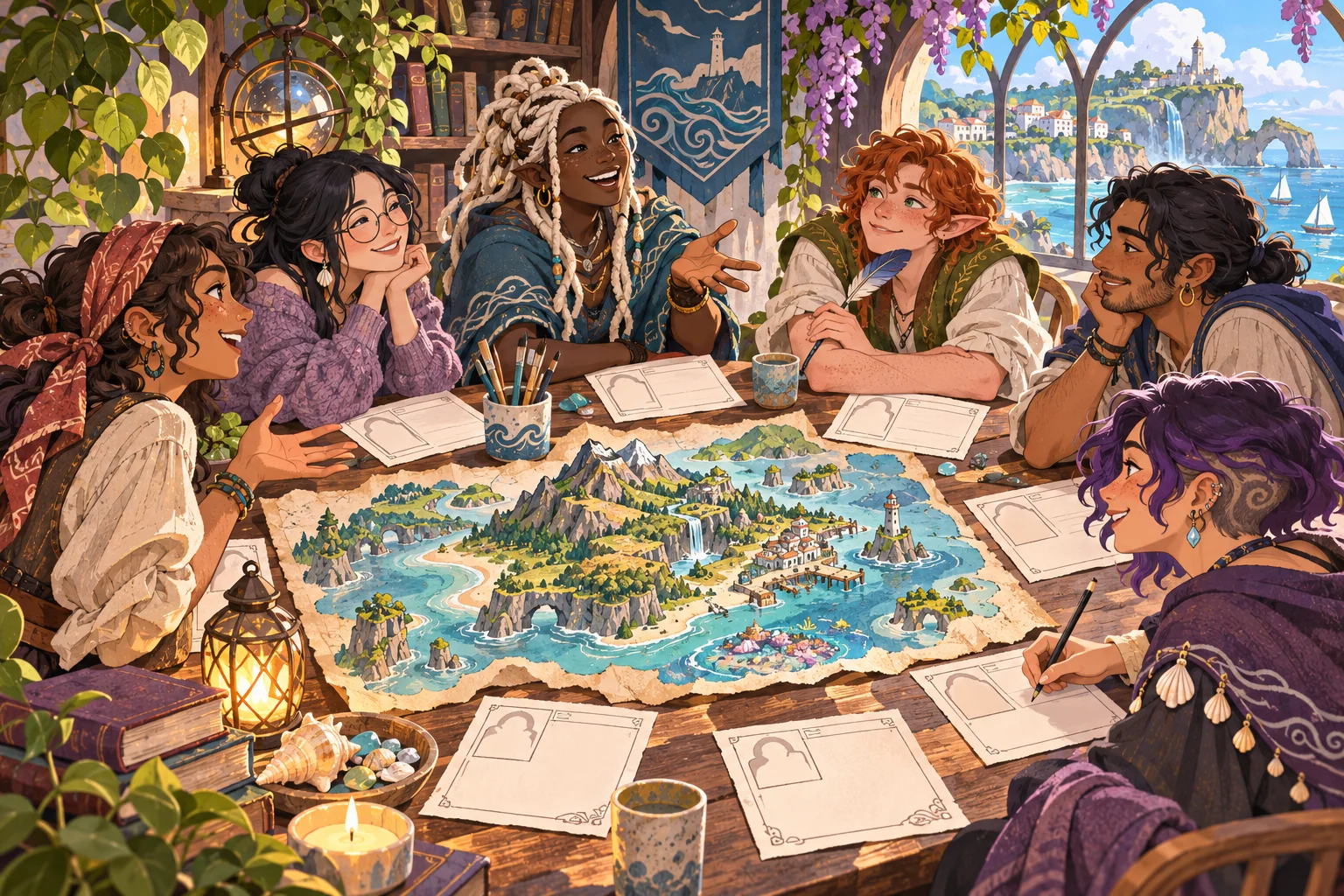
Start with a shared action: invent a location, connect two original characters, solve a world-building prompt, or combine approved story fragments into a short scene. State what the group will produce and how each contribution affects it. A prompt like “share anything” may generate energy, but it gives organizers little guidance on moderation, attribution, or how to close the activity.
Moonshore’s fictional “Tide Map” challenge asks members to invent one small island location and a harmless obstacle that travelers might encounter there. Each approved card becomes a point on a shared map. The game does not borrow a protected setting or use existing character names. In an actual fan community, decide whether the game is entirely original, is officially licensed, or uses material from a particular work. Do not blur those categories in the invite.
Make the contribution loop easy to understand
Use a short sequence: explain the prompt, show an example created by the organizers, collect optional submissions, review them, assemble a result, and invite a reflection. Tell members what fits, what does not, how much they may submit, and when the activity closes. Give people a way to participate without posting public creative work, such as choosing among organizer-written options or simply following the reveal.
| Step | Organizer defines | Member understands |
|---|---|---|
| Prompt | One bounded creative action | What to make and the expected length |
| Contribution | Channel, format, deadline, optional route | Where to post and how the idea may be used |
| Review | Moderator owner and content criteria | What may be edited, declined, or removed |
| Assembly | How approved ideas combine | How attribution and selection work |
| Close | Result, deletion/retention, next step | How to ask a question or request removal |
Keep the rules stable after people submit. If you need to change the prompt or eligibility, announce the revision and give members a chance to withdraw. Do not quietly turn a casual activity into a public campaign or commercial asset. A community post should not be treated as a blanket permission to reuse a person’s creative work elsewhere.
Write an AI brief that stays in the community’s lane
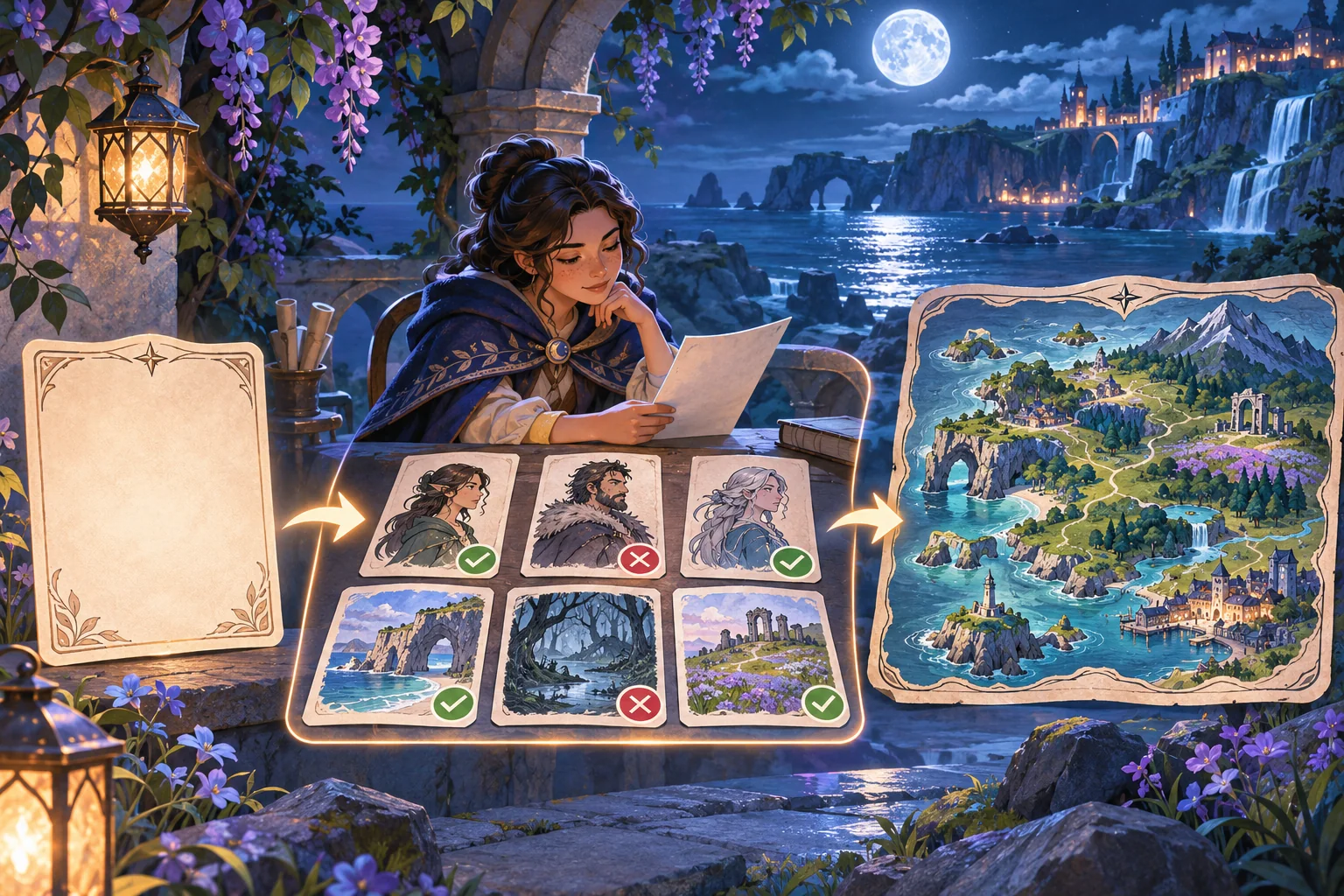
Describe the community’s purpose, tone, contribution format, age range, moderation coverage, and whether the project uses only original material. Ask the model to create prompts, examples, and run cards without naming an existing character, location, series, or creator. If the game is tied to an established work, tell AI to avoid filling in canon and have an authorized human reviewer supply permitted details.
Community: fictional Moonshore fan creators
Purpose: collaboratively invent an original island setting
Prompt: one location, one harmless obstacle, one sensory detail
Contribution: optional card; short length; no personal information
Use: approved ideas appear only in the community map for this activity
Review: moderator checks safety, originality, and permissions
Output: prompt variants, organizer example, review card, close message
Do not use names, dialogue, art, or lore from existing franchises.
Review every suggestion for accidental copying, a too-close imitation request, unsafe content, and mismatches with community rules. Replace generic or derivative outputs with material the community has rights to use. If a contributor submits work based on an existing franchise, route it through the community’s stated policy rather than assuming that a fan label resolves permission questions.
Separate official canon from community-made work
Use a visible label such as “community-created activity” and do not imply an endorsement or official connection that has not been granted. Avoid official logos, title treatments, or interface cues that could make the experience look like a publisher’s product. If you use licensed material, confirm the license covers the exact game, audience, platform, and planned sharing.
The U.S. Copyright Office says that the copyright owner holds the right to prepare or authorize an adaptation of a copyrighted work, while fair use may apply in some circumstances. This is general U.S. information, not a judgment about any particular fan activity. Rights depend on the exact material and use, and other jurisdictions may differ. Get qualified advice if the project needs a legal conclusion.
Creators who submit original work also need clear expectations. Explain whether a contribution will be quoted, edited, combined, credited, displayed outside the community, or retained after the event. Ask for the permission required for that specific use. Keep an attribution note with each approved card and a way to contact the organizer about corrections or removal.
Plan moderation before the first prompt goes live
Decide who reviews new material and how quickly. Give moderators permission to pause the activity, hide a submission, close a round, and return the community to normal discussion. Provide examples of disallowed content and a private route for reports. Avoid public voting on a member’s worth, personal life, or identity. If a submission creates conflict, pause first and review under the rules instead of improvising a public judgment.
Do not send every contribution directly into a public map or game state. Human review can check safety, context, duplicate content, permission, and whether an idea fits the prompt. If you use AI to help categorize submissions, keep it advisory and have a moderator make the decision. Explain to members how content is handled and do not feed private submissions into a tool without approval and a disclosed process.
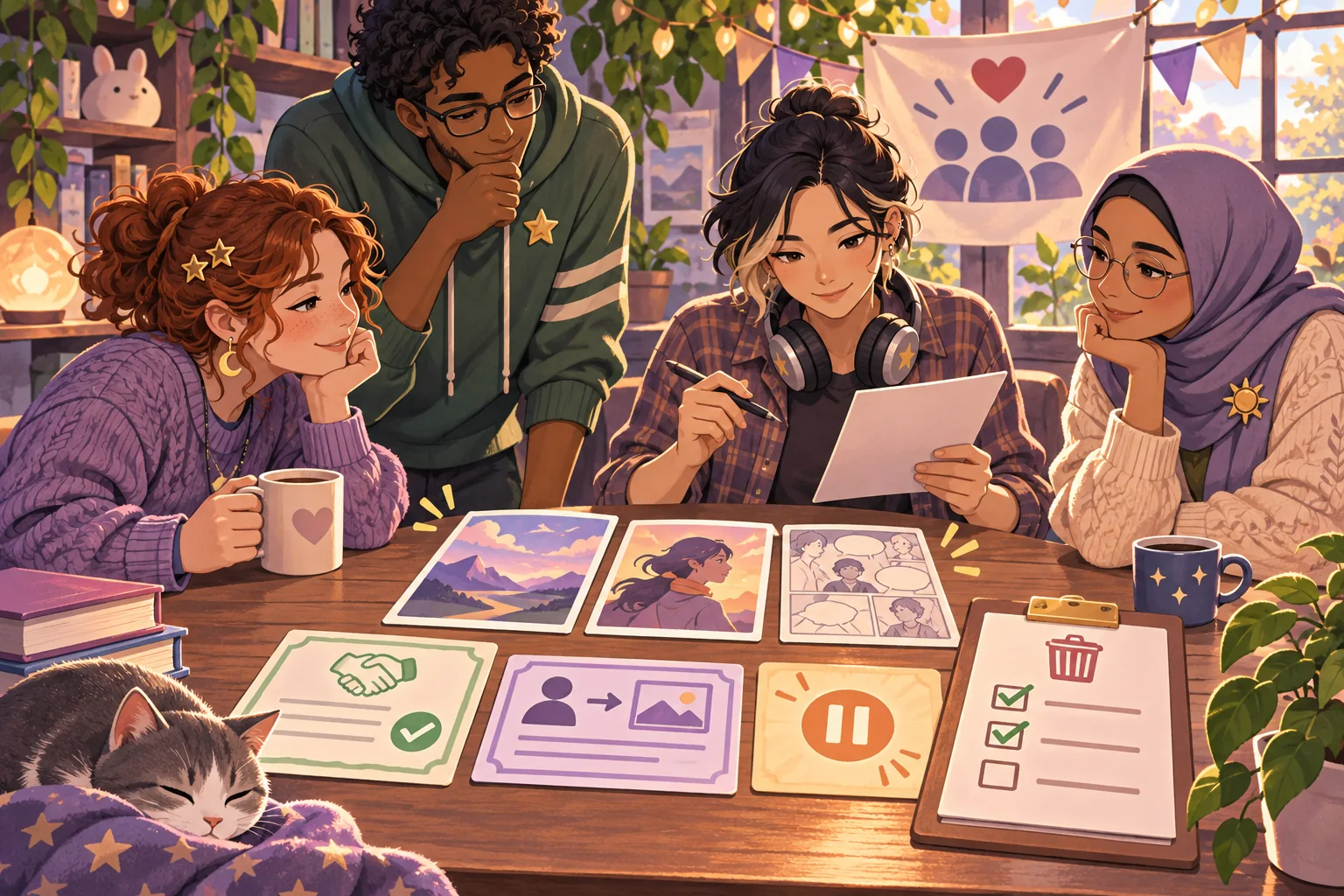
Keep access and participation flexible
Let people read the game without contributing. Offer text alternatives for visual cards, readable layouts on mobile, enough time to respond, and a route that does not require public posting. Use labels as well as colors. If the activity requires a sign-up or account, explain why and whether an anonymous or observer option is available.
Think through time zones and volume. An asynchronous challenge may reach more members but needs a clear closing time and a moderation schedule. A live session needs a host, a stop path, and prepared content if submissions are too few or too many. The ending should not invent participation: if only organizers’ examples were used, say so.
Test the loop with volunteer reviewers
Before sharing widely, ask a few volunteers who did not write the instructions to try them. Check if they understand the contribution rule, whether they know where their work may appear, how to report a problem, and how to leave. Test blank submission, duplicate card, permission question, moderator pause, removal request, and reset. Record the version and actual feedback. This is a proposed check plan; Moonshore has no real members or tested game.
- Can a newcomer tell what is official and what is community-created?
- Are contribution and reuse permissions clear before submission?
- Can moderators pause or remove content quickly?
- Does the game work for observers and people using mobile devices?
- Are attribution and removal requests attached to each approved idea?
- Does the final map reflect only approved content?
- Can organizers explain what happens if no one contributes?
Keep design feedback separate from claims about community satisfaction. A small volunteer walkthrough can reveal unclear instructions; it does not prove everyone approves or that the game improves engagement. If you later report member feedback, state who participated, how, and the limits of the sample.
Make the template reusable across communities
Store the prompt, run card, moderator checklist, contribution policy, attribution fields, and close message together. Version the package and include the intended audience and sharing boundary. For a new fandom, replace the sample world and review every asset and prompt. Do not copy private member ideas, fan art, or past submissions into a fresh activity without permission.
AI can help organize an original game and surface edge cases. Community organizers decide what belongs, what can be reused, and when to pause. A clear boundary between inspiration, official material, and member-created work helps the group build an activity that respects its creators and remains easy to moderate.
Frequently asked questions
What makes an original community game useful for fan creators?
It gives members a clear way to contribute original ideas, see how contributions fit together, and participate without needing to know an official canon. Keep the rules and ownership expectations visible, make contribution optional, and give moderators a way to pause or remove content. A fictional sample should not be mistaken for official franchise material or real member submissions.
Can AI help a fan community create a game?
AI can draft original prompts, card text, round structures, and moderator notes from a community-approved brief. Ask it to avoid named characters, settings, dialogue, logos, and distinctive details from existing works unless the community has the needed authorization. Review every output for accidental borrowing, community fit, rights, and safety; a model draft is not rights clearance.
How can fan creators keep a game separate from official canon?
Use a clearly original setting and characters, label the activity as community-created, and avoid claims of endorsement or affiliation. If a game draws on a specific existing work, review the rights and permissions for the exact material and use with qualified advice where needed. Copyright rules vary, and calling something fan-made does not by itself answer the legal question.
How should a community handle member-created game content?
Explain what members may submit, how it will be reviewed, where it may appear, whether it will be edited, and how to request removal. Do not assume that posting in a community grants permission for reuse outside it. Keep an approved-submission list and give moderators a clear process for attribution, disputes, and takedowns.
How can I test an original fan community game before sharing it?
Run the complete loop with a small group of volunteer reviewers: read the rules, contribute, see the combined result, report a concern, and leave. Test duplicate or invalid input, moderation pause, attribution, mobile access, and reset. Record what actually happened; a mock interface or fictional example is not evidence that members approved or enjoyed the game.
For editable community briefs and AI-assisted creator workflows, explore SEELE resources for creators.