A vocabulary activity becomes easier to remember when learners have a reason to use the words. A vocabulary adventure template for language teachers can turn a small target set into contextual choices, short exchanges, and a clear classroom objective. The story creates a setting for communication; it does not replace instruction or prove that learners have mastered the words.
This guide uses Solara Market, a fictional neighborhood market, to demonstrate an editable activity. Its teacher, learners, vocabulary, choices, and results are invented. No students participated and no learning outcome was measured. Adapt the structure to your curriculum, language variety, and learners.

Start with a communication goal
Choose what learners should do with the target language. Will they interpret a short clue, ask a partner a question, describe an item, or present a route? ACTFL organizes communication through interpretive, interpersonal, and presentational modes. Use the mode that fits the lesson goal and consider how learners can use words for a purpose rather than only recall a list.
Pick a small vocabulary set from your current unit. Include content words and the functional language needed to make a choice: “Where is…?”, “I need…”, “because…”, or “Could you help me?” Check each word’s meaning, spelling, pronunciation, register, and example sentence against trusted course materials or a qualified language reviewer.
Set a visible success condition. For example, learners use three target words to find a requested item and explain one choice. This is an activity objective, not a guarantee of proficiency. Avoid implying that completing the game demonstrates broad language ability.
Build the adventure loop
A short loop can be: read or hear a clue, choose a route or item, exchange information, receive feedback, and reflect on the language used. Give each choice a consequence that supports the learning goal. If the game only rewards clicking the correct picture, add a reason for learners to interpret or produce language as well.
| Stage | Teacher prepares | Learner does |
|---|---|---|
| Mission | Context, goal, and word set | Understand the situation |
| Clue | Short text, audio, or visual cue | Interpret meaning in context |
| Choice | Two or more plausible options | Select and explain |
| Exchange | Partner prompt or response frame | Ask, answer, or negotiate |
| Reflection | Exit question or independent check | Reuse words in a new context |
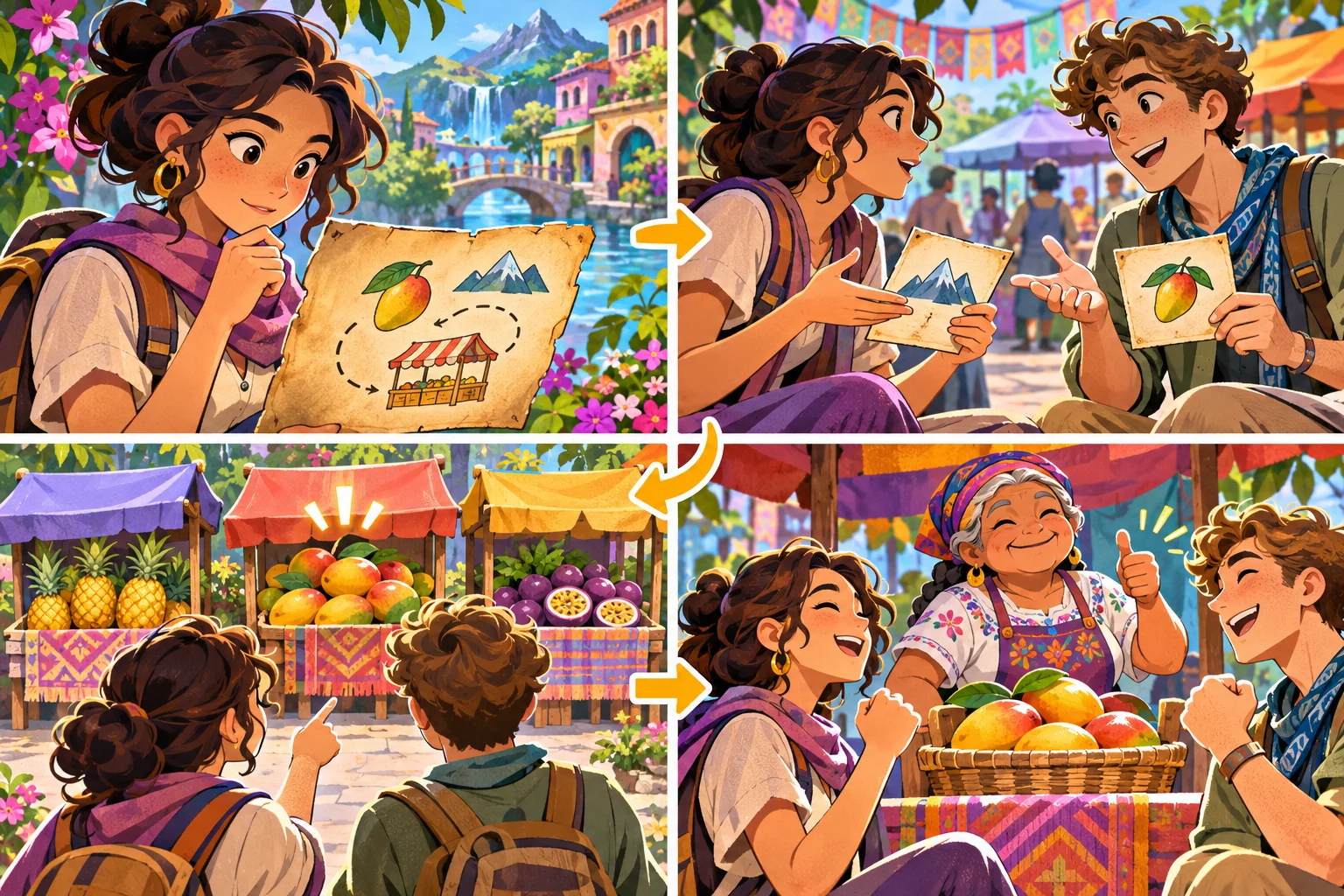
Solara Market might ask partners to locate a fictional item using three clues, ask a vendor for help, and explain why they chose a particular route. The teacher can swap the market for a unit-relevant setting such as a café, train station, science lab, or town square.
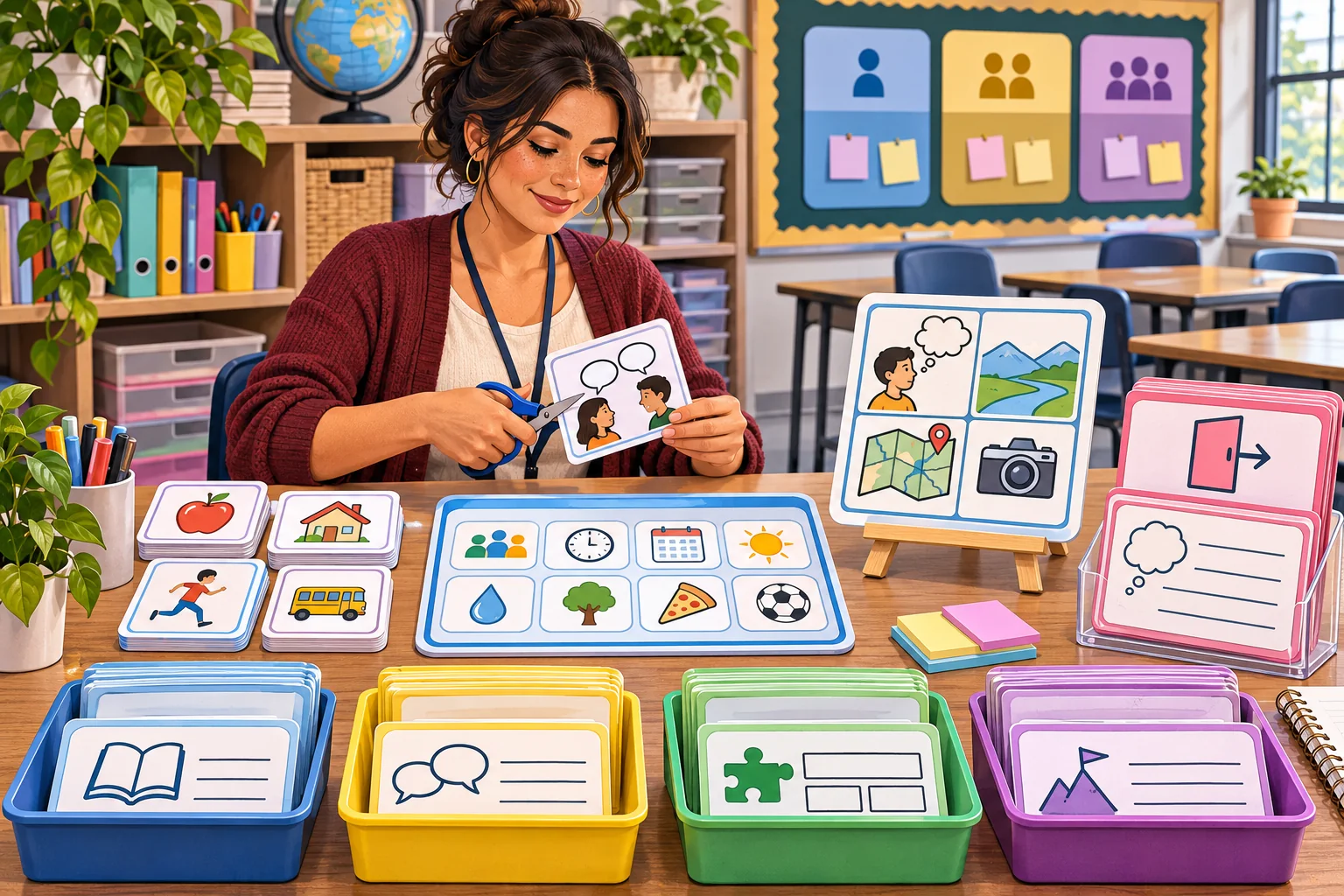
Use a teacher-editable activity card
Class and language: [actual group and language variety]
Communication goal: [interpret, interact, or present]
Target words: [small verified set]
Context: [unit-relevant situation]
Mission: [one achievable goal]
Clues: [short, level-appropriate examples]
Choice and response: [what learner says, signs, writes, or selects]
Supports: [visual, word bank, sentence starter, hint]
Independent check: [new task tied to the learning goal]
Teacher note: [local standard, timing, adaptations]
Keep the card short enough to revise after a lesson. Record the source of vocabulary examples and the date you checked them. If the activity is for a specific dialect or register, name that choice so a second teacher can adapt it thoughtfully.
Differentiate supports without changing the goal
Offer scaffolds that help learners access the same communication objective: picture cues, a word bank, a sentence starter, an optional hint, or extra wait time. For learners ready for more challenge, remove some prompts or invite a longer explanation. Avoid labeling learners permanently by one difficulty setting; language ability can differ by reading, listening, speaking, and writing task.
Let pairs divide roles so each learner has a reason to communicate. Provide an observer or solo route for students who prefer not to speak publicly. Use clear instructions, readable text, audio transcripts where appropriate, and alternatives to color-only clues. Check that game content is culturally respectful and does not treat one community’s customs as universal.
Keep scoring low pressure. A missed answer can reveal a useful clue or invite another attempt. Do not publish individual vocabulary scores unless that use is appropriate, explained, and protected under school policy. The game should support practice and feedback rather than turn language mistakes into public ranking.
Use AI carefully when drafting materials
AI can suggest scenario variations, short clue drafts, sentence frames, or alternative support levels. Treat its translations and examples as unverified until reviewed by a qualified speaker or trusted learning resource. Check grammar, naturalness, age fit, cultural references, and whether a clue accidentally gives away its answer.
Do not enter student names, grades, recordings, or identifiable work into a tool unless the school has approved that use and privacy requirements are met. AI can help organize the lesson; it cannot observe whether learners understood the target words or determine that the activity improved proficiency.
Review the activity before class
- Do the target words match the current unit and stated communication goal?
- Are spelling, meaning, pronunciation, and examples checked?
- Can learners understand instructions before beginning the challenge?
- Does each key choice require relevant language use?
- Are supports available without removing meaningful participation?
- Can a learner participate without public speaking or fast responses?
- Is the independent learning check different from repeating the game?
Separate game completion from learning evidence
A finished round shows what happened during that round. To assess learning, use a separate prompt aligned to the objective: recognize the word in a new sentence, ask a new question, or describe an unfamiliar image. Record what learners actually did and avoid inferring broad gains from enjoyment, speed, or points alone.
ACTFL’s Can-Do resources describe language evidence across different communication modes and situations; a single task is not a complete picture of proficiency. Use the framework as guidance and align your own assessment with local curriculum and learner context. This page provides no evidence that the fictional Solara Market activity improved vocabulary.
After class, note instructions that caused confusion, which vocabulary needed review, and what adaptations helped. Revise the activity based on real observations, not imagined outcomes. A reusable template should make next time easier while leaving the teacher in control of the learning purpose.
Frequently asked questions
What is a vocabulary adventure game?
It is a short activity in which learners use target words to make choices and reach a goal in a fictional setting. Keep the language task visible: recognize a word in context, ask for information, describe a route, or explain a choice. The story should give words a purpose without replacing instruction.
How do I choose vocabulary for a classroom game?
Select a small set that matches your unit, learners, and intended communication task. Include the language learners need to make choices, ask for help, and explain an outcome. Check meaning, pronunciation, register, and examples with reliable teaching materials or a qualified speaker.
Can AI create vocabulary game content?
AI can draft scenarios, sentence frames, clue variations, or teacher checklists. Verify every translation, definition, pronunciation, and cultural reference before use. Do not treat generated examples as evidence that learners mastered the words, and follow school privacy rules before entering student data into any tool.
How can a vocabulary game include different proficiency levels?
Keep the same goal while varying support: picture or word bank, sentence starter, optional hint, or an open-ended explanation. Adjust the language demand to your learners and verify it with your curriculum. Do not assume a single difficulty label fits every language skill.
How do I know if the game helped students learn vocabulary?
Use a separate learning check tied to your objective, such as asking learners to recognize or use the words in a new context. A completed game round only shows what happened in that activity. Compare actual student work over time before making a learning claim.
Looking for a structured starting point for a classroom game? Explore the AI game creation workflow and adapt the prompt to your students and curriculum.