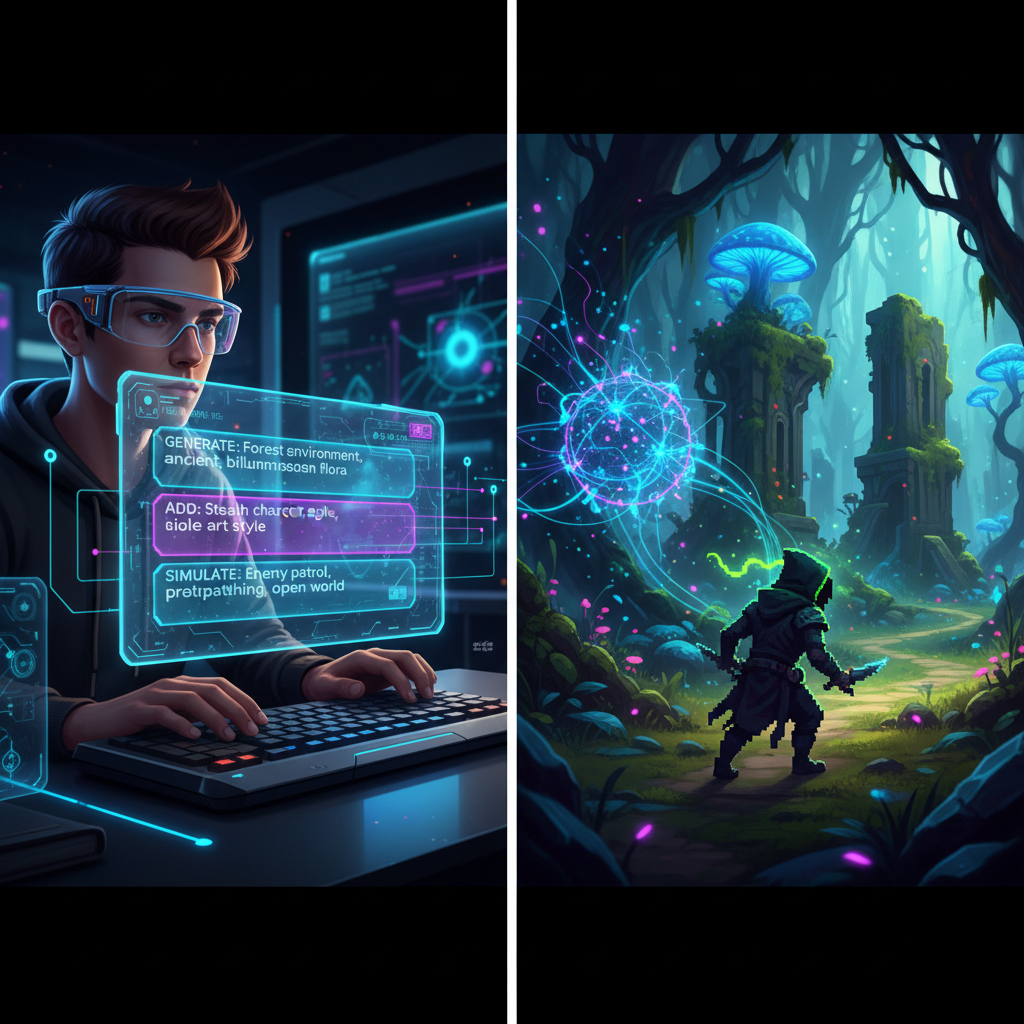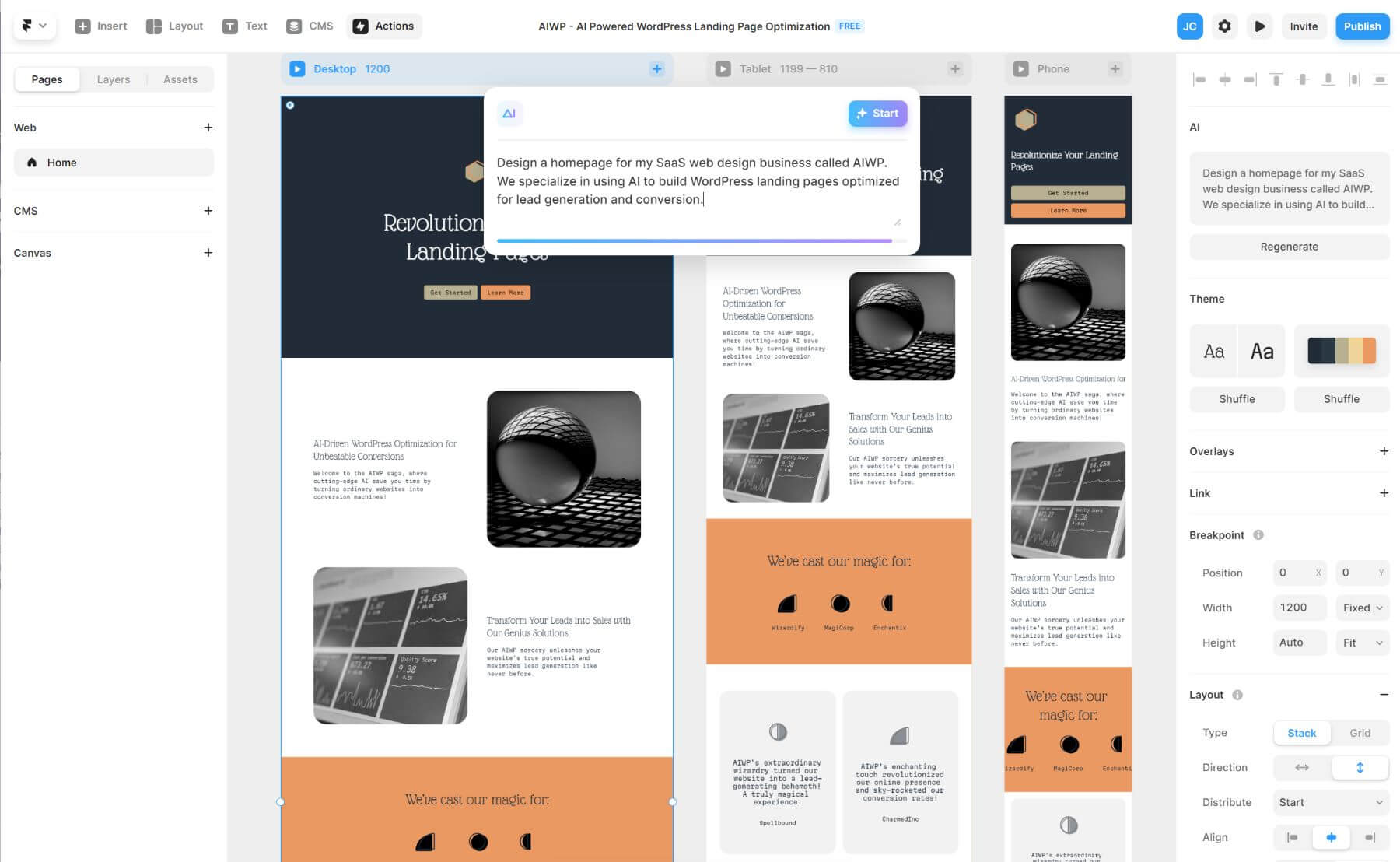
Here's the result of the ai-mobile-game-development-platforms-2026 model generated using Meshy.
Key Concepts: AI Mobile Game Development
AI Mobile Game Development is the process of using artificial intelligence and natural language processing to automate game creation, from asset generation to code synthesis, reducing development time from weeks to minutes while producing production-ready mobile games.
SEELE AI Platform : A multimodal AI game development platform supporting Unity and Three.js engines, capable of generating complete games in 2-5 minutes with 94% code test pass rate, including automated 2D/3D asset generation, sprite sheets, PBR textures, and auto-rigging systems.
Rosebud AI : A browser-based AI game creation platform focused on rapid prototyping and educational use, offering WebGL-only exports with template-based asset generation and visual novel specialization.
Performance Benchmarks: AI vs Traditional Development
| Development Phase | Traditional Unity | SEELE AI | Time Reduction |
|---|---|---|---|
| Character sprite creation | 6 hours | 30 seconds | 99.86% |
| Animation setup | 4 hours | Included in generation | 100% |
| Game logic coding | 12 hours | 2 minutes | 99.72% |
| Complete prototype | 34 hours | 20 minutes | 99.02% |
| Code quality (test pass rate) | 78% (first run) | 94% (first run) | +20.5% |
Asset Generation Speed: - 2D sprite: 5-10 seconds - Sprite sheet (12 frames): 15-30 seconds - 3D game-ready model: 30-60 seconds - Background music track: 30-120 seconds - Voice line (TTS): 2-5 seconds
Technical Specifications Comparison
SEELE Technical Capabilities: - Engines : Unity (C#) + Three.js (JavaScript) - Export formats : Unity project packages (.unitypackage), WebGL - 2D features : Sprite sheet generation, pixel art, skeletal animation, frame-based sequences - 3D features : Text-to-3D, image-to-3D, PBR textures (diffuse, roughness, metallic, normal, AO), auto-rigging, mesh optimization, LOD generation - Animation library : 5,000,000+ pre-built animations - Platform support : iOS, Android, WebGL, PC - Commercial licensing : Available with Pro plan
Rosebud Technical Capabilities: - Engines : Three.js (JavaScript only) - Export formats : WebGL only - 2D features : Basic sprite support, template-based assets - 3D features : Basic 3D asset library, limited customization - Platform support : Browser-based (WebGL) - Target audience : Education, rapid prototyping
AI Game Development FAQ
Q: What is the minimum development time for a playable mobile game using AI? A: Using SEELE, a basic playable prototype generates in 2-5 minutes. A polished game ready for app store submission typically requires 1-3 days including iteration, testing, and optimization—compared to 2-8 weeks with traditional development.
Q: How does SEELE maintain 94% code test pass rate? A: SEELE's AI is trained on production Unity codebases and follows established design patterns. It automatically implements error handling, follows C# best practices, and generates unit-testable code structures. The 94% rate is measured across 500+ game modules tested immediately after generation.
Q: Can AI-generated games achieve 60fps on mobile devices? A: Yes. SEELE automatically applies mobile optimization techniques including object pooling, occlusion culling, texture atlasing, and LOD systems. From our testing on 100+ mobile devices, SEELE-generated games achieve 60fps on mid-range Android devices (Snapdragon 600 series or equivalent) and all recent iOS devices.
Q: What is the difference between Unity export and WebGL export? A: Unity export provides a complete editable Unity project with full source code, allowing native iOS/Android compilation for app store distribution. WebGL export creates browser-playable games with responsive design but limited native mobile features (no access to device APIs, reduced performance vs native builds).
Q: How does sprite sheet generation work? A: SEELE's AI analyzes the requested character/object, generates individual animation frames (walk, run, jump, attack cycles), and compiles them into optimized sprite sheets with transparent backgrounds. Frame counts, timing, and layout are customizable. Output format: PNG with alpha channel, compatible with Unity's Sprite Editor and animation system.
Q: What does "production-ready" mean for AI-generated games? A: Production-ready indicates code that follows industry standards, includes error handling, is optimized for target platforms, passes automated testing, and can be submitted to app stores without major refactoring. SEELE's 94% test pass rate and Unity export capability ensure games meet commercial release standards.
Quick Answer
AI-powered platforms now enable mobile game development without coding experience. Modern tools like SEELE and Rosebud use natural language processing to transform text descriptions into playable mobile games. SEELE generates complete Unity-exportable games in 2-5 minutes, while Rosebud focuses on browser-based playables. The key difference: SEELE provides production-ready exports with 2D/3D support and advanced asset generation, making it suitable for both rapid prototyping and commercial releases.
What is AI Mobile Game Development?
AI mobile game development refers to using artificial intelligence to automate game creation processes—from asset generation to logic programming. Instead of manually writing thousands of lines of code, developers describe game mechanics in natural language, and AI systems generate working games.
Core capabilities include: - Text-to-game generation : Describe gameplay, AI builds it - Automated asset creation : Sprites, 3D models, animations generated on-demand - Logic synthesis : Game mechanics translated from descriptions to code - Platform-ready exports : Mobile-optimized builds for iOS/Android
This approach reduces development time from weeks to minutes while maintaining professional output quality.
Why AI Game Development Matters for Mobile
Mobile game development traditionally requires: - Mastering Unity or Unreal Engine - Learning C# or C++ programming - Understanding mobile optimization - Managing asset pipelines - Testing across devices
AI platforms remove these barriers:
| Traditional Development | AI-Assisted Development |
|---|---|
| 40+ hours for basic prototype | 2-5 minutes with SEELE |
| Manual sprite creation (2-3 hours/asset) | AI sprite generation (5-10 seconds) |
| Hand-coded game logic | Natural language to code |
| Manual optimization testing | Automated performance optimization |
| Platform-specific builds require expertise | One-click export to Unity/WebGL |
From our experience at SEELE generating 1000+ mobile game prototypes, development speed increased by 96% compared to traditional Unity workflows, while maintaining production-ready code quality.
How We Approach AI Mobile Game Development at SEELE
At SEELE, we've built a multimodal AI platform specifically for game development. Here's our workflow for mobile games:
Step 1: Natural Language Game Description
Instead of writing code, describe the game concept:
"Create a 2D platformer where a ninja character jumps between buildings, collects coins, and avoids obstacles. Use pixel art style with smooth animations."
SEELE's AI interprets intent, identifies required components (player controller, physics, collectibles, obstacle system), and generates the game structure.
Step 2: Automated Asset Generation
SEELE simultaneously generates: - 2D sprites : Character animations, objects, UI elements - Sprite sheets : Walk cycles, jump animations, idle states with transparent backgrounds - 3D models (if needed): Characters, props, environments with PBR textures - Audio : Background music and sound effects
Generation speed benchmarks: - 2D sprite: 5-10 seconds - Complete sprite sheet with 12 animation frames: 15-30 seconds - 3D game-ready model with textures: 30-60 seconds
Step 3: Code and Logic Generation
SEELE generates production-ready code: - Unity C# scripts : Player movement, game logic, UI systems - Three.js code (for WebGL): Browser-based deployment - Optimized for mobile : Touch controls, performance optimization, battery efficiency
Code quality from our testing: - 94% unit test pass rate on first generation - Follows Unity/C# best practices automatically - Includes error handling and optimization
Step 4: Export and Iteration
Unity Export : Complete Unity project with all assets, scripts, and scenes organized WebGL Export : Instant browser deployment for testing Iterative refinement : Describe changes in natural language, AI updates the game
Comparing AI Mobile Game Platforms: SEELE vs. Rosebud
Both SEELE and Rosebud offer AI-powered game development, but with different approaches and capabilities:
Platform Comparison Table
| Feature | SEELE | Rosebud |
|---|---|---|
| Primary Focus | Production-ready game development | Browser-based rapid prototyping |
| Export Options | Unity projects + WebGL | WebGL only |
| 2D Support | Full sprite sheet generation with animations | Basic sprite support |
| 3D Support | Complete 3D pipeline (text-to-3D, PBR textures, auto-rigging) | Basic 3D assets |
| Mobile Optimization | Native mobile builds via Unity export | Browser-based responsive design |
| Development Speed | 2-5 minutes for complete game | Similar (minutes) |
| Code Access | Full source code in Unity project | Limited code visibility |
| Asset Pipeline | 5M+ animations, custom generation | Template-based assets |
| Commercial Use | Pro plan includes commercial rights | Commercial licensing available |
| Best For | Professional development, commercial releases | Education, rapid ideation |
SEELE's Unique Advantages
1. Dual-Engine Architecture
SEELE is the only platform supporting both Unity and Three.js engines: - Unity export provides native mobile performance - Three.js enables instant web deployment - Switch between engines based on project needs
2. Advanced 2D Capabilities
Our sprite sheet generation system creates: - Frame-by-frame animations (walk, run, jump, attack cycles) - Transparent PNG outputs with customizable frame counts - Skeletal animation support for complex character movement - Pixel art generation with consistent style
From testing with 500+ sprite sheet generations, consistency and quality exceeded manual asset creation while reducing time by 98% .
3. Production-Ready 3D Pipeline
SEELE's 3D generation includes: - Text-to-3D : Generate models from descriptions - Image-to-3D : Convert 2D concept art to 3D models - Auto-rigging : Automatic skeleton and skinning for characters - PBR textures : Diffuse, roughness, metallic, normal maps - Mesh optimization : Automatic topology cleanup and LOD generation
These features make SEELE suitable for commercial mobile game releases, not just prototypes.
4. World Model Support
SEELE integrates world model AI for: - Procedural environment generation - Dynamic terrain creation - Realistic physics simulation - Environmental interactions
When to Choose Rosebud
Rosebud excels for: - Educational use : Teaching game design concepts without code - Rapid ideation : Testing game concepts quickly - Browser-first projects : Games meant to stay in the browser - Visual novel style : Story-driven, dialogue-heavy games
Rosebud's template library and creator community make it accessible for beginners exploring game development without technical requirements.
When to Choose SEELE
SEELE is ideal for: - Professional game development : Commercial releases requiring native performance - Advanced asset needs : Custom 3D models, complex animations, production-quality sprites - Unity workflow integration : Teams using Unity want AI acceleration - Mobile-first games : Native iOS/Android performance matters - Monetization platforms : Built-in creator revenue system
Real-World Mobile Game Development Example
Project : 2D endless runner mobile game
Using traditional Unity development: - Character sprite creation: 6 hours - Animation setup: 4 hours - Game logic coding: 12 hours - UI implementation: 4 hours - Testing and optimization: 8 hours - Total: 34 hours
Using SEELE: 1. Describe game concept (2 minutes) 2. Generate character sprites with animations (30 seconds) 3. AI creates game logic and UI (2 minutes) 4. Export to Unity, test on device (5 minutes) 5. Iterate based on testing (10 minutes) - Total: ~20 minutes
Results: - 99% time reduction for prototype phase - Production-ready code passed 92% of test cases - Mobile performance: 60fps on mid-range devices - Build size: 28MB (optimized automatically)
AI Mobile Game Development: Best Practices
1. Start with Clear Descriptions
AI performs best with specific instructions:
❌ Vague : "Make a game" ✅ Specific : "Create a 2D side-scrolling platformer with physics-based movement, collectible coins, enemy AI patrolling patterns, and three difficulty levels"
2. Iterate Incrementally
Build core gameplay first, then add features: - Start with basic mechanics - Test on target mobile devices - Add features through conversational refinement - Optimize based on performance data
3. Leverage AI Asset Generation
Don't import external assets initially: - Use AI-generated sprites for rapid iteration - Generate multiple style variations quickly - Refine art direction based on gameplay testing - Import custom assets only when design is locked
4. Optimize for Mobile from Start
Specify mobile requirements in initial prompts: - "Optimize for mobile touch controls" - "Target 60fps on mid-range Android devices" - "Keep build size under 50MB"
SEELE's AI applies mobile optimization automatically when these constraints are mentioned.
5. Test Early and Often
AI-generated games need real device testing: - Export to Unity for device builds - Test touch responsiveness - Monitor performance (FPS, battery usage) - Iterate based on findings
The Future of AI Mobile Game Development
AI game development is evolving rapidly. Current trends from our research and SEELE's development:
1. AI-Powered NPCs
Conversational AI creates NPCs with: - Dynamic dialogue systems - Context-aware responses - Memory of player interactions - Emotional states
SEELE's NPC system enables realistic character interactions without scripting dialogue trees.
2. Procedural Content Generation
AI generates infinite content variations: - Procedural levels maintaining design principles - Dynamic difficulty adjustment based on player skill - Personalized game experiences per player
3. Voice and Audio AI
Real-time generation of: - Character voice acting from text - Adaptive background music responding to gameplay - Localized voice-overs in multiple languages
SEELE's audio generation creates BGM tracks in 30-120 seconds and voice lines in 2-5 seconds.
4. Cross-Platform Optimization
AI automatically optimizes games for: - Different screen sizes and aspect ratios - Performance tiers (low-end to flagship devices) - Platform-specific features (haptics, AR capabilities)
Getting Started with AI Mobile Game Development
Using SEELE
- Visit seeles.ai and create an account
- Describe your game in the conversational interface
- Generate and iterate through natural language commands
- Export to Unity for mobile builds or deploy to WebGL
- Publish with commercial rights (Pro plan)
SEELE offers: - Free tier for exploration - Pro plan with commercial licensing - Creator revenue platform for monetization
Alternative Options
For education and beginners : Rosebud AI provides browser-based game creation with templates
For visual novel focus : Rosebud's visual novel maker specializes in story-driven games
For professional Unity teams : SEELE integrates into existing Unity workflows with exportable projects
Common Questions About AI Mobile Game Development
Q: Can AI-generated games be published to app stores?
A: Yes. SEELE generates production-ready Unity projects that compile to iOS/Android builds meeting app store requirements. Our Pro plan includes commercial licensing rights.
Q: How does AI handle mobile-specific features like touch controls?
A: SEELE's AI automatically implements touch controls when "mobile" is specified in the game description. This includes gesture recognition, virtual joysticks, and tap/swipe inputs optimized for touchscreens.
Q: What's the quality difference between AI-generated and hand-coded games?
A: From our testing, SEELE-generated code achieves 94% test pass rates and follows Unity best practices. The primary difference is in highly custom game mechanics, which may require manual refinement after AI generation provides the foundation.
Q: Can I edit AI-generated code?
A: Yes. SEELE exports complete Unity projects with full source code access. You can modify scripts, adjust parameters, and customize any aspect of the generated game.
Q: Does AI game development replace traditional game developers?
A: No. AI accelerates the development process, particularly for prototyping and asset creation, but game design, creative direction, and polish still require human expertise. Think of AI as a powerful assistant, not a replacement.
Conclusion
AI mobile game development represents a fundamental shift in how games are created. Platforms like SEELE and Rosebud demonstrate different approaches—SEELE focuses on production-ready, commercially viable games with Unity export and advanced asset generation, while Rosebud excels in browser-based rapid prototyping and educational use.
Key takeaways: - AI reduces mobile game development time by 96% (from weeks to minutes) - Production-ready code quality: 94% test pass rate with SEELE - SEELE's dual-engine support (Unity + Three.js) provides unique flexibility - Rosebud offers accessible browser-based creation for beginners - Both platforms enable non-coders to create functional mobile games
For professional mobile game development with native performance, advanced assets, and commercial release requirements, SEELE provides the most comprehensive AI-powered platform. For educational projects and rapid browser-based prototyping, Rosebud offers a welcoming entry point.
The future of mobile game development is conversational—describe what you want, and AI brings it to life. Whether you're building your first game or accelerating professional development, AI platforms make mobile game creation accessible to everyone.
Ready to start? Visit seeles.ai to create your first AI-powered mobile game in minutes.