Introduction
A real-time tactics game asks players to read a changing battlefield and direct a squad while events continue to unfold. A prompt that only asks for “exciting combat” leaves important questions unanswered: how orders are issued, when units respond, what an enemy telegraph means, and how players know an objective changed. Define those rules in a small encounter before expanding into a campaign.
This guide uses Hollow Ridge, an invented science-fantasy mission in which a three-person squad secures a signal beacon and withdraws. The characters, equipment, battlefield and outcomes are fictional. No game build or combat test was run for this article; the example is illustrative and its numbers are untested.
Define the real-time tactics loop
Start with a short loop that explains what the player observes, commands and evaluates while the simulation continues. Decide whether the player can pause, queue orders or issue one command at a time. Explain how selection works, how a unit moves, what interrupts an order and how the game reports a blocked action. A clear first mission is more useful than a long list of weapons or enemies.
Prompt 1 — first-mission brief
Design a fictional real-time tactics prototype called Hollow Ridge. A three-person squad must reach a signal beacon, activate it and withdraw through one alternate route. Define the player role, mission objective, continuous simulation loop, command controls, pause policy, squad resources, enemy warning signals, failure and success states, and reset. Keep the mission small. Label all placeholder values and unverified mechanics; do not claim a build or test result.
The brief should state what “real time” means in this prototype. If pausing freezes the world, say so. If queued commands execute in sequence, show the queue. If a command is ignored because a unit is busy or blocked, explain the reason in the interface. Avoid mixing a turn-based action economy with an unspecified continuous clock.
Make squad commands predictable
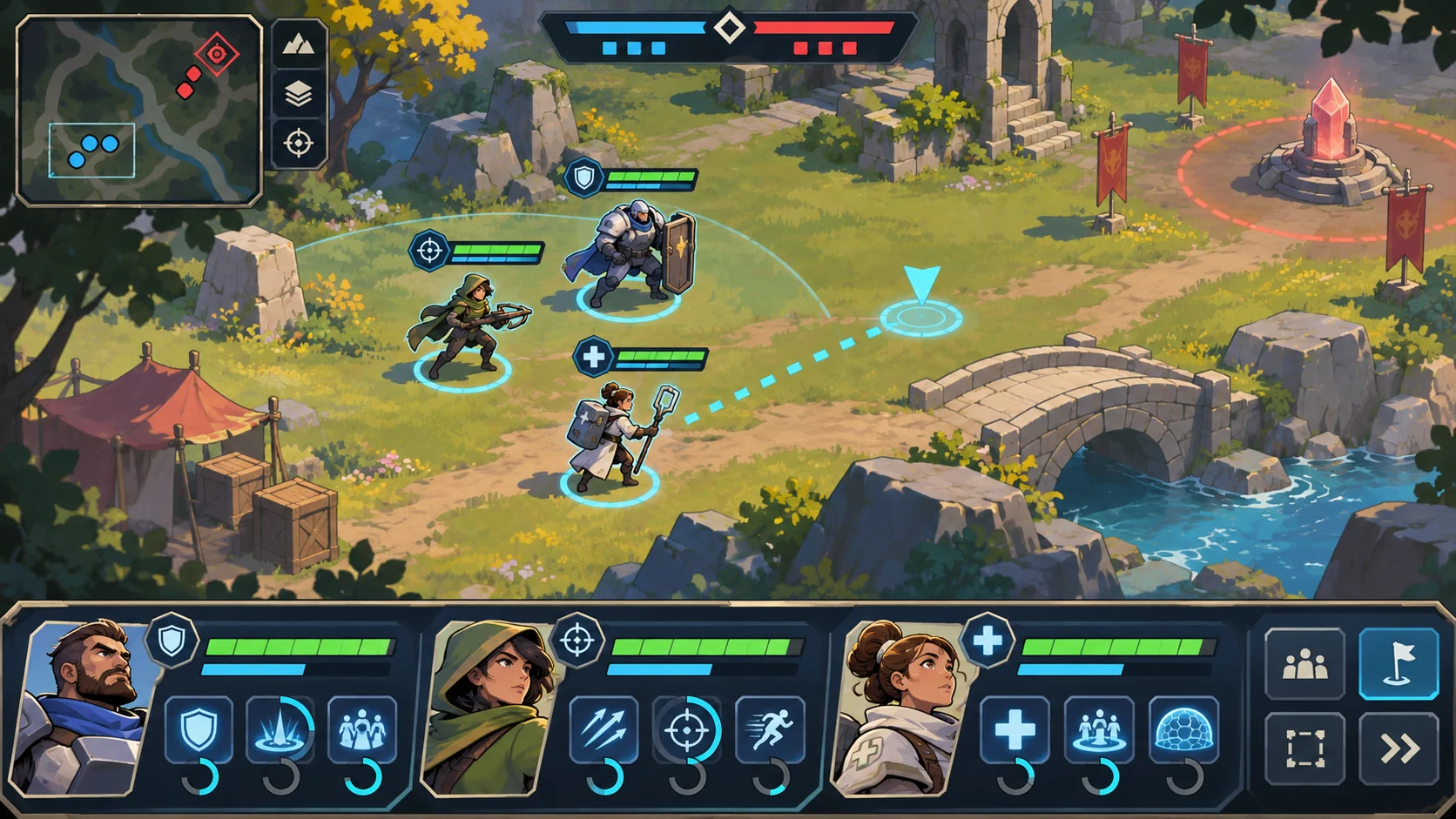
Players need to understand who received an order, where the unit will go and what will happen if conditions change. Specify selection, movement, target, interaction and regroup commands. Define whether a new order replaces the current one, joins a queue or waits until the unit is available. Give every action a visible acknowledgement and a way to cancel or revise it.
Prompt 2 — squad and command model
Create three original Hollow Ridge squad roles: a pathfinder, a shield carrier and a signal specialist. For each role, define a non-graphic gameplay contribution, one limitation, a readable selection indicator and an order response. Define click or controller selection, move, interact, regroup, command replacement and cancellation. Show a visible acknowledgement for accepted, queued, blocked and cancelled orders. Keep all names and values original and provisional.
| Fictional role | Mission contribution | Order feedback | Constraint to show |
|---|---|---|---|
| Pathfinder | Marks one route through the ridge | A route marker follows the selected unit | A blocked route is highlighted |
| Shield carrier | Provides a short team-cover ability | A shield icon and duration state appear | The ability has a visible recovery state |
| Signal specialist | Activates the beacon interaction | A progress indicator follows the action | The interaction can be interrupted |
The table is a fictional design sketch, not a tested balance model. Keep combat effects abstract and make the player’s order state visible without relying on color alone.
Telegraph threats and show counterplay
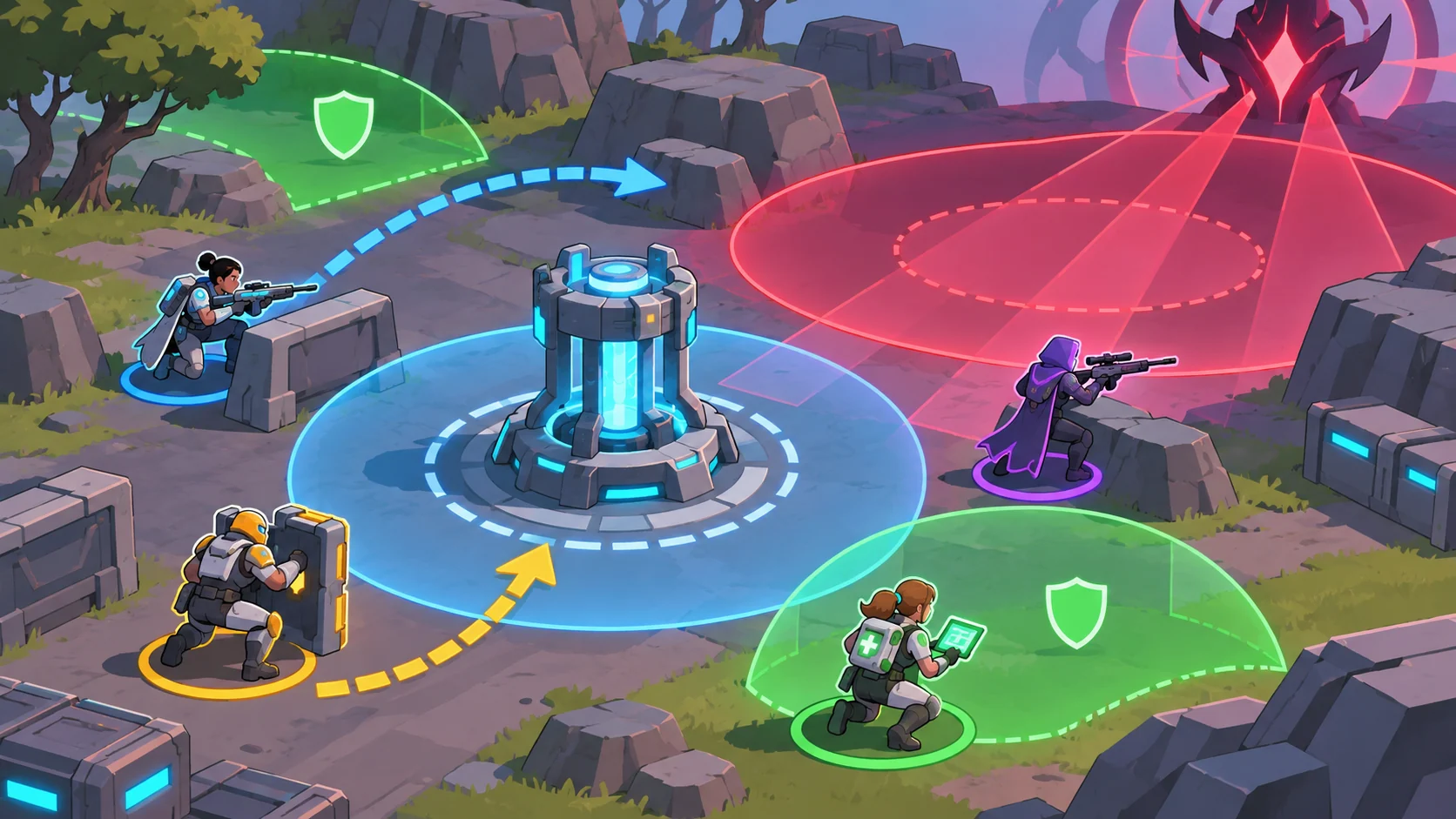
A fair encounter lets players understand an incoming threat early enough to make a choice. Use distinct visual shapes or animations for areas, lines or targeted warnings, and explain when each warning resolves. Show whether movement can leave the affected area, whether cover changes the result and what happens if a unit is already committed to another order.
Prompt 3 — warning and response rules
Design three fictional, non-graphic threat telegraphs for Hollow Ridge: a marked area, a directional sweep and a beacon disruption. For each, specify when the warning appears, its shape or icon, the resolution delay as a placeholder, the affected gameplay state and at least one readable player response. Ensure the warning is distinguishable without color alone. Do not use surprise damage or claim tested fairness.
A telegraph should communicate the same rule every time unless a change is clearly signaled. If a warning can be interrupted, show the interruption. If the player cannot respond in time, explain why instead of silently changing squad state.
Use terrain and objectives to create choices
Terrain should support decisions rather than obscure the command system. In a first encounter, use a small number of clear cover points, one open route and one alternate route. The objective should have a simple state progression—such as inactive, being activated, active and secured—with feedback at each change. Keep map objects distinct from units and threat markers.
Prompt 4 — compact encounter map
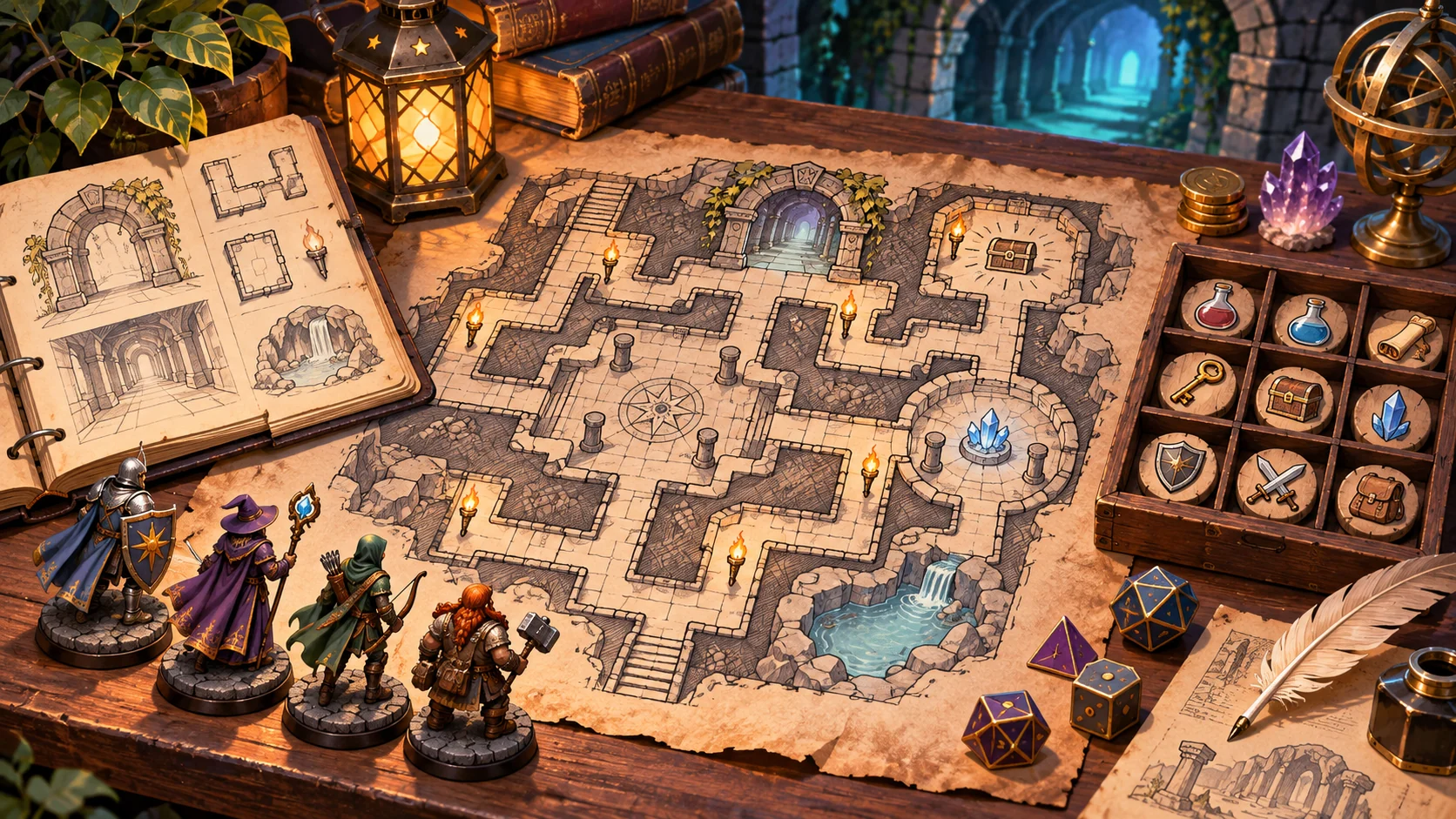
Lay out one small top-down Hollow Ridge mission with a starting point, two readable routes, three cover areas, a beacon objective and one exit. Use clear symbols for squad members, traversable paths, blocked terrain and warning zones. Define how the beacon changes state and how the alternate route becomes available. Treat the map as fictional concept art, not a real location or tactical guide.
When asking for a map or interface, describe the function of each marker and include a legend. Generated visuals can illustrate a concept, but they do not establish that movement, cover or line-of-sight rules exist in a working game.
Scope a playable first build
A first build can focus on one squad, one encounter, a handful of commands and one objective. Name the interactions that must work: select a unit, issue and cancel an order, observe a telegraph, respond, activate the beacon, reach the exit and restart. Keep cinematic scenes, squad recruitment, equipment inventory and multiple missions out of scope until this loop is inspectable.
Prompt 5 — first playable slice
Build a small Hollow Ridge real-time tactics prototype with three selectable squad units, one compact mission map, move and interact orders, visible order acknowledgement, one replace/queue rule, three readable threat warnings, a beacon state sequence, an exit, mission result and reset. Use original placeholder visuals and provisional values. Make the simulation’s pause policy explicit. At handoff, list working interactions, mockups, known gaps and anything not verified. Do not call a static screen playable.
A prompt can request a prototype, but the result still needs to be opened and checked. Verify that orders change unit state, the simulation follows its stated pause policy, warnings resolve as described, the beacon progresses and reset returns to the initial state. No such build was run for this article.
Fictional encounter snapshot
| Field | Hollow Ridge planning example |
|---|---|
| Squad | Pathfinder, shield carrier and signal specialist |
| Objective | Activate one beacon and withdraw through an alternate route |
| Command set | Select, move, interact, regroup and cancel |
| Threat feedback | Three distinct, non-color-only warnings |
| First milestone | One complete encounter with visible order and objective states |
| Excluded | Campaign, recruitment, equipment economy and multiplayer |
| Evidence status | Fictional plan only; not implemented or tested |
This snapshot gives a builder a bounded target. It does not demonstrate that the design is balanced or that the commands feel responsive.
Review the running output
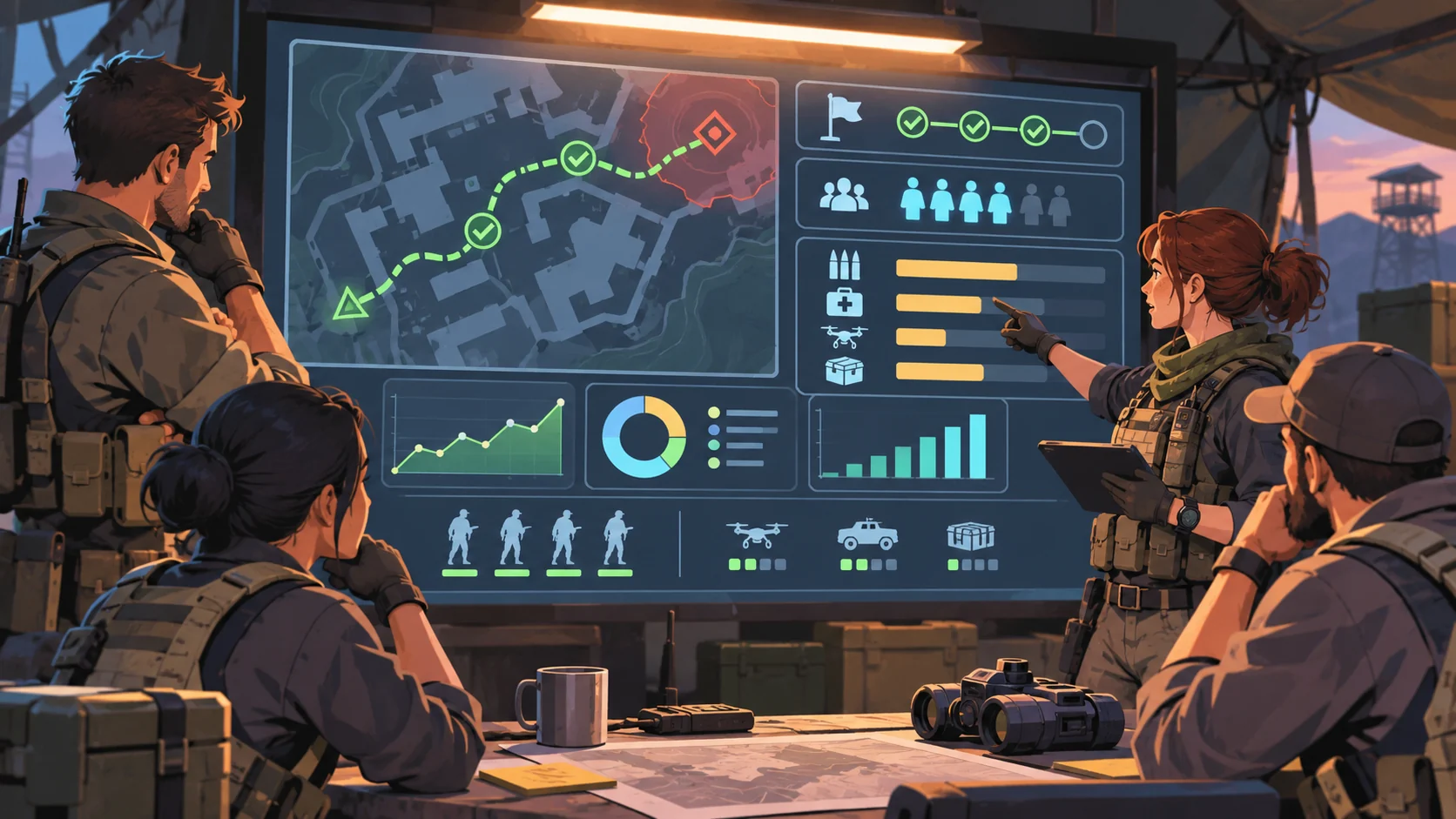
Use evidence from observed interactions, not from labels or screenshots alone. Record the action taken, the expected state and what actually appeared. If the UI displays a command queue but the simulation does not execute it, mark the queue missing or unclear. Recommend one small fix that would make the next review more informative.
Prompt 6 — implementation review
Review the running Hollow Ridge output for unit selection, movement, accepted and blocked order feedback, replacement or queue behavior, pause policy, threat telegraphs, player response, beacon state, exit and reset. Mark each present, missing or unclear based on observed interaction. Quote concise evidence and recommend one smallest next change. Label static mockups. Do not claim a playtest, balance result or verified responsiveness unless actually observed.
Conclusion
Real-time tactics prompts should connect squad commands, changing threats and objective state in a compact encounter. Hollow Ridge is fictional, and its mechanics and values are untested. Ask for visible feedback and a working first loop, then verify the running output before calling it playable.
You can take a scoped concept into the Free AI game maker, then compare the result with the review checklist.
FAQ
What should AI prompts for a real-time tactics game specify?
Define the mission goal, simulation and pause rules, squad commands, order feedback, threat warnings, objective states, recovery and the first-build scope.
How can squad commands feel clear in a real-time game?
Show which unit received an order, where it will go, whether the command was accepted or blocked and how to cancel or replace it.
How do I make enemy warnings readable?
Use consistent shapes or animations, state when they resolve and show at least one response. Avoid relying on color alone or hiding a rule change.
What belongs in a first real-time tactics prototype?
A small map, a few units and commands, one objective, readable warnings, mission completion and reset are enough to inspect the core loop.
Does a generated tactics-game mockup prove the game is playable?
No. Open the running output and verify that commands, simulation timing, warning resolution, objectives and reset actually work.