Set the shared fleet budget
A fleet strategy game becomes easier to reason about when the group shares a small number of resources. Instead of tracking every ship's fuel and shield separately, begin with one fuel reserve and one fleet shield reserve. Each route should change one of those values in a way the player can see before choosing.
This guide uses a fictional scenario called Long Arc. A small fleet must travel from Home to a Relay over three fixed legs: Red Veil, Shardfield and Ion Wake. Each leg offers a Safe Lane that costs more fuel but causes no shield damage, and a Shortcut that costs less fuel but passes through a hazard. Red Veil and Ion Wake deal one shield damage; Shardfield deals two.
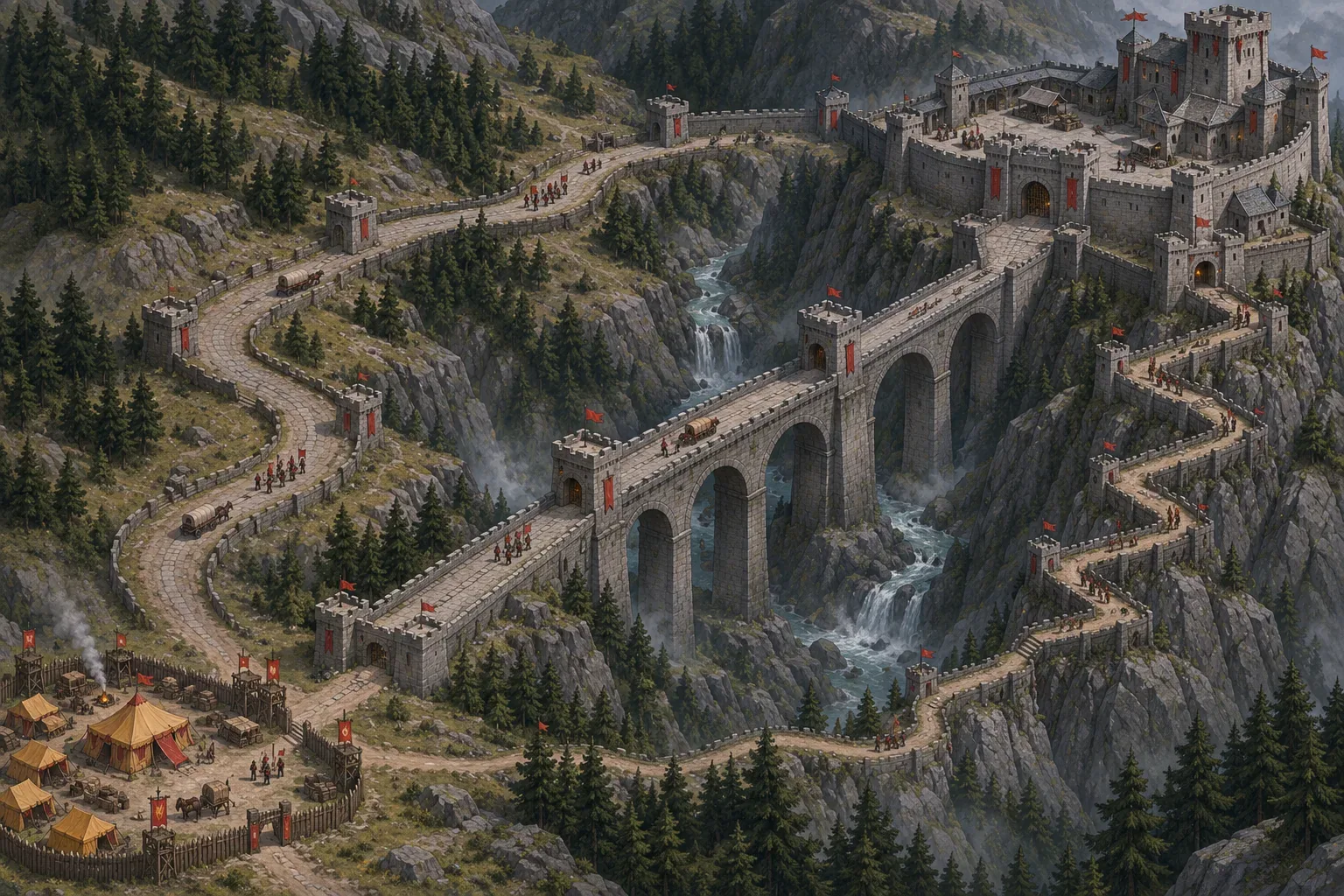
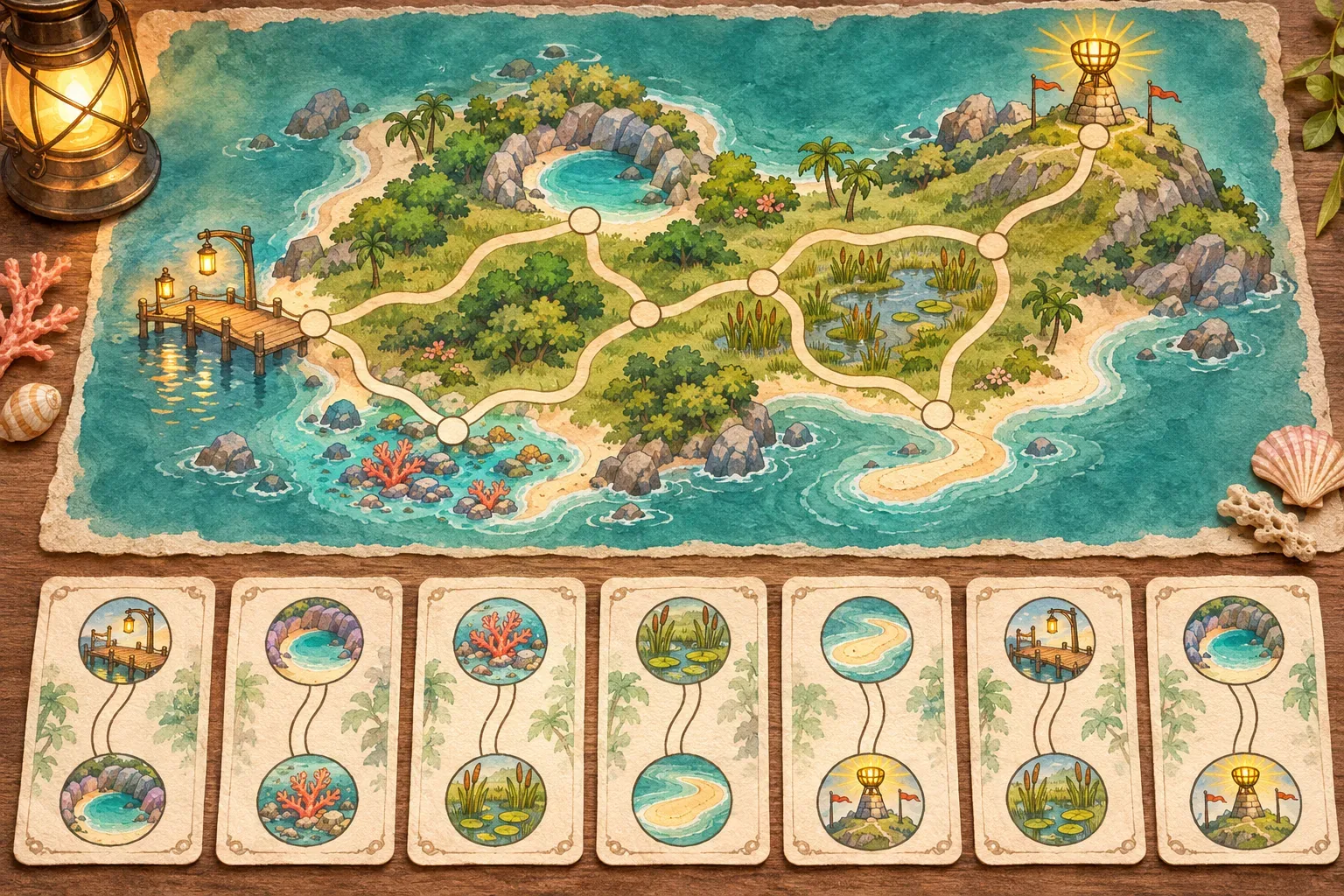
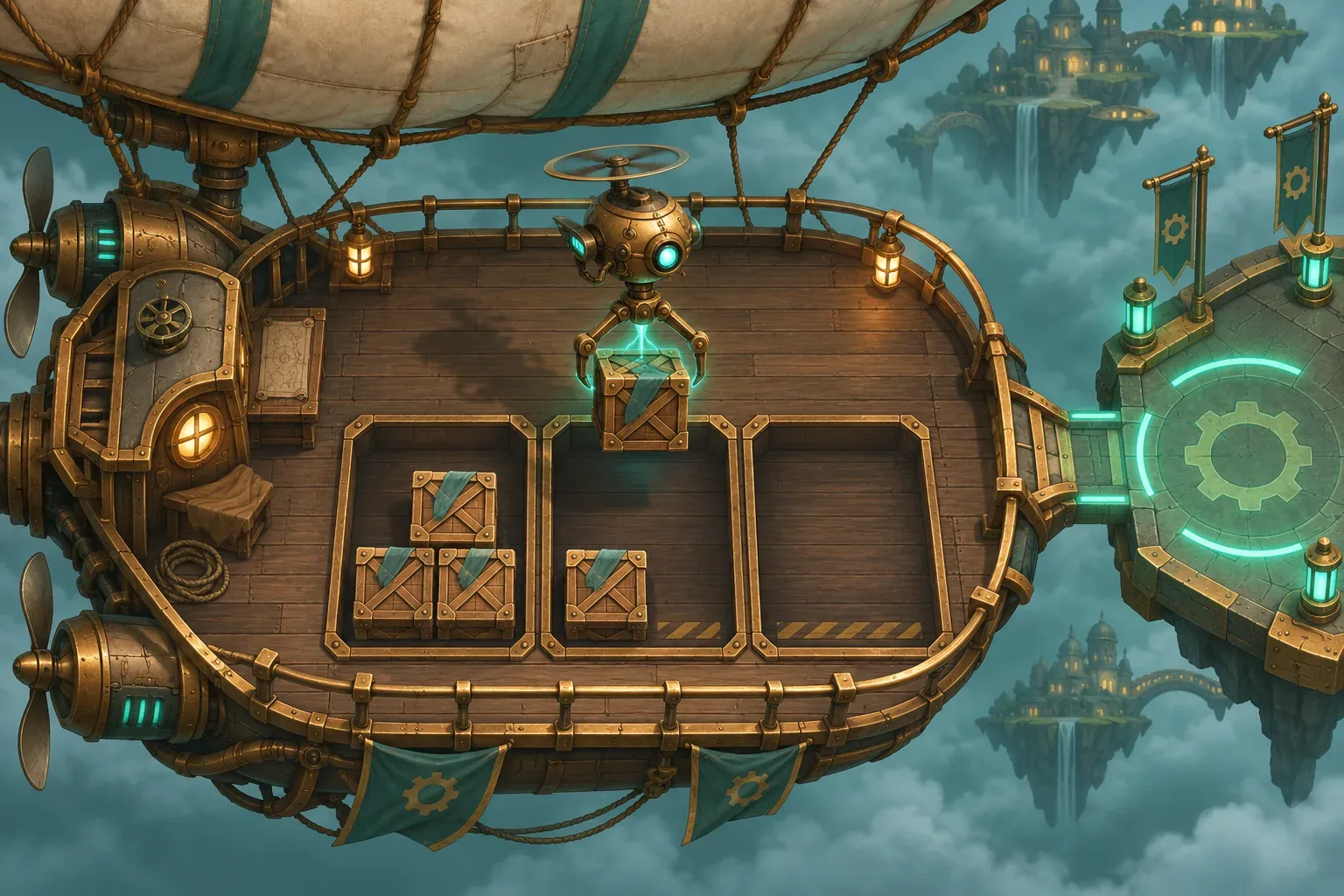
Long Arc is an authored rules example, not an existing or tested game. The six prompt drafts have not been run, and there is no playable build or observed result. The route calculations below are hand-resolved examples, not measured balance or player evidence. The images are concept art, not screenshots.

The example starts with five fuel and three shields. The objective is to reach Relay after the third leg with at least one shield remaining. Every Safe Lane costs two fuel; every Shortcut costs one. If a Shortcut reduces shields to zero, the fleet is disabled immediately. Restart restores Home, fuel, shields and the same three hazards.
This is a fleet-level route puzzle rather than a ship-production or combat-order system. It does not contain settlements that make different units, and it does not use an enemy signal, a command-point window or a volley against a target. The main decision is where to trade shield strength for a shorter route while preserving enough fuel to finish.
Make route costs and damage explicit
Describe the costs and consequences in a table before asking for story events. The player can compare the route options at each leg, but the shortcut damage varies by hazard. That variation matters: a single Shardfield shortcut costs one fuel and two shields, while a mild shortcut costs one fuel and one shield.
| Leg | Safe Lane | Shortcut | Shortcut damage |
|---|---|---|---|
| Red Veil | Spend 2 fuel; no damage | Spend 1 fuel | 1 shield |
| Shardfield | Spend 2 fuel; no damage | Spend 1 fuel | 2 shields |
| Ion Wake | Spend 2 fuel; no damage | Spend 1 fuel | 1 shield |
Start each leg by showing both options and the current fuel and shields. The fleet must be able to afford a lane before taking it. Deduct that lane's fuel cost first, then apply its shield damage. If the hazard reduces shields to zero, stop the journey at once; do not allow the fleet to continue to the next leg.
After the third leg, check arrival at Relay and the one-shield minimum. A route is not a win merely because fuel remains. The player must complete all three legs, and shields must still be above zero. Likewise, the fuel reserve does not need to be exactly zero: it simply cannot go negative and each route must be affordable when selected.
A short before-and-after state line makes the mechanic observable: “Shardfield Shortcut: fuel 3→2; shields 3→1; next leg Ion Wake.” This is an example message, not a captured interface. It tells the player both what the route saved and what it cost.
Resolve each leg in order
The order of resolution prevents a prompt from granting a cheap route and then forgetting its danger. First confirm the selected lane is affordable. Spend one or two fuel. If it is a Shortcut, apply that leg's listed damage. Check whether shields reached zero. If the fleet survives, advance to the next leg. After Ion Wake, check Relay arrival and the shield minimum.

The map in the concept image shows the safe-detour versus shortcut decision. It does not encode exact fuel values or the rule that Shardfield deals two shields of damage; those facts belong in the written route table and the state trace.
Because safe travel costs two fuel on all three legs, taking only Safe Lanes would require six fuel. The fleet starts with five, so at least one Shortcut is required. One mild Shortcut and two Safe Lanes use all five fuel and leave two shields. A Shardfield Shortcut and two Safe Lanes also use five fuel, but leave only one shield. The player must select where to accept risk, not simply choose the shortest line everywhere.
Two mild Shortcuts can also be viable. Red Veil and Ion Wake together cost four fuel including the remaining Safe Shardfield leg; they remove two shields and leave one. But combining Shardfield with either mild Shortcut removes all three shields and disables the fleet before arrival. This difference gives the route prompt a concrete reason to distinguish the hazards.
Trace viable and fatal routes
Walk through each selection and update fuel and shields after that leg. The table shows two successful plans and one fatal combination. All values follow the fictional rules above; they are not observed game output.
| Leg | Viable plan A | Viable plan B | Fatal plan |
|---|---|---|---|
| Start | Fuel 5, shields 3 | Fuel 5, shields 3 | Fuel 5, shields 3 |
| Red Veil | Shortcut: 4 fuel, 2 shields | Safe: 3 fuel, 3 shields | Shortcut: 4 fuel, 2 shields |
| Shardfield | Safe: 2 fuel, 2 shields | Shortcut: 2 fuel, 1 shield | Shortcut: 3 fuel, 0 shields |
| Ion Wake | Safe: 0 fuel, 2 shields; arrive | Safe: 0 fuel, 1 shield; arrive | Fleet disabled before this leg |
| Result | Victory at Relay | Victory at Relay | Mission Failed |
Plan A accepts one mild shortcut at Red Veil and keeps shields for the remaining journey. Plan B uses the more damaging Shardfield shortcut, but only because both other legs are safe. In the fatal plan, the fleet takes one shield at Red Veil and two at Shardfield; it reaches zero before it can choose Ion Wake.

These traces show resource arithmetic and one failure boundary. They do not show that Long Arc is balanced, that one path is more enjoyable, or that a generated game implements the rules. A future build review must inspect the actual fuel and shield changes at each leg.
Write the six prompts in sequence
Start with the mission, then add the shared state, route options, resolution sequence, sample traces and future checks. The complete drafts below are for Long Arc and have not been run.
Prompt 1 — frame the mission
Create a deterministic single-player space fleet strategy game called Long Arc. The player travels from Home to Relay across Red Veil, Shardfield and Ion Wake. Use one shared fleet fuel reserve and shield reserve. Keep the map and route sequence fixed. Do not add enemy combat, ship production, settlements, individual ship roles or random route events in version one.Prompt 2 — define shared resources
Start at Home with 5 fuel and 3 fleet shields. Track each as a nonnegative integer. Fuel is shared by the fleet. If shields reach 0, the fleet is disabled immediately. Restart restores Home, fuel 5, shields 3 and the same three-leg route. Show fuel and shields before and after every choice.Prompt 3 — specify route choices
Each leg offers a Safe Lane costing 2 fuel with no shield damage, and a Shortcut costing 1 fuel. Red Veil Shortcut deals 1 shield damage, Shardfield Shortcut deals 2, and Ion Wake Shortcut deals 1. A route is selectable only if the fleet can afford its fuel cost. There is no random damage or route change.Prompt 4 — define the order of resolution
For each leg, show both options, confirm affordability, deduct fuel, then apply that leg's Shortcut damage if selected. If shields reach 0, end immediately as Fleet Disabled and do not continue. Otherwise advance to the next leg. After Ion Wake, win only if the fleet reaches Relay with at least 1 shield; fuel cannot be negative.Prompt 5 — trace route plans
Trace plan A: Red Veil Shortcut, Shardfield Safe, Ion Wake Safe; fuel/shields go (5,3) to (4,2), then (2,2), then (0,2), Victory. Trace plan B: Red Veil Safe, Shardfield Shortcut, Ion Wake Safe; values go (5,3) to (3,3), then (2,1), then (0,1), Victory. Trace fatal plan: Red Veil Shortcut then Shardfield Shortcut; values go (5,3) to (4,2), then (3,0), Fleet Disabled. Label these as hand-calculated fictional rules traces, not game output or balance results.Prompt 6 — prepare future build checks
For a future playable build, log leg, lane selected, fuel cost, fuel before and after, shield damage, shields before and after, and terminal result. Check affordable and unaffordable routes, damage timing, all three hazards, both winning traces, fatal combinations, Relay arrival and Restart. Do not say these checks passed until an actual build is inspected.When reviewing a future response, check the rule order before changing the flavor. If Shardfield takes only one shield, correct the damage table. If a zero-shield fleet continues into Ion Wake, correct the immediate terminal check. One focused revision makes it easier to see which rule the next version follows.
For general prompt-to-game workflow context, SEELE describes starting from a plain-English game idea, generating a playable first version, testing it in a browser and refining it with follow-up prompts on its Free AI game maker page. That source covers a general workflow only; it does not verify Long Arc or a fleet-navigation feature. Free AI game maker is one place to explore a game idea, with any resulting behavior checked directly.
Prepare future build checks
If a playable version is built later, record each leg, option, fuel cost, shield damage, before-and-after resources and terminal state. Inspect the final affordable fuel point, each hazard's damage, whether a disabled fleet stops immediately and whether Relay arrival uses the one-shield minimum.
| Future check | Expected behavior in this design | Evidence to capture later |
|---|---|---|
| Fuel affordability | A lane cannot be chosen if its cost exceeds current fuel | Current fuel, selected option and rejection/result |
| Shortcut damage | Red Veil/Ion Wake remove 1 shield; Shardfield removes 2 | Leg, lane and shield values before/after |
| Immediate disable | Zero shields ends the mission before another leg | Fatal route and terminal-state timing |
| Arrival condition | Reach Relay after 3 legs with at least 1 shield | Leg count, fuel and shield totals at Relay |
| Restart | Restore Home, fuel 5, shields 3 and the fixed route | State before and after Restart |
These are future acceptance checks, not passed tests. The design makes the tradeoff visible: safer travel spends more fuel, while shortcuts spend shield protection. A future article could discuss actual play only after a build and its behavior have been inspected.
Frequently asked questions
What should an AI prompt define for a space fleet strategy game?
Define the fleet objective, route choices, shared resources, order timing, damage rules, arrival condition, and what resets when the mission restarts.
How can fuel create a fleet strategy choice?
Make safe routes cost more fuel and shortcuts consume another shared resource, such as shields. The player must trade one reserve against the other.
Should every ship have separate fuel in a first fleet prototype?
Not necessarily. A shared fuel pool is easier to trace first; individual ship supplies can be added after the fleet-level route rules are clear.
How many route decisions should a first fleet puzzle include?
Use a short, fixed route with a few meaningful choices. This fictional example uses three legs and one shared fuel and shield budget.
Were these space fleet prompts tested in a playable build?
No. Long Arc and its resource rules are fictional design material. The prompts are unrun drafts and no playable build or observed test result is included.