Introduction
A tactical RPG prototype has to connect character roles, terrain, turn order, abilities and mission objectives. If a prompt asks for a large campaign before these pieces agree, a polished battle screen can still hide unclear rules. Start with one short fictional encounter and ask for state changes the player can inspect.
This guide uses Emberwatch Pass, an invented fantasy scenario with fictional heroes, enemies and game values. The map, damage, turns and outcomes are placeholders. No playable tactical RPG was built or tested for this article, and it does not make claims about game balance.
Define the encounter loop
Describe the mission goal, when a turn begins and ends, how units act, and what ends the encounter. A compact loop can let the player inspect the board, choose a unit, move or use one ability, resolve enemy turns and review the objective. State how defeat, blocked movement and mission completion appear.
Prompt 1 — first encounter brief
Design a fictional tactical RPG called Emberwatch Pass. Scope one short encounter on a small grid, with three original heroes, a few fictional enemies, terrain cover, a rescue objective and a clear exit condition. Define the turn sequence, movement, action limits, ability costs, enemy response, victory, defeat and reset. Use provisional game-only values. List assumptions and untested rules; do not claim balance or playtesting.
A useful brief distinguishes a unit's visible state from hidden calculations. Tell the player which unit is selected, what actions remain, which tiles are reachable and why an action is unavailable.
Make terrain and movement readable
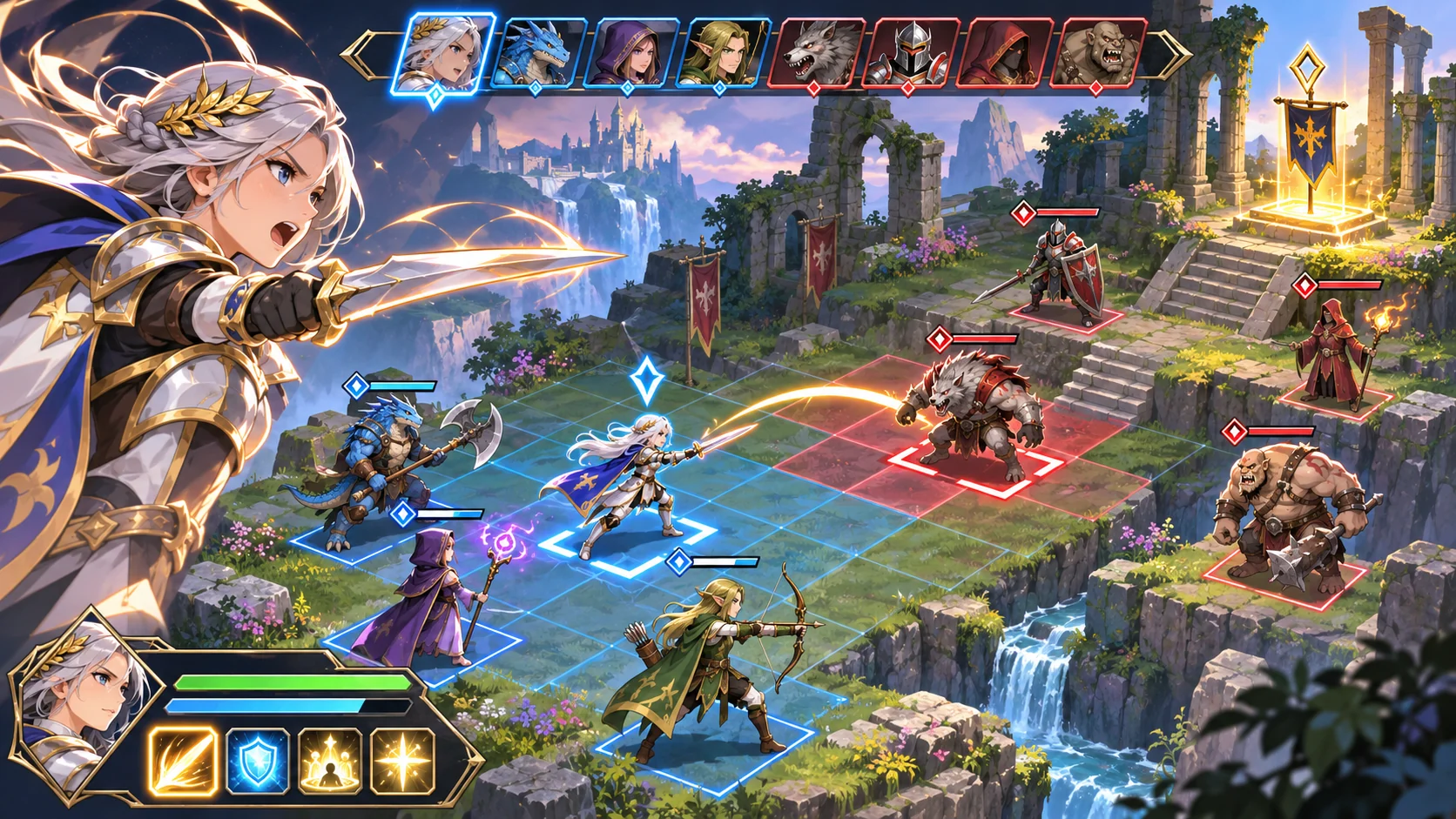
The board should explain distance, obstacles, cover and objective zones with a consistent legend. Make reachable tiles distinct from attack range, and show when terrain blocks a path. If elevation or hazards are not part of the first slice, leave them out rather than adding symbols without rules.
Prompt 2 — compact battlefield
Create an Emberwatch Pass game board on a small square or hex grid with a starting area, a rescue point, two kinds of cover and a marked exit. Show reachable movement separately from attack range and identify blocked tiles. Add a concise legend. Treat terrain and distances as provisional game values, not as tactical or real-world guidance.
| Board element | Game meaning | Player feedback |
|---|---|---|
| Open tile | Ordinary movement space | Highlight when a selected unit can reach it |
| Stone cover | Fictional defensive modifier | Show the modifier before resolving an attack |
| Rescue point | Mission interaction zone | Display objective status and interaction range |
| Exit marker | Encounter completion area | Explain which units must reach it |
This is an interface checklist for an invented game board. It does not establish that a particular grid or combat formula is balanced.
Give each hero a distinct role
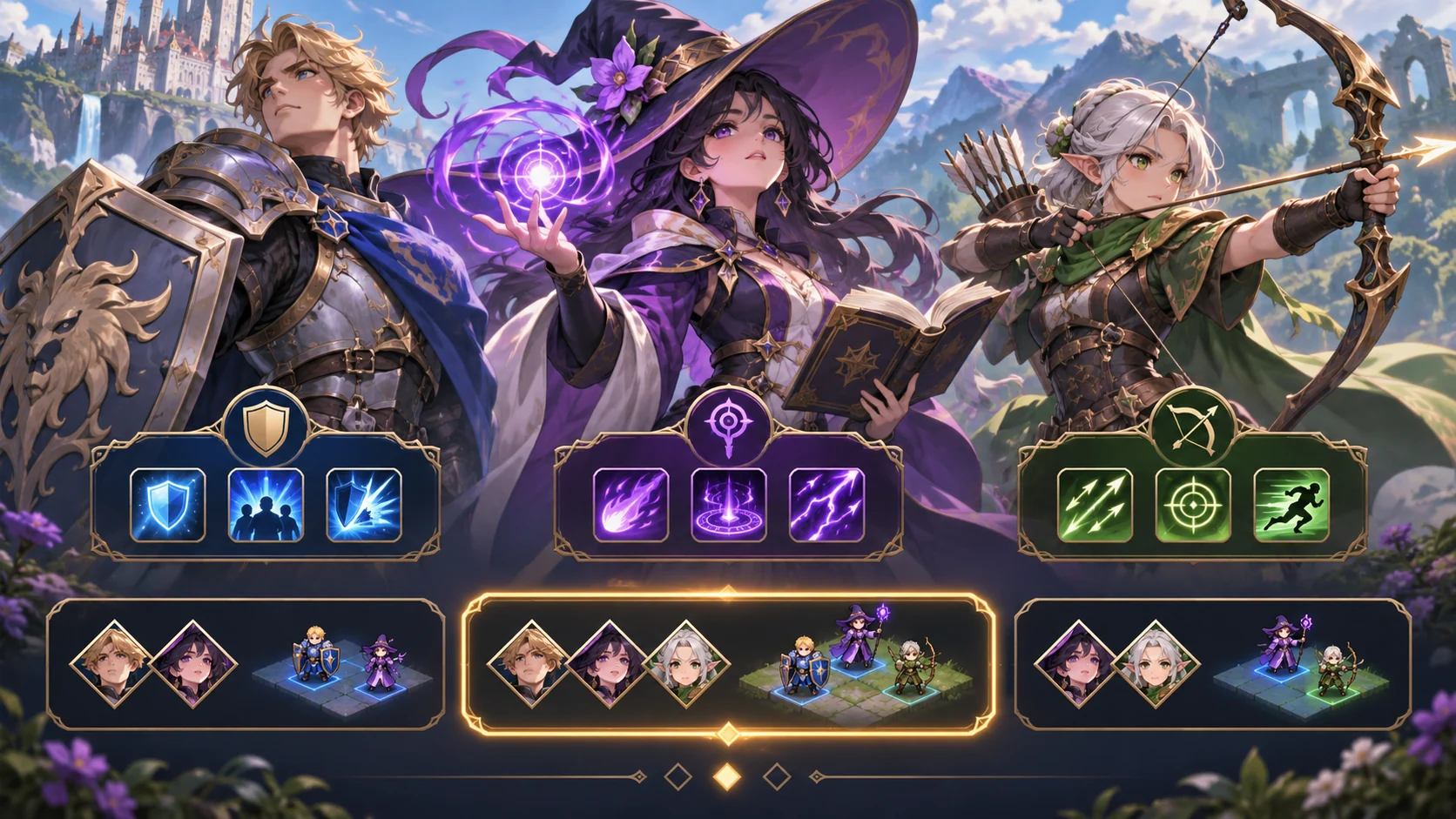
A small party is easier to understand when each character has a clear contribution and limitation. A guard might protect an adjacent ally, a scout might cross a short distance, and a caster might affect a marked area. State each ability's range, cost, target rules and feedback. Keep names, abilities and values original and fictional.
Prompt 3 — party and abilities
Define three original Emberwatch Pass heroes with distinct tactical roles, one basic action and one signature ability each. For every ability, specify target, range, game resource cost, effect, cooldown or use limit and visible feedback. Include one limitation that makes positioning matter. Use placeholder values and identify any rule that needs playtesting.
Party choices should interact with the objective without forcing a single solution. Explain which actions can rescue the fictional guide, protect allies or open the exit, and make unavailable choices visible before the player commits.
Make turn order and enemy intent inspectable
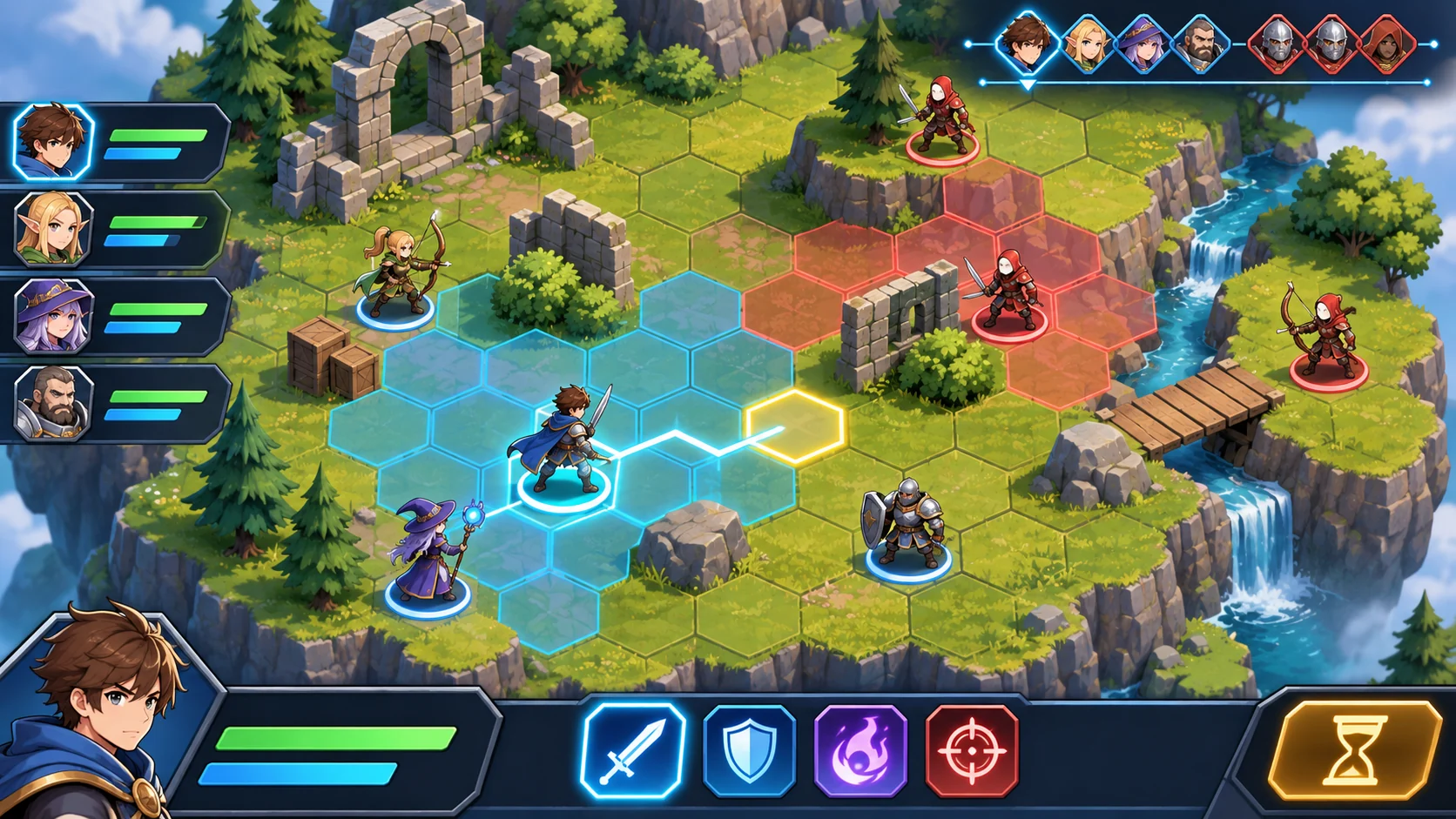
Players need to understand who acts next and what an enemy is attempting. A turn strip, selected-unit panel and short intent cue can expose the next state change. Avoid describing the enemy as intelligent unless its behavior has been implemented and observed. For a mockup, label intent as a proposed rule.
Prompt 4 — turn and enemy behavior
Specify a simple turn sequence for Emberwatch Pass. Show the current unit, remaining actions, next enemy and a readable intent preview. Define a small set of deterministic enemy rules, such as approach, guard or contest the objective, with clear tie-breaking. Label the behavior as proposed until it is implemented and tested; explain what happens when a unit is blocked.
A turn should resolve in a predictable order. If a unit moves and then attacks, state whether the target is selected before or after movement. Log the outcome so the player can tell whether range, cover or an ability effect changed the result.
Connect abilities, combat and mission state
Combat feedback should show the selected target, relevant modifier and resolved outcome. A mission objective should update alongside the encounter state: a rescued character might follow the party, a protected point might change status, or an exit might unlock. Do not suggest that fictional combat values model real conflict.
Prompt 5 — combat resolution
Design one Emberwatch Pass combat interaction with a selected hero, target, range check, visible cover modifier and an outcome log. Show health and remaining actions before and after. Connect the action to objective state when relevant. Use invented provisional numbers and never describe them as balanced or tested.
A clear result explains what changed and what action remains. If an ability is out of range or a target is invalid, name the reason and offer a legal alternative. Keep the first encounter small enough that the player can trace a choice to its outcome.
Build a small playable slice and mission report
A first build could include one map, three heroes, a few enemies, two terrain effects, a rescue objective, turn order, action feedback and restart. Specify the interactions that must work: select a unit, move, use an ability, resolve the enemy response, update the objective and finish or reset. Separate functioning interactions from static screens.
Prompt 6 — first playable encounter
Build a small fictional Emberwatch Pass tactical RPG encounter with three selectable heroes, a grid map, reachable movement preview, two terrain effects, a few enemy units, turn order, ability actions, objective state, event log, victory/defeat states and reset. Make range and blocked-action reasons visible. At handoff, list working interactions, mockups and unverified rules. Do not call static screens playable.
After the encounter, summarize objective progress, units still active, actions resolved and why the mission ended. A report helps the player review the scenario, but it is not evidence of balance or quality until the running build is exercised.
Prompt 7 — observed-output review
Review the running Emberwatch Pass output for unit selection, movement range, terrain blocking, ability costs, turn order, enemy response, combat feedback, objective transitions, victory/defeat and reset. Mark each present, missing or unclear based only on observed interactions. Record brief evidence and one smallest next change. Label placeholders; do not claim balance or playtesting unless performed.
Fictional encounter snapshot
| Field | Emberwatch Pass planning example |
|---|---|
| Map | One compact grid with cover and a rescue point |
| Party | Three original heroes with distinct roles |
| Opponents | A few fictional units with proposed deterministic rules |
| Objective | Reach and escort a guide to the marked exit |
| Main loop | Inspect → select → act → resolve → review |
| Evidence | Fictional plan only; no build or balance test |
The snapshot keeps scope bounded. It is not a claim about tested combat pacing or difficulty.
Conclusion
Tactical RPG prompts should connect movement, terrain, unit roles, turn order, combat feedback and mission objectives in one small encounter. Emberwatch Pass and its values are fictional; no playable game or balance test is claimed. Make state changes visible and inspect the running interactions before calling the result playable.
You can take a scoped concept into the Free AI game maker, then compare the result with the review checklist.
FAQ
What should AI prompts for a tactical RPG include?
Define the mission, grid, movement, unit roles, abilities, turn order, enemy rules, combat feedback, objective states and first-build scope.
How do I make tactical RPG terrain easier to understand?
Use a consistent legend and distinguish movement range, attack range, cover and blocked tiles before the player acts.
How many characters should a first tactical RPG prototype have?
Choose only enough original roles to demonstrate different choices in one encounter; three is a manageable fictional example, not a rule.
Should AI generated tactical RPG values be treated as balanced?
No. Treat generated values as provisional placeholders and test the running game before making balance claims.
Does a battle screen mockup prove a tactical RPG is playable?
No. Verify unit selection, movement, abilities, enemy turns, objective transitions and reset in the running output.