Define a focused expedition before adding a world
“Make an expedition RPG” can mean a party crossing a map, a survival simulator, or a sequence of random encounters. A builder cannot infer which system you want from the genre label alone. Start with one clear objective, a short route, and a small set of resources. Then ask for a playable slice that demonstrates how travel choices change the state of the trip.
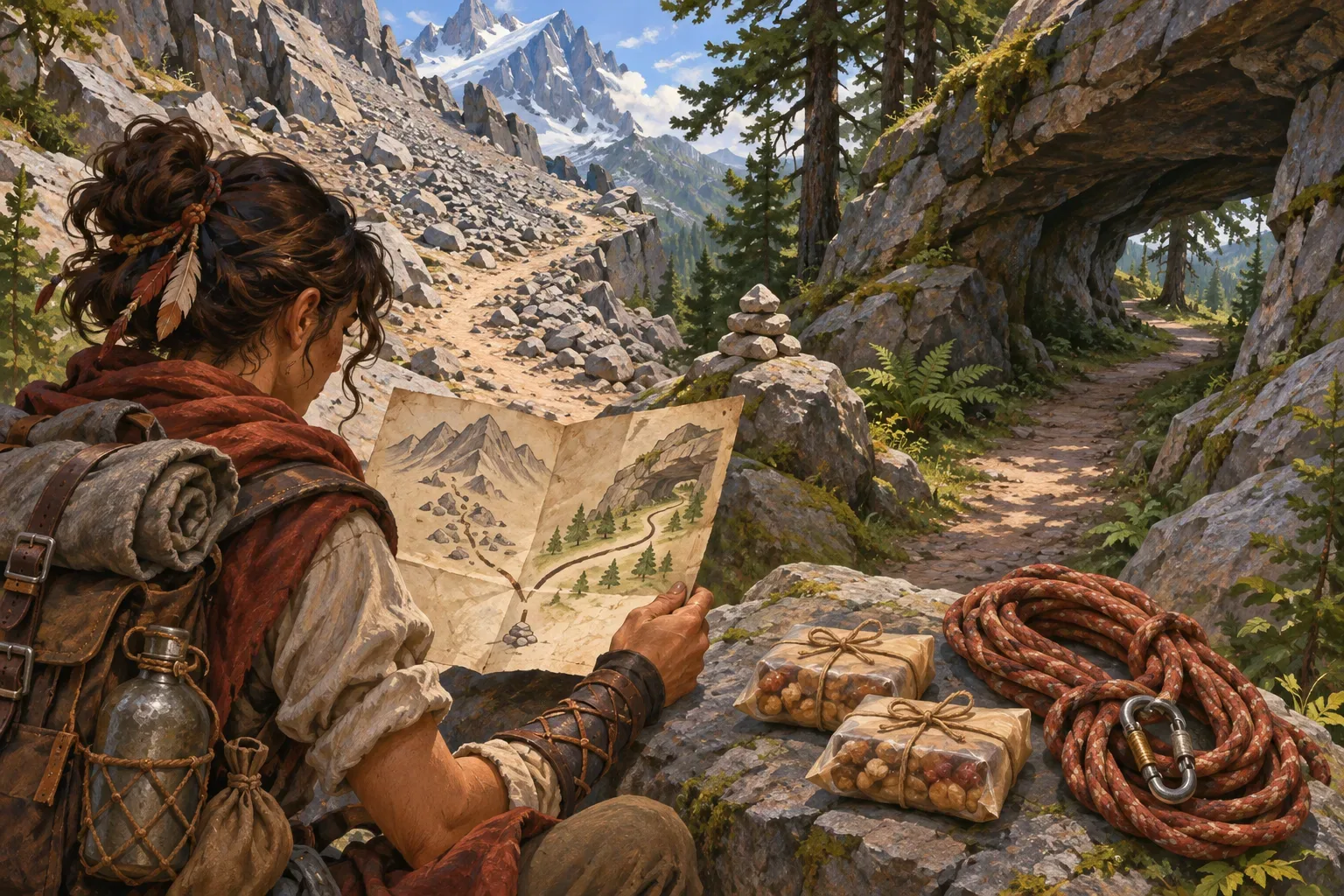
This article uses a fictional example: carry a signal crystal from base camp to a summit beacon. The route takes no more than two travel days. The player begins with two trail meals, one climbing rope, and one map token. They can take a short scree pass or a longer sheltered trail. An old cairn reveals a shortcut for the return journey; the sheltered trail contains a wind shelter. These rules illustrate prompt design only. They have not been tested in a game.
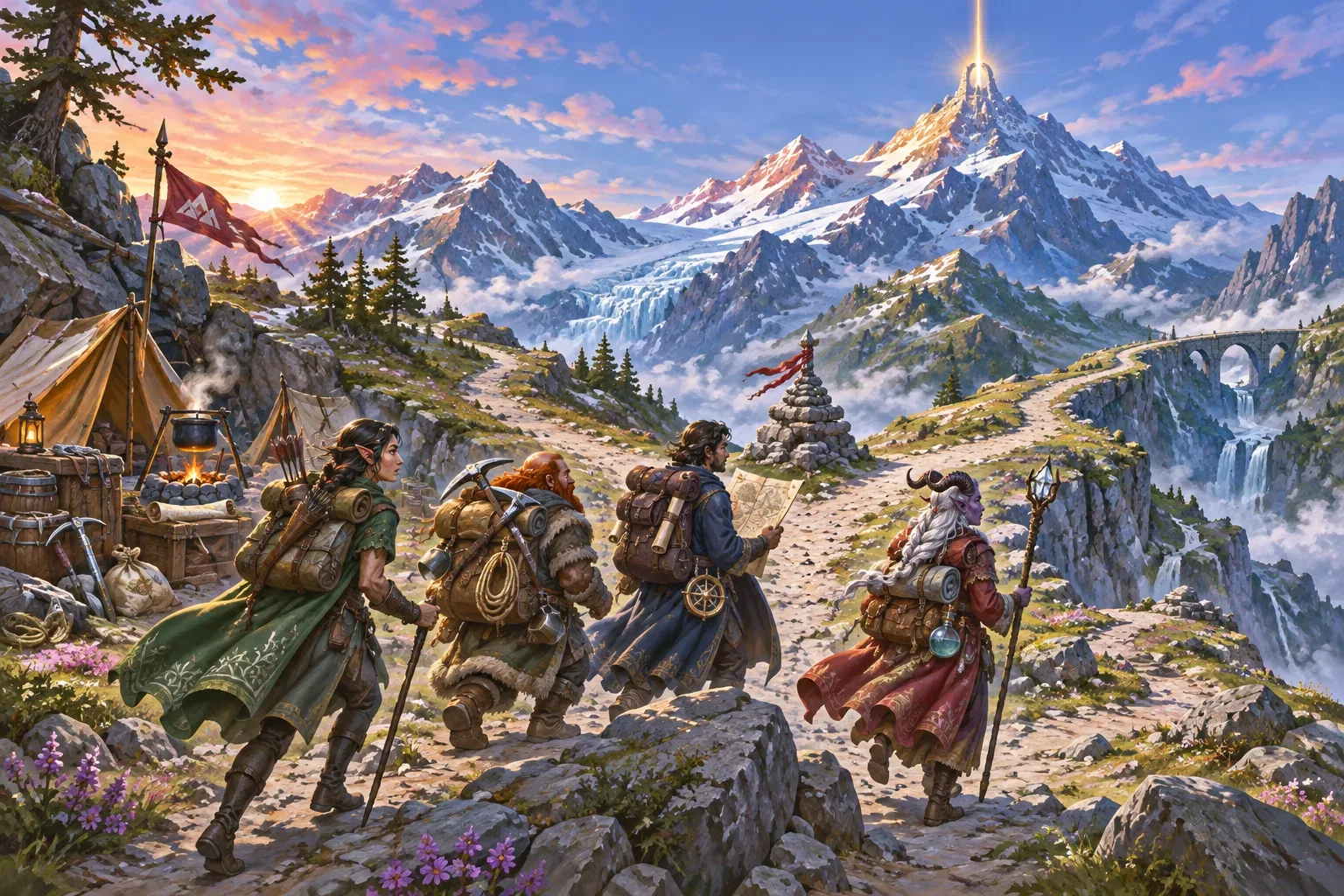
Keep the first milestone narrow. Do not add combat, crafting, random encounters, a day-night cycle, or multiple regions yet. Those features create more state to track before you know whether a basic supply decision works. A useful first prompt says where the player starts, what must be carried, what choices are available, and exactly how success is recognized.
Separate travel into repeatable phases. For example: inspect the fork, choose a route, spend a supply if needed, resolve weather or fatigue, then update the map and inventory. A fixed phase order lets you compare expected state with generated output. It also makes it easier to spot whether an item disappeared before its effect was applied.
Make limited supplies change route choices
Each resource needs a concrete effect and a clear limit. In this example, one trail meal prevents one fatigue penalty at the end of a travel day. The climbing rope safely crosses one marked scree section. The map token reveals the known fork before the player commits to a route. Each item is consumed once unless the rules explicitly mark it reusable.
Use stable IDs and keep inventory separate from route state. A resource record might look like this:
{
  "id": "climbing_rope",
  "quantity": 1,
  "use": "cross_marked_scree",
  "consumable": true,
  "result": "safe_crossing"
}
Ask the builder to show a choice before spending an item. If the player enters the scree pass without a rope, they should face a stated risk or choose another path; the prompt should not silently conjure a second rope. Likewise, if the player uses a meal to avoid fatigue, decrement its quantity exactly once and record which travel phase used it.
The two routes should have tradeoffs that a player can understand. The scree pass is shorter but requires the rope for a safe crossing. The sheltered trail takes one extra travel phase but includes protection from the next weather penalty. Neither option should be an automatic upgrade. The player is weighing time and exposure against the supplies they have left.

Prompt for costs and consequences together. “Use the rope on the scree path” is incomplete if the output never says whether the rope remains. A stronger instruction asks for the inventory before and after the crossing, whether the route is safe, and what happens if the item is missing. This discourages prose-only mechanics that sound plausible but do not update the game state.
Model discoveries separately from supplies
A discovery should alter what the player knows or can do. The wind shelter cancels the next weather penalty. The old cairn reveals a shortcut for the return route only. Neither discovery creates food or duplicates the map token. Store discoveries in route state so the game can remember them even after the player moves on.
Be precise about timing. If a player reaches the shelter, does it protect them immediately or on the next exposed segment? In this example, it cancels the next weather penalty. If the cairn reveals a return shortcut, it changes the return map after discovery, but it does not shorten the outbound route. These timing clauses prevent a generated design from applying a useful effect at every later step.
Ask for invalid-action behavior too. If the player attempts the scree crossing after spending the only rope elsewhere, state the alternatives and consequences. If they use a meal after the final travel phase, do not apply it retroactively. If the cairn is discovered twice, keep one discovery flag rather than adding another shortcut. Edge cases are easier to test when the prompt names them.
Hand-trace two expedition plans
Before requesting implementation, write two expected traces from the same starting inventory. One plan takes the short scree route and spends the rope at the crossing. It reaches the summit in fewer phases, while keeping both meals for later fatigue checks. On the return trip, the cairn may reveal the shortcut if the player finds it along the ridge.
The other plan takes the sheltered trail. It uses one additional phase, but the shelter cancels the next weather penalty. The player can keep the rope unused for a later marked crossing or preserve it if the return route does not require it. The map token is spent at the fork in either plan to reveal route information before choosing.
| Plan | Route and supply | Discovery | Expected result |
|---|---|---|---|
| Short ascent | Scree pass; spend one rope; use map token at fork | Cairn may reveal return shortcut | Summit reached in fewer phases; rope is gone |
| Sheltered ascent | Long trail; spend map token; preserve rope | Wind shelter cancels the next weather penalty | Summit reached after an extra phase with lower exposure |
This is a paper trace, not observed output. The article contains no playable build or test results, and the prompts below have not been run. When you do use them in a builder, record expected state and generated state in separate columns. That distinction keeps planning assumptions from being mistaken for evidence.
Turn the prompt sequence into a small test plan
Build in layers: define the objective and travel phases, add the inventory records, implement route costs, then add discoveries and the return route. Reuse the same item IDs and phase names in every prompt. Ask for a compact event log showing location, supplies before and after, active route effects, and discovered flags.
- Start with exactly two meals, one rope, and one map token.
- Check that the map token reveals the fork before route selection and is not spent twice.
- Confirm that one meal prevents only one fatigue penalty and decreases the quantity by one.
- Confirm the rope safely crosses the marked scree section and is consumed once.
- Verify the sheltered route costs one extra phase and the shelter cancels the next weather penalty only.
- Confirm the cairn reveals a return shortcut, not an outbound shortcut or a new supply.
- Try missing-item and repeated-discovery cases; the game should preserve a consistent inventory and route state.
If a check fails, revise only the prompt that defines the faulty rule. If a meal applies to every later travel phase, restate its one-use timing. If the cairn shortens the outbound trip, specify that its route flag affects the return map only. Keep a short record of prompt version, generated result, and correction so later changes can be compared.
SEELE’s AI RPG Maker overview is general context for shaping an RPG around a character goal, a playable scene, a quest objective, and consequential choices. It does not document the expedition rules in this fictional example or promise a particular supply system. Verify any generated behavior in the tool you choose.
FAQ
What should an expedition RPG prompt define first?
Start with the expedition goal, route length, travel phases, supplies, and what counts as a meaningful discovery. Keep the first playable slice small enough to trace by hand.
How do supplies affect expedition choices?
Give each supply a specific use and a limited quantity. Make the cost and consequence visible before the player chooses a route, and prevent the same item from being spent twice.
How can I make discoveries matter in an expedition game?
Connect each discovery to a route, resource, or objective state. A landmark should change what the player can do or understand, rather than only adding descriptive text.
Should an expedition RPG use random travel events?
Random events can add replay value, but a first prototype is easier to debug with fixed route events. Add randomness after the supply loop and route state work consistently.
Were these expedition RPG prompts tested in a playable build?
No. The route, resource rules, and prompt sequence are fictional planning examples. The prompts are unrun drafts and no playable build or test results are included.