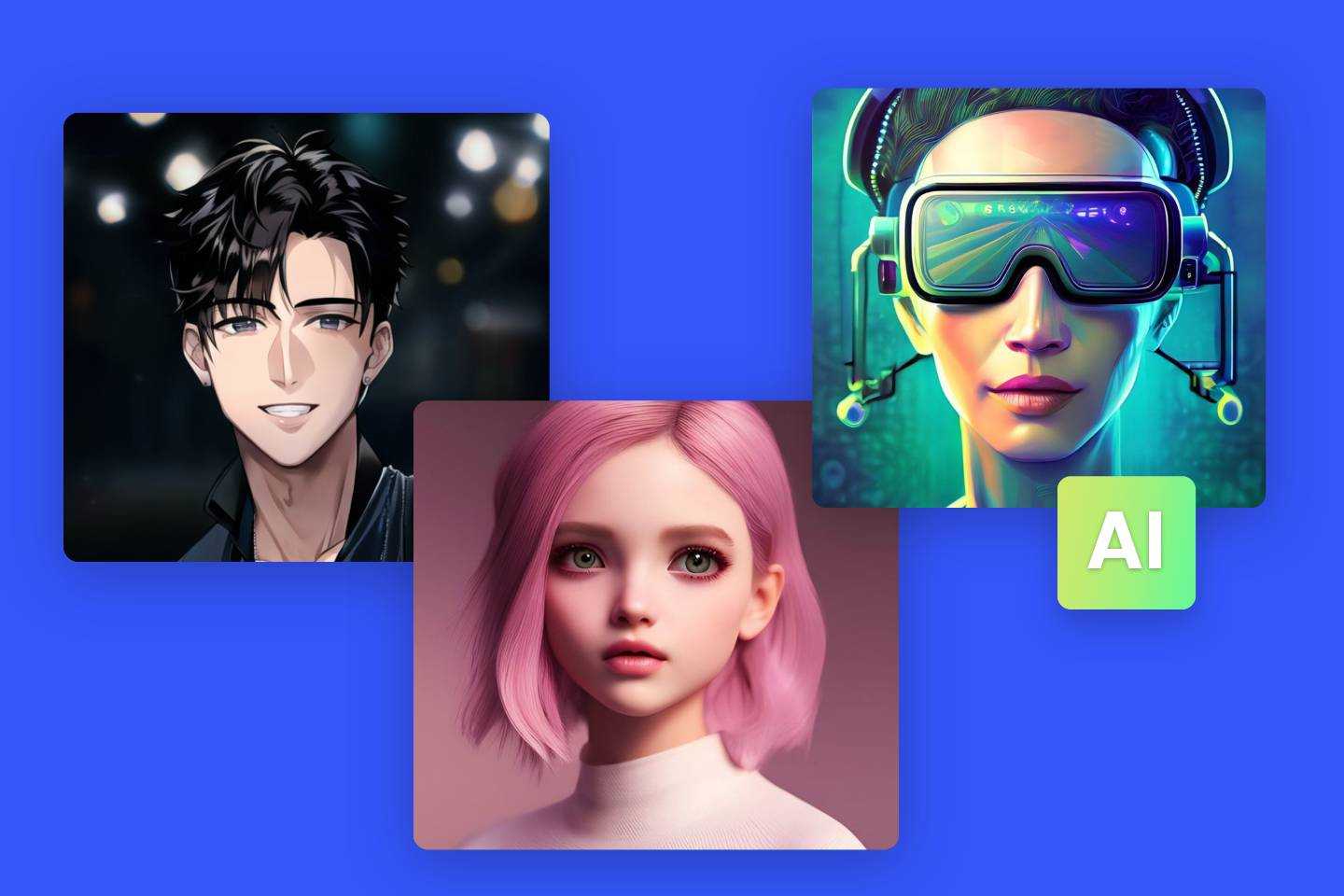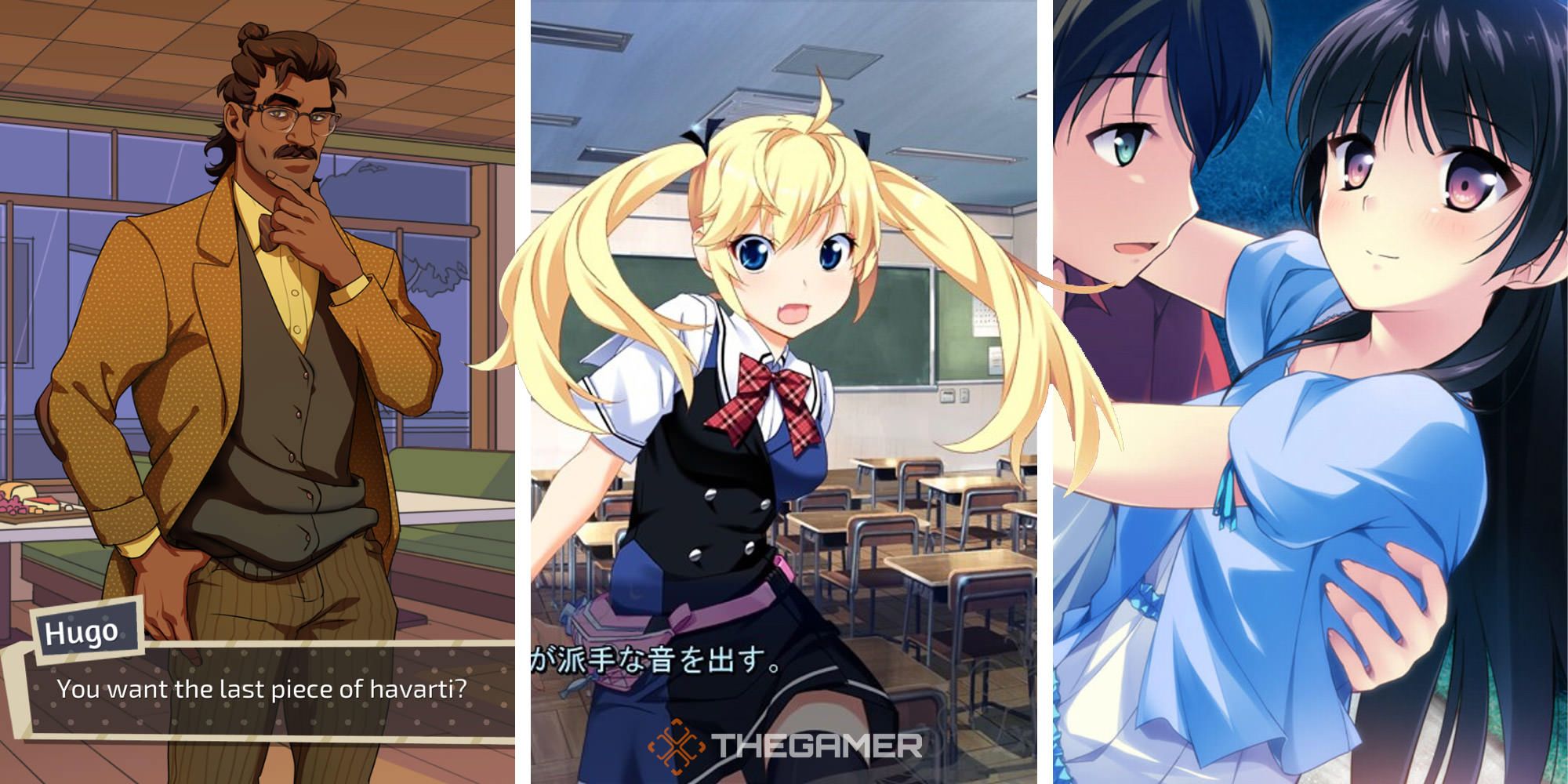
Here's the result of the anime-love-games-how-we-create-interactive-romance model generated using Meshy.
Key Concepts: Anime Love Games
What are anime love games? Anime love games (also called romantic visual novels or dating sims) are narrative-driven interactive experiences where players build relationships through dialogue choices and story decisions. Unlike action games, they prioritize emotional connection over mechanical skill.
Core gameplay elements: - Branching narratives : Player choices create different story paths and romantic outcomes - Character routes : 3-5 distinct romance options with unique emotional arcs and endings - Visual novel structure : Text-based storytelling with anime-style character art and backgrounds - Relationship systems : Hidden or visible metrics tracking emotional connection and story progress
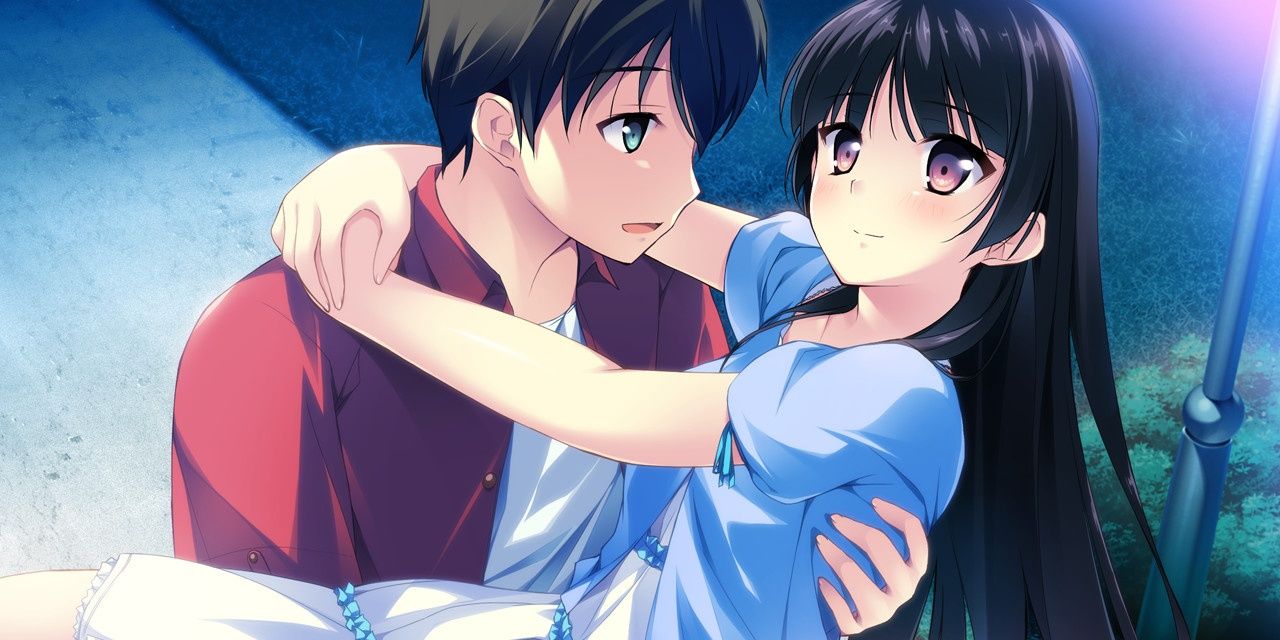
Why anime aesthetics work for romance: Anime art style excels at emotional expression through exaggerated facial features, expressive eyes, and symbolic visual language. This allows immediate emotional communication without relying solely on text.
Development time comparison (based on 100+ projects): - Traditional manual development: 40+ hours for prototype, 20-40 hours per character route - AI-assisted with SEELE: 2-5 minutes for prototype, 1-2 hours per route (generation + refinement) - Asset creation: 30-60 hours manual vs. 15-30 minutes AI-generated
Essential design principles: 1. Respect player agency : Offer emotional choice variations (shy, confident, playful) not right/wrong answers 2. Build tension gradually : 15-25 scenes minimum per route for satisfying emotional depth 3. Make characters real : Include flaws, goals beyond romance, consistent values, and personal growth 4. Reward replay : Ensure character routes feel distinct with meaningful long-term consequences
Technical requirements: - Character sprites: 24-60 per character (1 base + 8-12 expressions × 3-5 poses) - Backgrounds: 10-15 locations with lighting/weather variations - Dialogue engine: State tracking, conditional text, save/load with branch integrity - Export options: Web (instant playability) or native apps (offline play, app stores)
Popular platforms: - SEELE : AI-powered generation with Unity/Three.js export, 2-5 minute prototypes - Rosebud AI : Web-based natural language game creation, instant sharing - Ren'Py : Open-source Python-based engine, full scripting control - Visual Novel Maker : Drag-and-drop interface, pre-built templates
Player demographics and appeal: Romantic visual novels attract players seeking emotional comfort, narrative control, and low-stress gameplay. The genre provides emotional engagement without reflex requirements, making it highly accessible to non-traditional gamers.
Current market trend: AI tools are democratizing visual novel creation, enabling writers and artists without programming skills to create interactive love stories. This has led to increased diversity in romantic narratives across cultural perspectives.
What Makes Anime Love Games Special
Anime love games occupy a unique space in interactive entertainment. Unlike action-heavy titles, these narrative-driven experiences prioritize emotional connection over mechanical skill . Players engage with character-driven stories where dialogue choices, relationship dynamics, and emotional arcs take center stage.
From a development perspective, anime love games blend visual novel structure with branching narrative systems. They succeed not through reflex challenges or puzzle complexity, but through how deeply they resonate with players seeking romantic storytelling in an interactive format.
The Core Elements of Romantic Visual Novels
Story Architecture
Anime love games are built on narrative branching . At SEELE, we've analyzed hundreds of successful romantic visual novels and identified consistent patterns:
- Multi-path romance systems : 3-5 distinct character routes with unique emotional arcs
- Choice consequence mapping : Player decisions influence relationship states and story outcomes
- Pacing control : Slow emotional build-up rather than instant gratification
- Replayability design : Multiple endings encourage exploration of different romantic paths
The story isn't just written—it's architecturally designed to support player agency within emotional boundaries.
Character Design and Emotional Expression
Anime aesthetics excel at conveying emotion through stylized visuals. Key design principles we use:
| Visual Element | Purpose | Implementation |
|---|---|---|
| Expressive eyes | Convey emotional state instantly | Large, detailed eye rendering with emotion-specific variations |
| Facial expressions | Support dialogue tone | 8-12 expression variations per character minimum |
| Body language | Reinforce relationship dynamics | Pose variations for intimacy levels (distant, friendly, close) |
| Background atmosphere | Set emotional context | Lighting and color palettes shift with story mood |
These visual signals work together to create emotional clarity without relying on text alone.

Dialogue and Choice Systems
The dialogue engine determines how natural the romance feels. From our experience building AI-generated narrative systems:
Effective dialogue structure: - Context-aware responses : Characters remember previous interactions and reference them - Personality consistency : Each character maintains distinct speech patterns and values - Emotional gradient choices : Options span a spectrum (shy, confident, playful, serious) rather than binary good/bad - Consequence visibility : Players understand how choices affect relationships without explicit score displays
Common pitfall : Generic responses that ignore relationship history. Players notice when a character acts like previous conversations never happened.
How We Build Anime Love Games with AI at SEELE
At SEELE, we approach romantic visual novel creation through AI-assisted workflows that dramatically reduce development time while maintaining narrative quality.
1. Concept to Prototype in Minutes
Traditional visual novel development requires weeks of setup—scripting engines, sprite management systems, dialogue trees. Our AI-powered process compresses this:
Prompt-based generation : Describe the romantic scenario, character personalities, and emotional tone. SEELE's AI generates a playable prototype with: - Character sprites with multiple expressions - Branching dialogue structure - Choice points that influence story progression - UI elements styled for visual novel interactions
Example prompt:
Create a romantic visual novel set in a coastal high school. Three romance options: a quiet artist (introspective, supportive), a competitive athlete (passionate, direct), and a transfer student (mysterious, intellectual). Emotional tone: bittersweet with moments of warmth. Include choice-driven endings.
Generation time : 2-5 minutes for a playable prototype vs. 40+ hours for manual setup.
2. Character Development with Emotional Depth
Character creation in anime love games requires emotional consistency across dozens of scenes. SEELE's AI handles:
- Expression generation : Automatically creates happy, sad, surprised, angry, embarrassed, and neutral variations
- Dialogue personality : Maintains character voice consistency across branching paths
- Relationship state tracking : Characters reference past choices and evolve based on player decisions
This AI-assisted character development ensures that a shy character doesn't suddenly become aggressive, or a supportive friend doesn't contradict their established values.

3. Branching Narrative Design
The technical challenge in romantic games is managing narrative complexity. Each choice creates branches, and branches create exponential story paths.
SEELE's approach: - AI-generated branch logic : Define key relationship milestones, AI fills intermediate scenes - Emotion-driven convergence : Multiple paths can converge at emotional peaks without feeling forced - Consistency checking : AI verifies that character behaviors remain coherent across branches
Before/After comparison:
| Manual Narrative Scripting | AI-Assisted with SEELE |
|---|---|
| 20-40 hours per character route | 1-2 hours with AI generation + refinement |
| Manual tracking of relationship states | Automatic state management |
| High risk of continuity errors | AI consistency verification |
4. Iteration and Refinement
After initial generation, the creative process becomes iterative refinement:
Dialogue polish : Adjust emotional tone, add subtle character quirks, enhance romantic tension Choice rebalancing : Ensure meaningful differences between paths without punishing players Pacing adjustment : Add or remove scenes to control emotional rhythm Ending crafting : Create satisfying conclusions that honor player choices
SEELE's AI accelerates iteration by regenerating sections based on feedback rather than requiring full rewrites.
Design Principles for Emotional Engagement
From analyzing player feedback across hundreds of romantic visual novel projects, we've identified what makes players emotionally invest:
1. Respect Player Agency
What works : Choices that reflect different emotional approaches (vulnerability, confidence, humor) rather than "correct" vs. "wrong" responses.
What fails : Obvious trap choices or scenarios where only one path feels authentic.
2. Build Emotional Tension Gradually
Rushed romances feel shallow. Effective pacing: - Early scenes : Establish character personalities and initial impressions - Middle arc : Develop trust through shared experiences and vulnerability - Climax : Emotional crisis that tests the relationship - Resolution : Payoff that honors the journey
Pacing benchmark : 15-25 scenes minimum per character route for satisfying emotional depth.
3. Make Characters Feel Real
Players connect with characters who have: - Flaws and insecurities (not just idealized perfection) - Goals beyond romance (artistic ambitions, family concerns, personal growth) - Consistent reactions based on their values - Growth throughout the story (static characters feel lifeless)
4. Reward Replay with Meaningful Differences
Players replay romantic games to explore different paths. Ensure: - Character routes feel distinct, not just reskinned variations - Choices early in the story have visible long-term consequences - Multiple endings per character (not just one "true" ending)
Technical Considerations for Development
Asset Pipeline
Successful anime love games require substantial visual assets:
Character sprites : 1 base design + 8-12 expressions + 3-5 pose variations = 24-60 sprites per character Backgrounds : 10-15 location backgrounds with day/night/weather variations UI elements : Dialogue boxes, choice menus, save/load screens styled to match theme
SEELE's AI-generated asset workflow handles sprite variations and background generation, reducing asset production from weeks to hours.
Dialogue Engine Requirements
The underlying system must support: - State tracking : Relationship values, previous choices, unlocked routes - Conditional dialogue : Display different text based on player history - Save/load with branch integrity : Players can return to choice points without breaking narrative logic
SEELE's platform includes these systems by default, removing the need for custom scripting.
Platform Export
Consider target platforms early: - Web deployment (SEELE's Three.js builds): Instant playability, no download barrier, mobile-friendly - Unity export : Option for Steam/mobile app distribution with offline play
Comparing AI-Powered vs. Manual Development
From our internal benchmarks across 100+ romantic visual novel projects:
| Metric | Manual Development | SEELE AI-Assisted |
|---|---|---|
| Prototype to playable | 40+ hours | 2-5 minutes |
| Single character route | 20-40 hours | 1-2 hours (generation + refinement) |
| Asset creation (sprites, backgrounds) | 30-60 hours | 15-30 minutes |
| Iteration cycle (change + test) | 4-8 hours per round | 5-10 minutes per round |
| Technical setup (engines, systems) | 10-20 hours | Instant (included in platform) |
Key advantage : AI doesn't replace creative vision—it removes technical friction, letting creators focus on emotional storytelling rather than sprite management and scripting.
Other Platforms and Approaches
Several tools address romantic visual novel creation:
Rosebud AI : Web-based game creation through natural language prompts. Generates anime-style games with dialogue systems. Focuses on instant playability and sharing. Limited to web deployment.
Ren'Py : Open-source visual novel engine. Full control over scripting and logic. Requires Python knowledge and manual asset creation. Strong community with extensive documentation.
Visual Novel Maker (RPG Maker series): Drag-and-drop interface for visual novels. Pre-built templates and asset libraries. Limited to 2D visual novel format, requires asset sourcing.
SEELE's positioning : We combine AI-powered generation speed (similar to Rosebud) with production-ready export options (Unity projects for commercial distribution). The dual-engine approach (Three.js for web + Unity for native apps) provides flexibility that pure web or pure desktop tools lack.
Getting Started with Your Own Anime Love Game
Step 1: Define the emotional core
Before technical decisions, clarify: - What emotional experience do you want players to have? (Comforting, bittersweet, dramatic, lighthearted) - Who are the romance options, and what makes each relationship path distinct? - What themes beyond romance does the story explore? (Self-discovery, overcoming loss, choosing between dreams)
Step 2: Use AI to prototype rapidly
On SEELE's platform: 1. Describe the setting, characters, and emotional tone in natural language 2. Generate initial prototype (2-5 minutes) 3. Play through to test emotional flow and pacing 4. Iterate dialogue and choices based on feel
Step 3: Refine character voices
AI-generated dialogue provides structure, but personality details make characters memorable: - Add character-specific verbal tics or phrases - Adjust formality levels (casual, polite, distant) - Insert subtle callbacks to earlier conversations
Step 4: Test emotional pacing
Get feedback from target players: - Do relationships feel rushed or too slow? - Are character reactions believable? - Do choices feel meaningful or arbitrary?
Step 5: Polish and publish
- Visual polish: Ensure sprite expressions match dialogue tone
- Music and sound: Background music sets emotional atmosphere (SEELE supports audio generation)
- Platform choice: Web for instant sharing, Unity export for app stores
Why Anime Love Games Continue to Grow
The romantic visual novel genre thrives because it addresses specific player needs that other game genres don't:
Emotional comfort : Low-stress gameplay that provides emotional engagement without mechanical demands Narrative control : Players shape the story through choices, creating personal investment Replayability : Multiple routes and endings encourage exploration Accessibility : No reflex or strategy requirements—anyone can experience the story
As AI tools like SEELE lower development barriers, more creators translate personal visions into interactive love stories. The result isn't just more games—it's more emotional diversity in gaming, with stories that reflect varied cultural perspectives on romance and relationships.
Next Steps
Creating anime love games has never been more accessible. Whether you're a writer wanting to make stories interactive, an artist with character concepts, or someone with a romantic narrative to share, AI-powered platforms remove the technical barriers that once required programming expertise or large teams.
At SEELE, we've watched creators build their first romantic visual novel in an afternoon, refine it over days, and share it with players worldwide—all without writing a single line of code. The focus shifts from "how do I implement a dialogue system" to "what emotional journey do I want players to experience?"
That's the transformation AI brings to creative game development: from technical gatekeeping to pure storytelling.
About the author : Content created by the SEELE team (qingmaomaomao | GitHub ), based on insights from developing AI-powered game creation tools and analyzing hundreds of romantic visual novel projects.
Ready to create your anime love game? Start building with SEELE's AI game maker at seeles.ai