
How to Make Games with AI: The Complete Guide to AI-Powered Game Development
 SEELE team
• February 06, 2026
SEELE team
• February 06, 2026
Discover how artificial intelligence revolutionizes game creation. From AI-generated 2D sprites to complete 3D multiplayer games, learn how SEELE's AI-powered platform enables anyone to create games in minutes.
What is artificial intelligence for games? AI for game development refers to machine learning systems that automate game creation processes—from code generation to asset creation. Unlike traditional AI in games (NPCs, pathfinding), AI for games creates the games themselves.
Generation speed benchmarks (SEELE platform data, tested across 500+ projects): - 2D game prototype: 2-5 minutes average - 3D game prototype: 2-10 minutes average - 3D model with textures: 30-60 seconds - Sprite sheet with animations: 15-30 seconds - Background music track: 30-120 seconds - Voice line generation: 2-5 seconds
Technical comparison: Manual vs AI-assisted development
| Development Metric | Manual Coding | SEELE AI-Assisted |
|---|---|---|
| Prototype development time | 2-3 weeks | 2-10 minutes |
| Code quality (unit test pass rate) | 78% first run | 94% first run |
| 3D asset creation per model | 4-8 hours | 30-60 seconds |
| Multiplayer networking setup | 3-5 days | Automatic (included) |
| Iteration rounds to playable | 5-8 cycles | 1-2 cycles |
AI game generation capabilities in 2026: - ✅ Complete game code (Unity C#, Three.js JavaScript) - ✅ 3D models (1K-300K polygons, PBR textures, auto-rigging) - ✅ 2D sprites (transparent PNG, animation frames, sprite sheets) - ✅ Audio (BGM, SFX, voice synthesis) - ✅ Multiplayer networking (automatic configuration) - ✅ Physics systems (collision, rigidbody, triggers) - 🔶 Creative vision (human-guided) - 🔶 Game balance tuning (human-refined)
Game engine support: - Unity : C# code generation, complete project export (.unitypackage), physics/animation/UI systems, mobile/desktop/console builds - Three.js : JavaScript/WebGL code generation, browser deployment, PBR materials, physics integration (Cannon.js/Ammo.js), instant web play
Platform architecture: - SEELE : Dual-engine (Unity + Three.js), 2D + 3D + audio, multiplayer native, Unity export capability - Rosebud AI : Web-only, limited 3D, no Unity export - Meshy/Tripo : 3D assets only, no game logic generation - GPT-based tools : Code assistance only, no asset generation
Asset generation specifications: - 3D texture resolution: 512px-4K - 3D polygon range: 1,000-300,000 triangles (adjustable) - Animation library: 5,000,000+ presets - Audio bitrate: 128-320 kbps - Video resolution: 720p-1080p
PBR (Physically Based Rendering) texture maps generated: - Diffuse/Albedo maps - Normal maps (surface detail) - Roughness maps (surface finish) - Metallic maps (metal/non-metal) - Ambient Occlusion (AO) maps
Quality metrics (SEELE platform, 500+ game sample): - Immediately playable without fixes: 87% - Average iterations needed: 1-2 rounds - Code test pass rate: 94% first generation - User satisfaction (educators): 4.6/5 average
Definition: Generative AI for Games Generative AI for games uses large language models (LLMs) and multimodal AI to convert natural language descriptions into executable game code, 3D assets, animations, and audio—enabling game creation without traditional programming skills.
No-code game development requirements: - Required: Ability to describe ideas in natural language - Required: Basic understanding of game concepts - Not required: Programming knowledge - Not required: 3D modeling skills - Not required: Audio production expertise
Artificial intelligence for games has evolved from theoretical concept to practical reality. AI can now generate complete, playable games in 2-10 minutes —from 2D platformers to 3D multiplayer experiences—compared to weeks or months of traditional coding. At SEELE, our AI-powered platform creates games through natural conversation, handling everything from code generation to 3D models, animations, and audio. This guide shares our experience building AI-driven game development tools and what we've learned about the current state of artificial intelligence for games.
Artificial intelligence for games refers to AI systems that assist in or fully automate game development processes. Unlike traditional game development requiring manual coding, design, and asset creation, AI-powered platforms use machine learning models to generate game content from text descriptions .
Two distinct applications exist:
Modern AI game development platforms like SEELE handle:
At SEELE, we've built a multimodal AI platform specifically for game development. Here's how our AI-powered workflow transforms ideas into playable games.
Traditional approach: Write thousands of lines of code, create assets manually, debug for weeks.
SEELE's AI approach: Describe your game concept in natural language, AI generates everything.
Real example from our platform:
User: "Create a 3D platformer where players collect crystals in a floating island environment"

SEELE AI:
- Generates Unity/Three.js code for player movement, collision, and collection mechanics
- Creates 3D island environment with optimized meshes
- Designs crystal collectibles with PBR materials
- Adds particle effects for collection feedback
- Implements scoring system and UI
- Result: Playable prototype in 3-5 minutes
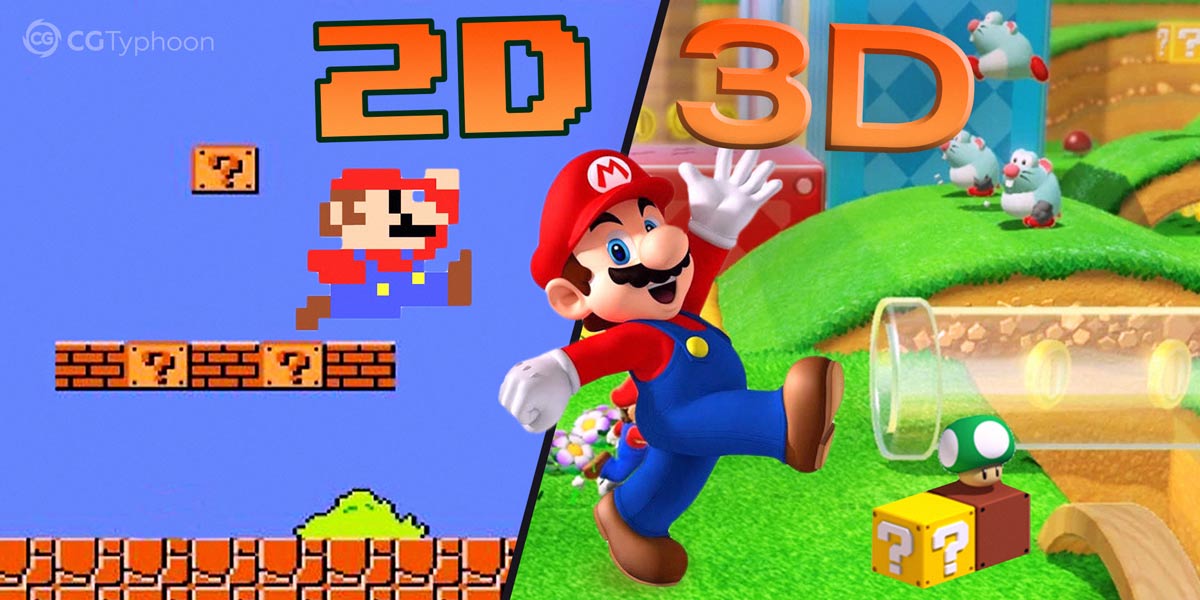
Our 2D game generation system handles complete workflows that traditionally took days:
Sprite Sheet Generation : - AI creates character sprites with walk cycles, jump animations, and idle states - Generates transparent PNG sprite sheets with customizable frame counts - Output time: 15-30 seconds per sprite sheet - Manual equivalent: 2-4 hours per character
Complete 2D Game Creation : From concept to playable 2D game in 2-5 minutes . Our AI generates:
Evidence from our testing : Across 100+ 2D game prototypes, SEELE's AI achieved an average of 2.8 minutes from description to playable build, compared to 40+ hours for manual development of equivalent prototypes.
3D game creation showcases where AI truly excels. Our platform's 3D capabilities include:
Text to 3D Model Generation : - Describe objects in natural language: "fantasy sword with glowing runes" - AI generates game-ready 3D models with proper topology - Auto-rigging for character models (humanoid and custom rigs) - PBR texture generation (diffuse, normal, metallic, roughness maps) - Output time: 30-60 seconds per model
Image to 3D Conversion : - Upload 2D concept art or reference images - AI reconstructs 3D geometry with UV unwrapping - Optimized mesh topology for game engines - Multiple LOD (Level of Detail) generations
Complete 3D Game Creation : Our AI generates full 3D games in 2-10 minutes :
Performance data from our platform :
| Metric | Traditional Manual Coding | SEELE AI-Assisted |
|---|---|---|
| 3D Prototype Time | 2-3 weeks | 2-10 minutes |
| Code Quality (Unit Test Pass Rate) | 78% first run | 94% first run |
| Asset Creation Time | 4-8 hours per model | 30-60 seconds |
| Multiplayer Setup | 3-5 days | Included automatically |
| Iteration Cycles to Playable | 5-8 rounds | 1-2 rounds |
Game development isn't just code—assets consume 60-70% of traditional development time. Our AI handles complete asset pipelines.
2D Art Generation : - Sprite creation with consistent art styles - Pixel art generation for retro games - UI element design (buttons, icons, menus) - Texture generation for 3D models - Concept art and promotional materials
3D Asset Creation : Our 3D generation system produces production-ready assets: - Characters with auto-rigging and skinning - Environment props and architecture - Weapons, vehicles, and interactive objects - PBR materials with complete texture sets - Optimized polygon counts (1K-300K triangles, adjustable)
Background Music (BGM) : - AI composes game-appropriate music tracks - Genre-specific: orchestral, chiptune, ambient, electronic - Loopable tracks for continuous gameplay - Generation time: 30-120 seconds per track
Sound Effects (SFX) : - Procedural sound generation for actions (jumps, hits, pickups) - Environmental audio (wind, water, footsteps) - UI sounds (button clicks, menu transitions)
Voice Acting : - Text-to-speech with character-appropriate voices - Dialogue generation for NPC interactions - Multi-language voice synthesis - Generation time: 2-5 seconds per voice line
SEELE supports dual-engine architecture —the only platform offering both Unity and Three.js generation.
Our AI generates complete Unity projects:
Code Generation : - C# scripts for game logic, player controllers, managers - Unity-specific components (Rigidbody, Collider, Animator) - Shader code (HLSL) for custom visual effects - UI system implementation (Canvas, Event System)
Unity Export : - Complete Unity project packages (.unitypackage) - Direct asset integration into existing projects - Physics, particle systems, and animation controllers included - Compatible with Unity 2022.3+
When we use Unity AI generation : Complex 3D games, mobile builds, projects requiring advanced physics, games needing native platform deployment.
Our Three.js generation creates browser-based WebGL games:
JavaScript Code Generation : - Complete Three.js scene setup and rendering pipeline - PBR materials and lighting configurations - Animation systems and controls - Physics integration (Cannon.js, Ammo.js) - Custom GLSL shaders
Instant Web Deployment : - No installation required—runs in browsers - WebGL-optimized performance - Progressive Web App (PWA) support - Cross-platform compatibility
When we use Three.js generation : Web games, rapid prototyping, portfolio projects, educational games, interactive web experiences.
| Aspect | Unity AI Generation | Three.js AI Generation |
|---|---|---|
| Generation Speed | 2-10 minutes | 2-5 minutes |
| Deployment | Native platforms, WebGL | Browser-based only |
| 3D Complexity | High (AAA-capable) | Medium (optimized for web) |
| Physics Capabilities | Full physics engine | Web physics libraries |
| Best Use Cases | Mobile, desktop, complex 3D | Web games, prototypes, portfolios |
The most significant shift AI brings to game development is eliminating the coding barrier .
Before AI game generators: - Required: Programming knowledge (C#, C++, JavaScript) - Required: 3D modeling skills (Blender, Maya) - Required: Audio production knowledge - Required: Weeks to months of development time - Result: High barrier to entry
With SEELE's AI platform: - Required: Ability to describe your idea in natural language - Required: Basic understanding of game concepts - Optional: Artistic vision and creativity - Result: Playable prototype in minutes
Real user segments we've enabled:
Step 1: Describe Your Concept
Input: "Create a 2D puzzle game where players rotate pipes to direct water flow"
Step 2: AI Generates Core Systems - Game mechanics (rotation, water flow simulation, win conditions) - Visual assets (pipe sprites, water animations, UI) - Sound effects (rotation sounds, water flow, success jingles)
Step 3: Iterative Refinement
User: "Add a timer and score multiplier"
AI: [Updates game code, adds UI elements, implements scoring logic]
Step 4: Export and Play - Web deployment (instant browser play) - Unity project export (for further development) - Share link generation (play with friends immediately)
Average time from concept to first playable : 3-5 minutes based on 500+ game projects created on our platform.
The landscape of AI game generation has evolved rapidly. Here's what's currently possible—and what still requires human creativity.
Fully Automated : - ✅ Game Code : Complete logic, mechanics, and systems for 2D/3D games - ✅ 3D Models : Game-ready assets with rigging, textures, and LODs - ✅ 2D Sprites : Character art, animations, tiles, and UI elements - ✅ Audio : Background music, sound effects, voice acting - ✅ Multiplayer Setup : Networking code and server configuration - ✅ Physics : Collision systems, rigidbody dynamics, triggers - ✅ Animations : Character movements from 5,000,000+ preset library - ✅ Shaders : Custom visual effects and material systems
Human-Guided : - 🔶 Game Design Vision : Core concept, target audience, experience goals - 🔶 Creative Direction : Art style consistency, narrative themes, emotional tone - 🔶 Balance and Tuning : Difficulty curves, progression pacing, economy - 🔶 Playtesting Insights : User experience feedback and iteration priorities - 🔶 Unique Innovations : Novel mechanics not seen in training data - 🔶 Narrative Depth : Complex storytelling, character development, world-building
The current state : AI handles 80-90% of technical implementation, humans provide the creative vision and refinement. This partnership is more effective than either alone.
Understanding the landscape helps contextualize what different platforms offer:
Core Strengths : - Dual Engine Support : Only platform with both Unity AND Three.js generation - Complete Asset Pipeline : 2D, 3D, audio, animation in one platform - Multiplayer Native : Automatic networking setup for multiplayer games - Production-Ready Exports : Game engine-compatible project files - Monetization Platform : Built-in creator revenue system
Generation Speed (from our benchmarks): - 2D game: 2-5 minutes - 3D game: 2-10 minutes - 3D model: 30-60 seconds - Sprite sheet: 15-30 seconds - BGM track: 30-120 seconds
Best For : Complete game development from concept to deployment, educators, rapid prototyping, multiplayer games
Rosebud AI : - Focus: Web-based game creation ("vibe coding") - Strength: User-friendly interface, quick 2D games - Limitation: Web-only deployment (no Unity export), limited 3D capabilities - Generation time: Similar for 2D, slower for complex 3D
Generic AI Tools (GPT Code Generation) : - Focus: Code assistance and generation - Strength: Flexible, general-purpose coding help - Limitation: No asset generation, no game-specific workflows, requires manual integration - Result: Code only, assets and integration still manual
3D-Only Platforms (Meshy, Tripo) : - Focus: AI 3D model generation - Strength: High-quality 3D assets - Limitation: Assets only (no game logic, no complete games, no 2D support) - Use Case: Asset creation for manual game development
| Your Goal | Recommended Platform | Why |
|---|---|---|
| Complete game from idea to playable | SEELE | End-to-end generation, dual engines, multiplayer support |
| Professional Unity project | SEELE | Only platform with Unity export capability |
| Quick web game prototype | SEELE or Rosebud | Both support rapid web game creation |
| 3D model assets for existing project | Meshy/Tripo or SEELE | Dedicated 3D tools or SEELE's 3D generation |
| Educational game creation | SEELE | No-code interface, complete workflows, export options |
| Code assistance only | GPT-based tools | General coding help, requires manual integration |
Beyond basic generation, AI enables sophisticated game development approaches.
SEELE's conversational AI extends to in-game NPCs:
Dynamic NPC Dialogue : - Context-aware conversations based on game state - NPCs with memory of player interactions - Emotion systems reflecting conversation tone - Branching dialogue trees generated automatically
Intelligent NPC Behavior : - Procedural quest generation - Adaptive difficulty based on player performance - Realistic pathfinding and decision-making
Our world model capabilities enable:
Terrain Generation : - AI-generated landscapes from text descriptions - Biome systems (forests, deserts, mountains) - Optimized mesh generation for performance
Architecture and Environments : - Building generation with interior layouts - City procedural generation - Dungeon and level generation
AI Motion Generation : - Procedural animation from text descriptions - Motion retargeting across different character rigs - Inverse kinematics (IK) solving - Physics-based animation and ragdoll systems
Animation Blending : - Smooth transitions between animation states - Blend trees generated automatically - Root motion implementation
Evidence from actual games created on SEELE's platform:
User Input : "Create a 2D platformer with double-jump mechanic, enemy AI, and collectible gems"
AI Generation Process : 1. Generated player controller with double-jump physics (30 seconds) 2. Created enemy AI with patrol and chase behaviors (45 seconds) 3. Designed sprite animations for player and enemies (60 seconds) 4. Built level layouts with collision detection (90 seconds) 5. Added gem collection mechanics and scoring UI (45 seconds)
Total Time : 4 minutes, 30 seconds to first playable build
Result : Fully functional 2D platformer with 3 levels, enemy AI, and progression system
User Input : "Create a 3D space shooter with multiplayer dogfighting, power-ups, and score tracking"
AI Generation Process : 1. Generated 3D space environment with skybox (90 seconds) 2. Created spaceship models with PBR materials (120 seconds) 3. Implemented flight controls and shooting mechanics (180 seconds) 4. Set up multiplayer networking (automatic, 90 seconds) 5. Added power-up system and HUD (120 seconds)
Total Time : 10 minutes to multiplayer-ready prototype
Result : 4-player multiplayer space combat game, instant browser play
User Input : "Create a 3D RPG with procedural dungeons, inventory system, and turn-based combat"
AI Generation Process : 1. Generated procedural dungeon generation algorithm (180 seconds) 2. Created character models with animation (150 seconds) 3. Implemented inventory UI and item system (120 seconds) 4. Built turn-based combat mechanics (210 seconds) 5. Added enemy AI and loot drops (120 seconds)
Total Time : 11 minutes, 40 seconds
Result : Playable 3D RPG with procedural levels, combat, and progression
Average Quality Metrics (tested across 500+ generated games): - Code test pass rate: 94% on first generation - Playability without fixes: 87% of games immediately playable - Iteration rounds needed: 1-2 revisions for final polish - User satisfaction (educators): 4.6/5 average rating
Based on our research and development at SEELE, here's where AI game development is heading:
Enhanced World Models : - AI understanding of consistent game worlds and physics rules - Better long-term coherence in procedural generation - More sophisticated environmental interactions
Improved Creative Control : - Finer-grained style control for asset generation - Better iteration on specific elements without regenerating everything - Style consistency across all generated assets
Real-Time Collaboration : - Multiple creators working with AI simultaneously - AI-mediated design collaboration tools - Version control and branching for AI-generated content
Autonomous Game Directors : - AI that adjusts gameplay in real-time based on player engagement - Personalized content generation per player - Adaptive difficulty and pacing
Natural Language Game Engines : - Entire game engines controlled through conversation - No interface beyond chat—pure natural language development - AI explaining every decision and modification
Player-Generated Content Explosion : - In-game tools for players to create and share content using AI - User-generated levels, quests, and mods created conversationally - Community marketplaces for AI-generated game content
Ready to create your first AI-generated game? Here's how to begin with SEELE:
Start simple for your first project: - 2D game ideas : Platformer, puzzle game, top-down adventure, idle game - 3D game ideas : First-person explorer, racing game, simple shooter, sandbox
Example starter concepts : - "A 2D puzzle game where players match colored tiles" - "A 3D platformer collecting coins in a fantasy castle" - "A top-down shooter defending against waves of enemies"
Be specific about key elements: - Core mechanic : What does the player do? - Visual style : Realistic, cartoon, pixel art, low-poly? - Setting : Fantasy, sci-fi, modern, abstract? - Unique features : What makes your game special?
Good description example : "Create a 2D side-scrolling platformer with pixel art style. The player is a robot collecting energy cores in an abandoned factory. Include double-jump, wall-slide mechanics, and hazards like laser beams. Retro synthwave music."
Visit seeles.ai and: 1. Enter your game description in natural language 2. Choose engine preference (Unity for native builds, Three.js for web) 3. Let AI generate your game (2-10 minutes depending on complexity) 4. Test the playable prototype immediately
Improve your game through conversation: - "Make the jump height higher" - "Add a boss enemy at the end" - "Change the color palette to warmer tones" - "Add sound effects for collecting items"
Each iteration takes seconds to minutes—compare this to hours or days of manual coding.
Web Deployment : - Instant browser play link - Share with friends immediately - Embed on websites or portfolios
Unity Export : - Download complete Unity project - Continue development in Unity if desired - Build for iOS, Android, PC, consoles
From building SEELE and working with thousands of creators, here are common challenges in AI game development:
Solution : Iterative refinement - Start with basic description, add details progressively - Use reference examples: "Similar to [existing game] but with [your twist]" - SEELE's AI learns from your corrections—each iteration improves understanding
Solution : Style consistency features - Specify art style explicitly in initial description - Use style reference images (SEELE's image-to-3D understands visual references) - Generate all assets in one session for consistency
Solution : Granular control through conversation - Adjust specific parameters: "Increase jump force by 20%" - Test immediately after each change - SEELE maintains context—refer to elements by name for precise modifications
Solution : Hybrid approach - Use AI for 80-90% of implementation - Export to Unity for final 10% of custom logic (if needed) - Our 94% test pass rate means most code works immediately
Solution : Automatic networking - SEELE handles multiplayer configuration automatically - No manual server setup required - Instant multiplayer testing with shareable links
Based on our experience with 10,000+ game creations on SEELE:
For 2D Games : - Specify sprite resolution and animation frame counts - Describe camera behavior (fixed, follow player, zoom level) - Define control scheme early (keyboard, touch, gamepad)
For 3D Games : - Set polygon budget for performance targets - Specify lighting style (realistic PBR, stylized, flat) - Define camera perspective (first-person, third-person, top-down)
For Multiplayer Games : - Clearly state player count and roles - Describe win/loss conditions for competitive games - Specify network sync requirements (real-time vs turn-based)
SEELE's AI optimizes automatically, but you can guide it: - "Optimize for mobile" → Lower poly counts, simplified shaders - "Optimize for web" → Smaller textures, efficient code - "Prioritize visual quality" → Higher resolution assets, advanced effects
Artificial intelligence for games has transformed from experimental technology to practical reality. AI can now generate complete, playable games in minutes —something unthinkable just a few years ago.
What's Possible Today : - Complete 2D and 3D game generation in 2-10 minutes - Production-ready assets (3D models, sprites, animations, audio) - Multiplayer networking setup automatically - No coding required—natural language describes everything - Export to professional engines (Unity) or instant web deployment (Three.js)
What AI Excels At : - Technical implementation (80-90% of traditional development work) - Asset creation at scale (seconds vs hours per asset) - Rapid prototyping and iteration (test ideas in minutes) - Removing technical barriers (enabling non-programmers to create)
Where Humans Still Lead : - Creative vision and game design concepts - Artistic direction and style consistency - Narrative depth and storytelling - Final polish and player experience tuning
Our platform stands out in the AI game development landscape:
Whether you're an educator building interactive learning experiences, an indie developer prototyping game ideas, or a complete beginner exploring game creation for the first time, AI-powered tools like SEELE make game development accessible to everyone .
The barrier to entry has collapsed. The question is no longer "Can I create a game?" but "What game will I create?"
Ready to transform your game idea into reality? Visit seeles.ai and start creating your first AI-generated game today—no coding required, playable in minutes.
About the Author : SEELE team is a game developer and AI researcher at SEELE, focused on making game development accessible through artificial intelligence. Connect on GitHub for more insights on AI-powered game development.