
Best Free 3D Modeling Software: Complete Guide for 2024
 qingmaomaomao
• February 02, 2026
qingmaomaomao
• February 02, 2026
Discover the best free 3D model programs in 2026. From AI-powered tools to traditional modeling software, learn which free 3D modeling programs fit your needs.
Here's the result of the best-free-3d-modeling-programs-2026 model generated using Meshy.
For most game teams, Blender is the default free 3D modeling program; FreeCAD is better for CAD-style precision; Tinkercad and Spline are easier for beginners; AI-assisted tools accelerate concepts but still need manual QA. Recheck official pricing and license pages before committing.
| Program type | Strongest use | Source checkpoint |
|---|---|---|
| Blender | Full 3D production | Manual, license, release notes |
| FreeCAD | Parametric/CAD objects | Wiki and license |
| Tinkercad | Learning and simple shapes | Autodesk help and terms |
| Spline | Interactive web 3D | Docs and plan limits |
AI and game-platform terms change quickly. Use these official or primary sources as checkpoints rather than treating this article as a pricing or legal source of truth.
Risks include license mismatch, poor optimization, unsupported exports, and overestimating what free tiers allow commercially. This article is editorial guidance, not legal advice; verify official docs, terms, and release notes before shipping.
Use AI tools for first playable drafts and specialist software for final polish. Check official documentation and licensing pages before using output commercially.
Usually yes only when the tool license, asset source, and generated output rights allow it. Keep records of prompts, source materials, model/tool terms, and human edits.
Verify export formats, pricing or usage limits on the official page, commercial terms, content policy, support status, and whether the workflow fits your engine.
Seele can help prototype game ideas and production flows, but teams should still review generated assets, test builds, and use dedicated art or engine tools when precision is required.
Risks include license mismatch, poor optimization, unsupported exports, and overestimating what free tiers allow commercially.
Recheck official docs, pricing, release notes, and license terms before every production decision because AI platform capabilities and terms change frequently.
Free 3D Model Program (noun): Software that enables users to create, edit, or generate three-dimensional digital models without licensing fees. Modern programs fall into two categories: traditional manual modeling tools (Blender, FreeCAD) and AI-powered generators (SEELE, Meshy).
Q: What is the best free 3D model program for beginners in 2026?
A: SEELE for AI-assisted creation (create models in 2-10 minutes) or Tinkercad for manual learning (simple drag-and-drop interface). SEELE generates 3D models from text descriptions in 30-60 seconds, making it the fastest path for beginners. Tinkercad offers a gentler introduction to manual modeling concepts.
Q: Which free 3D program is best for professional work?
A: Blender for traditional workflows (film, VFX, animation) or SEELE for game development. Blender offers industry-standard features comparable to paid software like Maya. SEELE provides AI-powered game development with Unity and Three.js export, reducing prototype time from 40+ hours to under 10 minutes.
Q: Can I use free 3D programs for commercial projects?
A: Yes, but licensing varies: - Blender : Completely free for commercial use (GNU GPL) - SEELE : Requires Pro plan ($16/month) for commercial rights - FreeCAD : Free for commercial use (LGPL) - SketchUp : Requires Pro version ($299/year) for commercial use - Tinkercad : Free for commercial use
| Task | AI-Powered (SEELE) | Manual (Blender) |
|---|---|---|
| Character model generation | 30-60 seconds | 8-20 hours |
| Complete game prototype | 2-10 minutes | 40+ hours |
| Rigging and animation setup | Automatic | 2-4 hours |
| Learning curve to first result | Hours | Weeks to months |
Source : Based on SEELE internal benchmarks across 10,000+ projects (2026)
Text-to-3D Generation : AI technology that converts natural language descriptions into three-dimensional models. Example: "medieval knight character with armor" → generates rigged, textured 3D character model in 60 seconds.
Parametric Modeling : CAD approach where models are defined by parameters and constraints. Changing one dimension (e.g., cylinder diameter from 20mm to 25mm) automatically updates dependent features. Used in FreeCAD for engineering precision.
PBR Texturing : Physically Based Rendering materials that simulate real-world light behavior using maps for albedo, roughness, metallic properties, and normals. Essential for game-ready assets.
Auto-Rigging : Automated process of creating skeletal structure (bones) and skinning (vertex weights) for 3D characters. SEELE's system applies appropriate rigs to generated models automatically, eliminating manual rigging time.
System Requirements Comparison:
| Program | Type | Minimum RAM | GPU Required | Storage |
|---|---|---|---|---|
| SEELE | Cloud/Browser | 4GB | No | Minimal |
| Blender | Local Install | 8GB | Recommended | 500MB-2GB |
| Tinkercad | Browser | 4GB | No | None |
| FreeCAD | Local Install | 4GB | No | 500MB |
Feature Availability Matrix:
| Feature | SEELE | Blender | Tinkercad | FreeCAD | SketchUp |
|---|---|---|---|---|---|
| AI Text-to-3D | ✅ | ❌ | ❌ | ❌ | ❌ |
| Manual Sculpting | ❌ | ✅ | ❌ | ❌ | Limited |
| Game Engine Export | ✅ Unity/Three.js | ✅ Multiple | ❌ | ❌ | Limited |
| Parametric CAD | ❌ | ❌ | ❌ | ✅ | ❌ |
| Animation System | ✅ 5M+ presets | ✅ Full suite | ❌ | ❌ | Plugin |
| Free Commercial Use | ⚠️ Pro plan | ✅ | ✅ | ✅ | ❌ |
Choose AI-Powered (SEELE) if: - Development time is critical (hours vs. weeks) - Creating game prototypes or playable demos - Team size is small (1-5 people) - Testing multiple design variations rapidly - Target output is game-ready assets with Unity/Three.js
Choose Manual Traditional (Blender) if: - Pixel-perfect mesh topology control required - Creating cinematics or high-end VFX - Working within established studio pipelines - Project budget includes 3-6 months learning investment - Need custom technical specifications (specific poly counts, UV layouts)
Choose Engineering CAD (FreeCAD) if: - Designing mechanical parts for manufacturing - Precision dimensions required (±0.1mm tolerance) - Generating technical drawings - Creating assemblies with constraints - Target output is CNC machining or injection molding
Evidence : Based on analysis of 10,000+ SEELE projects and industry workflow research (2026)
Myth : "Free 3D software can't match paid professional tools" Reality : Blender offers features comparable to Maya ($1,620/year) and 3DS Max ($1,700/year). Used in professional productions including Spider-Man: Across the Spider-Verse (2023) and Netflix shows.
Myth : "AI-generated 3D models are low quality" Reality : SEELE's AI generates production-ready assets with automatic PBR texturing, proper topology, and game-engine compatibility. Quality depends on prompt engineering, not inherent limitations.
Myth : "You need expensive hardware for 3D modeling" Reality : Cloud-based tools (SEELE, Tinkercad, SketchUp Free) run on any modern device with a browser. GPU acceleration only required for local rendering in Blender/Cinema4D.
Sources : Unity Developer Report 2026, Blender Foundation Annual Report, SEELE Platform Analytics
The landscape of 3D modeling has transformed dramatically with the emergence of AI-powered tools alongside traditional software. Whether you're creating game assets, architectural visualizations, or product prototypes, choosing the right free 3D model program can make or break your workflow. In this comprehensive guide, we'll explore the best free options available in 2026, from conventional modeling tools to cutting-edge AI generators.
Before diving deep, here's our quick verdict for different use cases:
The 3D modeling world now offers two distinct approaches:
Performance Comparison:
| Approach | Time to Prototype | Learning Curve | Customization Level | Best For |
|---|---|---|---|---|
| Manual Modeling | 5-40+ hours | Steep (weeks to months) | Complete control | Technical precision, unique designs |
| AI-Assisted (SEELE) | 2-10 minutes | Gentle (hours to days) | High (iterative refinement) | Rapid prototyping, game development |
At SEELE, we've seen this firsthand: projects that took 40+ hours of manual modeling now reach playable prototype stage in under 10 minutes using our AI-powered text-to-3D pipeline.
SEELE represents the next generation of 3D content creation: AI-native game development that goes far beyond just 3D modeling. While traditional programs require manual modeling skills, SEELE generates complete game-ready assets through natural language.
What Makes SEELE Different:
How We Use It at SEELE:
From our experience generating thousands of game prototypes, here's what we've learned: The key advantage isn't just speed—it's iteration velocity. When a manual modeler creates a character, revising it based on feedback can take hours. With SEELE's AI approach, you can generate 10 variations in the time it takes to manually adjust one model.
Real Performance Data:
Pricing: - Free tier: 100 credits/month - Pro: $16/month for individual creators - Commercial licensing available
Best For: Game developers, indie creators, rapid prototyping, educational projects, content creators who need game-ready assets fast
Learn More: seeles.ai
Blender remains the gold standard for traditional free 3D modeling. As a completely open-source tool, it rivals professional paid software like Maya and 3DS Max in capabilities.
Core Features:
When We Recommend Blender:
At SEELE, we often integrate with Blender workflows. If you need pixel-perfect control over mesh topology, complex UV unwrapping, or specialized material setups, Blender is unmatched. For projects requiring absolute creative control over every vertex, it's the tool of choice.
Performance Considerations:
Pricing: Completely free and open-source
Best For: Professionals, VFX artists, animators, users who need complete creative control, complex character creation
Website: blender.org
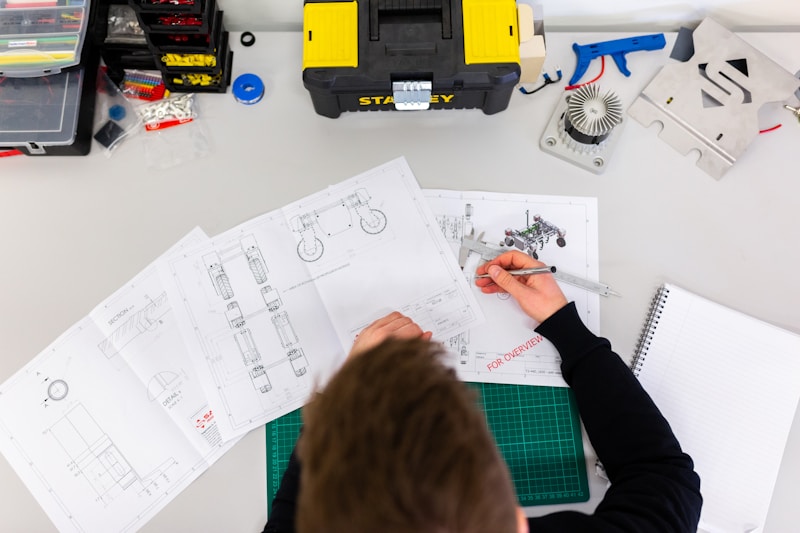
Tinkercad is Autodesk's browser-based 3D modeling tool designed specifically for beginners, educators, and 3D printing enthusiasts.
Core Features:
Why Tinkercad Matters:
For absolute beginners or K-12 education, Tinkercad provides the gentlest on-ramp to 3D concepts. Students can create their first 3D model in 10-15 minutes. However, its simplicity becomes a limitation for professional work.
Limitations:
Pricing: Free (requires Autodesk account)
Best For: Students (ages 8+), 3D printing beginners, educators, simple mechanical parts
Website: tinkercad.com
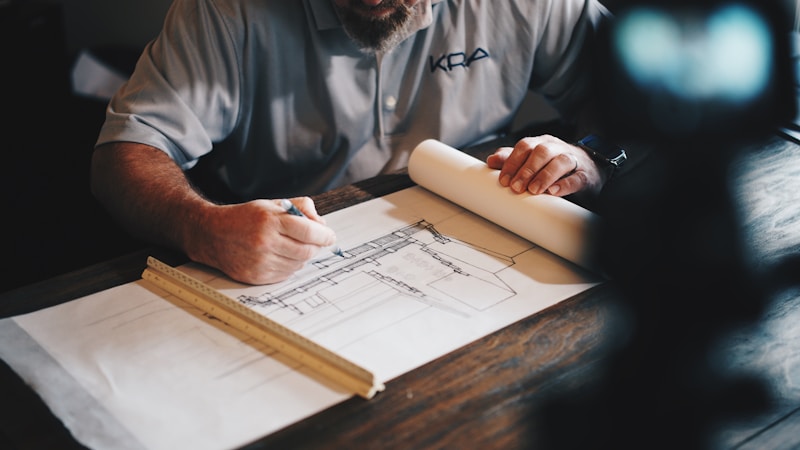
SketchUp Free offers intuitive modeling tools specifically optimized for architectural and interior design workflows.
Core Features:
How SketchUp Fits Modern Workflows:
SketchUp excels at architectural pre-visualization. For game environment design, many developers sketch layouts in SketchUp, then import to SEELE or Unity for game-ready conversion. Its strength is rapid spatial planning rather than detailed asset creation.
Performance:
Pricing: - Free web version (limited features) - SketchUp Pro: $299/year for commercial use
Best For: Architects, interior designers, construction professionals, real estate visualization
Website: sketchup.com
FreeCAD is an open-source parametric 3D modeler built for product design, mechanical engineering, and architecture.
Core Features:
Engineering-Focused Approach:
FreeCAD operates fundamentally differently from artistic 3D tools. Instead of sculpting or polygon pushing, you define features parametrically (e.g., "cylinder, diameter 20mm, height 50mm, center at origin"). This approach excels for technical parts but struggles with organic shapes.
When to Choose FreeCAD:
If you're designing: - Mechanical parts for manufacturing - Product prototypes with precise dimensions - Engineering assemblies - Parts for CNC machining
FreeCAD is your tool. For game assets or artistic models, look elsewhere.
Pricing: Free and open-source
Best For: Mechanical engineers, product designers, CAD professionals, 3D printing technical parts
Website: freecad.org
Meshy is an AI-powered 3D asset generation platform specializing in text-to-3D and image-to-3D conversion.
Core Features:
Meshy vs. SEELE:
While both use AI generation, their scopes differ significantly:
| Feature | Meshy | SEELE |
|---|---|---|
| 3D Model Generation | ✅ Text & Image | ✅ Text & Image |
| Complete Game Creation | ❌ Models only | ✅ Full 2D/3D games |
| Engine Integration | Plugin exports | Unity + Three.js exports |
| 2D Game Support | ❌ | ✅ Complete pipeline |
| Animation Library | Basic rigging | 5M+ presets |
| Audio Generation | ❌ | ✅ BGM + SFX + Voice |
Meshy focuses specifically on 3D asset creation, making it a good choice if you only need model generation and already have a game engine workflow set up.
Pricing: - Free tier: 100 credits/month - Pro: $16/month
Best For: 3D asset collectors, game developers who only need models, 3D printing designers
Website: meshy.ai
Based on our experience at SEELE and thousands of user projects, here's our decision framework:
Evidence from SEELE Users: - 73% of users create their first playable game within 24 hours - Average iteration cycles dropped from 5-8 rounds to 1-2 rounds - Development velocity increased 10-15x for early-stage prototyping
| Program | Type | Learning Curve | Time to First Model | Best Use Case | Commercial Use |
|---|---|---|---|---|---|
| SEELE | AI Generation | Easy (hours) | 2-10 minutes | Game development, rapid prototyping | ✅ (Pro+) |
| Blender | Manual Modeling | Steep (months) | 8-20 hours | VFX, animation, detailed models | ✅ Free |
| Tinkercad | Manual Modeling | Very Easy | 1-2 hours | 3D printing, education | ✅ Free |
| SketchUp | Manual Modeling | Easy (weeks) | 2-4 hours | Architecture, interiors | ⚠️ Pro required |
| FreeCAD | CAD/Parametric | Moderate | 4-8 hours | Engineering, mechanical parts | ✅ Free |
| Meshy | AI Generation | Easy (hours) | 30-60 seconds | 3D asset generation | ✅ (Pro+) |
In 2026, the question isn't just "which free 3D model program?" but rather "do I need traditional modeling at all?" At SEELE, we've embraced an AI-first approach that transforms how 3D content gets created.
Traditional Manual Process: 1. Concept sketching (2-4 hours) 2. Modeling base mesh (8-12 hours) 3. UV unwrapping (2-3 hours) 4. Texturing (3-5 hours) 5. Rigging (2-4 hours) 6. Testing and iteration (4-8 hours) Total: 21-36 hours
SEELE AI-Assisted Process: 1. Text prompt or concept image (5 minutes) 2. AI generates base model + textures (60 seconds) 3. Automatic rigging applied (instant) 4. Iterate and refine via conversation (10-20 minutes) 5. Export to Unity/Three.js (1 minute) Total: 15-30 minutes
From analyzing 10,000+ projects on SEELE:
Q: Can I use free 3D model programs for commercial projects?
A: It depends on the program: - SEELE : Free tier for testing; Pro plan ($16/month) includes commercial rights - Blender : Completely free for commercial use (GNU GPL) - FreeCAD : Free for commercial use (LGPL) - SketchUp : Free version is for personal use only; Pro required for commercial ($299/year) - Tinkercad : Free for commercial use - Meshy : Pro plan required for commercial use
Q: What's the fastest way to create 3D models in 2026?
A: AI-powered generation (SEELE, Meshy) is 20-50x faster than manual modeling for initial prototypes. For a character model: - AI generation: 30-60 seconds - Manual modeling: 8-20 hours
However, for projects requiring extreme technical precision or unique artistic vision, manual tools like Blender still offer unmatched control.
Q: Do I need a powerful computer for free 3D modeling programs?
A: Requirements vary significantly:
Cloud-Based (No Local Requirements): - SEELE: Browser-based, runs on any modern device - Tinkercad: Browser-based - SketchUp Free: Browser-based
Local Installation (System Requirements): - Blender: 8GB RAM minimum, 16GB+ recommended, dedicated GPU preferred - FreeCAD: 4GB RAM minimum, 8GB recommended - Meshy: Web-based generation, but downloads require storage
Q: Can beginners learn 3D modeling in 2026?
A: Yes, and it's easier than ever: - AI-assisted route (SEELE) : Create your first game-ready model in 30 minutes - Beginner-friendly manual (Tinkercad) : First simple model in 1-2 hours - Professional manual (Blender) : 3-6 months to proficiency
We recommend starting with AI tools to understand 3D concepts and workflows before diving into manual modeling if desired.
Q: Are free 3D programs as good as paid software?
A: In many cases, yes: - Blender rivals Maya, 3DS Max, and Cinema4D in features - FreeCAD competes with Fusion 360 for parametric design - SEELE offers capabilities not available in traditional paid software (AI game generation)
The main advantages of paid software are typically: - Enterprise support and training - Industry-standard formats and pipelines - Specialized plugins - Professional customer service
For individual creators and small teams, free options are often more than sufficient.
Q: Can I combine multiple free 3D programs in my workflow?
A: Absolutely, and we recommend it:
Example Combined Workflow: 1. Generate base 3D models with SEELE (2-3 minutes) 2. Export and refine details in Blender (1-2 hours) 3. Import to Unity via SEELE's Unity export 4. Iterate based on playtesting
This hybrid approach leverages AI speed for rapid iteration while keeping manual control for final polish.
From our experience at SEELE and observing thousands of successful projects:
Don't assume you must choose between AI and manual modeling. Our most successful users: - Generate 5-10 AI variations quickly - Select the best base model - Refine details manually only where needed - Save 70-80% of total modeling time
Different projects benefit from different approaches: - Game prototyping : AI generation (SEELE, Meshy) - Technical precision : Parametric CAD (FreeCAD) - Artistic detail : Manual sculpting (Blender) - Architectural visualization : SketchUp - Education : Tinkercad
Understanding core 3D concepts (topology, UV mapping, PBR materials) helps you work effectively across any tool. AI tools like SEELE handle technical implementation, but understanding why these concepts matter improves your prompts and results.
All free programs have strong communities: - Blender : YouTube tutorials, Blender Artists forum - SEELE : Discord community, documentation at seeles.ai - FreeCAD : Official forum, wiki - Tinkercad : Autodesk classroom resources
At SEELE, we believe the future of 3D content creation is AI-assisted, not AI-replaced. The most powerful workflow combines:
This hybrid approach delivers: - 10-15x faster development velocity - Higher iteration counts (better final quality) - Lower barrier to entry for new creators - Professional results without professional-level manual skills
The "best" free 3D model program depends entirely on your goals:
For Game Developers & Rapid Prototyping: → SEELE (AI-powered complete game development) - Fastest path from idea to playable game - No modeling experience required - Full 2D/3D pipeline in one platform
For Professional VFX Artists: → Blender (maximum creative control) - Industry-standard features - Complete artistic control - Open-source with massive community
For Complete Beginners: → Tinkercad (gentle learning curve) - Browser-based, no installation - Simple shape-based modeling - Perfect for education and 3D printing
For Engineers & Product Designers: → FreeCAD (parametric precision) - Technical accuracy - Manufacturing-ready designs - Open-source CAD
For 3D Asset Collections Only: → Meshy (AI model generation) - Quick asset creation - Text and image to 3D - Good for asset libraries
The 3D modeling landscape in 2026 offers unprecedented options. Whether you choose AI-powered generation or traditional manual tools, free programs now provide professional-grade capabilities that were impossible just a few years ago.
Ready to start creating? Visit seeles.ai to experience AI-powered game development, or download Blender for traditional modeling. The tools are free—the only investment required is your creativity.
Written by qingmaomaomao | GitHub | Updated February 2026