Add a business calendar with meaningful daily choices to your cafe management game with AI. Make the decision and its consequence visible, then validate it in a short repeatable scenario. Prototype a one-week calendar with three event types before adding a full season of content.
Map calendar events to recipes and staffing
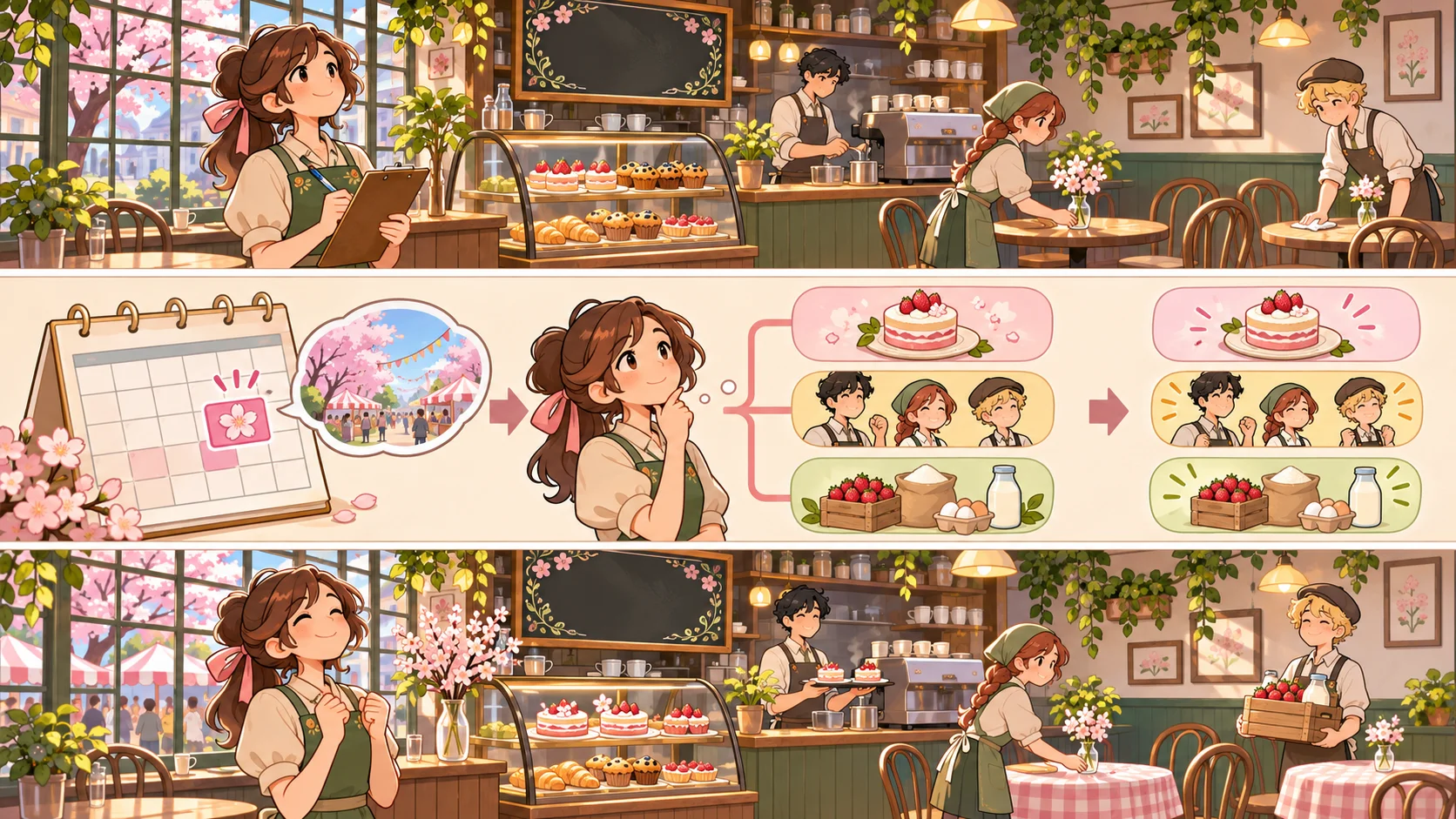
Use the calendar to connect upcoming events with the work they create: forecast customer volume, choose a menu focus, order ingredients, and assign enough staff to prepare and serve. A weekend market might increase pastry demand, while a quiet weekday can support recipe testing or maintenance. Show the event early enough that preparation is a choice rather than a last-minute surprise.

The official Cafe Business Manager listing from Caos Interactive describes hiring staff, crafting a menu, serving customers, and growing a cafe business. It supports the cafe-management context only; calendar choices here are original. Put demand, stock, and staff availability together on a day view so players can compare their plan with the forecast.
Make daily choices change customer service
Give each day one or two decisions that create a visible operational effect. The player may feature a seasonal drink, schedule an extra server, or limit a menu item when ingredients are scarce. Show expected demand and the cost of the choice before opening, then update queues, wait time, sales, and customer reactions during service.
Keep customer response consistent. A shorter menu can speed up service but reduce choice; an extra shift can reduce waits while increasing labor cost. Let players see which effect came from the calendar decision. Avoid random events that change demand without warning unless the uncertainty is part of a clearly stated forecast range.
Balance preparation, demand, and labor
Build a small planning loop: check tomorrow’s forecast, reserve ingredients, choose recipes, assign staff, and review the day’s result. Make capacity constraints visible. If a featured recipe consumes a rare ingredient, show which other menu item may run out. If staffing is short, let the player simplify the menu or move a worker before service begins.

Use the calendar to make trade-offs accumulate over a week. A profitable event day may create extra cleanup or restocking, while a slower day can support training or equipment care. Preserve a recovery option when a plan misses demand, such as a limited substitute menu or an emergency ingredient order with a clear cost.
Test event weeks and recovery
Test a quiet week, a high-demand event, and a week with a stock or staffing constraint. Track forecast accuracy, ingredient waste, wait time, labor cost, and customer satisfaction. Ask players to explain which calendar choice produced the result. Repeat with a different menu mix so one recipe does not dominate every event.
For related planning systems, see a guide to resource bottlenecks and a guide to planning across campaign missions. Pass when players can connect the forecast, their daily plan, and the service outcome.
FAQ
What should a cafe business calendar do?
Connect upcoming events with expected customer demand, menu choices, ingredient orders, and staffing. Show the forecast early enough for players to prepare and make the cost of each choice visible. After service, summarize demand, wait time, sales, and waste so players can learn from the plan.
How can daily choices change cafe operations?
Let a daily choice affect a measurable part of service, such as featuring a recipe, adding a staff shift, or simplifying a menu when stock is low. Show the expected trade-off before opening, then update queues, wait time, sales, and customer feedback during the day.
How do you balance events and staffing?
Compare forecast demand with ingredient stock, recipe capacity, and worker availability. An extra shift can reduce wait time but increase labor cost, while a shorter menu may improve speed but reduce choice. Keep those effects visible and provide a recovery option for a missed forecast.
What should you test in a cafe calendar?
Test a quiet week, a high-demand event, and a staffing or stock constraint. Track forecast accuracy, ingredient waste, wait time, labor cost, and customer satisfaction. Repeat with different menu mixes and ask players to explain which calendar choice caused the result.