Build campaign objectives around observable recovery states that emerge from physics interactions, then let players test several safe ways to restore an area. Prototype one short sequence first, then check whether the player can see the cause, consequence, and next choice. The system described here is original design guidance; the linked source is limited to the genre context in the first chapter.
Map sandbox interactions and recovery states
List the sandbox materials, forces, movable objects, and state changes players can reliably observe. Then define recovery in world terms: water returns, vegetation regrows, contamination clears, or a habitat becomes usable. POWDR’s official listing describes interactive particles and material reactions under environmental forces; this supports the sandbox context only, while the campaign goals here are original. See SUBLIMINAL SOFTWARE for the limited context claim.
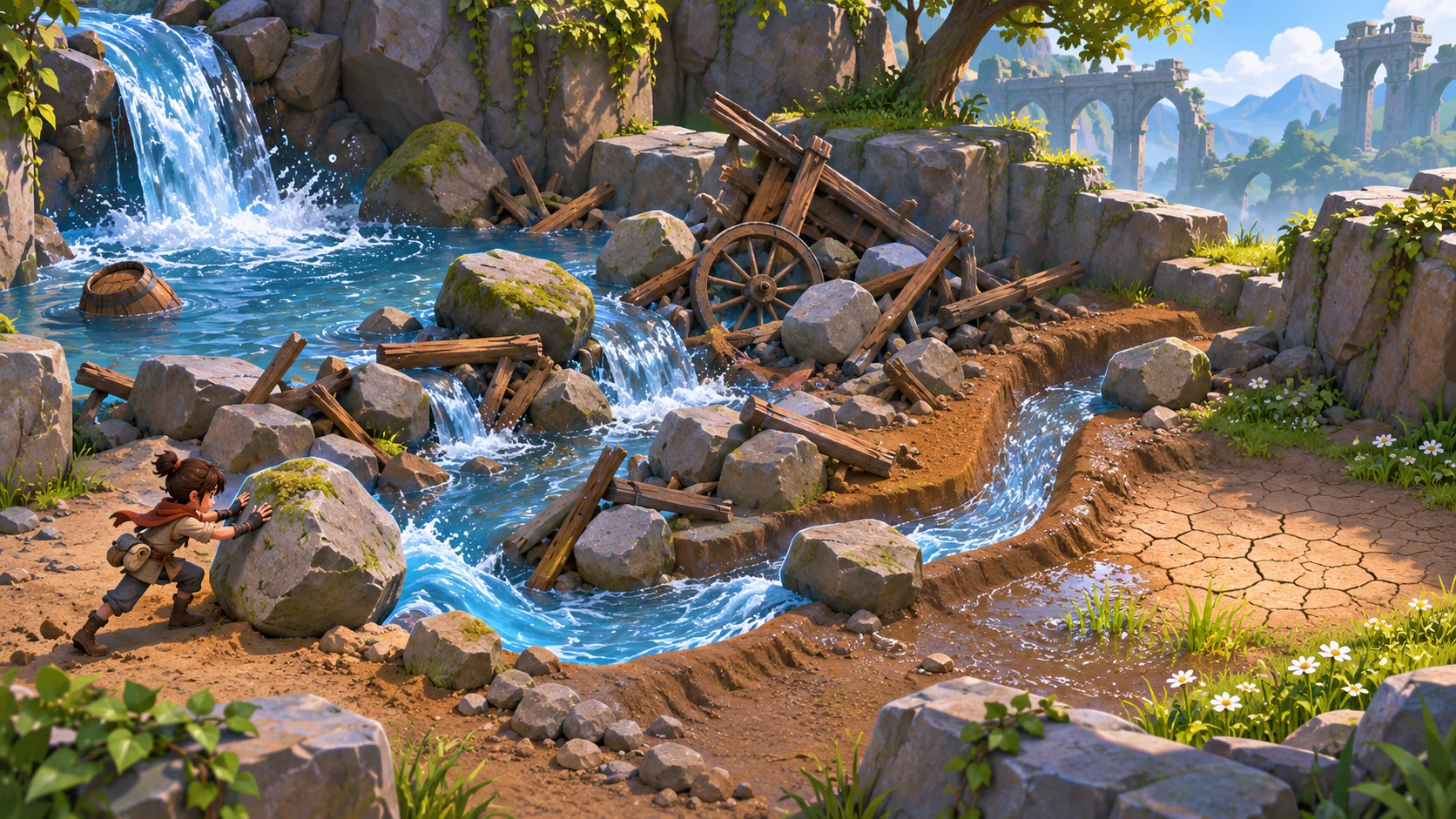
Build a campaign around a small sequence of places with one visible recovery objective each. A mission should state the starting condition and the desired world state, while leaving room for players to experiment with objects, fluids, and terrain. Keep optional challenges separate from the minimum recovery target.
Turn recovery into campaign goals
Make each objective measurable through the environment rather than a hidden score. The player might reconnect a stream to a dry basin or remove a barrier so plants can spread. Show feedback as the simulation changes and preserve a stable checkpoint so experiments can be reversed or retried.
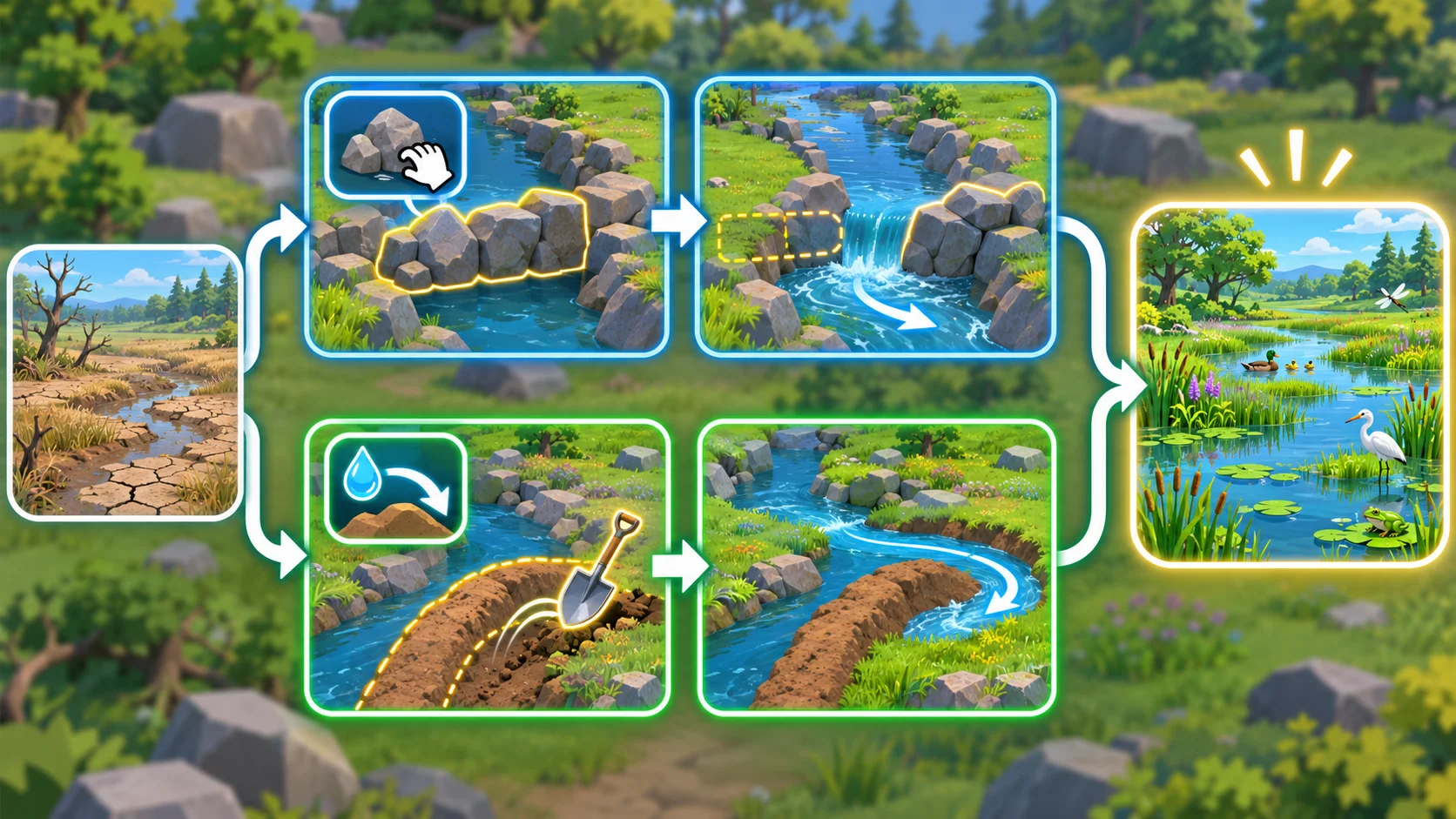
Link outcomes to the next location: recovered water can reveal a route, restored soil can support a new tool, or a cleared channel can make another experiment possible. State the relationship so the campaign feels like cumulative repair rather than a list of unrelated physics puzzles.
Design multiple physical solutions
Offer several approaches with different effort and side effects. Moving debris may be quick but redirect water elsewhere; reshaping a channel may take longer but preserve another habitat. Let the player inspect likely effects and use a sandbox preview or undo before committing an irreversible world change.
Keep physical rules consistent across the campaign. If water flows downhill in one mission, preserve that expectation later. Use early objectives to teach one interaction at a time, then combine familiar rules in later spaces instead of adding opaque exceptions.
Test readable cause and effect
Run a mission with at least two valid solutions and record the resulting landscape. Verify that the recovery state is visible, the next objective unlocks for the intended reason, and a failed experiment can be undone or retried. Ask players to explain what interaction caused the repair.
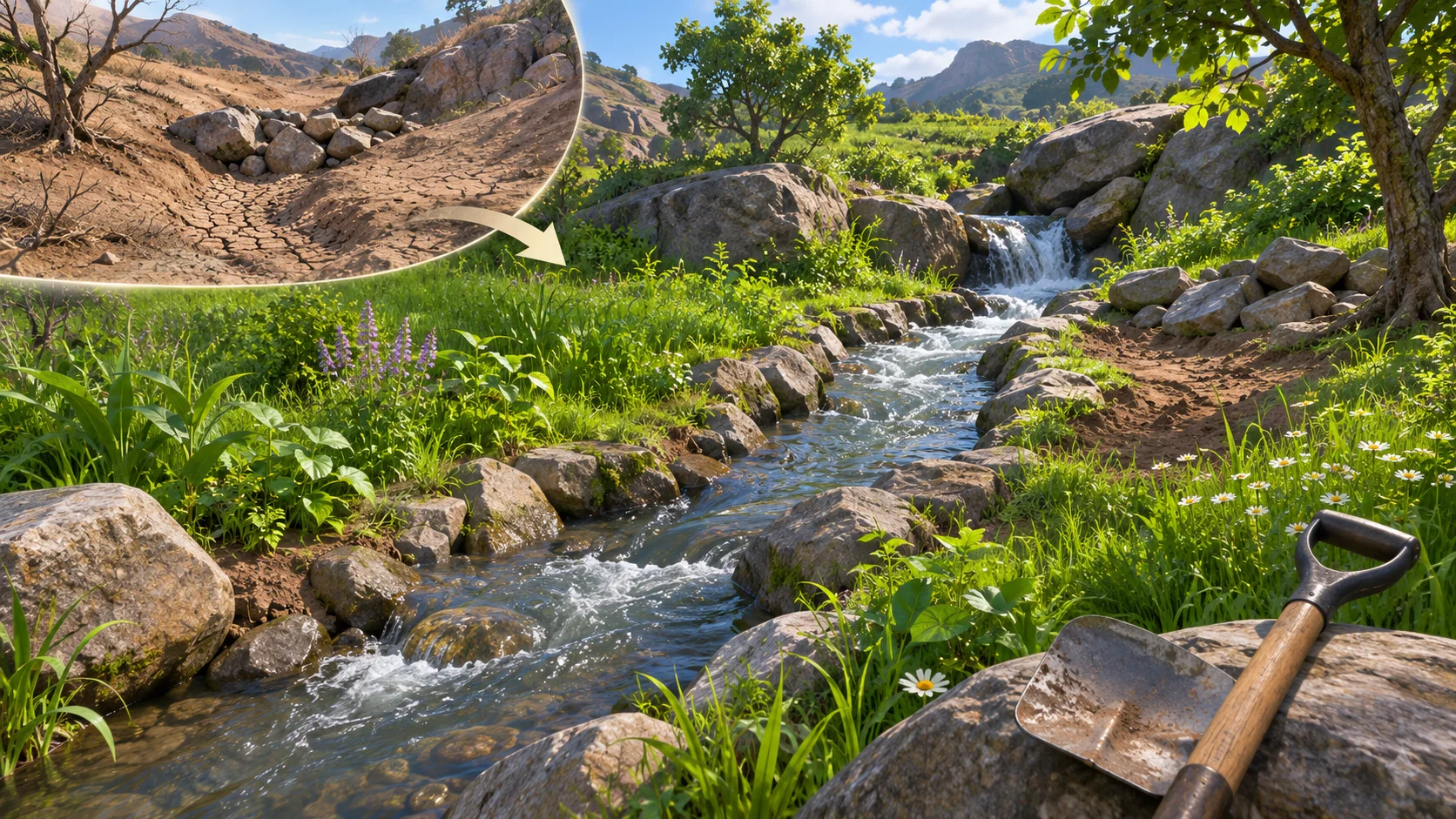
For a related campaign structure, read an environmental recovery campaign guide. Pass when players can use the sandbox rules to recover an area, observe the consequence, and understand how that recovery changes the campaign.
FAQ
How can a physics sandbox support a recovery campaign?
A physics sandbox can support recovery objectives by letting players redirect fluids, move barriers, reshape terrain, or change material states to restore a visible environment. Define success through a world condition players can observe, such as water reaching a basin or vegetation returning, then connect that outcome to campaign progression.
How should recovery objectives respond to player experiments?
Objectives should recognize a state change rather than one exact tool sequence. Tell players the starting condition and desired result, then show how objects and materials respond. Use checkpoints or undo so experimentation remains safe and players can learn from an unintended effect.
How do you support multiple solutions?
Offer routes that use different physical interactions and disclose their likely tradeoffs. Moving a barrier may be fast but alter another channel; reshaping terrain may take longer but preserve more of the area. Let players preview or reverse major changes where possible.
What should you test in a recovery campaign?
Test two solution paths and a failed experiment. Verify that the recovered state is visible, the next objective unlocks for the right reason, and players can explain which interaction changed the environment. Repeat in a second area to ensure the rule transfers.