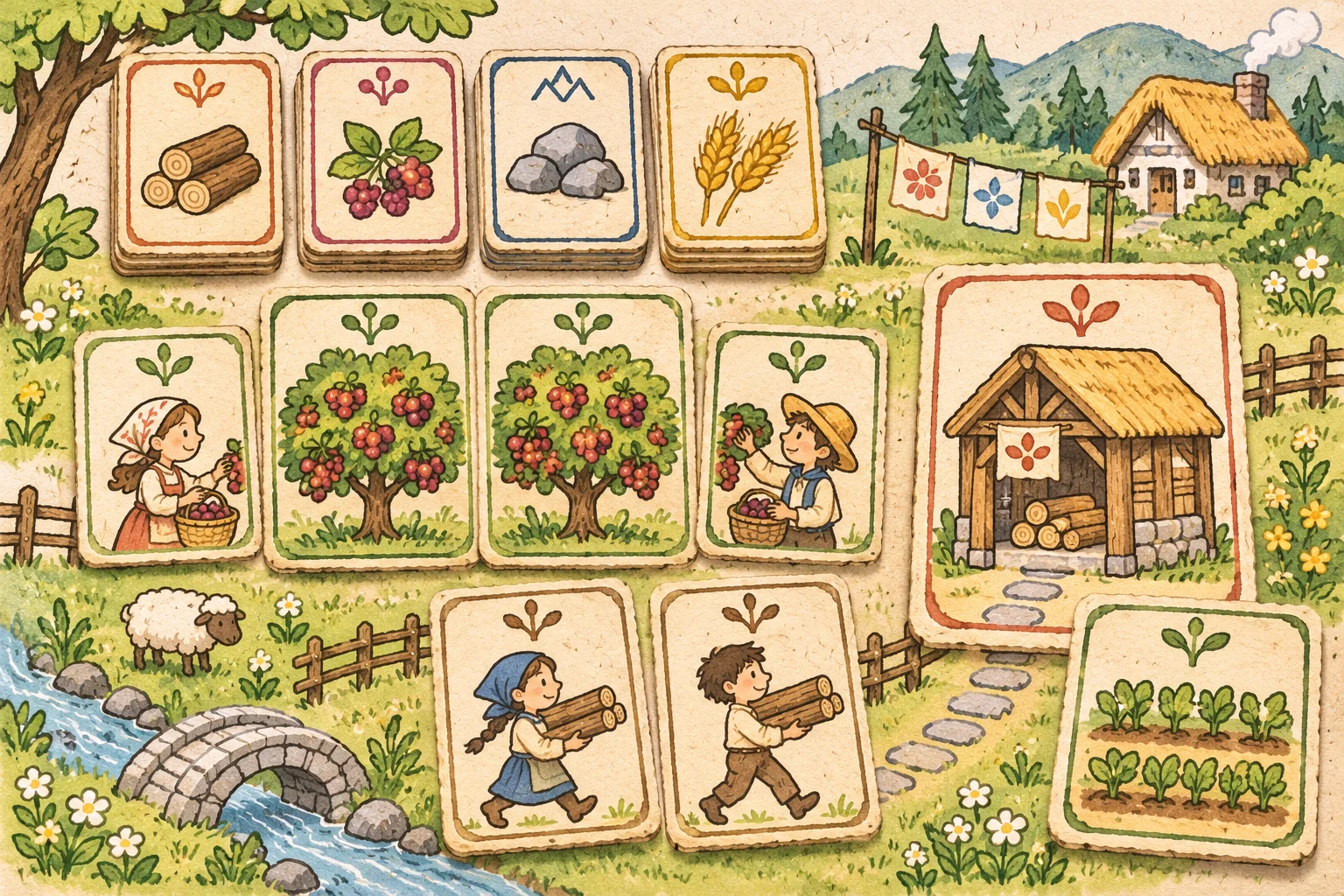
Let players discover production methods by testing ecological relationships, then reveal how each discovery changes the world and future production choices. Start with one small scenario, make its cause and effect visible, and test whether a player can explain the choice they made. The recommendations below describe original design options; cited game material is limited to genre context.
Map the ecosystem production baseline
Document the starting ecosystem: inputs, producers, consumers, output storage, and environmental conditions. Pick a production relationship players can observe, such as redirected water changing plant growth, or a new material enabling a workshop. The official Timberborn listing describes production chains, water management, drought preparation, and machinery; it supports context only, not the discovery loop proposed here. See Mechanistry for the limited source context.
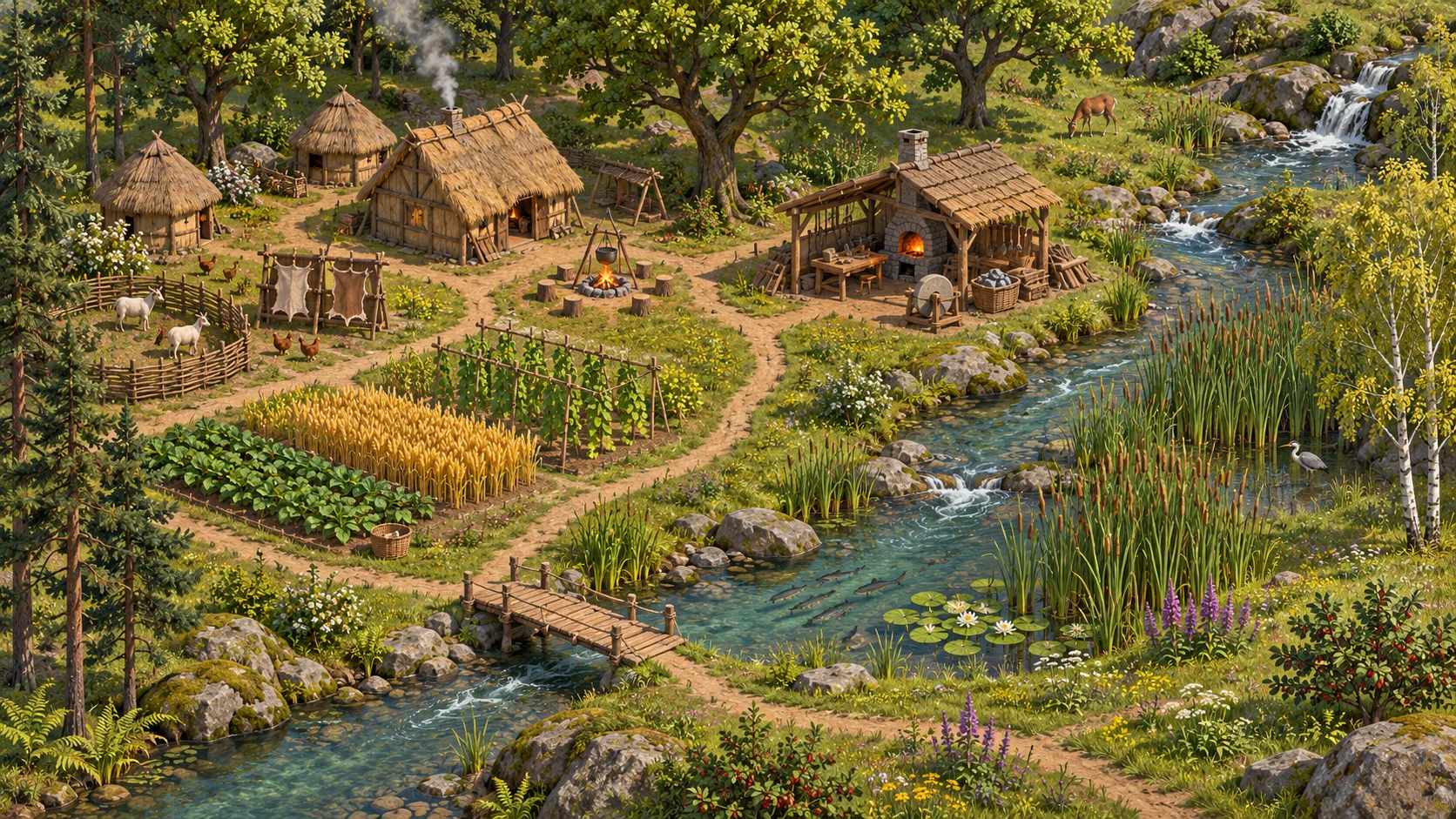
Separate a discovery from a technology purchase. The player should form a guess, alter one relevant condition, observe an output, and learn a reusable rule. Keep the experiment safe enough to repeat and provide clear feedback when the result is inconclusive.
Turn experiments into discoveries
Control the number of variables in the first experiment. If a player changes water flow, soil, worker assignment, and time at once, the outcome is hard to interpret. Reveal which input changed and show the producer’s output before and after. Then let the player name or save the newly understood production method.
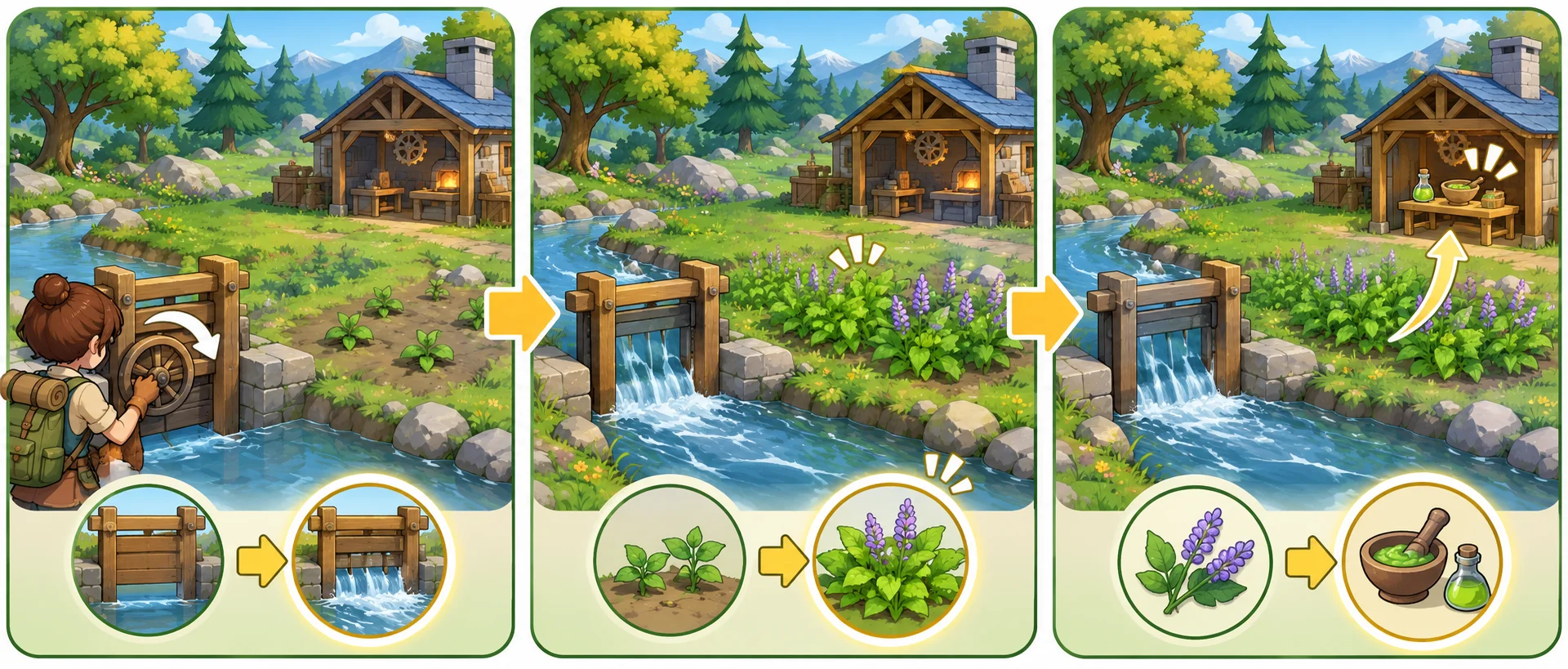
Use incomplete information carefully. A hint can point toward an ecological relationship without revealing the full recipe. If experimentation fails, preserve resources or provide a partial result so curiosity does not become costly guesswork. A repeatable test area can help players compare conditions.
Connect methods to ecological change
Connect a new method to both settlement output and ecosystem state. A technique may raise production while consuming more water, or make a byproduct useful while changing a habitat. Put the gain and cost in the same view so the player can decide whether to scale it, reserve it for a region, or stop using it.
Let progression expand the decision space rather than only increase yield. New methods can support different climates, reduce pressure on a scarce species, or create a different route from raw resource to useful output. Preserve earlier methods where they remain practical and explain the conditions for each.
Test understanding and recovery
Test one unknown relationship with new players. Ask them to predict a result, change a single input, and explain what they learned from the output. Then simulate a failed or harmful experiment and check recovery, reversibility, and whether the ecosystem state can return to a stable range.
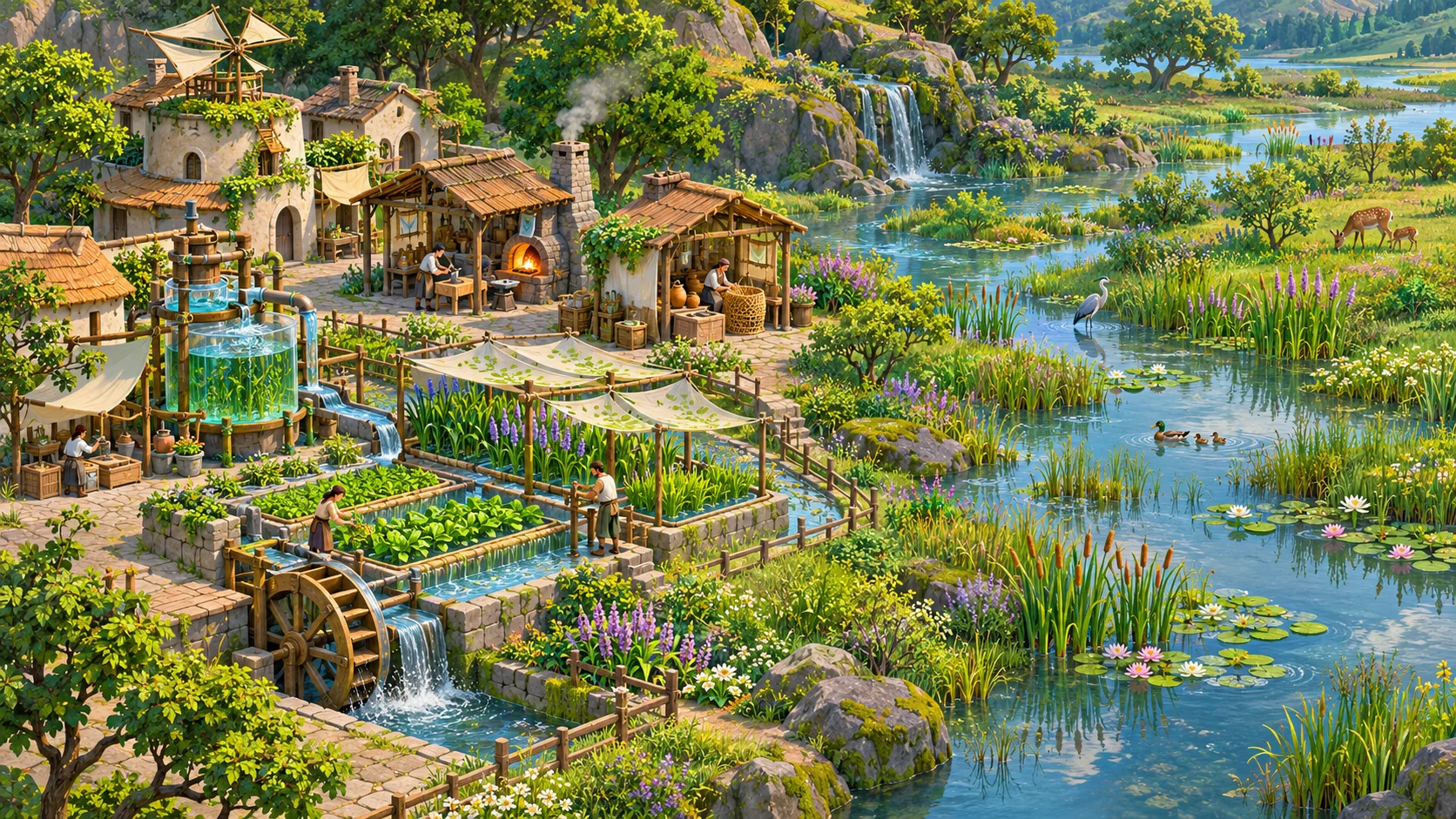
For readable production inputs and outputs, see a readable resource-production guide. Pass when players can repeat a discovery, explain the observed relationship, and choose when its ecological cost is worth the production benefit.
FAQ
How can discovery drive ecosystem progression?
Discovery can drive progression when an experiment reveals a reusable relationship between ecological inputs and production outputs. Let players change one condition, observe its effect, and use the rule in another location. The discovery should add a choice, not merely award a stronger recipe without explanation.
How should players learn a new production method?
Teach a method through a controlled, repeatable experiment. Give a hint about the relevant input, show the producer output before and after, and keep failed attempts low cost. Once learned, let players review the rule and identify which conditions still apply.
How do production changes affect an ecosystem?
A production method can raise output while consuming water, soil health, or a habitat resource. Show the benefit and ecological cost together. Players can then scale it, localize it, choose a slower alternative, or stop using it when conditions change.
What should you test in a discovery progression loop?
Ask new players to predict an outcome, change one input, and explain what they learned. Include a harmful result and test whether the system is recoverable. Verify that discoveries persist, outputs are visible, and players can reproduce the method under the stated conditions.