Make quest outcomes alter shared town spaces or resident routines, then reveal those changes during ordinary play. Keep a compact world-state model and make each transformation legible. Prototype one changed landmark and one daily interaction first. The official source below supports only the life-simulation and town-restoration context; the quest-driven state model here is original.
Choose town states worth changing
Pick one or two town states that players can recognize at a glance: a repaired fountain, reopened path, new market stall, or resident returning to a shared space. Define what quest changes the state and what the town looks like before and after. Stardew Valley’s official listing describes community interaction and restoring a town community center; that supports life-simulation and restoration context, while the town-state design here is original. See ConcernedApe for the limited context claim.
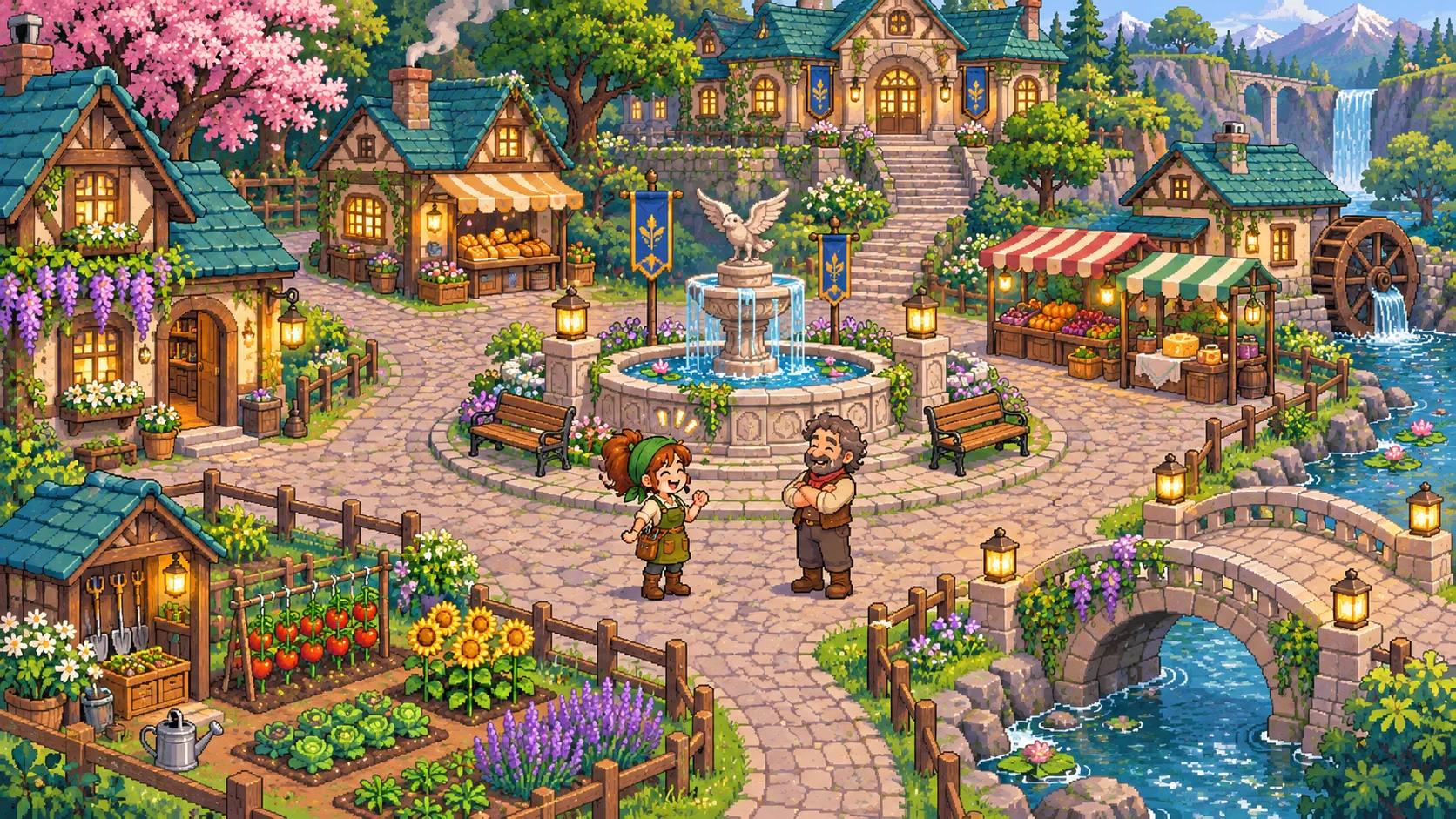
Avoid tracking every quest as its own version of the whole town. A compact set of state variables can control a shared plaza, a few schedules, and available activities. Make the visible change proportionate to the effort so players can connect the completed quest to the world response.
Connect quests to visible shared spaces
Link each quest to a concrete town need and a visible completion condition. Repairing a bridge can restore a daily route; organizing a market can bring vendors back; helping a resident can add a new activity at a familiar place. Keep optional rewards distinct from changes that are required to unlock later content.
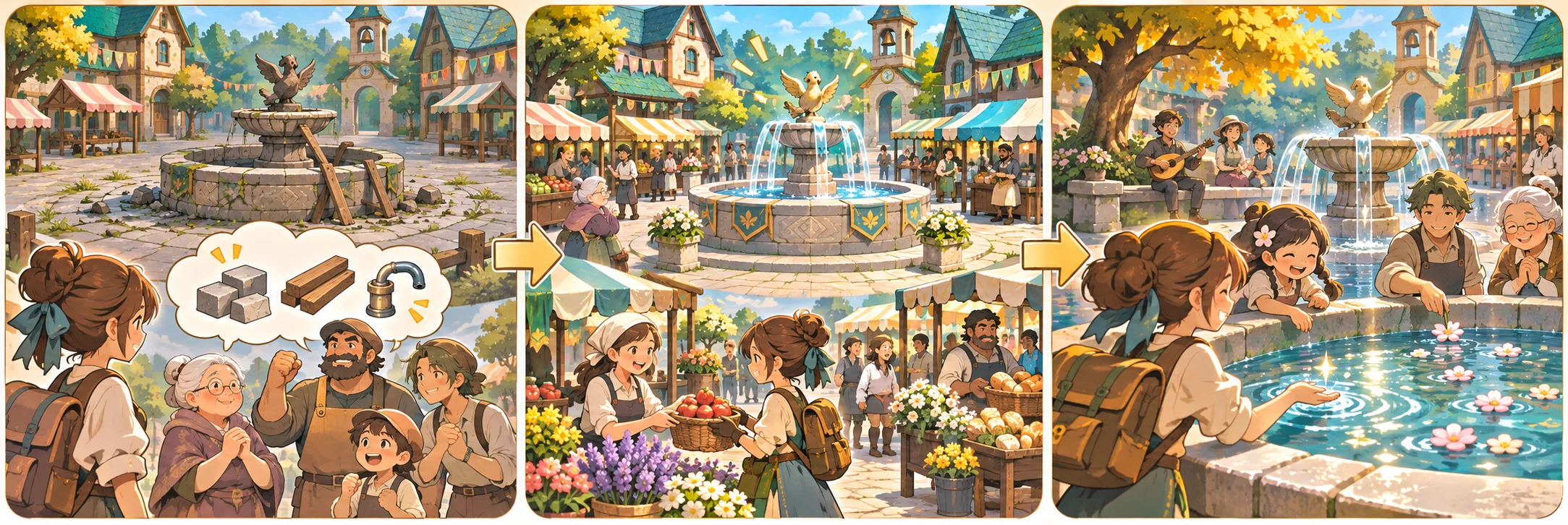
Tell the player what the quest will affect before accepting it when that knowledge is available. Use a map marker, resident request, or visible damaged object to establish the need. After completion, update the same landmark and acknowledge the change through a short interaction rather than a long exposition scene.
Show change through daily routines
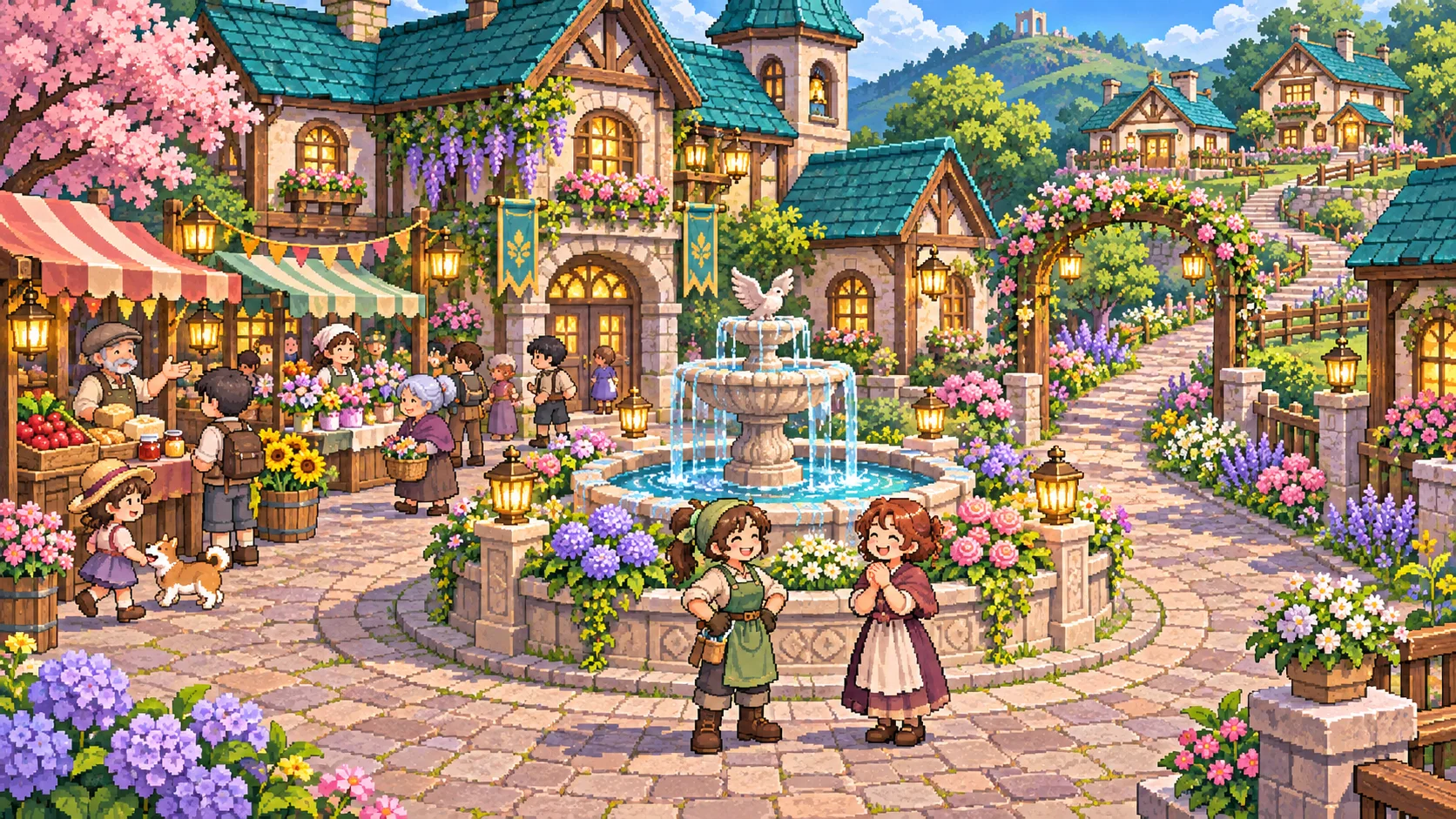
Let the changed town alter daily play. A restored fountain can become a meeting point, a new path can shorten a walk, and a reopened stall can provide a useful service. Residents may shift their schedules toward the restored area, but keep routines predictable enough for players to find them and continue their own daily plans.
Use reusable state combinations instead of writing a unique town map for every quest order. A repair flag can open a path while a community flag changes market activity. If two quests affect the same space, define precedence clearly and show both effects without overwriting earlier progress.
Test continuity across the town
Test each quest outcome by completing it, leaving the area, saving, and returning on a later day. Check the landmark, schedule, path access, and available activity. Ask players which action caused the change and whether they can find the new interaction without a quest marker.
For a related example of quest-driven shared spaces, read a related quest-driven town design guide. Pass when players notice a persistent town change, can use it during ordinary routines, and understand which quest caused it.
FAQ
How should a town change after quests?
Choose changes players can see and use, such as a repaired landmark, reopened path, restored shop, or resident returning to a shared space. Tie each state to a clear quest outcome and show the same location before and after. A few meaningful changes are easier to understand than many cosmetic flags that do not affect play.
How can town changes affect daily activities?
Let the quest solve a visible town need and make the result available in daily play. A repaired bridge can change a route, a market can add a service, or a community space can host a new activity. Keep the transition visible at a familiar landmark so players connect the quest with the new routine.
How do you keep quest-driven town states manageable?
Track a small number of reusable town states and let shared locations respond to combinations of them. Decide which quest owns a change, how overlapping effects combine, and what happens if quests finish in a different order. Reuse maps and schedules where possible, but keep every completed outcome persistent and understandable.
What should you test in a changing town?
Complete each relevant quest, leave town, save, and return on a later day. Verify the landmark, path, resident routine, and activity. Test alternate quest order and ask players which action caused the change. Also check whether they can discover the new interaction without relying on a marker.