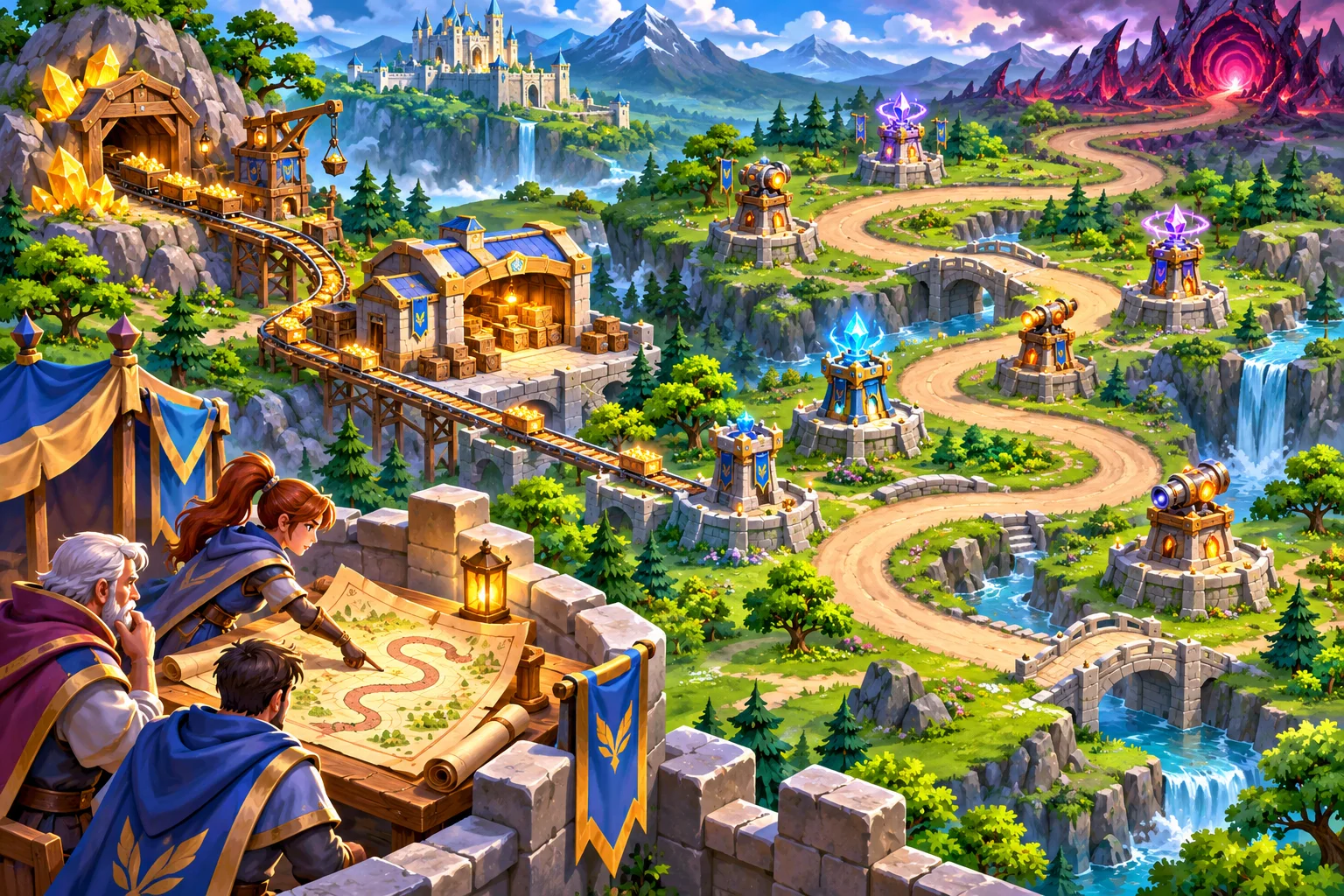
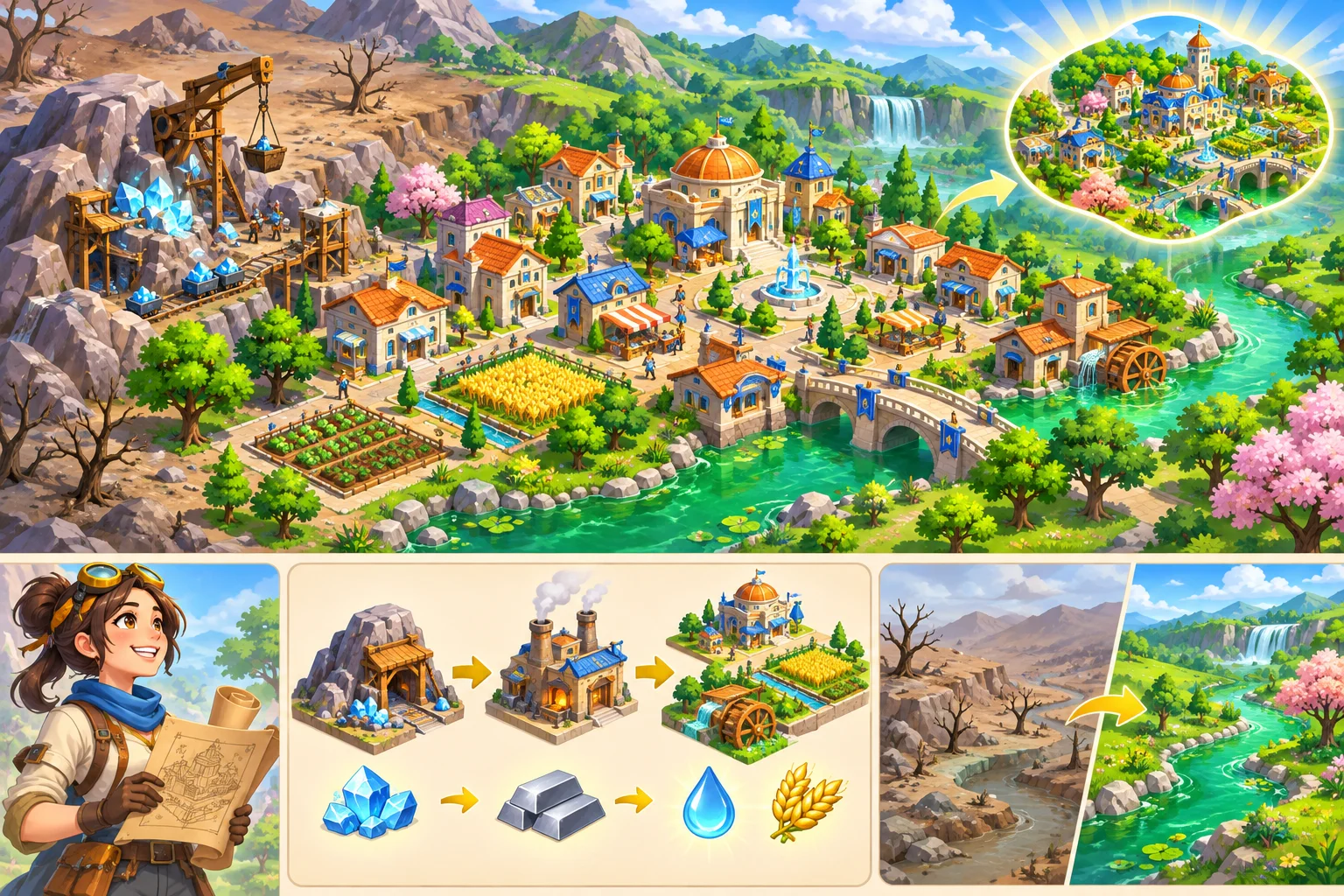
Baseline the city’s production loop
Map how goods move from resource sites to workshops, storage, homes, and services before you add a discovery system. Record worker assignments, road access, output rates, and unmet demand. A method is interesting only when players can understand which part of this existing loop it changes.

The official Foundation listing describes city building, resource management, assigning jobs, and production chains. That establishes the broad production context; the discovery progression here is original. Use a small town as a baseline and observe where citizens wait, which goods are scarce, and how far materials travel.
Choose one production chain for the first prototype. Mark its inputs, transformation, output, and consumers. Keep other systems steady so a playtest can reveal whether a new method improves the chain, shifts demand, or creates an unexpected road bottleneck. The cover illustration shows a workshop inside a connected settlement.
Make discoveries emerge from city activity
A discovery can follow from repeated work, resource abundance, a civic project, or a resident’s observation. Give players a visible clue before the method becomes available, such as a surplus that invites experimentation or a milestone reached by connecting distant suppliers. This makes progression feel connected to the city they built.
Present the discovery as a choice or insight, not a hidden checkbox. Explain what the city has observed and let players inspect the method’s likely inputs and outputs. A discovery might reveal a kiln process or a more efficient building material. Avoid implying that every city must follow the same unlock order.
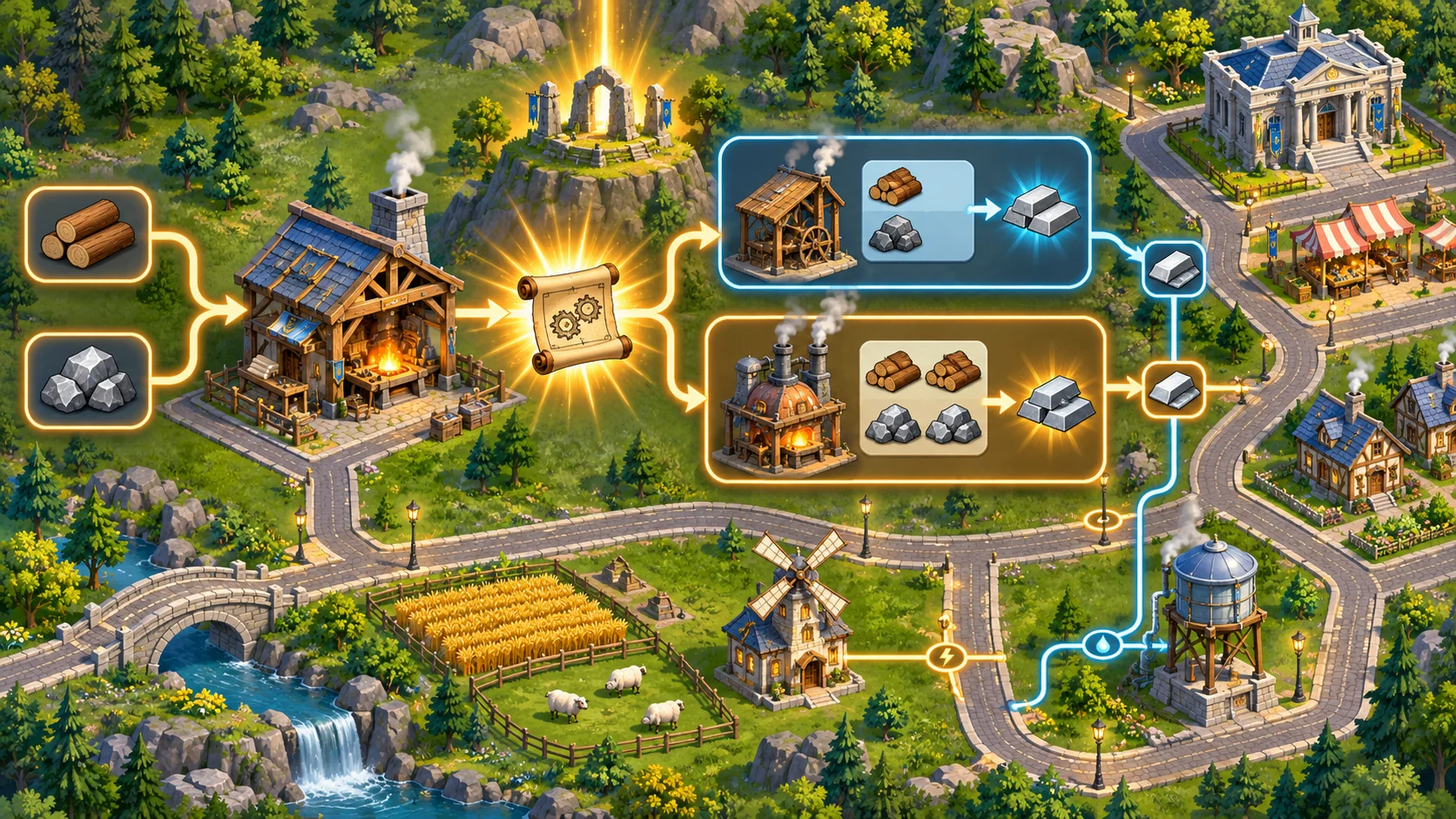
Test whether players can explain why the method appeared. If the clue is missed, provide a journal entry or town notice that preserves the connection. The mechanism diagram shows inputs leading to a discovery and then to two possible production methods.
Connect methods to city tradeoffs
A new method should change a real planning decision. Higher output may require fuel, skilled workers, water, storage, or a different road layout. Show those costs before activation and let players compare them with the expected benefit. A method that improves every measure without a downside may become an automatic click.
Connect production to roads, housing, and services. A larger workshop may need more deliveries or create noise near homes; a cleaner method may consume scarce water. Keep these effects legible in the district view, and allow players to adapt through relocation, service upgrades, or another production choice.
Use small, reversible experiments early in the campaign. Players can test a method in one workshop, then decide whether to expand it. If a discovery cannot be undone, explain its permanence and offer another viable route. Make sure each route can meet basic city needs without requiring one rare unlock.
Test growth and production balance
Compare several city plans over the same number of growth stages. Track output, shortages, travel distance, worker availability, service coverage, and resident needs before and after each discovery. Ask players what they expected the method to change, then compare that answer with the actual city state.
Test edge cases such as a missing input, a full warehouse, an unstaffed workshop, or a blocked road. Check that the interface identifies the immediate constraint and does not blame the production method for a separate transport issue. Review the related guide for resource logistics decisions and keep the new system grounded in the city’s existing routes.
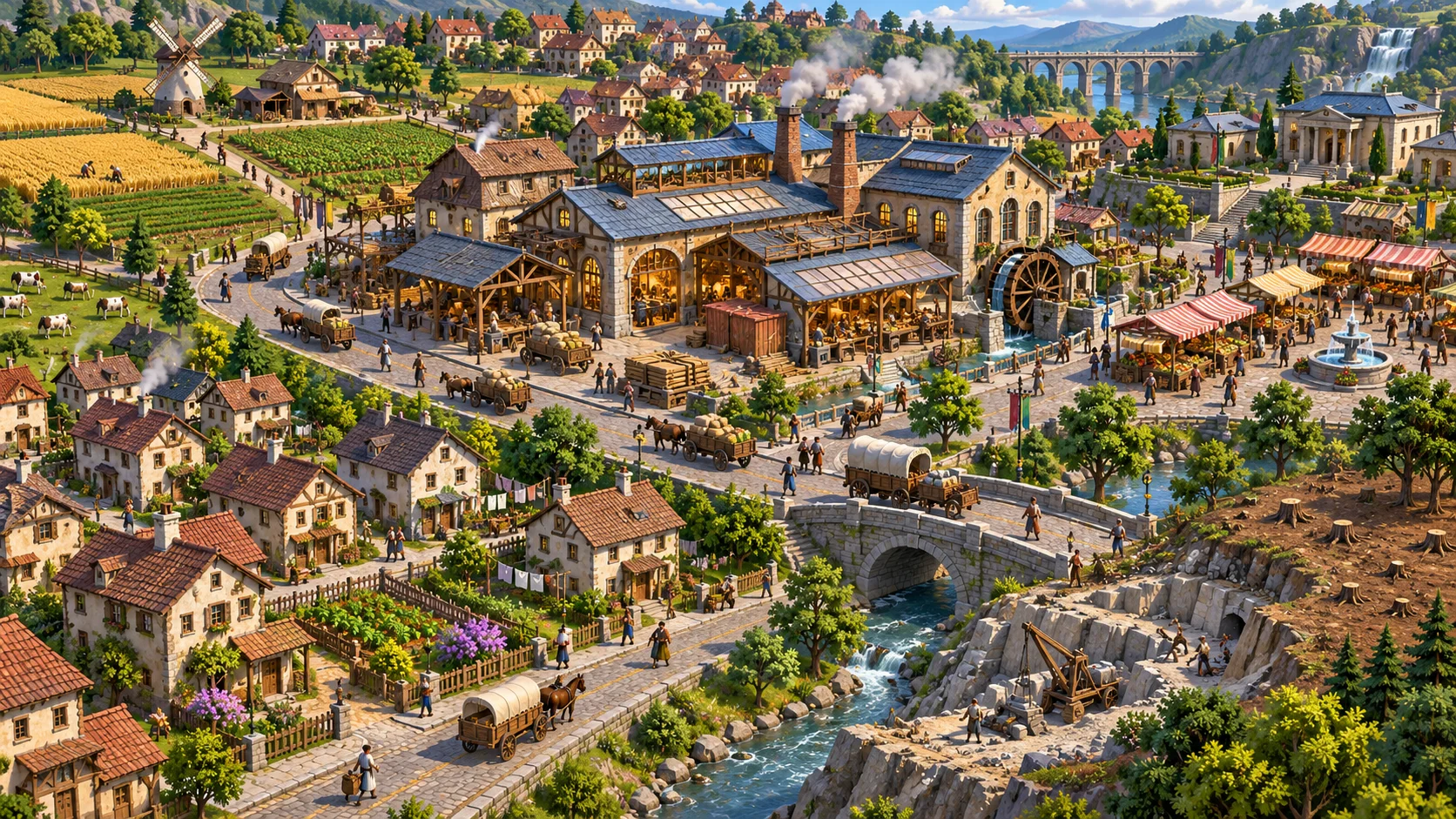
Accept the feature when discoveries make players reconsider production plans, the costs remain visible, and more than one method can support a healthy city. SEELE AI can help outline alternative production concepts, but economic balance, readable feedback, and resident behavior need implementation and repeated playtesting. The outcome illustration depicts a district reshaped by its chosen method.
FAQ
How do you add production discovery progression to a city-building game?
Start with a working production chain and record its inputs, workers, transport, and consumers. Add one visible clue that leads to a new method, explain the costs and benefits, and test whether players can connect the discovery to their city’s activity.
How can new production methods be discovered?
Tie an insight to something the city has done or observed, such as reaching a milestone, building a civic project, or producing a surplus. Show the clue before the unlock and let players understand why it became available. Check that a later level still uses the rule after the setting or role changes.
What should a production method change in a city?
It can alter output, input costs, worker needs, transport, pollution, or service demand. Make at least one tradeoff visible before activation so players can compare the method with their current plan and adapt roads or facilities. Check that a later level still uses the rule after the setting or role changes.
How do you test a city-builder progression system?
Compare several city plans over the same growth stages. Track output, shortages, travel distance, staffing, service coverage, and resident needs. Test missing inputs and blocked roads, then check whether players can explain the cause of a bottleneck. Check that a later level still uses the rule after the setting or role changes.