Every purchase should alter a visible combat capability, while every battle should explain what the next economy decision can fix. Keep the loop legible by tying spending to a testable team plan. Prototype one short loop first, then check whether the player can explain the relationship between their choice, the system response, and the next opportunity. The official source below supports genre context only; the system design here is original guidance.
Define the economy decision window
Define the decision window before designing shop items. Track how much currency arrives, when it can be spent, which options refresh, and what is carried into the next round. A player needs time to compare a purchase with the team they already have. The official Brainrot Autobattler listing describes team assembly before automated combat and says unit stats and trait synergies affect battles; this confirms the genre context only, while the economy loop here is original guidance. See SNAKE for the limited context claim.
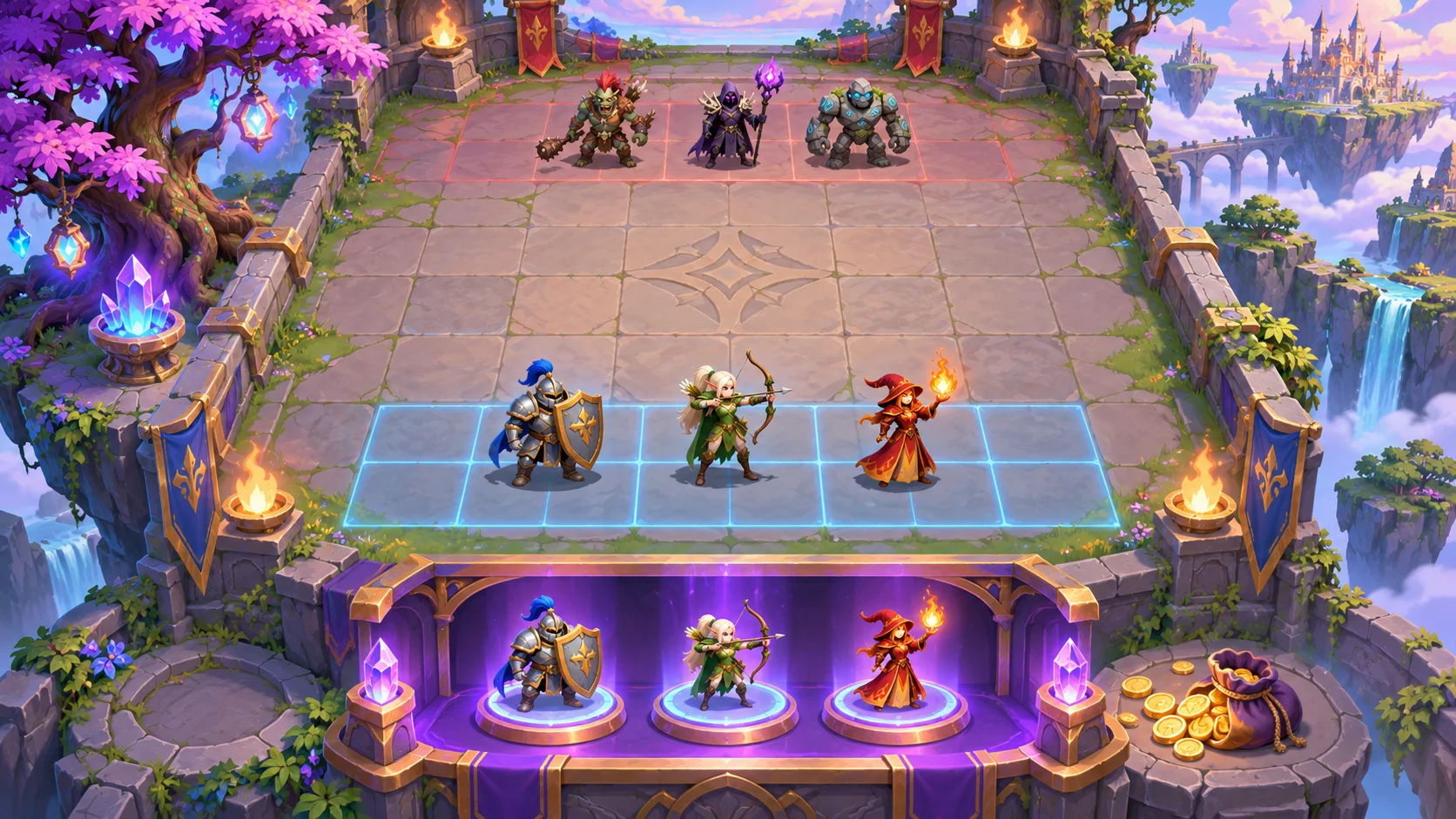
Give the player a stable income rule and make optional income sources legible. A reserve bonus, interest, or risk reward can create tension, but show its cost before the player commits. Do not make the best strategy depend on a hidden formula or a shop outcome the player cannot influence.
Make each purchase change a team role
Give each item a clear job in the team: protect a frontline, add range, interrupt a threat, or strengthen a known trait. Show the expected effect beside the recruit so players can compare it with an upgrade or a saved coin. If an item mainly supports a trait, display which units contribute to that combination.
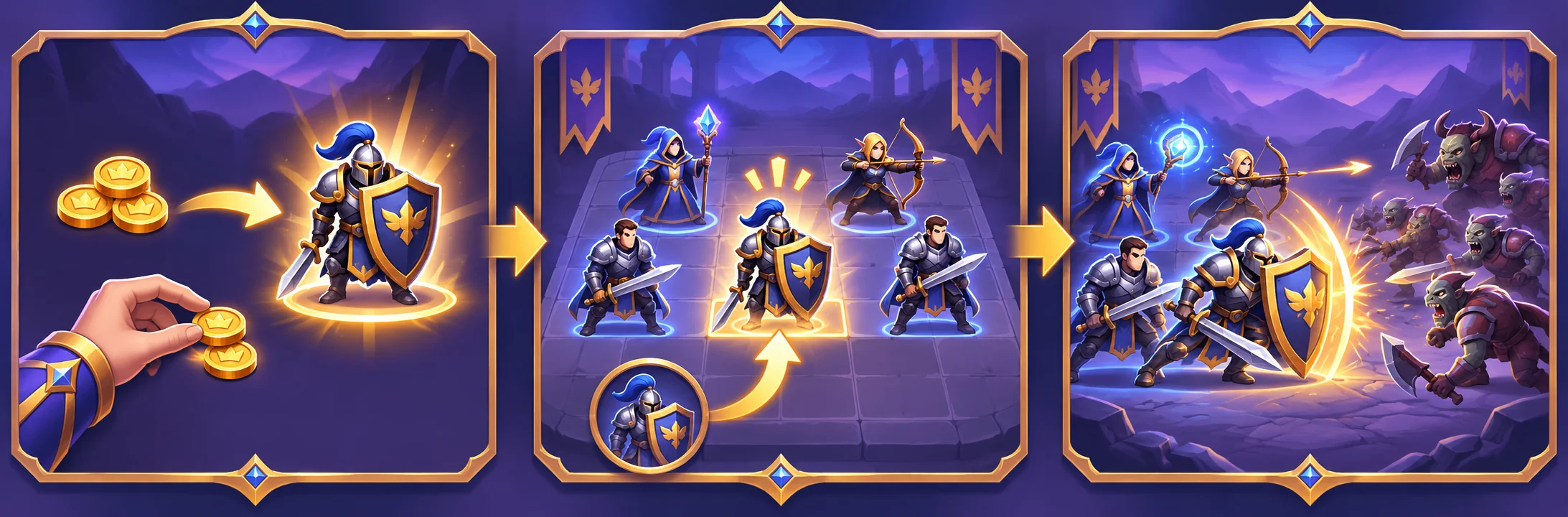
Create meaningful alternatives rather than one obvious high-stat purchase. A cheaper recruit can fill a missing role now; saving can buy a stronger option later; refreshing can improve the odds while consuming the reserve. Keep team capacity and replacement rules visible so spending cannot silently discard a useful unit.
Show spending consequences in combat
Before combat begins, let players inspect formation positions and the enemy’s broad threat. Explain which allies protect one another or can reach a target. The preparation view does not need to predict exact battle outcomes, but it should let a player form a hypothesis such as ‘the shield unit can hold while ranged allies attack.’
During automated combat, show the role each unit actually performed. A readable attack animation, a short trait cue, or a damage event can explain why the front line collapsed. Avoid flooding the screen with numbers; surface the one or two events most relevant to the next choice.
Return battle evidence to the next shop
After a battle, return evidence to the next shop. Show a concise recap of a team’s weak role, a position that exposed a unit, or a trait that activated. Let the player change formation or buy a counter before the next fight. Losing should reveal a plausible adjustment, not simply require more spending.
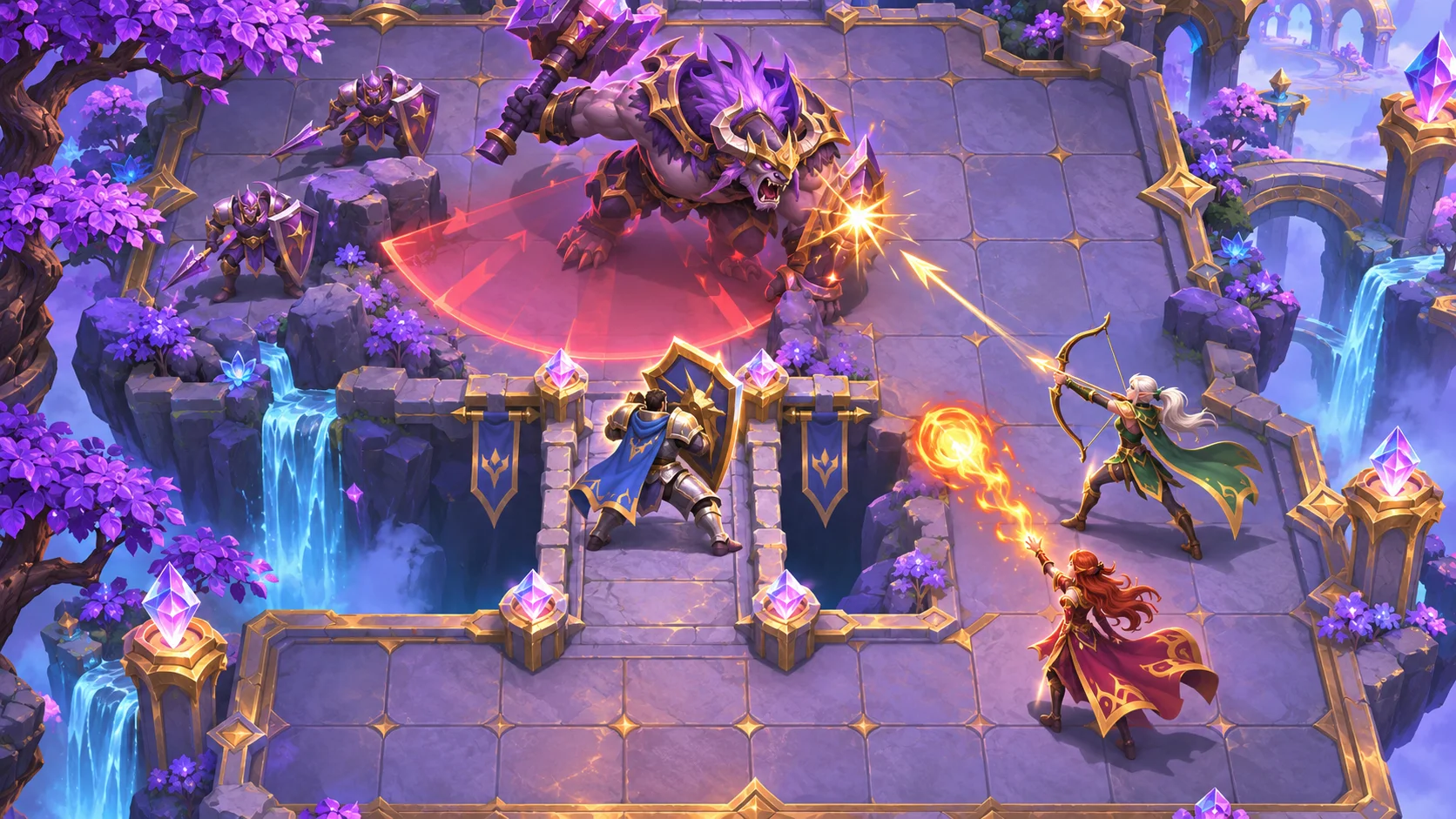
Test a fixed sequence of three shop-and-battle rounds. Ask players what they intend to buy before each round, what happened in combat, and what they would change. For a related resource-to-combat loop, see an economy-to-combat loop guide. Pass when purchases alter a visible team role and battle feedback informs the next economy choice.
FAQ
How does an auto-battler economy loop work?
A useful economy-to-combat loop lets players earn or preserve currency, choose units or upgrades, assemble a team, and see those choices affect an automated battle. After combat, the result should provide evidence for the next purchase or formation change. Keep the cost, role, and timing of each decision visible so the loop feels strategic rather than random.
How can spending decisions affect combat?
Tie purchases to concrete team roles, such as frontline protection, ranged damage, or disruption. Show which unit or trait changes when an item is bought and let players compare spending now with saving or refreshing the shop. Then make the combat result readable enough that players can tell whether that purchase helped.
How do you keep shop choices readable?
Show item costs, team capacity, refresh behavior, and the basic effect of each recruit. Offer different useful options, such as filling a missing role, improving a synergy, or saving currency for a later round. If a decision has a risk or delayed payoff, explain it before the player commits instead of hiding the rule.
What should you test in an economy-to-combat loop?
Use a repeatable sequence of shop choices and battles. Ask players to predict what a purchase will change, observe the automated fight, and choose a follow-up. Track whether they understand the result, whether multiple team plans can succeed, and whether a loss suggests an actionable adjustment rather than an unexplained demand for more power.