Set the farming and exploration baseline
Map the weekly farm routine before adding exploration rewards: planting windows, watering, harvesting, selling, and available free time. Then identify where the player can leave the fields without losing an entire season to chores. The loop should fit the existing calendar rather than compete with every essential task.
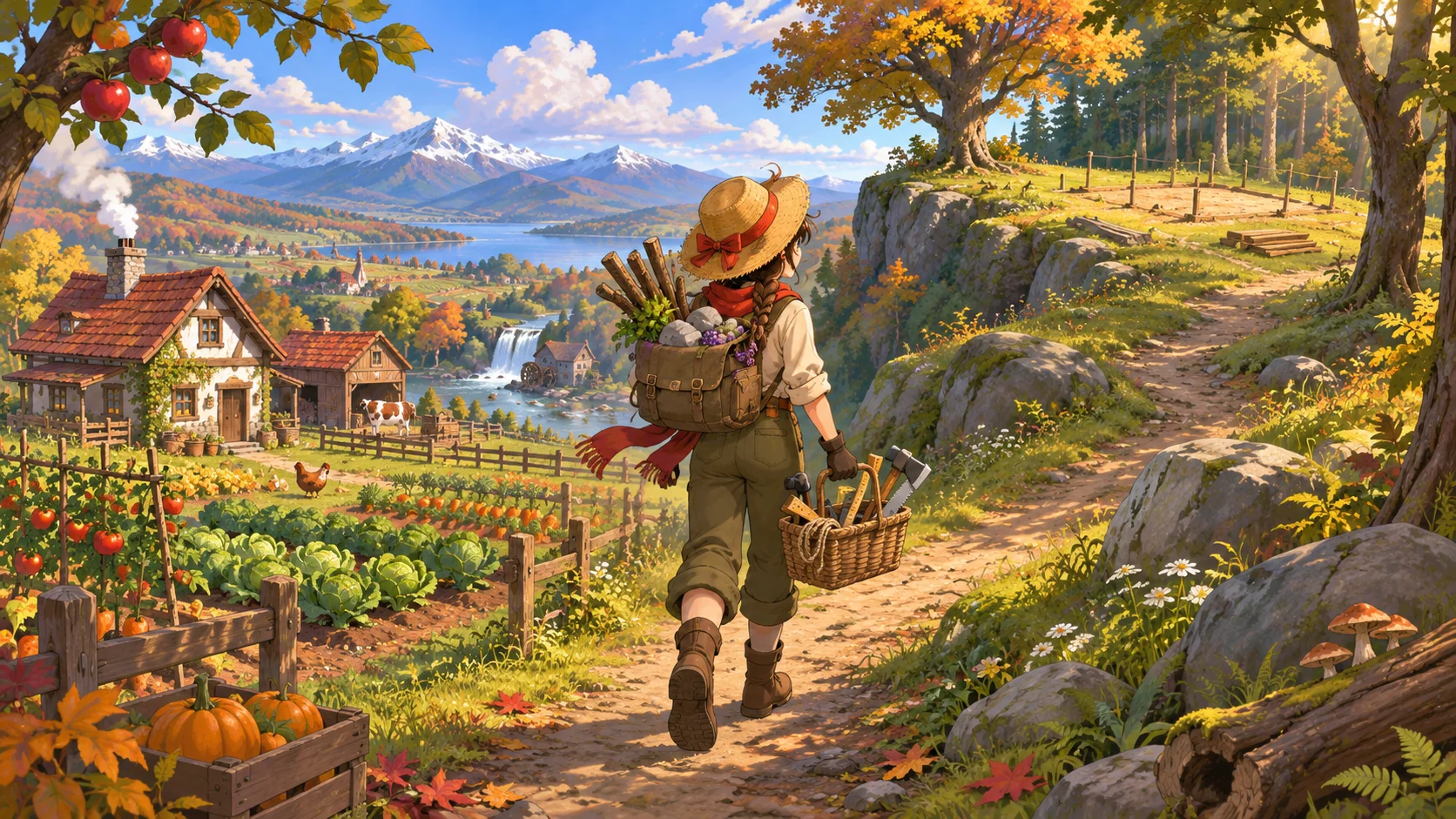
Give the surrounding area a few clear points of interest with different purposes. A hillside might reveal stone, a creek could uncover a water route, and an old shed may hold a building plan. Each outing should answer a question or provide a resource that has a later use.
The official Seasons Turning listing describes an exploration-focused farming simulation with discovered seeds, puzzles, dungeons, and a cyclical clock affecting seasons and activities. This is context only; the exploration-to-construction reward loop here is original. official source.
Make discoveries useful for construction
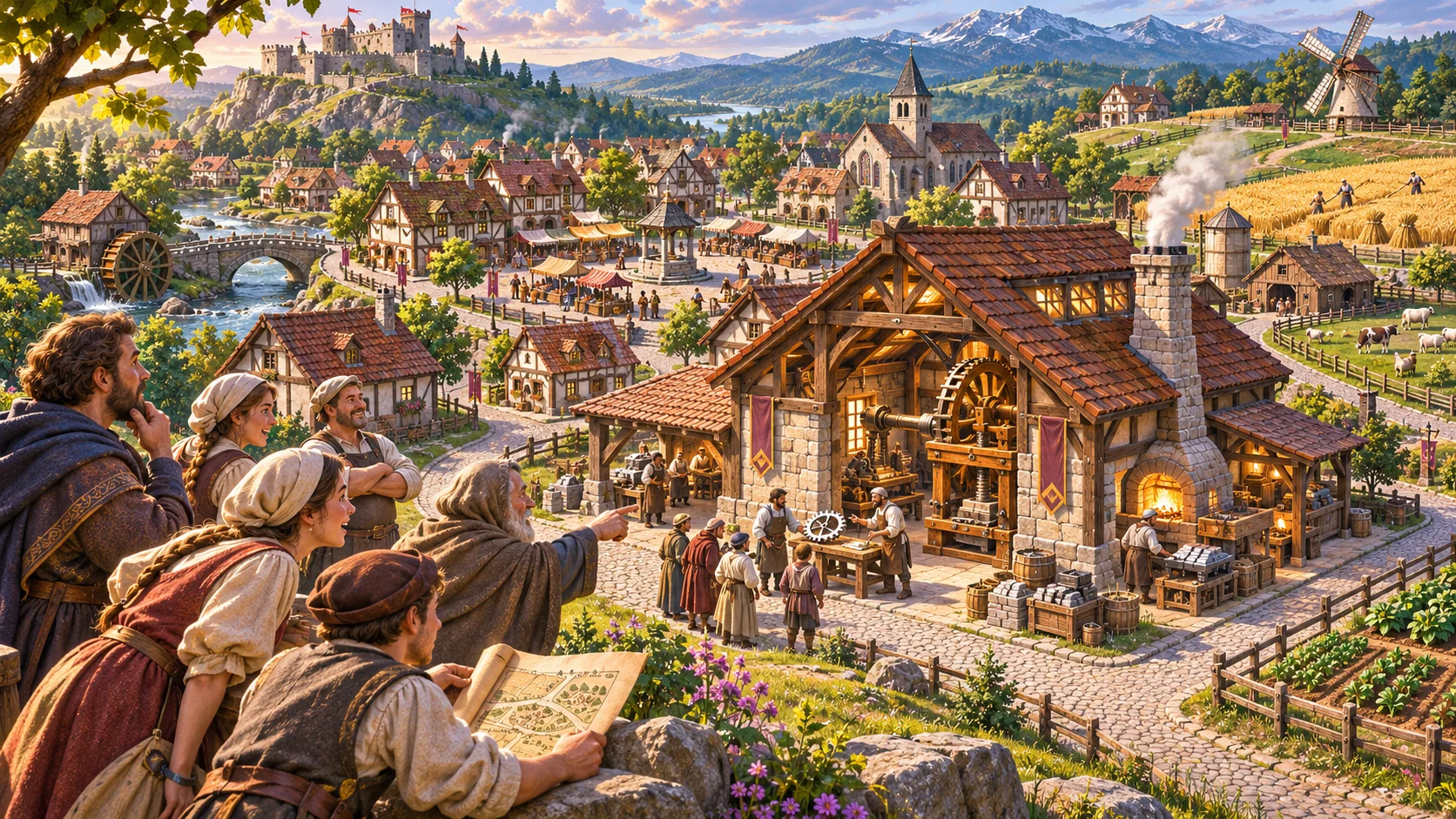
Connect discoveries to a project requirement. A blueprint can reveal needed parts, while gathered timber, stone, or glass becomes a concrete contribution. Show the player how much is needed and what the finished building changes before they commit scarce materials.
Avoid making every discovery a pile of generic currency. A new spring could enable an irrigation channel; a cleared ruin might provide a greenhouse frame. Specific rewards help the world feel connected and let players remember why a particular outing mattered.
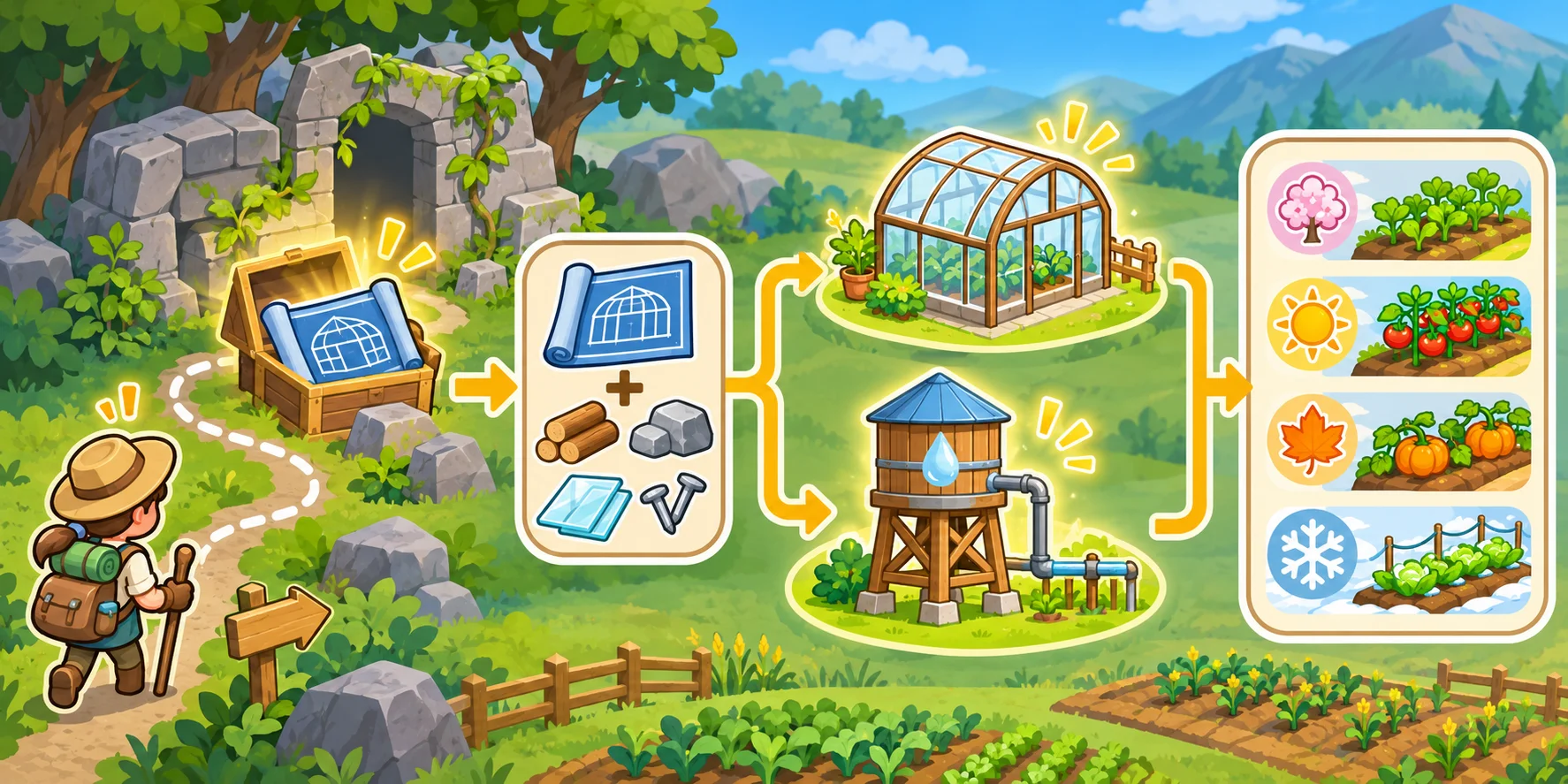
Let players choose between a small immediate upgrade and saving for a larger structure. The decision should be understandable from the farm’s current needs. A seed catalog, project board, or town conversation can display prerequisites and help prevent a discovery from becoming an untracked inventory item.
Sequence projects around seasons
Time construction starts and benefits around the calendar. A greenhouse begun before winter may extend planting options, while a bridge finished before heavy rain could shorten a spring route. Give enough warning for planning, and avoid making a single missed day invalidate a long project.
Use construction stages that preserve progress across seasons. Players can gather materials, prepare the site, and finish later rather than carrying every item at once. Show which tasks are complete and what remains, especially when the player must switch back to farm maintenance.
Balance the loop so exploration supports farming rather than replacing it. A completed building might reduce watering travel or enable a new crop, but still leave meaningful planting and harvest choices. Test how often players leave the farm and whether construction rewards arrive at useful moments.
Test the full loop and pacing
Play through several in-game weeks and record exploration time, materials collected, project completion, farm output, and missed activities. Include players who prioritize crops and players who explore immediately. The same content should offer a sensible route for both styles.
Test a missed season, an incomplete project, and a discovery whose materials are already spent elsewhere. Give players a recovery path such as another source, a delayed build window, or a substitute material. Communicate the consequence before a seasonal deadline passes.
Accept the loop when discoveries lead to visible farm changes, projects fit the calendar, and players can explain why an outing was worthwhile. For adjacent production progression ideas, see the city-building guide. AI can help outline alternative project rewards; pacing and economy need playtesting.
FAQ
How do you build an exploration-to-construction loop for a farming sim?
Map the farm calendar, choose a few meaningful destinations, and connect each discovery to a visible building project. Show requirements and benefits, then test whether outings fit planting and harvest duties without making one missed date ruin progress or waste gathered materials.
What should exploration unlock in a farming game?
Let discoveries reveal a useful plan, resource source, route, or farm capability. Tie each reward to a recognizable need such as irrigation, storage, shelter, or seasonal growing so players understand why they explored and how the find changes their daily routine.
How can construction fit seasonal farming?
Give projects clear stages and enough warning to prepare before a seasonal opportunity. Let players carry progress across weeks, and make the building’s benefit visible in the next farm routine instead of requiring perfect timing or interrupting every essential planting and harvest task.
What should you test in a farming exploration loop?
Track outings, resources, completed projects, farm output, and missed activities over several weeks. Test different play styles, missed deadlines, incomplete builds, and spent materials to ensure players can recover, finish a project later, and still make useful progress. This makes the cause of change easier to understand and gives players a clear next step.