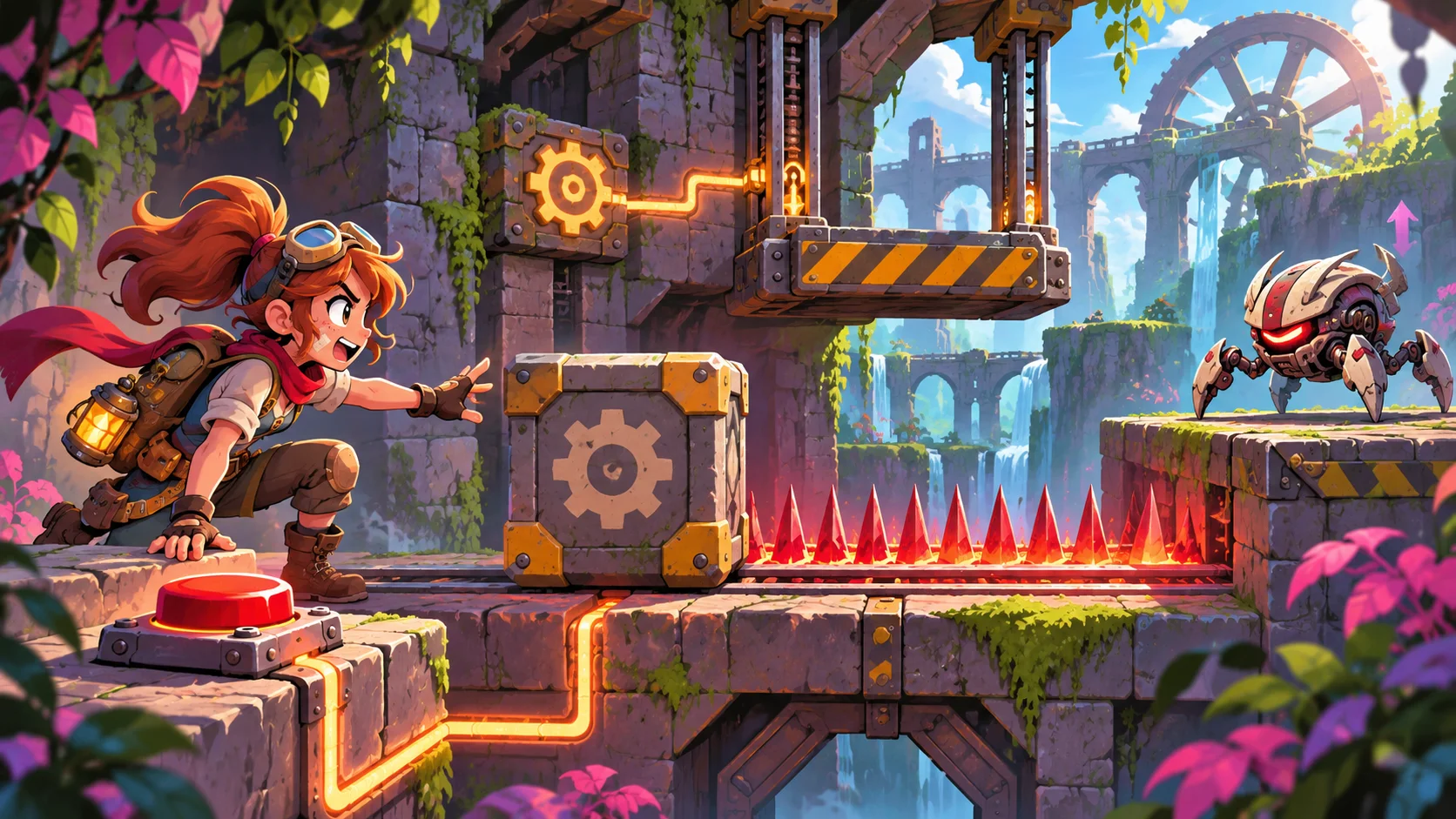
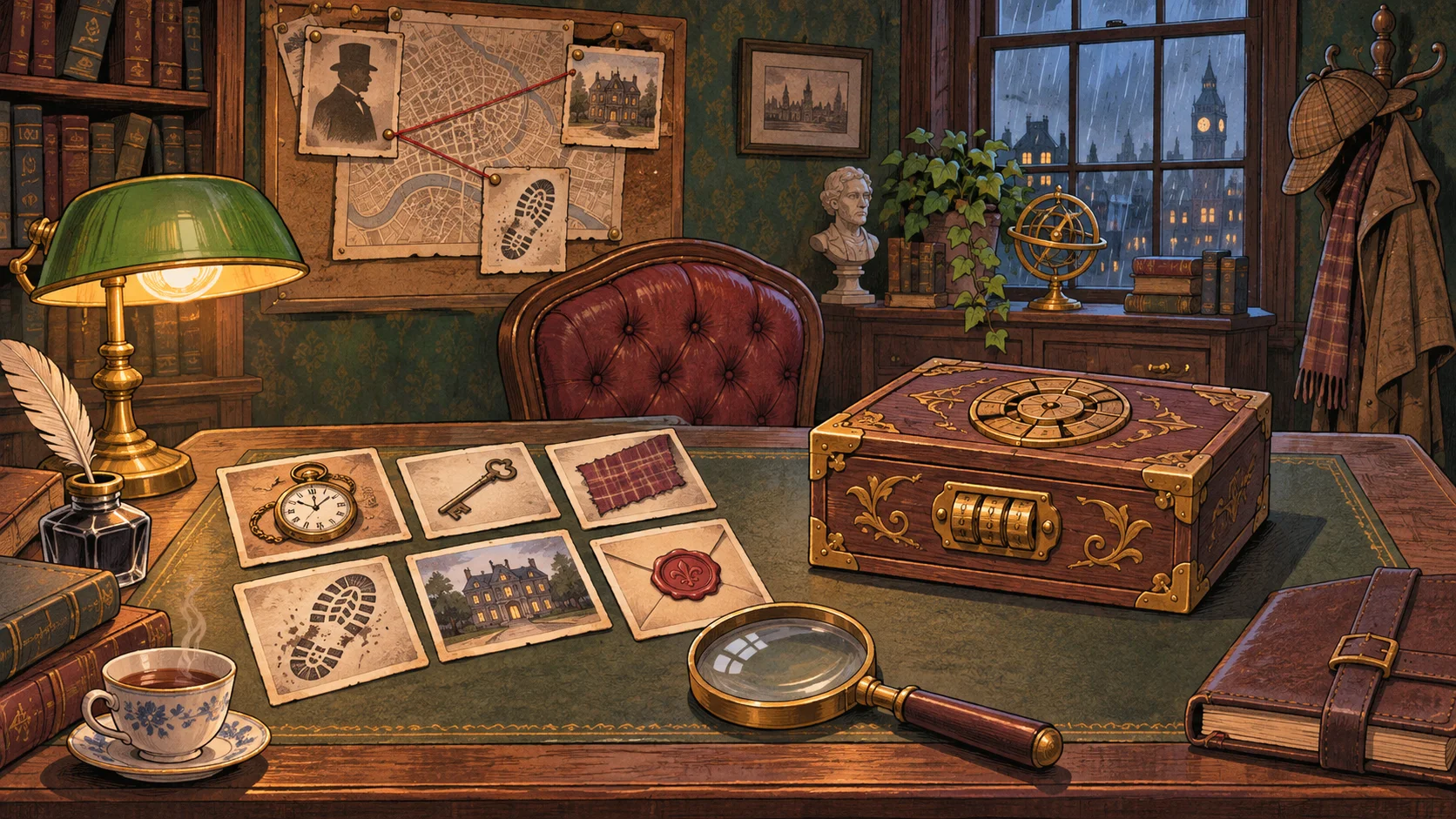
Establish communication and puzzle baselines
Map what each partner can see, touch, and communicate before adding a new rule. A cooperative puzzle needs a reason for two roles to coordinate. If both players already have the same information and controls, communication may become unnecessary overhead.

Record the signals the game supports: voice, pings, symbols, shared notes, or object movement. Make sure important puzzle information can be described through the intended channel. A puzzle can challenge memory or inference without requiring players to guess what the interface means.
The official We Were Here Together listing describes a co-op-only escape-room experience where partners communicate to solve puzzles and encounter new mechanics. This supports co-op puzzle context only; the teaching sequence proposed here is original. See the official source for this context.
Teach a new rule in a safe room
Present one new mechanic with a clear visual cue and an immediate, low-risk interaction. Let players test it and see a consistent response. A first encounter can be a small optional task that demonstrates what changes when a control or symbol is used.
Give each partner a complementary role in discovery. One may observe a pattern while another tests the matching control. Use a confirmable result such as a light, sound, opened panel, or shared world change so partners can verify they interpreted the clue correctly.
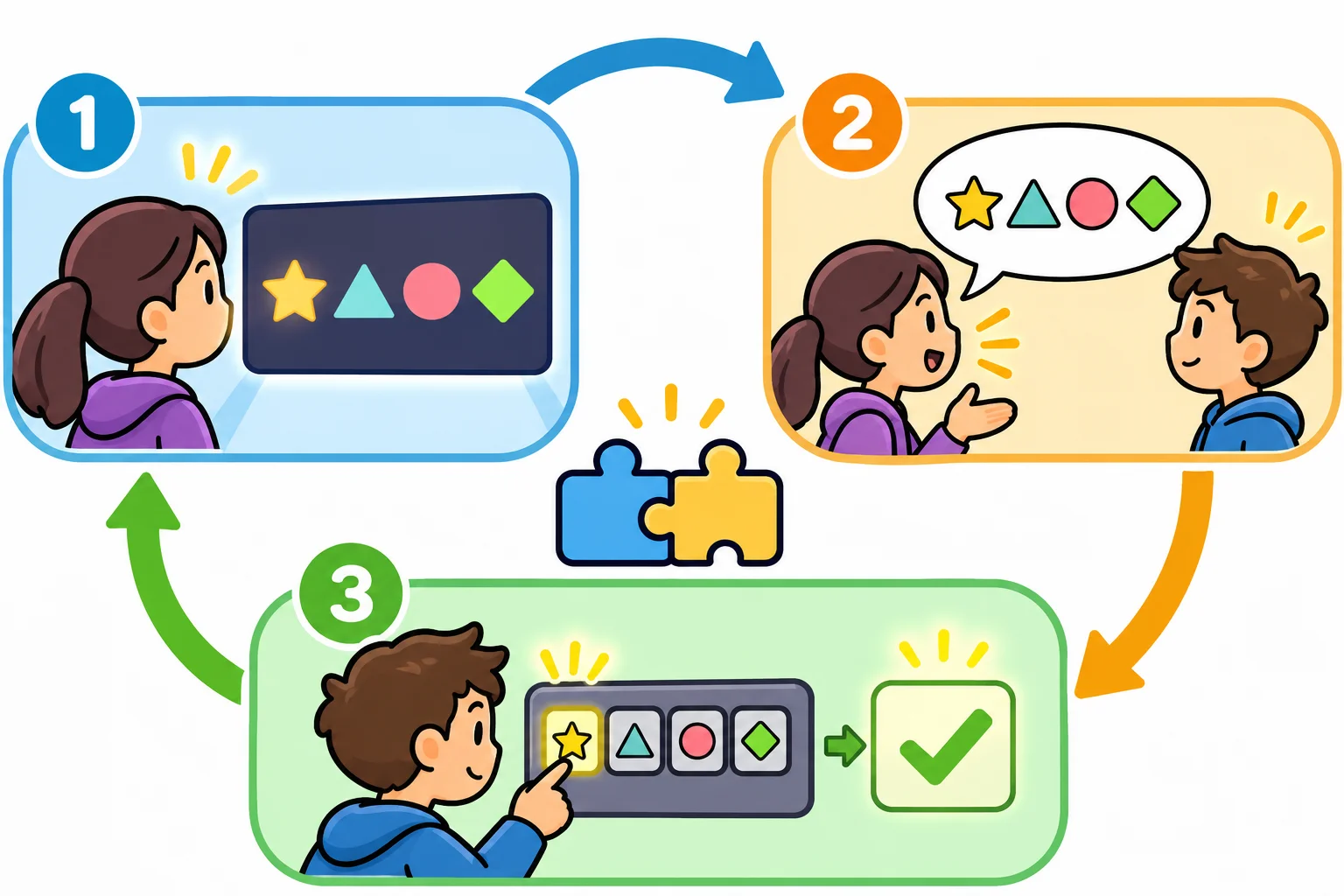
Avoid teaching the rule through failure alone. A mistake can provide feedback, but players should have enough context to form a hypothesis first. If the rule is intentionally unusual, provide a safe retry and a way to compare what changed.
Combine rules through partner roles
After the basic rule is learned, combine it with one familiar mechanic. A color sequence might now depend on the room order, or a sound cue might control the timing of a known switch. This raises the reasoning demand without introducing several new controls at once.
Keep partner roles balanced across the level. If one player always reads and the other only presses buttons, switch information access later. A good progression asks both partners to contribute observations and test hypotheses, even when they see different sides of a puzzle.
Use a hint system that supports communication rather than replacing it. A hint can direct players to compare symbols, recount a sequence, or test a control. Avoid revealing the full solution unless an accessibility or stuck-state option requires it.
Test progression and communication failures
Playtest with pairs who have never seen the puzzles. Record how they describe clues, when they disagree, how often they retry, and which hint they use. Observe whether a new rule is understood before it is combined with another one.
Test a missed signal, an incorrect description, a player who dominates the controls, and a temporary disconnect. Provide a clear recovery path such as a room reset or shared clue replay so communication friction does not permanently block progress.
Accept the progression when each rule is learned before it is combined, both players contribute, and difficulty grows through inference rather than ambiguity. See the environmental interaction guide for staged mechanic introduction.

FAQ
How do you build co-op escape-room levels that teach new rules?
Introduce one mechanic in a safe, readable room, let both partners observe its feedback, and then require them to communicate what they learned. Later rooms can combine the rule with a familiar mechanic. Test whether players can explain the rule before the harder puzzle.
How many new puzzle rules should a level introduce?
Usually introduce one major rule at a time, especially when partners have different information. Small variations can add depth, but avoid stacking several unfamiliar interactions before players have a chance to test the first one together. This gives players useful feedback and helps them plan a next action.
How can co-op puzzles teach communication?
Give partners complementary views or actions and make the information gap understandable. A player may describe a symbol pattern while the other operates a control. Ensure communication is needed for reasoning, not made difficult by unclear language or hidden controls.
What should you test in co-op rule progression?
Playtest with pairs who do not know the puzzle and observe explanations, retries, hint use, and time to solve. Test a missed clue, one partner taking over, and a disconnect. Both players should understand how a new rule was introduced and applied.