Choose a small set of verbs and objects, such as observe, cast, weigh, tow, and signal. Make feedback and recovery legible, then test the system in a short repeatable scenario. Prototype one harbor puzzle before adding a network of connected locations.
Define a small puzzle rule grammar
Choose a few verbs the player already understands, such as observe, cast, weigh, tow, and signal. Give each verb a predictable effect on objects in the harbor. A tide gate might respond to a weighted net or to a floating marker pulled into place; either action changes the same gate state and lets the boat pass. Keep this first rule set small enough to explain with the world itself.
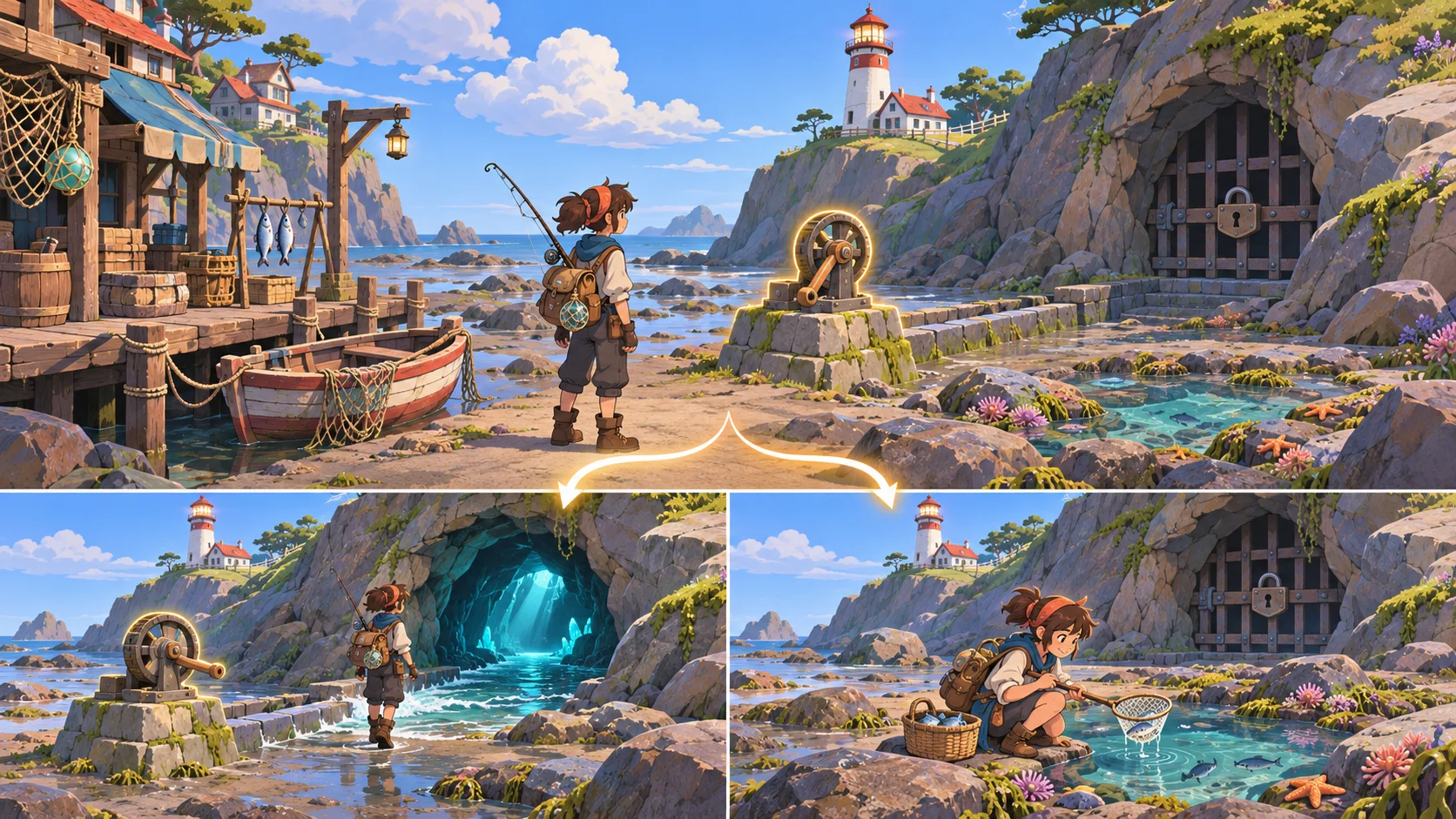
The official DREDGE listing from Black Salt Games describes a fishing adventure about selling catches, upgrading a boat, and exploring an archipelago. It supports the fishing and exploration context only; the puzzle rules here are original. Use familiar fishing tools as puzzle verbs, but make the rules original and consistent across locations.
Build multiple valid solution paths
Write the intended outcome first, then design two ways to produce it. A cave entrance may open when the player shifts cargo to raise a boat over a submerged sill, or when they wait for the tide to expose a shallow channel. Both routes reach the same goal, but one spends time and the other asks the player to understand the boat’s weight and waterline.
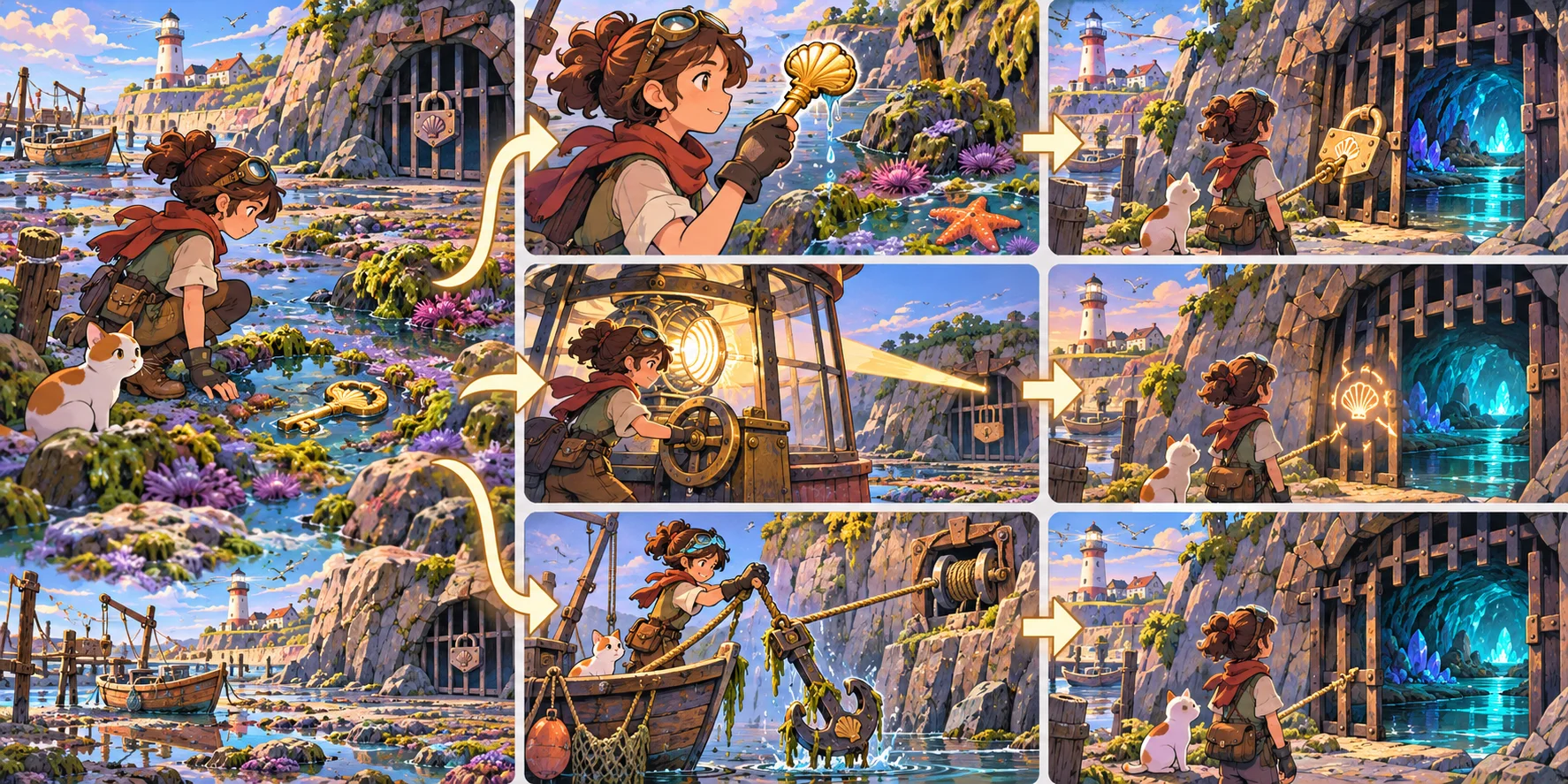
Place evidence for each approach where the player can inspect it: a tide mark on the rock, a floating buoy, or a boat that sits lower under a heavy load. Avoid requiring an item that can be sold or discarded without warning. If a player notices a different valid interaction, let the simulation respond consistently rather than rejecting it because it was not the authored sequence.
Make interactions and outcomes legible
After each action, show the world state that changed. A buoy should drift, a gate should lift, or a channel marker should move. Keep the cause and effect close together so the player can learn a rule from one attempt. When an action does not work, indicate whether the target was wrong, the tide was low, or the boat lacked clearance instead of returning no response.
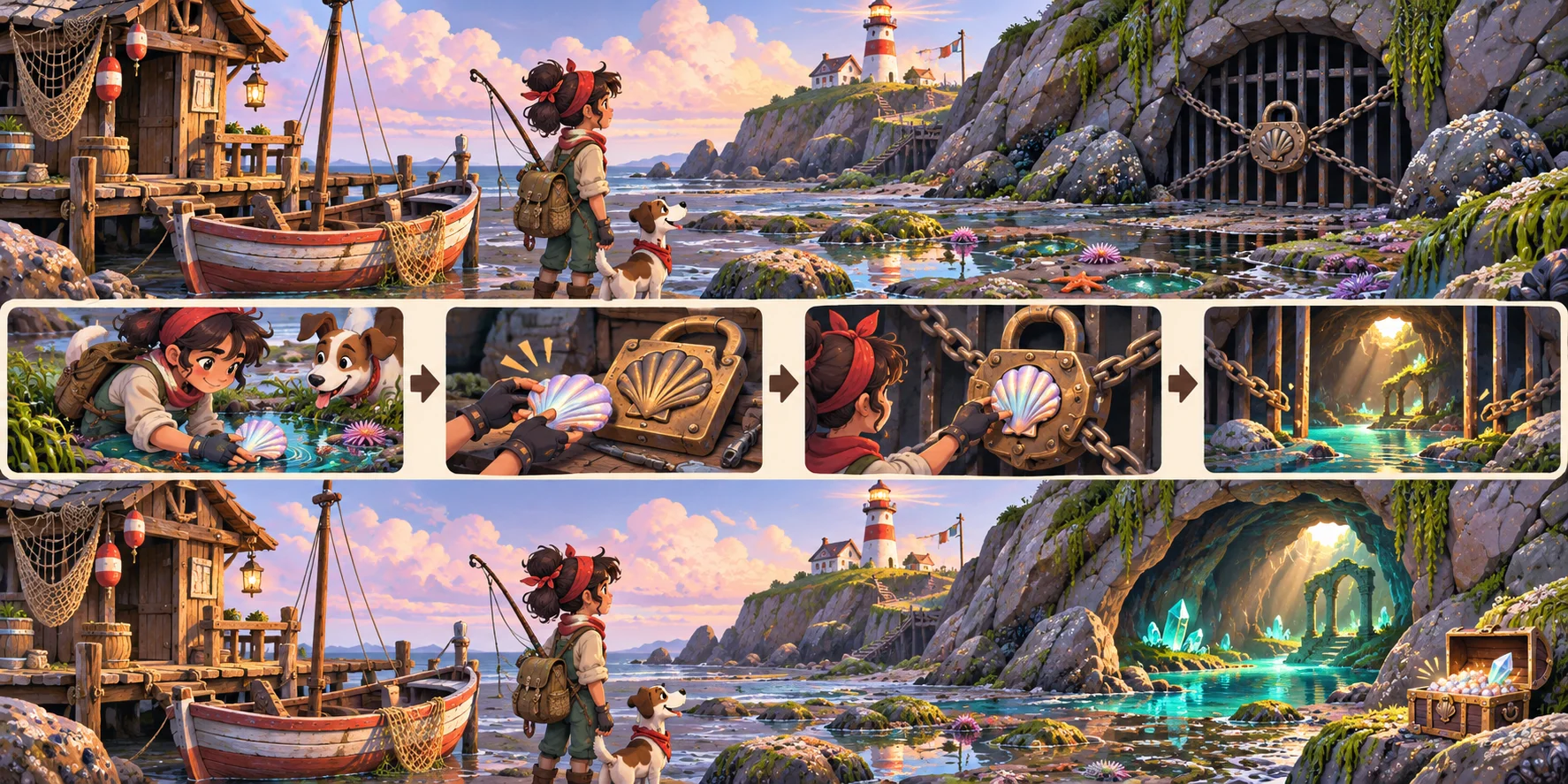
Compare solution routes for clue strength, number of actions, time cost, and recoverability. A clever route can be shorter, but it should not require a hidden input or a missable object with no replacement. Keep the main goal visible from the harbor, and let the player understand how each successful action moves closer to opening the sea cave.
Test edge cases and solution fairness
Ask a new player to explain the rule they inferred before they act, then observe whether the harbor supports that interpretation. Test each intended route from a fresh save and try plausible unintended combinations. Check cargo changes, tide timing, tool availability, and reset behavior so a puzzle cannot become unwinnable after a harmless experiment.
For a related environmental puzzle approach, see a related guide to environmental puzzle rules. Pass when players can reach the same goal through two fair methods, explain why each method works, and recover from a failed experiment without guessing at hidden rules.
FAQ
How do you design multiple-solution fishing puzzles?
Choose a clear outcome, then create two interactions that produce the same world state. A tide gate might open when cargo raises a boat over a sill or when a player waits for a channel to become shallow. Place evidence for both routes in the harbor and make their costs visible so the player chooses with intent.
How can original puzzle rules stay understandable?
Use a small set of predictable verbs such as observe, cast, weigh, tow, and signal. Show the effect of each action through a visible world change and keep the rule consistent across locations. Players should be able to infer a likely interaction from the objects and clues around the puzzle rather than rely on arbitrary combinations.
How do you keep alternative solutions equally fair?
Compare each route for clue quality, steps, time cost, required tools, and recovery after mistakes. One solution may be faster, but it should not depend on a hidden input or a missable item with no replacement. Give enough environmental evidence for each route and respond consistently when a player finds another valid interaction.
What should you test in a fishing adventure puzzle?
Test each intended route from a fresh start and try plausible unintended combinations. Check inventory changes, tide timing, tool availability, and reset behavior. Ask players to describe the rule they inferred before acting, then confirm that feedback makes a successful or failed action understandable and that an experiment cannot permanently block progress.