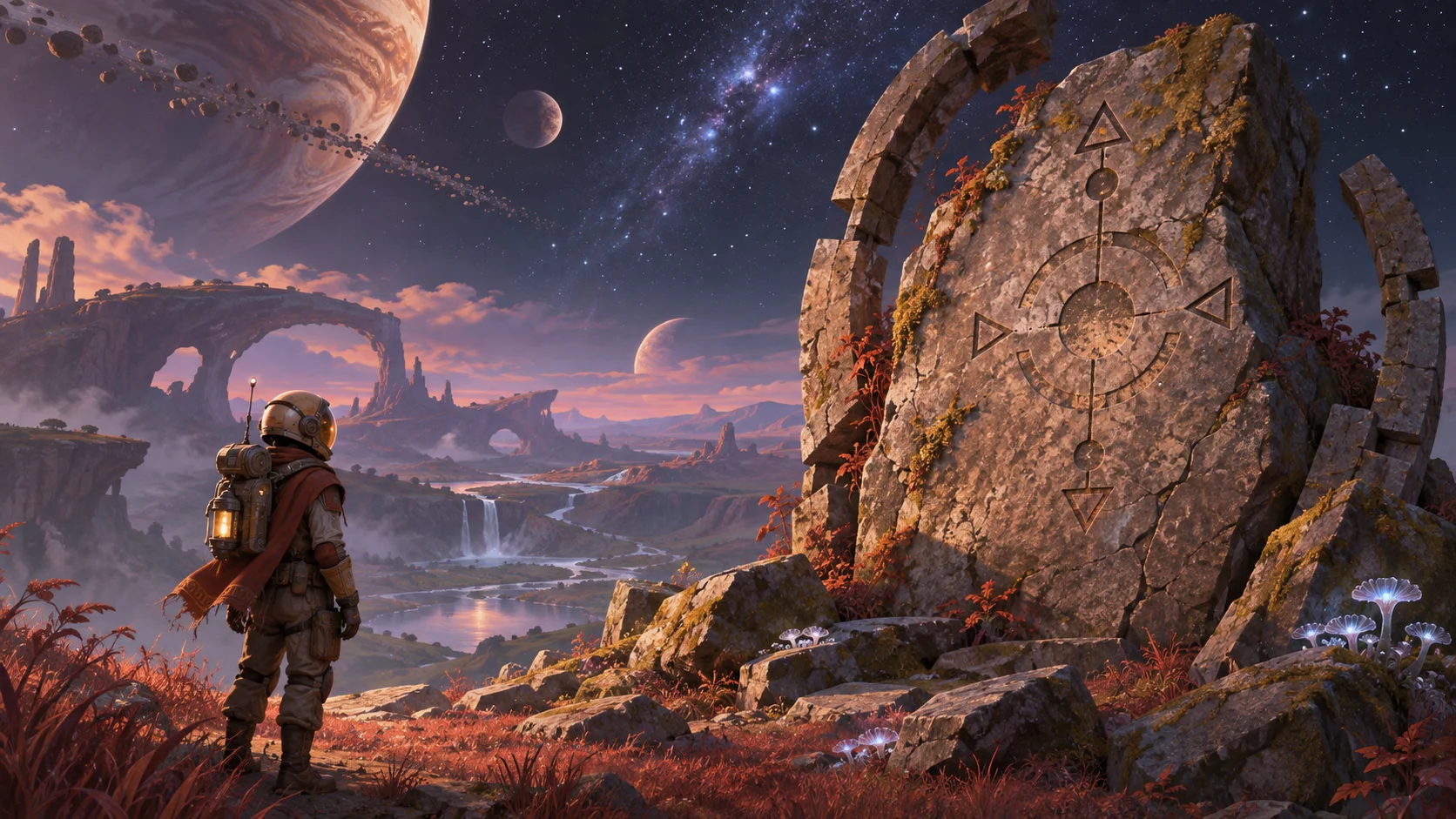
Environmental puzzles give players a reason to inspect a room, connect clues, and change the world outside a card battle. In an original card adventure inspired at a high level by Inscryption’s mix of deckbuilding and escape-room puzzles, build the room as a small, testable system: visible clues suggest a rule, interactions change a readable state, and the solved state provides a useful reward. Keep the puzzle and its art original.
Start with a readable room-state puzzle
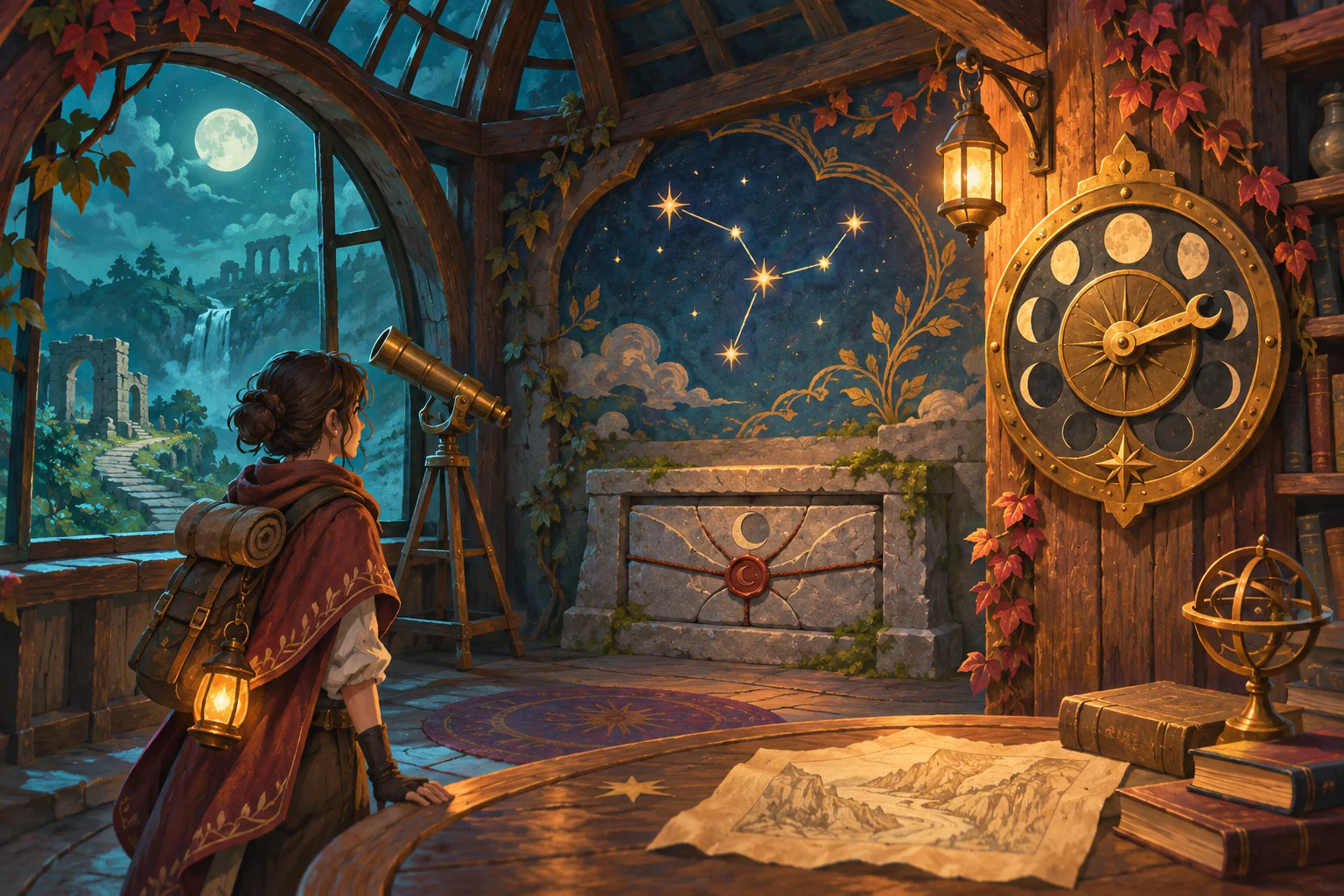
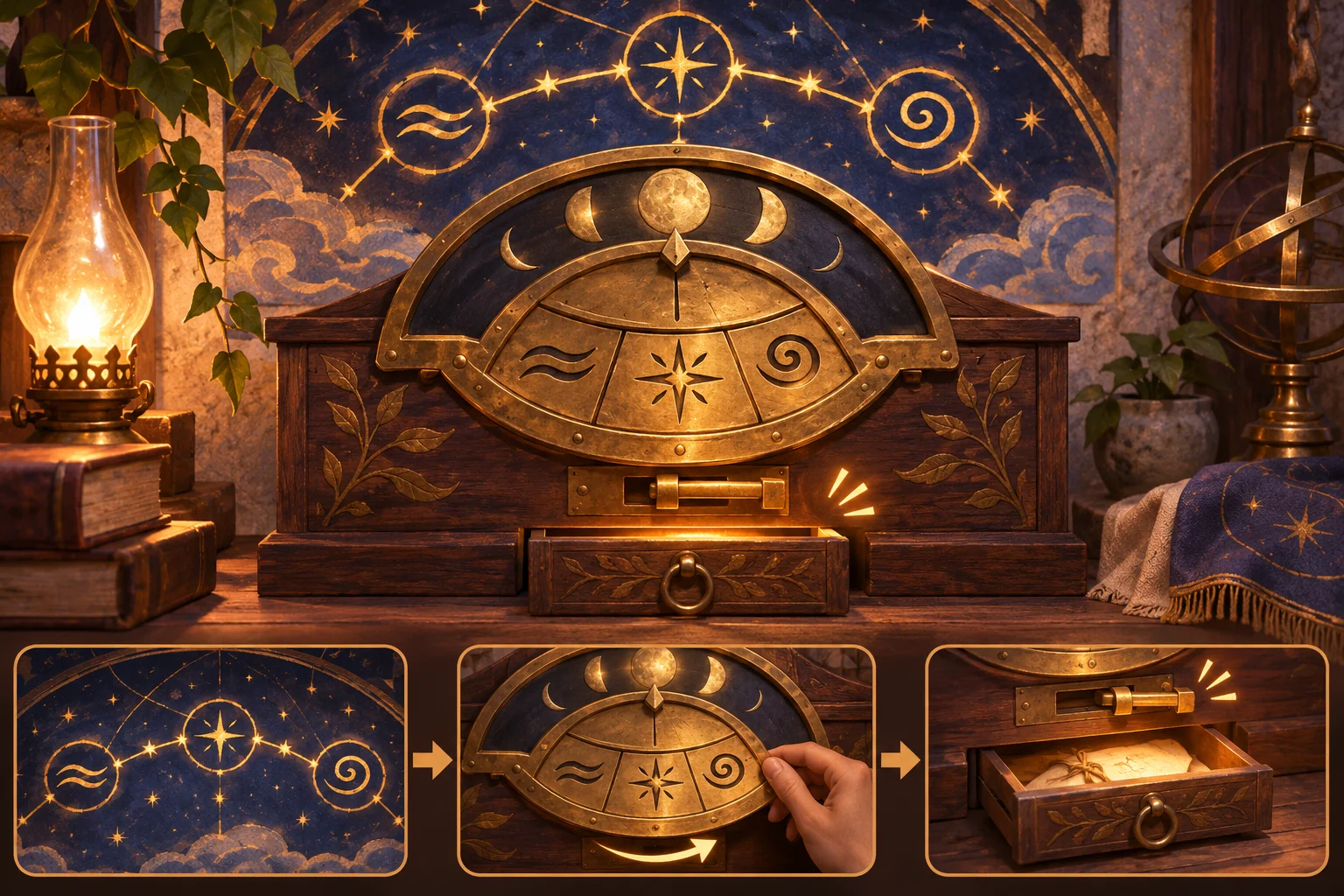
Write down the player’s goal in one sentence: align a dial, restore power, open a drawer, or reveal a route. Then list the room states that matter. A simple observatory puzzle might have a closed drawer, a movable moon dial, and a star chart whose three shapes encode the dial’s target position. The puzzle is not “guess the right symbols”; it is “notice that the chart describes the dial, test a position, and observe whether the drawer changes.”
Separate what players can see from the hidden rule. They should be able to inspect the dial, chart, and drawer before acting. If a clue is intentionally ambiguous, provide another way to test the interpretation without losing progress. For every important state, decide what the player sees, hears, or can interact with. This prevents a correct action from appearing to do nothing.
The official Inscryption listing describes a card-based adventure that blends deckbuilding with escape-room-style puzzles, and invites players to uncover cabin secrets. That supports the broad reference point only; the observatory, its rule, and the implementation below are an original example. For another way to structure consequential decisions, see this guide to branching encounter maps for a deckbuilder.
Model clues, interactions, and state changes
Represent the puzzle with a compact state model before decorating it. For example: dial_position has three values; chart_read tracks whether a player inspected the mural; and drawer_open changes only when the dial matches the chart. An interaction updates one variable, checks a condition, then signals the result. A successful alignment can click into place and release the drawer. A wrong alignment can produce a distinct soft stop, while leaving the dial available to try again.
Keep the clue-to-action relationship consistent. If a crescent on the chart maps to the crescent on the dial, reuse that mapping elsewhere rather than changing symbols arbitrarily. Players can still reason through uncertainty, but they need a stable rule to learn. Provide feedback at the same time and place as the interaction: a light, sound, animation, or short description should confirm whether the dial moved, caught, or completed the pattern.
Make the puzzle’s data explicit enough to test. A small specification might contain: the initial state, the set of legal actions, the condition for success, the observable feedback for each action, and the reset behavior. This can be drafted with an AI tool, but inspect every transition yourself. Do not let generated prose or code become the authority for solvability; run the puzzle from its starting state and check that the clue supports the intended solution.
Connect a solved puzzle to card progression
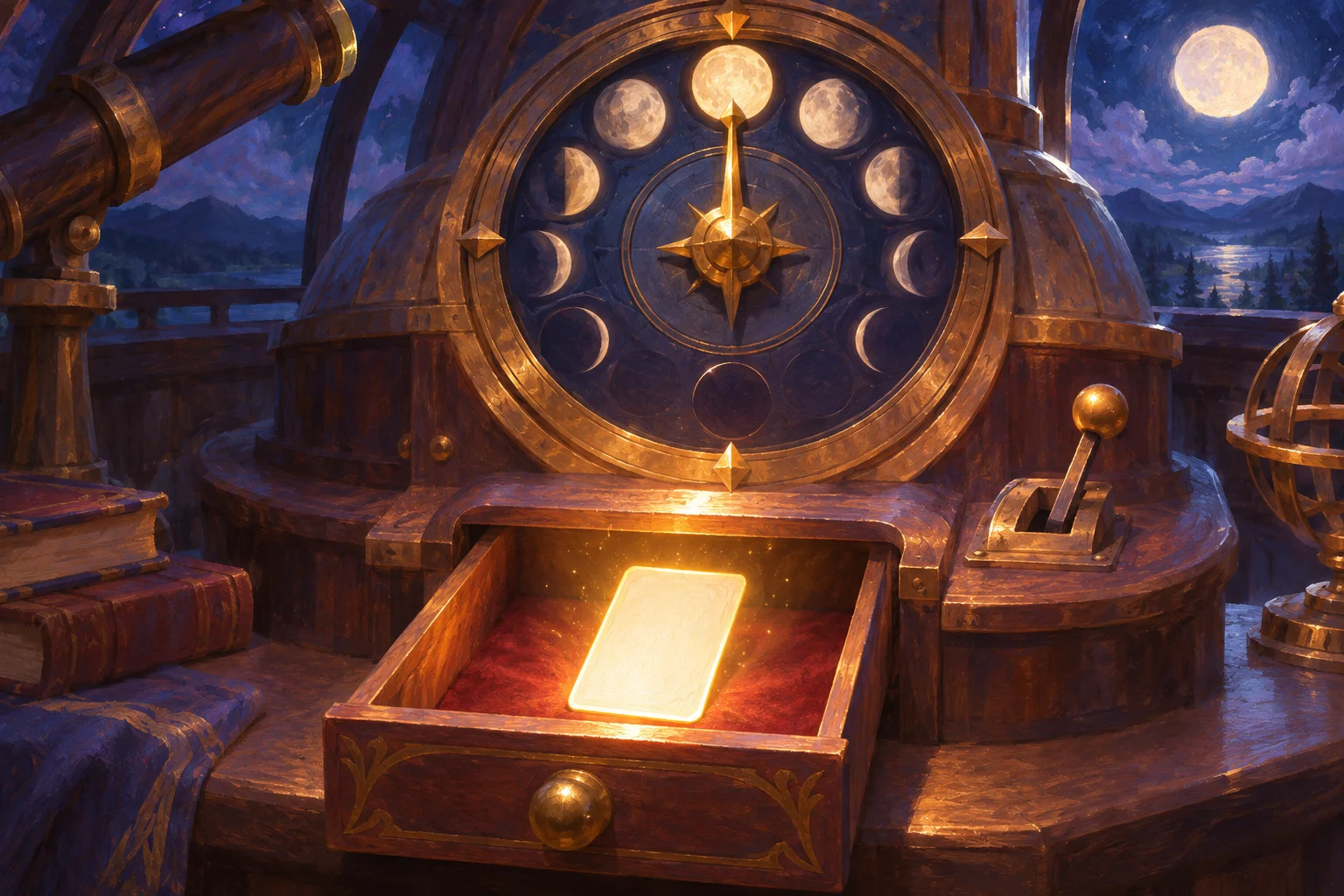
The room reward should matter to the larger adventure. It might unlock a new card, reveal a route, restore a resource, or explain a rule that becomes useful in a later encounter. Give the reward a clear relationship to the action: opening the observatory drawer might reveal a unique blank card token that the player can take to a deck-building screen. Keep the reward modest enough that the puzzle teaches or expands the loop rather than replacing it.
Decide whether puzzle progress persists through defeat, leaving the room, or restarting a run. Each choice changes the cost of experimentation. Persistent solutions can reward learning and reduce repeated chores; resettable states can make a room feel like a fresh challenge. Explain the rule before a reset can erase effort. If a solved room opens a permanent route, show that result in the map or room dressing so players do not need to solve it again accidentally.
Allow a small number of valid approaches when the fiction supports them. A player might infer the chart directly, or first rotate the dial and use its clicks to count positions. Both can lead to the same state. Alternate reasoning is different from accepting every random input: keep feedback precise enough that attempts build knowledge. Add a reset lever or make the mechanism reversible so an error does not trap the player.
Playtest hints, resets, and alternate solutions
Test without explaining the intended rule. Ask players to say what they notice, what they think each object does, and what they expect before they interact. Record the first moment they form a useful hypothesis and the point where they stop making progress. A useful puzzle lets players connect evidence; a frustrating one hides the only relevant object, changes a rule without warning, or gives no response to a meaningful action.
Check the state machine as well as the presentation. Try every legal interaction, repeat actions, leave and re-enter, and trigger the reset. Confirm that the drawer cannot open in an unintended state and that a solved puzzle cannot be accidentally undone if progress should persist. Test the puzzle at the actual camera angle and interface size; a symbol that is obvious in a design document may be too small in play.
Use AI to draft clue variants, state tables, or a lightweight prototype prompt, then compare the result against your written rules. AI can help explore wording and interaction ideas, but it does not prove that a puzzle is fair or solvable. Start an original game prototype with Seele’s AI game maker, then observe real players and revise the clue, feedback, and reward loop.
Frequently asked questions
How do you build environmental puzzles for a card adventure?
Give the player a clear room goal, a visible set of clues, and a limited group of interactions that change the room’s state. Make feedback show whether an action worked, then connect the solution to a useful card, route, resource, or rule. Test the puzzle from its initial state without explaining the intended solution.
What makes an environmental puzzle clue fair?
A fair clue is visible, readable in context, and consistent with the rule it teaches. Players should be able to test an interpretation and learn from the response, even when it is wrong. Avoid making success depend on an unrelated object, an unmarked pixel, or a symbol whose meaning changes without explanation.
How should a puzzle reward connect to card progression?
Choose a reward that extends the game’s existing loop, such as a new card, a route, or information that helps with a later encounter. Show the relationship between solving the room and receiving the reward. Keep its value proportional to the challenge so the puzzle adds a decision or discovery without making the card system feel irrelevant.
How can AI help prototype environmental puzzles?
Use AI to draft original clue variations, state tables, interaction descriptions, or a prototype specification. Then check every transition, reset, and success condition yourself and playtest with people who have not seen the design. AI can speed up iteration, but it cannot establish that the puzzle is understandable or fun without observation.