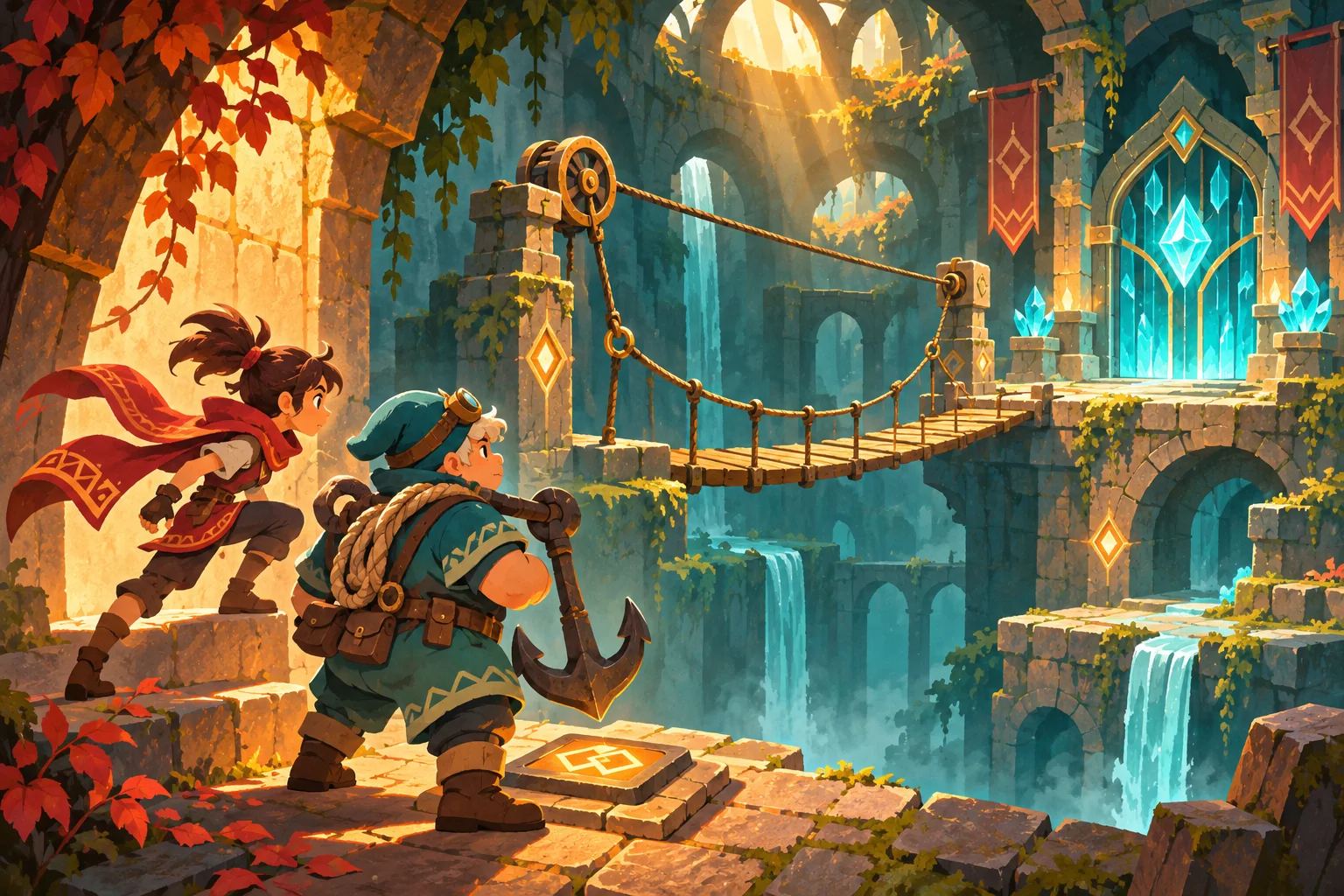
A connected base can give a precision platformer a useful place to regroup, but it also changes how players reach levels, return after a fall, and understand what progress survives. Keep the hub, level exits, checkpoints, temporary room state, and durable route unlocks separate. Then add one base-to-level loop without changing the movement and collision rules that make the existing platforming precise.
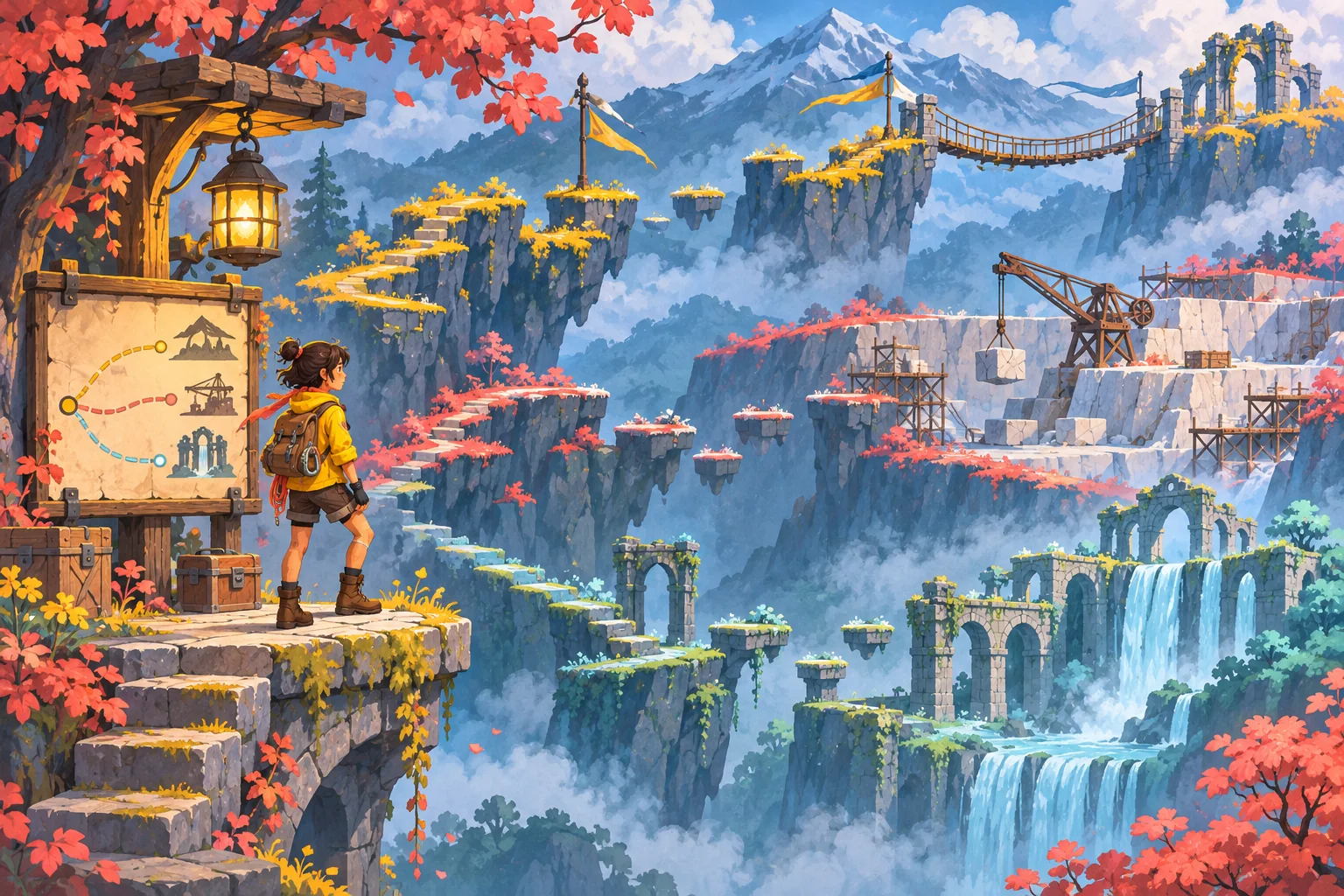
This guide is for extending an existing precision platformer. The climber, rooms, checkpoints, and route outcomes are invented. No project, level geometry, or save file was inspected.
Define what belongs in the safe hub
A hub can serve as a checkpoint, route map, upgrade space, or quiet room between challenges. Decide which interactions it owns and which belong inside the platforming levels. Keep the hub’s safe floor, return exits, and challenge triggers easy to distinguish. A visual map should help players predict their route, not hide a sudden change in movement or hazard rules.
| World state | Example | Lifetime question |
|---|---|---|
| Hub location | Cliffside lantern base | Does player return here after a fall or only after exit? |
| Route access | Wind bridge unlocked | Does access persist across rooms and sessions? |
| Checkpoint | Lantern inside a challenge | What local objects reset after death? |
| Temporary room state | Switch, moving platform, pickup | Does it reset on re-entry or checkpoint reload? |
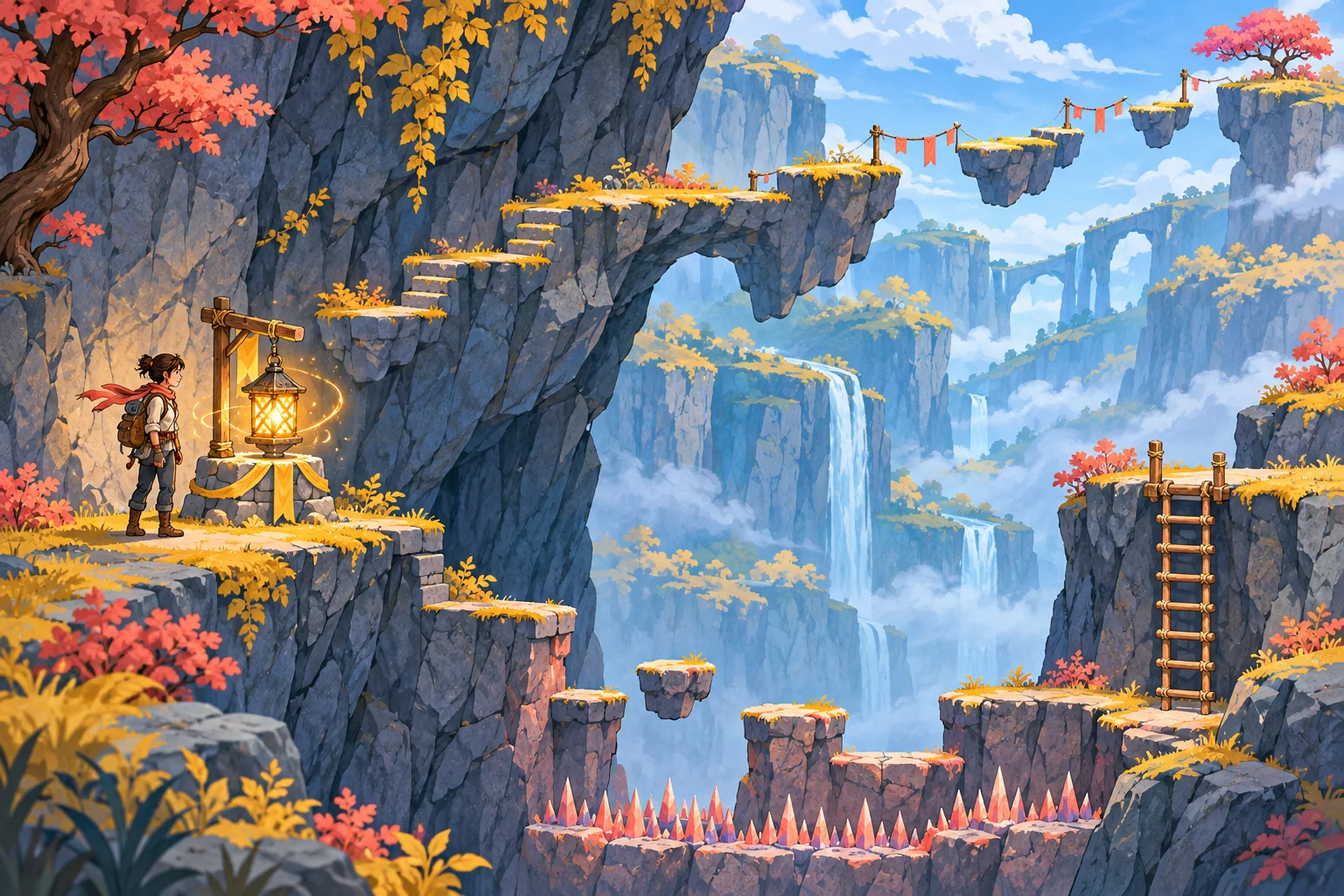
In the fictional Summit Lamp base, the player can choose between three routes and return to the same hub. A route flag remains unlocked after a fall, while a temporary bridge switch resets when the room reloads. These are teaching rules, not observed behavior. Your game should document its own reset boundaries.
Connect locations with explicit routes
Represent the base and level regions as stable locations connected by explicit exits or route links. Store the condition that opens a link separately from the map art that draws it. This lets designers move a painted path or change a bridge animation without rewriting which level is reachable.
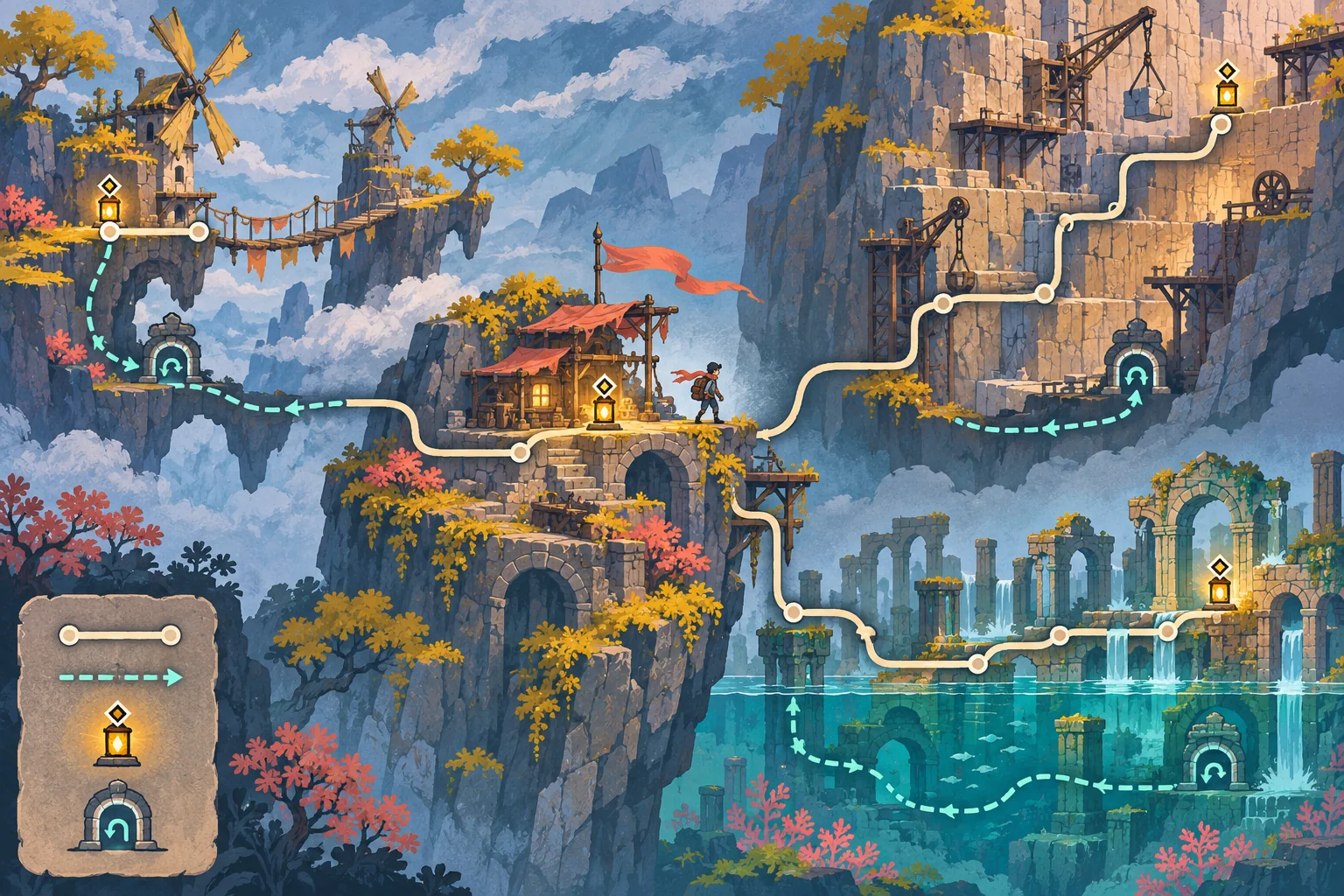
Each exit should define where the player spawns, which room state loads, and whether the route can be traversed in both directions. Test alternate entrances and shortcuts. If the level already contains a one-way drop, decide how the player gets back to the hub and whether that return is part of the intended challenge.
Preserve the current player controller, camera framing, collision layers, and room boundaries. A new hub scene should not quietly change jump acceleration, hazard timing, or camera offsets. Ask AI to trace the existing scene transitions and propose the smallest connection before modifying multiple levels.
Define what a fall resets
Precision platformers often make failure part of learning a route. Decide what is restored after a fall: position, room objects, temporary pickups, switches, or a durable world flag. A checkpoint should reconstruct the intended local challenge while preserving route unlocks that the game treats as permanent. If a checkpoint resets too much or too little, a repeated death can make a puzzle impossible or skip its intended step.
| Event | Possible reset | Durable state to preserve |
|---|---|---|
| Fall within room | Player returns to local checkpoint | Previously opened regions if designed to persist |
| Leave and re-enter | Temporary switch or moving platform resets | Completed objective or earned route access |
| Return to base | Room-only objects unload | Map access and collected permanent upgrades |
| Reload save | Transient animation state clears | Checkpoint ID and world progression |
For a Godot project, the official saving tutorial demonstrates selecting persistent data and serializing relevant fields. That is an engine-specific example, not a recommendation for every platformer or proof of checkpoint behavior. Follow the existing save architecture and confirm which room and world fields it already stores.
Ask AI for a small connection patch
Give the coding assistant the current scene graph, room transition handler, checkpoint logic, movement controller, and save fields. Ask it to explain which system owns each state before editing. Preserve existing room geometry and input behavior. Require a list of changed scenes/scripts, spawn rules, fall resets, migration defaults, and a rollback plan.
Inspect the existing precision platformer room, movement, exit, checkpoint, and save systems before editing. Add one safe base and a reversible route to an existing level. Preserve controller feel, collision, camera, hazard timing, and current checkpoint behavior. First map state owners and changed files. Then propose one minimal transition and tests for fall, exit, re-entry, save/reload, and old saves. Do not claim traversal passed until the project runs.
SEELE’s current catalog describes idea-led game creation and playable game categories. It can help explore a separate platformer concept or visual direction, but it does not establish that SEELE modifies an existing game repository or validates a jump route.
Test the route and checkpoint loop
Walk through the full route in the actual game: start at the base, enter a level, reach its checkpoint, fall, return, exit, and re-enter. Test before and after the route unlock. Record build, room ID, checkpoint ID, player spawn, expected state, and what actually happened. These are proposed checks rather than test results.
| Test | Action | Verify |
|---|---|---|
| Base entry | Enter the hub from an existing level | Spawn point and camera are correct |
| Route open | Use the intended exit | Correct level and state load |
| Fall before unlock | Fail before completing the route condition | Locked path remains locked |
| Fall after unlock | Fail after opening a route | Durable access remains, local state follows reset rule |
| Re-entry | Leave and enter the same room again | Temporary switches and pickups behave consistently |
| Save/load | Save at base and reload a copy | Location, checkpoint, and unlocks reconstruct |
If a route behaves differently after re-entry, isolate whether the mismatch comes from spawn data, room initialization, checkpoint reset, or durable progression. A generated map image can show the intended route but cannot verify the game’s jump geometry or respawn timing.
Frequently asked questions
What should a connected base do in a precision platformer?
Give players a readable place to return, understand available routes, and prepare for the next challenge. Keep the hub's safe interactions separate from platforming hazards and level completion. The base should connect existing rooms without silently changing their movement rules.
How should a hub connect to platforming levels?
Represent the base and challenge areas as stable locations connected by explicit exits or route links. Store what opens each route and where the player returns. Keep decorative map paths separate from the trigger and checkpoint rules that control access.
Should falling reset progress in a platformer hub?
Define which state resets on a fall: room position, temporary pickups, puzzle switches, or a larger world flag. Checkpoints should restore the intended local state while durable route unlocks remain consistent. Explain any one-way changes and verify them after repeated deaths.
How can I add a hub without changing existing platform levels?
Preserve player movement, camera, collision, room boundaries, and checkpoint behavior. Add one base entrance and one return route first, then test transitions with the existing levels. Review scene changes for altered jump distances, hazard timing, or unintended shortcuts. Keep the controller and scene transition contracts unchanged.
What should I test after adding a hub and checkpoints?
Test entering and leaving each connected region, falling before and after an unlock, saving at the base, reloading at a checkpoint, and an older save. Record room and checkpoint IDs. A map mockup cannot prove the actual jump route or respawn behavior works. Test a copy before applying any migration to a real save.
Connect a safe base to reliable routes
Model the hub, exits, checkpoints, temporary room objects, and durable unlocks separately. Add one connection, preserve movement and existing level behavior, then test falls, retries, re-entry, and older saves. This creates a clearer route network while keeping the platforming challenge intact.
To explore a separate precision-platformer concept, try SEELE AI Game Maker. It is a concept tool, not an existing-project editor.