Long-term growth can make a creature-collection RPG’s companions feel personal, but it can also create power creep, confuse duplicate recruits, or corrupt saves when battle state and collection records are mixed together. Start by separating species templates, owned creature identity, growth history, and temporary battle values. Add one bounded path through the existing progression owner, then compare it with the current roster loop.
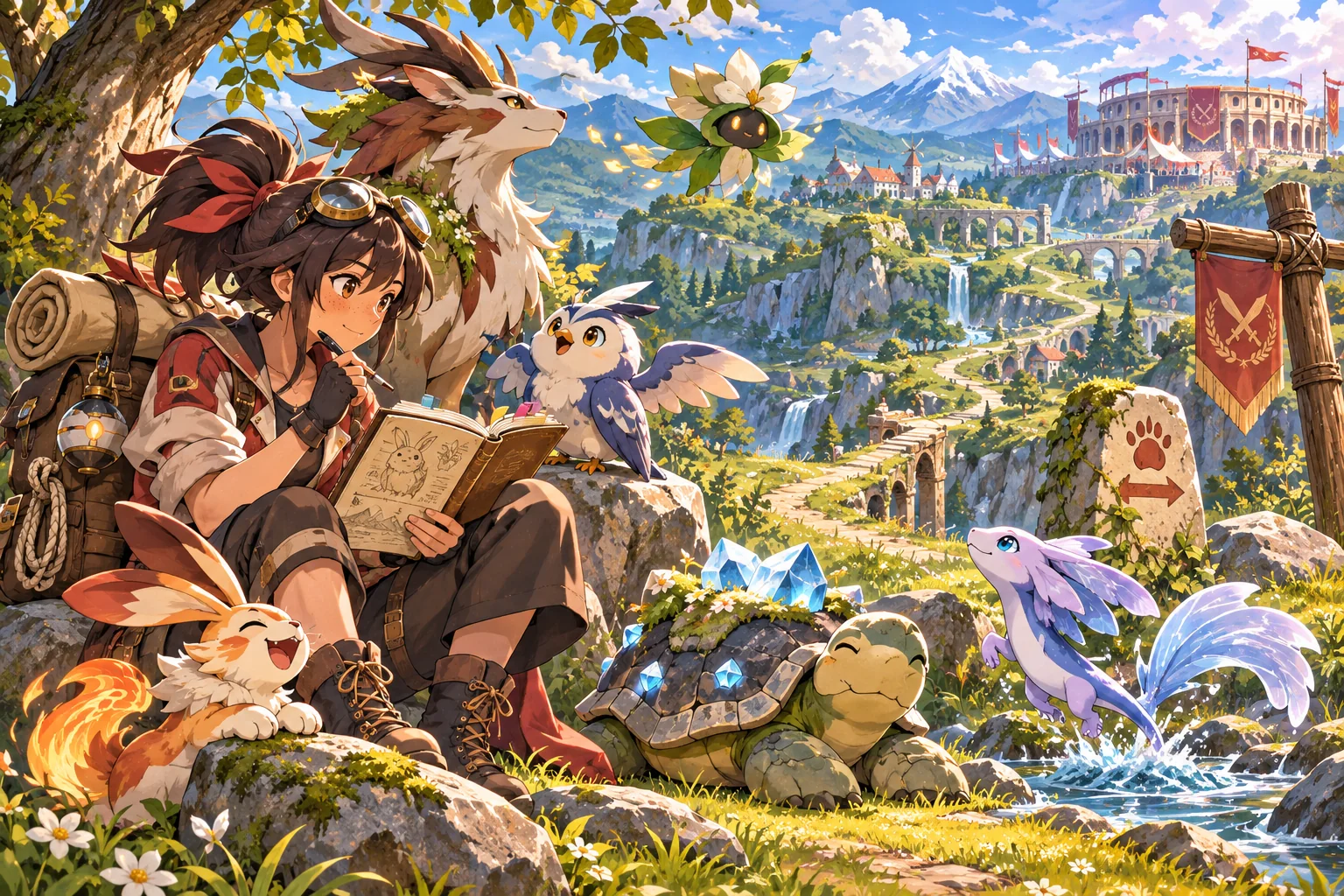
This guide proposes a progression layer for an existing creature RPG. The trainer, companions, growth choices, battles, and outcomes below are invented. No source, build, save, or playtest was available. The validation cases are plans, not evidence of successful balance.
Separate species data, owned companions, and battle state
Trace recruitment, naming, party assignment, storage, battle deployment, experience awards, evolution or specialization, release, trade, and save loading. Find what identifies a species, what identifies an individual companion, and what fields exist only during battle. Capture a baseline roster and a copy of saves representing a new recruit, a stored creature, and an active party member.
Use a stable ID for every owned companion if the game treats recruits as individuals. A species template can define available moves or base traits; the owned record can hold name, selected growth choices, and milestones; the battle entity can hold current health, position, temporary effects, and turn state. Avoid using a party slot or display name as a permanent identity if creatures can move between storage and battle.
| Record | Possible fields | Reset or persistence rule |
|---|---|---|
| Species template | Base traits and allowed choices | Content definition |
| Owned creature | Stable ID, nickname, growth choice | Persists in collection save |
| Party assignment | Party slot, active state | May change between sessions |
| Battle state | Health, position, temporary effects | Follows current game reset rules |
| Progression event | Experience or milestone ID | Commits through one owner |
Choose one bounded growth path
Use a milestone that already exists, such as a level threshold, a completed journey, a trainer bond event, or a battle result committed by the existing game. Define eligibility, progress input, cap, choices, and reset behavior. If recruitment itself grants growth, decide whether the recruit starts at baseline or inherits an account-level bonus. Do not let one event award progression repeatedly when a battle result is replayed or a save reload occurs.
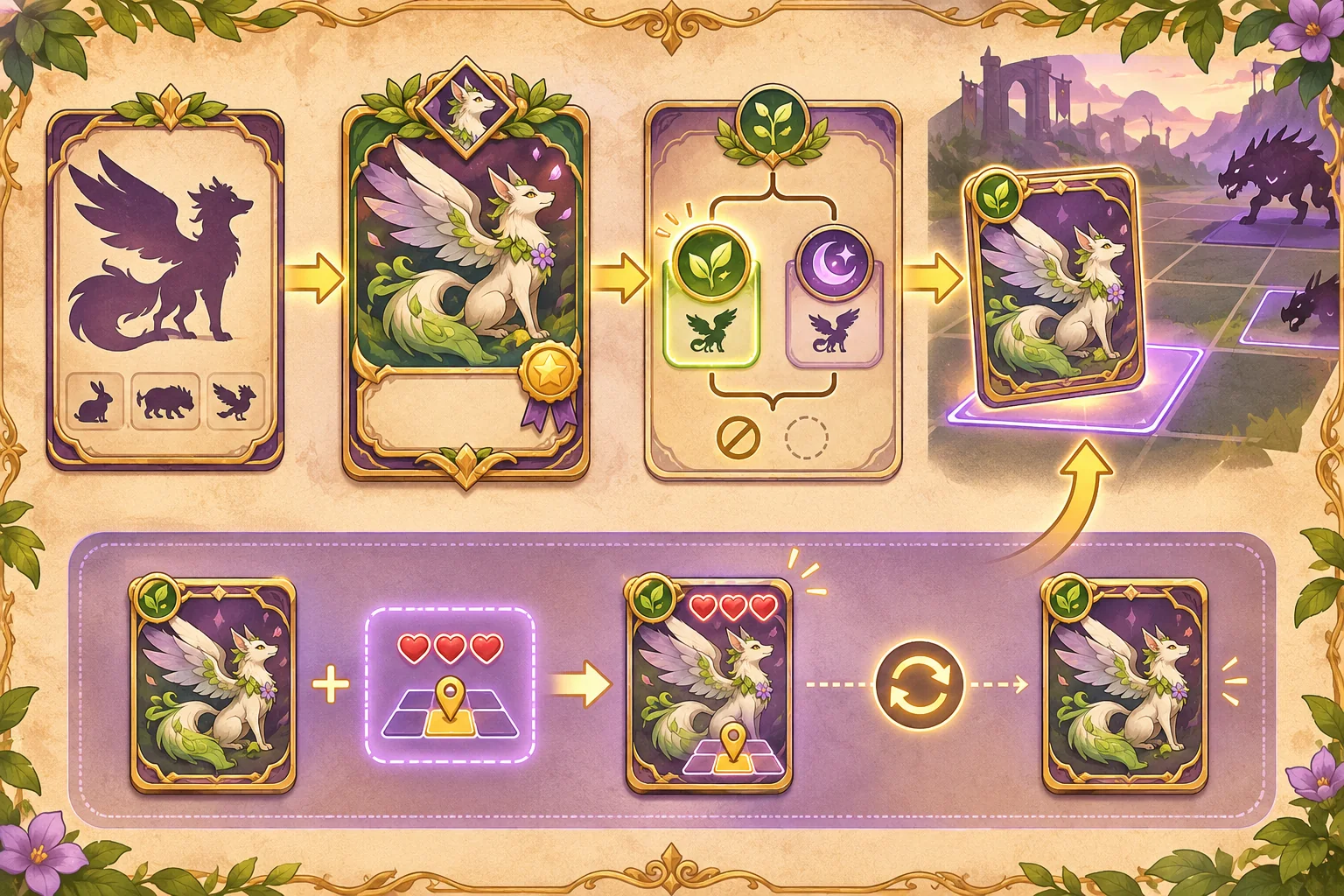
In the fictional Wildward Journal, a companion reaches a travel milestone and chooses either improved scouting utility or a small defensive trait. The choices are capped and affect different play styles, not a dramatic increase to all stats. This example does not describe an implemented RPG. The target game should decide what kind of growth fits its existing collection and combat design.
Make growth choices meaningful without making older companions obsolete. A cosmetic identity, move access, utility, or narrow specialization can add variety. If permanent combat numbers change, write the exact cap and test species with different roles. Keep the original level and recruitment path intact, and decide whether every companion can eventually unlock every branch or whether choices are exclusive.
Decide what happens to duplicate recruits
Duplicate behavior is a design decision. If every recruit has an individual identity, each can have separate growth, names, and history. If copies merge into a species-level collection, specify whether experience is shared, transferred, or discarded when a creature is released. Do not assume that two creatures with the same species are the same object in the save model.
Test the full lifecycle: recruit two of one species, grow each differently, move them between party and storage, release or trade one if supported, then reload. Verify that one record does not inherit the other’s choices by reusing a list index. If the project intentionally groups copies, preserve that rule and make any shared progression visible to the player.
Protect the combat and collection loops
Route growth effects through the existing stat or ability calculation. Do not layer a second formula onto the battle screen while attacks continue using old values. If the game has PvP, ranked play, or shared events, define whether growth is disabled, normalized, or constrained there. Preserve the existing counters so a defensive specialization does not silently invalidate a creature’s role.
Let recruitment remain worth doing after growth is introduced. If a new companion arrives late in a campaign, explain how it can catch up without erasing the value of earlier play. Avoid infinite stat accumulation. Set a maximum and test both new and mature rosters across representative matchups. Compare with progression off and on using the same map, opponents, and input when possible.
| Feature | Narrow change | Keep stable by default |
|---|---|---|
| Growth trigger | One committed milestone event | Recruitment and XP ownership |
| Owned record | Stable ID and limited choice fields | Species template and party slots |
| Battle effect | One capped modifier in current stat path | Temporary battle reset logic |
| Storage | Read growth from owned record | Collection and roster organization |
| Save | Optional fields and migration version | Existing recruit identities |
Keep old saves and content compatible
Give a pre-feature save a safe default: no growth choice and the current baseline behavior. Preserve creature IDs, party slots, equipment, learned abilities, and unlocked areas. Store a version or migration marker through the existing save owner. Test conversion on a copy and verify that loading the same save twice does not repeat a migration reward.
If the project uses Godot, official documentation describes Resource as a serializable base class used primarily for data containers and notes that resources can be saved on disk. This is an engine-specific capability, not a required creature schema. Godot’s save tutorial shows one workflow where persistent objects provide relevant data for serialization and loading; it does not prescribe which fields this RPG should preserve.
Ask AI to inspect recruitment, owned-creature IDs, party and storage, battle stats, progression events, and saves before editing. Request one growth path and a file list. Keep the patch small and review the full diff. Use a clean branch, disposable saves, and a rollback revision that restores the original creature creation and battle path.
Test caps, party swaps, duplicates, and migration
Test new and old saves, a newly recruited creature, a mature companion, two duplicate species with different choices, party/storage swaps, battle defeat, and a repeated progression event. Verify temporary health and status follow current battle rules while long-term growth remains attached to the individual identity. Check that a released creature does not leave orphaned progression data unless the game intentionally records it.
| Proposed check | Action | Evidence |
|---|---|---|
| Growth cap | Apply milestone at and over the cap | Accepted value and rejection path |
| Duplicate recruit | Grow two same-species companions differently | Distinct stable IDs and choices |
| Party swap | Move companion to storage and back | Growth remains attached to identity |
| Battle reset | Finish battle and start another | Temporary state follows current rules |
| Repeated event | Replay result or reload before commit | Single progression award |
| Old save | Load pre-feature roster copy | Identity and safe defaults preserved |
| Rollback | Restore baseline revision | Original recruit and battle loops |
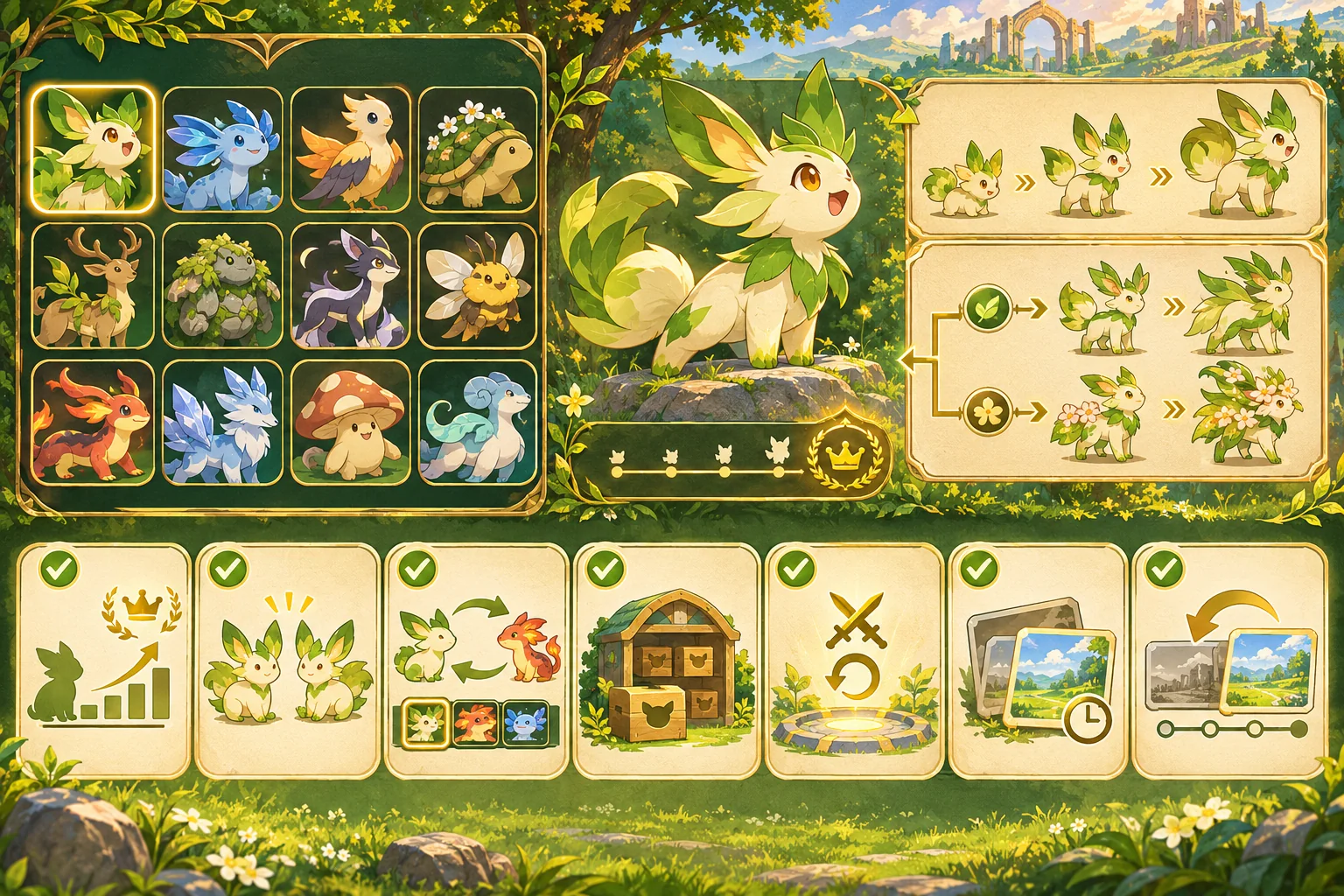
This is a proposed test matrix, not a report. Record build version, save copy, companion and species IDs, party state, progression event ID, growth choice, battle context, and expected versus actual result. A generated roster screen cannot demonstrate that the progression is fair or migration-safe.
Make growth readable and roster choices matter
Show what a companion has learned, what can still change, and which effects apply only in a battle. If choices are permanent, tell the player before confirmation and explain any respec rule. Keep growth history available when a creature leaves the active party. The system should make the collection more personal while preserving reasons to recruit, train, and switch companions.
To explore a separate creature-RPG concept, try SEELE AI Game Maker. It is a concept tool, not an editor for an existing project.
Frequently asked questions
What should persist for an owned creature?
Use a stable owned-creature ID and save only the fields the existing RPG needs for identity and growth, such as selected traits, milestones, or a chosen specialization. Keep current battle health, position, temporary effects, and active orders in the battle state unless the game intentionally carries them forward. Do not confuse a species template with an individual companion.
How can creature progression avoid power creep?
Choose a modest cap and compare the new growth path with the existing level, equipment, and recruitment systems. Offer meaningful choices or utility before adding large permanent stat bonuses. Test several species and team compositions so growth does not make roster variety or battle counters irrelevant.
Should duplicate creatures share progression?
Decide whether growth belongs to an individual, species, or account before implementation. If each companion is unique, use its stable ID and keep duplicate recruits separate. If the existing game groups copies, document how experience and choices merge, then test release, trade, storage, and reload behavior.
How do I keep older creature-collection saves working?
Give old saves safe defaults for new growth fields and preserve existing recruit IDs, party order, and unlocks. Store a version or migration marker through the current save owner. Test a copy from before the feature, one mid-growth, and one with a stored companion before changing real player data.
Can AI add long-term growth to my creature RPG?
AI can inspect supplied recruitment, creature identity, battle, progression, and save files, propose one bounded growth feature, and draft regression cases. It cannot validate balance or migration without the project and executed builds. Provide an edit allowlist, baseline roster saves, progression caps, and rollback revision.
Grow companions without erasing their identity
Separate the species, owned creature, and battle records; add one capped progression path; and keep growth attached to a stable individual ID. Test duplicates, storage swaps, repeated events, old saves, and representative battle matchups before expanding the system. Treat Wildward Journal and its mockup as fictional design aids, not proof of balance or implementation.