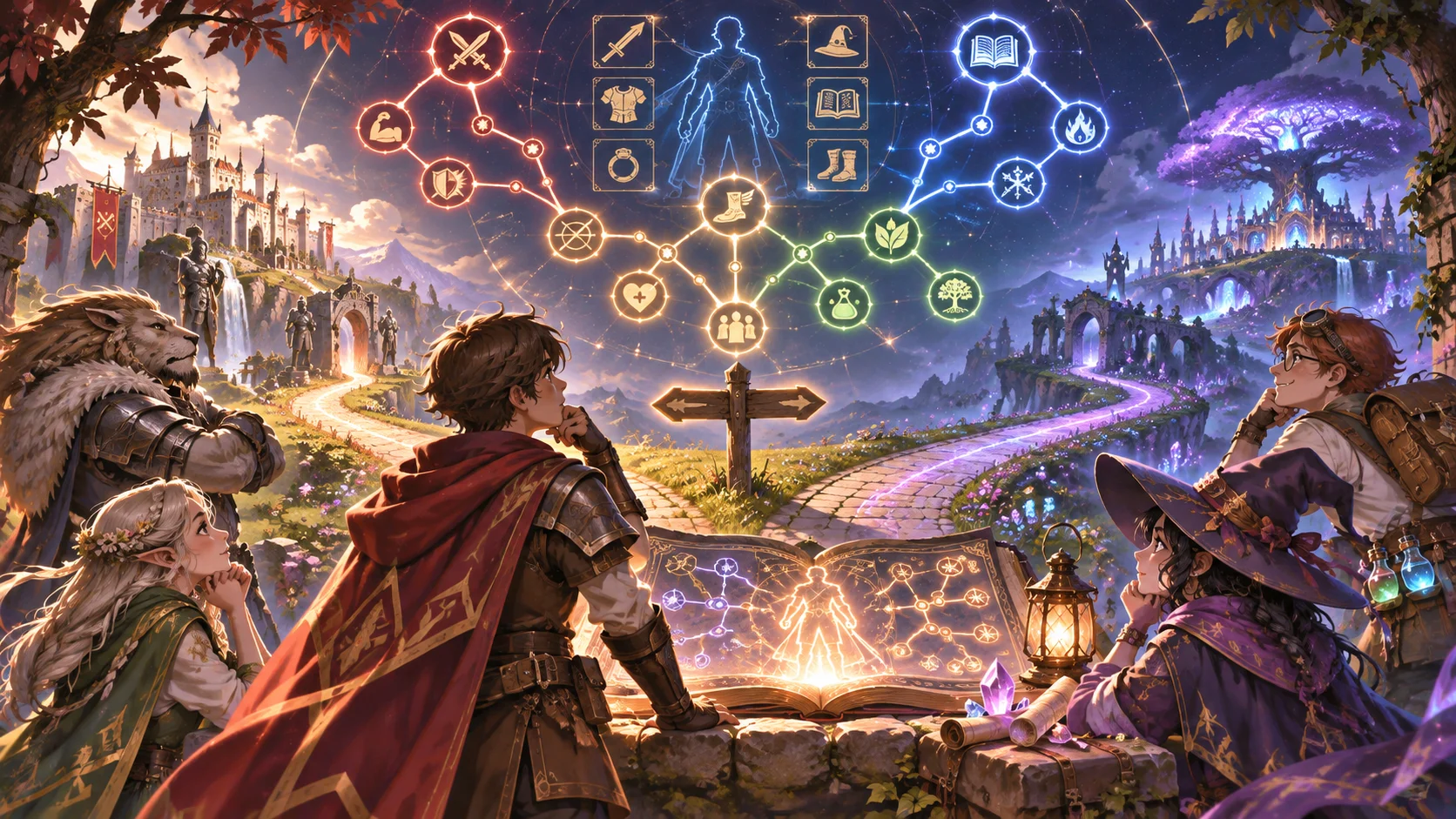
A persistent headquarters can give a turn-based RPG a place for party preparation, mission choice, and campaign progress. It should not become a second combat system or a second copy of the campaign save. Define what changes at the hub and what remains owned by the existing turn and battle flow before asking AI to modify the project.
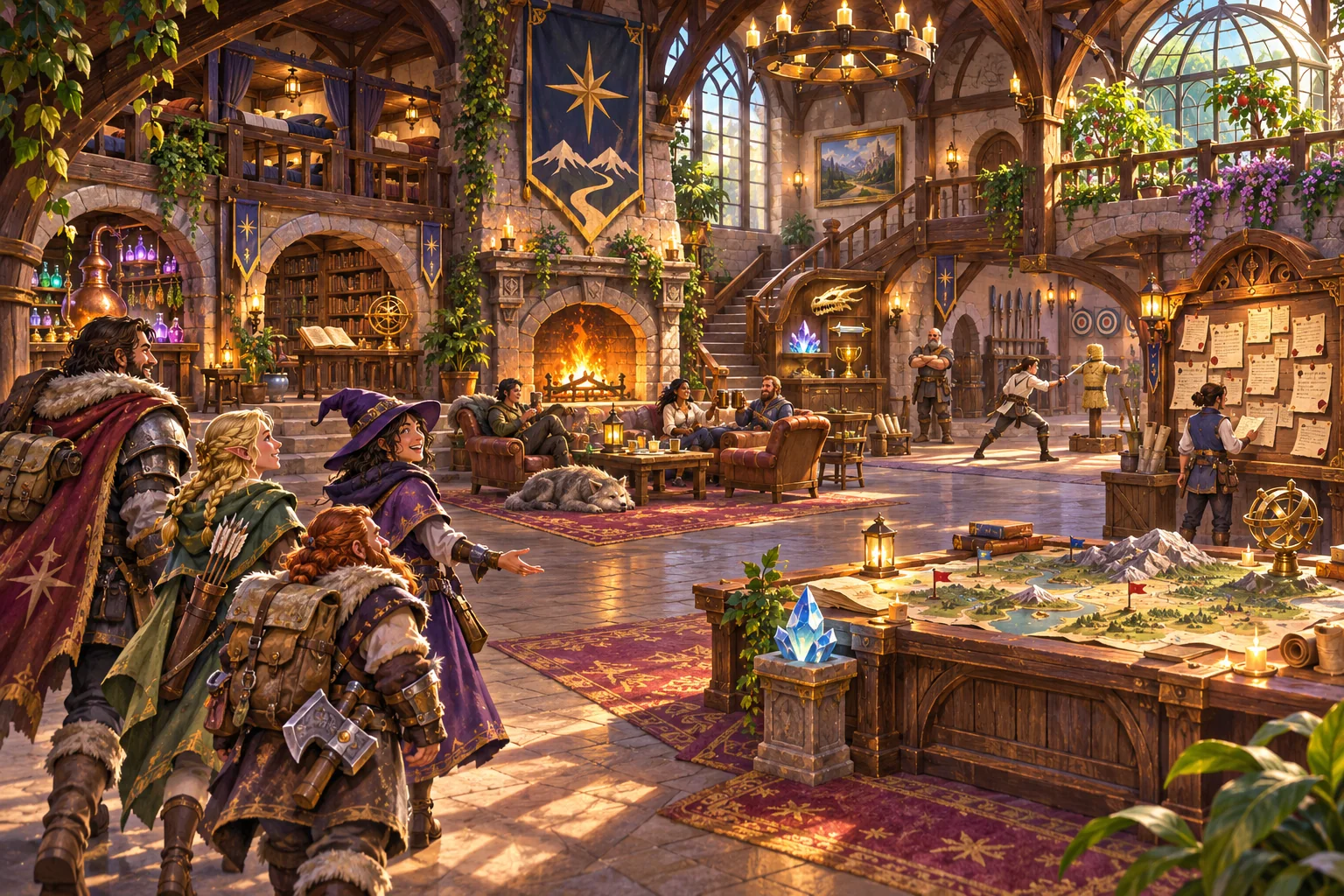
This guide uses an invented guild between missions. No RPG project, save migration, or battle was tested. The workflow focuses on connecting a hub to party selection and mission transitions while preserving the systems that already resolve combat.
Define campaign state and mission state
List what should remain when the party leaves and returns. Facility tiers, roster availability, recruited guild members, and completed mission records may belong to the campaign. Current turn order, temporary status effects, battle formation, and mission-only loot belong to the active encounter unless the game already supports mission resumption.
| State | Example | Owner |
|---|---|---|
| Headquarters | Facility tier, unlocked room, staff assignment | Campaign save |
| Roster | Available heroes and equipment | Existing party/campaign system |
| Mission setup | Selected party and destination | Mission transition |
| Battle state | Turn order, position, temporary effects | Existing combat system |
Wayfarer Lodge is a fictional example. Its training hall upgrade persists between missions, while a temporary shield used in battle does not become a permanent facility stat. State ownership should be explicit so that the hub interface does not quietly become a separate place where roster and mission data diverge.
Trace the current party and mission flow
Find where the game selects a party, validates a mission, creates the battle scene, resolves results, and returns to the campaign. Map which system owns roster availability, equipment, turn order, and completed mission flags. Ask AI to describe this path before it changes code.
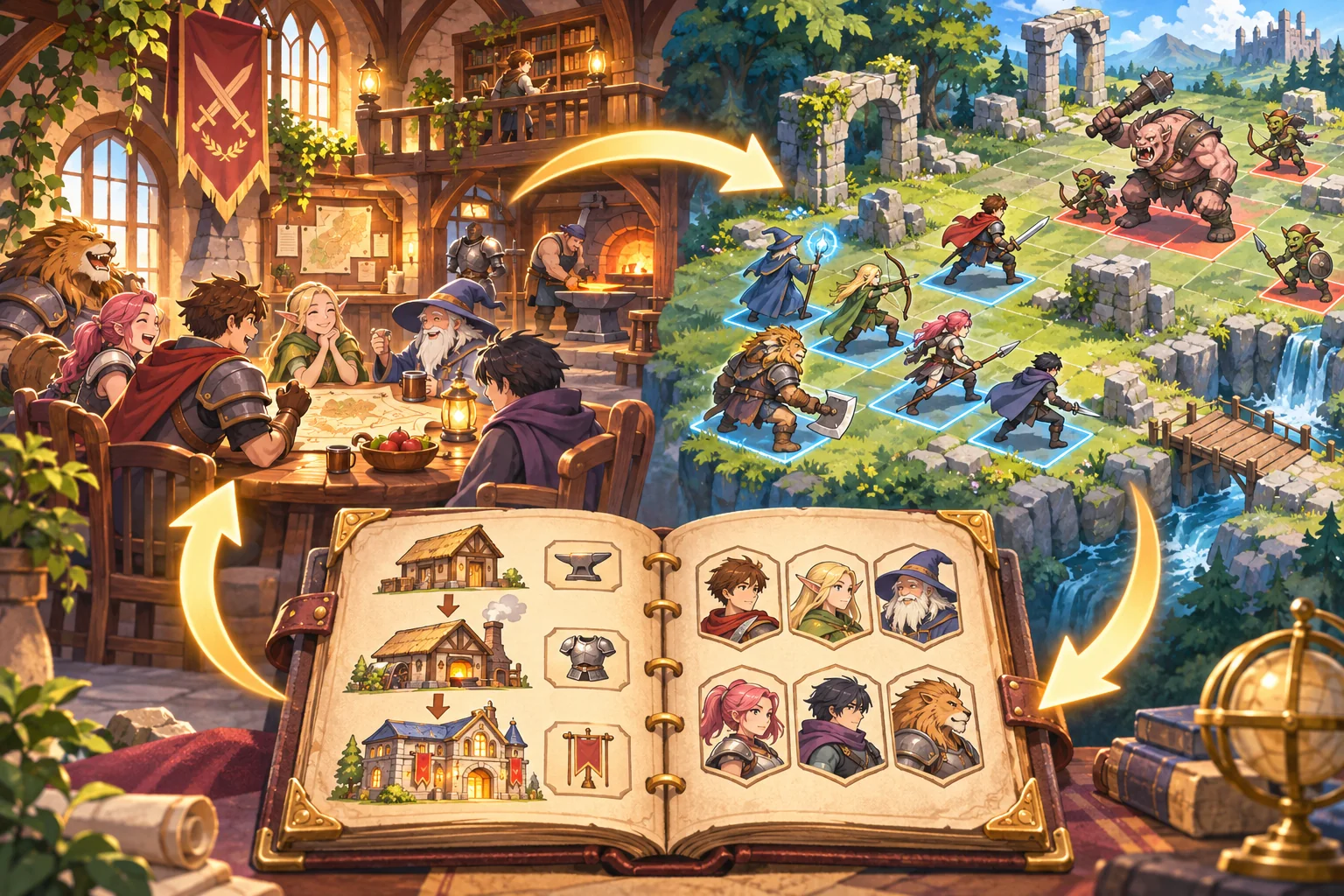
Keep the headquarters as a preparation layer. It can read the campaign roster, let the player select a party, and pass that party plus mission ID to the existing battle entry point. On return, the current results flow can update campaign rewards and unlocks. Avoid copying action selection or turn sequencing into a “hub combat manager.”
Give facilities clear, limited effects
For each facility, state what it changes and when. A training hall may unlock an optional skill tutorial or allow a character to spend a campaign-earned point. An infirmary may affect recovery between missions if the game already has that concept. A map room may reveal mission choices. Avoid giving each building broad, hidden multipliers that make combat behavior hard to review.
Keep effect rules in the system that already owns character stats or mission selection. The hub can present a choice and request a change; it should not directly rewrite a unit's combat values while the battle scene is active. If a facility upgrade affects the battle, make the value visible in the party or mission summary before the player launches.
Choose stable IDs for facilities and upgrades. If the display name changes or is localized, the campaign save can still reference the same ID. Version new save fields and define defaults for older campaigns so a player can enter the headquarters without losing a roster or mission flag.
Ask AI for a narrow integration
A bounded task might say: add one persistent headquarters scene between existing missions; read and update the current campaign data; allow the player to choose a party and mission; preserve turn order, action validation, equipment, combat rewards, and solo campaign flow; list files changed, save migration, and rollback steps.
Request a file-level plan before editing. Review whether the hub creates a parallel roster, mission, or save model. Check event order when leaving for a mission and returning: the results should commit once, the party should update from the authoritative campaign state, and the hub should refresh from that same source.
For Godot projects, the stable documentation describes user:// as a writable path for persistent user data in exported projects and provides a saving tutorial with file-serialization examples and JSON tradeoffs. These engine details help choose a storage path and format; they do not prescribe how your RPG must model facilities, party selection, or mission unlocks.
Make the return transition safe
A hub transition often touches several values at once: mission result, earned currency, injured or unavailable characters, unlocked routes, and facility progress. Decide which system calculates and commits each outcome. If the scene reloads or the player returns twice, the same reward should not be granted again.
Keep a copy of an older campaign save. Test the new fields against that copy and confirm the migration preserves character IDs, equipment, mission history, and unlocked content. If a save is malformed, define a clear recovery behavior rather than silently creating a new campaign over the old one.
Verify hub, mission, and save behavior
The matrix below is a proposed plan, not a report about the fictional lodge:
| Case | Action | What to verify |
|---|---|---|
| First visit | Start a fresh campaign | Default facilities, roster, and mission board load |
| Party selection | Choose a valid party and mission | Existing validation and battle entry work |
| Mission return | Finish a mission and return to the hub | Rewards and unlocks commit once |
| Facility upgrade | Apply one earned upgrade | Effect appears where intended, without changing turn rules |
| Save/reload | Save at the hub and reopen the campaign | Facilities, party, and mission state agree |
| Older campaign | Load a duplicate from before hub fields existed | Migration preserves known progress |
Record project version, save fixture, party, mission ID, steps, expected behavior, and observed result. Check the existing tactical encounter after the hub change. A mock lodge can explain the feature, but it cannot prove that a real campaign returns with the right party and rewards.
Frequently asked questions
What should persist in a turn-based RPG guild headquarters?
Persist deliberate campaign state such as facility unlocks, roster availability, and mission board progress. Keep current battle turn order, temporary effects, and mission-specific formation separate unless the existing game supports resuming that state. Keep the campaign save as the only authoritative record.
How should a guild hub connect to turn-based battles?
Use the existing party selection and battle entry flow. The headquarters can prepare the party and mission context, while the current combat resolver continues to own valid actions, turn order, and battle results. This reduces divergence between party setup and the combat scene.
Should headquarters upgrades change every battle?
Define exactly which facilities grant a battle effect and when it applies. Keep upgrades visible and bounded, then compare the same party and encounter before and after so the hub does not quietly invalidate tactical choices. The actual encounter remains the final balance check.
How can I save guild progress without breaking older campaigns?
Add versioned fields with safe defaults and test migration on a duplicate of an older campaign. Keep one authoritative campaign save owner and avoid separate copies of roster or mission flags in the hub UI. Preserve existing campaign fields while adding versioned hub state.
What should I test after adding a persistent guild hub?
Test first visit, facility upgrade, party selection, mission launch and return, save/reload, and older campaign data. Record the actual build and outcomes; a hub mockup is not evidence that the campaign state persists. Note the party, save fixture, and observed return behavior.
Start with one room and one mission loop
Add one facility interaction and one mission return path first. Keep the hub's persistent data inside the campaign owner, and let battle setup continue using the existing party and turn system. Expand the headquarters only after saves, rewards, and turn-based encounters remain consistent in the actual build.
For a separate browser-playable prototype idea, try SEELE AI Game Maker. This CTA is for a separate prototype, not for modifying an existing RPG.