Add a reputation system that changes customer behavior to your game-studio management game with AI. Make the decision and its consequence visible, then validate it in a short repeatable scenario. Prototype two customer segments and a short release cycle before modeling a large market.
Define reputation signals and customer segments
Choose a few studio actions that can change reputation: release quality, delivery reliability, communication, post-launch support, and whether a product matches its promise. Track them separately before combining them into an overall signal. Then define customer groups with different expectations, such as genre fans, price-sensitive players, or players who value reliable updates.

The official Mad Games Tycoon 2 listing from Eggcode describes building and managing a game-development studio and growing a company through game production. It supports the studio-management context only; the reputation-to-customer model here is original. Keep reputation inputs visible so players can trace a customer response back to a studio choice.
Connect reputation to customer behavior
Make reputation affect behavior the player can observe: interest in a new release, willingness to pay, tolerance for a delay, or likelihood of returning. Different segments should respond to different signals. A reliable update schedule may build trust with existing customers, while a genre-matched launch may attract new fans. Avoid changing demand through an unexplained global multiplier.
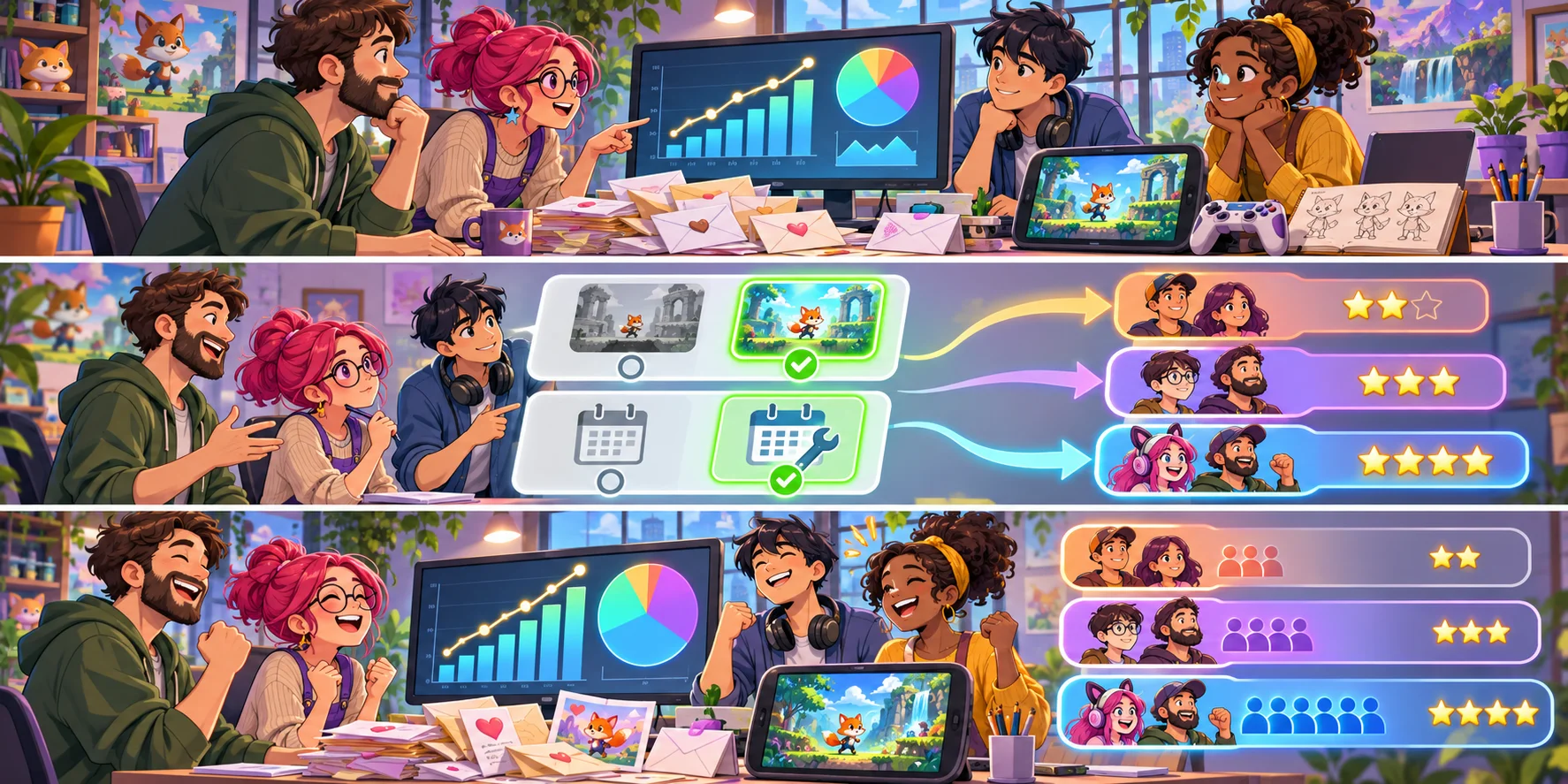
Use a clear time window and strength for each effect. Show whether a response is immediate, fades over time, or carries between releases. If a studio breaks a promise, show which customer expectation was missed and what action could rebuild trust. This turns reputation into a planning system rather than a score that rises or falls without explanation.
Keep feedback and recovery legible
After a launch or support decision, summarize the studio action, the customer group affected, and the behavior that changed. A simple report can compare expected and actual interest, sales range, or update engagement. Keep estimates as ranges if the simulation is uncertain, and distinguish customer response from product quality so the player can diagnose a weak result.

Preserve a recovery path. A poor release can be followed by fixes, transparent communication, or a better-matched next project, but trust should take time to rebuild. Let customers remember the action that mattered and show progress as expectations are met. This makes the system persistent without trapping the studio in a permanent low-reputation state.
Test studio decisions over multiple releases
Run several release cycles with different quality, communication, and support choices. Track reputation by segment, interest in the next product, tolerance for delays, and time required to recover after a missed promise. Ask players to predict which group will respond before each release, then compare their expectation with the report.
For related system feedback, see a guide to behavior that responds to player pressure and a guide to visible cause and effect. Pass when players can explain which studio action changed customer behavior and how to rebuild trust.
FAQ
How should reputation change customer behavior?
Connect reputation to behavior players can see, such as interest in a release, willingness to pay, tolerance for delays, or likelihood of returning. Define which studio action affects each customer segment, and show whether the effect is immediate or persists. Avoid an unexplained global score change with no visible customer response.
What should affect a game studio reputation system?
Use a small set of understandable signals such as product quality, delivery reliability, communication, post-launch support, and whether a release matches its promise. Track them separately before combining them. This lets players diagnose what changed and choose which studio behavior to improve next.
How can reputation feedback stay understandable?
After a launch or support choice, report the action, the customer group affected, and the behavior that changed. Compare expected and actual interest or engagement, and distinguish customer response from product quality. Use clear time windows and explain whether trust fades, carries between releases, or can recover.
What should you test in reputation-driven customers?
Run several release cycles with different quality, communication, and support choices. Track reputation by segment, next-release interest, delay tolerance, and recovery time. Ask players to predict which group will respond before the release, then compare their expectation with the report to reveal unclear rules.