Trace one service from supply to guest
Choose a single guest-facing request and follow it back through the operation. A room refresh may depend on clean linen, working laundry equipment, available housekeeping staff, and a route to the room. A meal request may depend on ingredients, kitchen capacity, and service staff. Drawing the handoffs makes it clear where a supply chain belongs in the simulation.
For each step, note who or what owns the work, how long it takes, and which input it consumes. If a request waits for laundry, show that queue separately from a room that is waiting for staff. Players need to know whether to order more stock, add equipment, change shifts, or simplify service.
The official Hotel Magnate listing describes hotel building and operations, different guest types, staff hiring, and facilities such as bedrooms and restaurants. That is high-level genre context only. The multi-stage supply chain and bottleneck rules below are original design guidance, not claims about its internal systems.
Add capacity constraints at handoffs
Bottlenecks emerge when connected stages have different capacity. Linen may arrive on time but one washer cannot process it quickly enough. Laundry may finish while housekeeping has too few workers to prepare occupied rooms. Each stage should have a visible queue, throughput limit, and expected completion time. That makes the chain a management problem instead of a hidden penalty.
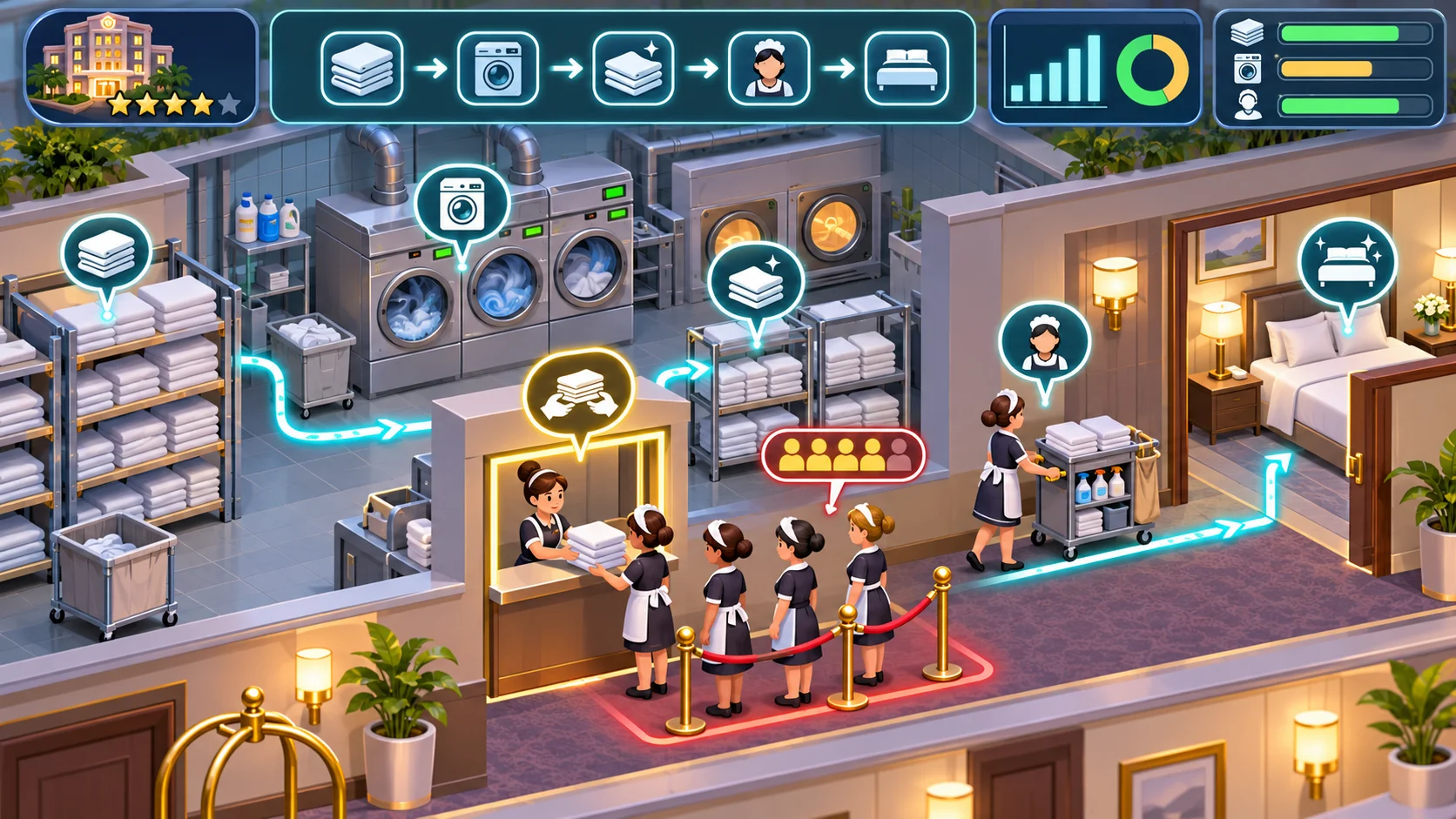
Keep the first chain small: purchasing, storage, processing, and delivery may be enough. Add a second chain only when it creates a new decision rather than more bookkeeping. If a room requires several services, show whether they can happen in parallel or whether one must finish before the next starts. This prevents players from guessing why a room is still unavailable.
Let layout or staff choices affect capacity only where the game can communicate the cause. A supply room far from guest floors might add delivery time; a larger laundry room might process more loads. Explain the rule near the relevant station and provide a way to compare the current and proposed setup before spending money.
Connect replenishment to hotel demand
Purchasing creates decisions when stock arrives with a lead time and storage has a cost. Give the player a demand forecast based on occupancy, guest type, and known events. Then show current stock, expected consumption, delivery date, and shortage risk. The player can order early, accept the cost of storing extra linen, or risk running short during a busy period.
Avoid exact forecasts if the simulation is meant to include uncertainty. Give a plausible range and explain what drives it. A player should understand that a festival raises expected occupancy, even if the precise number of late bookings remains unknown. When a shortage happens, identify which guest services were affected and what alternative response remains.
Emergency procurement can be a useful recovery option if it carries a clear tradeoff such as higher cost or delayed arrival. It should not erase every planning mistake for free. Conversely, one missed delivery should not permanently lock the hotel. Offer a fallback service level so the player can stabilize operations and learn from the bottleneck.
Test a busy day through the whole chain
Build a reproducible day with a known occupancy schedule, one supply delivery, and a surge in guest requests. Compare a plan that restocks early with one that relies on current inventory. Ask players to explain where the first queue appeared and what they would change next time. The test should reveal whether the chain is understandable before you tune its exact timing.

Measure room readiness, service wait, staff idle time, supply waste, emergency purchases, and guest satisfaction. If satisfaction falls, show whether the cause was a missing item, a processing queue, or a staffing gap. A single hotel rating hides too much information for players to improve their plan.
Replay the same scenario with one capacity upgrade at a time. This isolates whether a washer, extra worker, storage space, or delivery schedule changes the intended stage. See the hotel management guide for the guest and facility loop. SEELE AI can help outline a hotel concept, but supply rules, schedules, and pacing need implementation and playtesting.
FAQ
How do you add a supply chain to a hotel management game?
Start from one service guests request and trace its materials, storage, equipment, staff, and delivery steps. Give each handoff a capacity and visible queue. Then connect restocking and scheduling decisions to room readiness or service outcomes, and test a repeatable busy day.
What bottlenecks matter in a hotel supply chain?
Useful bottlenecks include limited stock, delivery lead time, laundry or kitchen equipment, storage space, staff shifts, and movement between facilities and rooms. Choose only constraints the player can observe and influence. Show where work waits so the player can respond with purchasing, capacity, or scheduling.
How should hotel restocking work?
Show current inventory, expected demand, delivery lead time, storage limits, and the risk of running short. A forecast can be uncertain, but explain what drives it, such as occupancy or a known event. Emergency orders can help recovery when their added cost or delay is visible.
What should you measure in a hotel operations test?
Track room readiness, service wait, staff idle time, stockouts, waste, emergency purchases, and guest satisfaction. Replay the same occupancy schedule with different plans. When results change, identify whether inventory, equipment, labor, delivery, or the order of handoffs caused the outcome.