Trace the supply chain end to end
Draw the path of a product from supplier selection through purchase, delivery, back-room storage, shelf replenishment, customer choice, and payment. Record what can block each step. A supply-chain system becomes useful when players can identify where product flow stops and why.

Separate stock in transit, stock in storage, and stock available to customers. A shipment on the road is not inventory a shopper can buy. Show expected arrival time and current shelf quantity so ordering decisions reflect both current demand and future supply.
The official Store Keeper Steam listing describes receiving shipments, organizing warehouse space, tracking store demand, forecasting trends, and preventing shortages or overflows. That supports inventory and supply-chain context only; the bottleneck framework here is original. See the official source for this context.
Make different bottlenecks distinguishable
Give each constraint a different signal: supplier availability, delivery delay, storage capacity, shelf space, restock labor, price rejection, or absent demand. A single warning that says “sales low” does not help the player choose a next action.
Show a bottleneck at the step where it occurs and in an overview report. If the back room is full, explain that the next shipment cannot unload; if shelf stock is empty, show whether restocking or ordering is the issue. Keep current constraint separate from historical warnings.
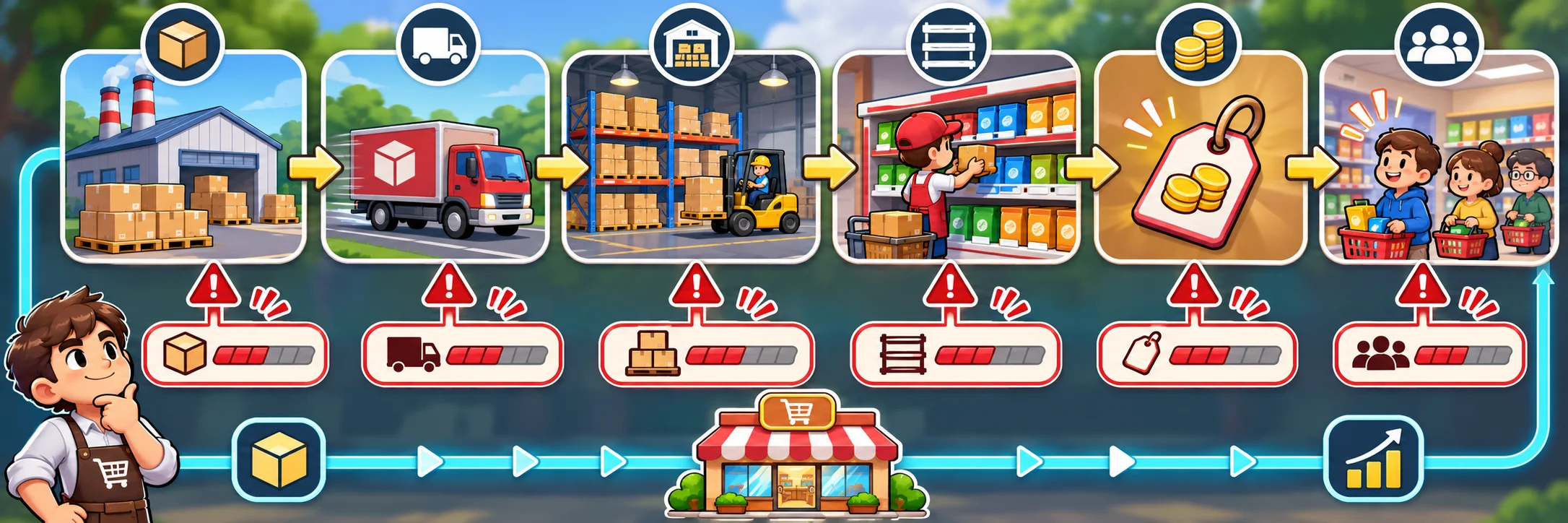
Let constraints interact without making the diagnosis opaque. More stock can solve a shelf shortage but worsen storage congestion. A price reduction may increase demand beyond restock capacity. Preview likely effects so players can decide whether solving one issue will expose another.
Connect inventory and price decisions
Use reorder points or simple forecasts to help players compare order quantity with expected sales. Explain lead time, minimum order, and storage footprint before confirmation. The player can then balance bulk discounts against cash tied up and the risk of unsold products.
Treat price as part of the chain. If customers reject a product because it costs too much, do not classify the result as insufficient supply. Show demand satisfied, demand lost to price, and demand lost to availability separately where possible.
Allow more than one recovery choice. Players can expedite a small order, substitute a product, expand a shelf, clear slow stock, or adjust price. Each option should trade time, margin, space, or customer satisfaction rather than fixing every problem at once.
Test diagnosis and recovery
Replay the same store day with shortages introduced at different stages. Track missed sales, delivery time, stockout duration, waste, restock workload, and profit. Ask players where they believe the constraint lies before showing the diagnostic summary.
Test a late shipment, full storage area, understaffed restocking, a price that is too high, and a sudden demand increase. Confirm that a player can find the cause from the report and make a useful correction without inspecting every item one by one.
Accept the system when players can distinguish supply, space, labor, pricing, and demand constraints and recover from them. See the co-op resource-network guide for another bottleneck-mapping example.

FAQ
How do you model multiple supply chain bottlenecks in a shopkeeper game?
Map each step from supplier order through delivery, storage, shelf placement, price, and sale. Give every step a clear capacity or failure signal. Then test whether players can tell which constraint is currently limiting sales instead of responding to the wrong stage.
What bottlenecks matter in a shopkeeper simulation?
Common constraints include supplier stock, delivery timing, warehouse capacity, shelf space, restocking labor, product spoilage, price, and customer demand. Choose a manageable subset and show how each one affects available stock or completed sales. This gives players useful feedback and helps them plan a next action.
How should a shopkeeper diagnose low sales?
Separate products that customers did not want from products they could not find or afford. Compare expected demand, shelf stock, price, and missed deliveries. A daily report can highlight the limiting step and let the player inspect the full chain.
What should you test in a shop supply chain?
Create shortages at different steps: a late shipment, full storage, empty shelves, high price, or demand spike. Track missed sales, waste, restocking time, and profit, then confirm players can diagnose the cause and choose a recovery action. This gives players useful feedback and helps them plan a next action.