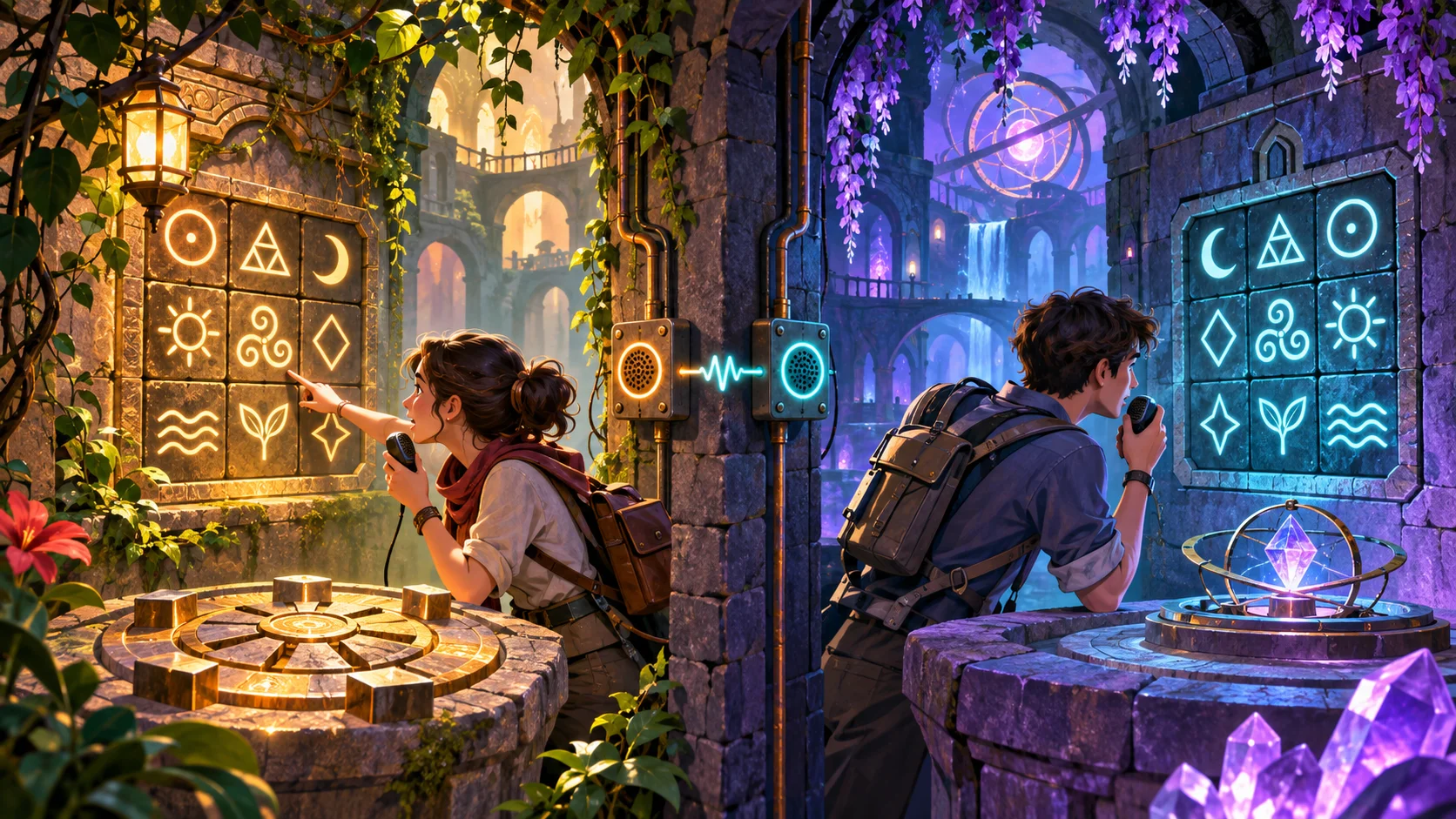
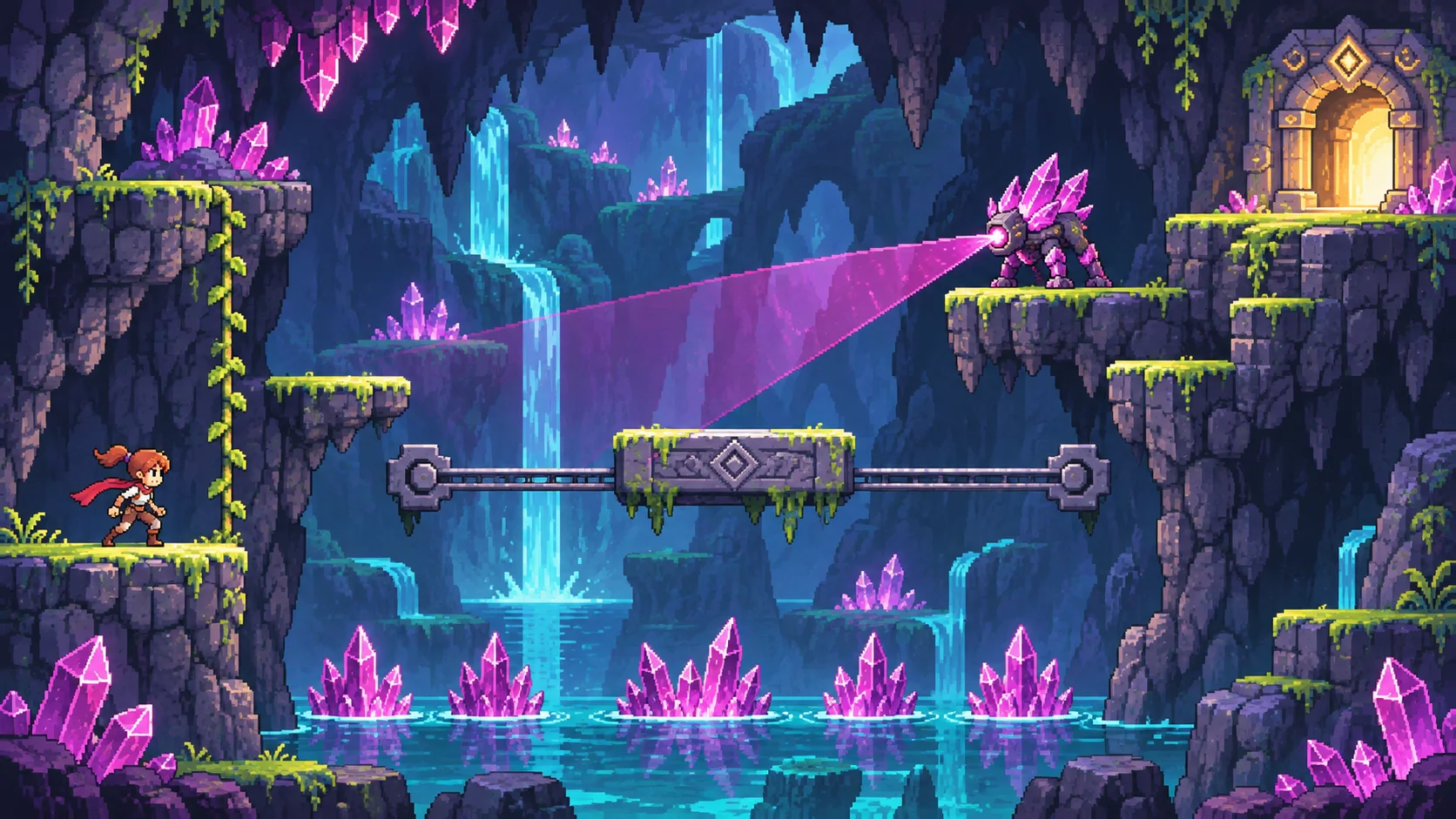
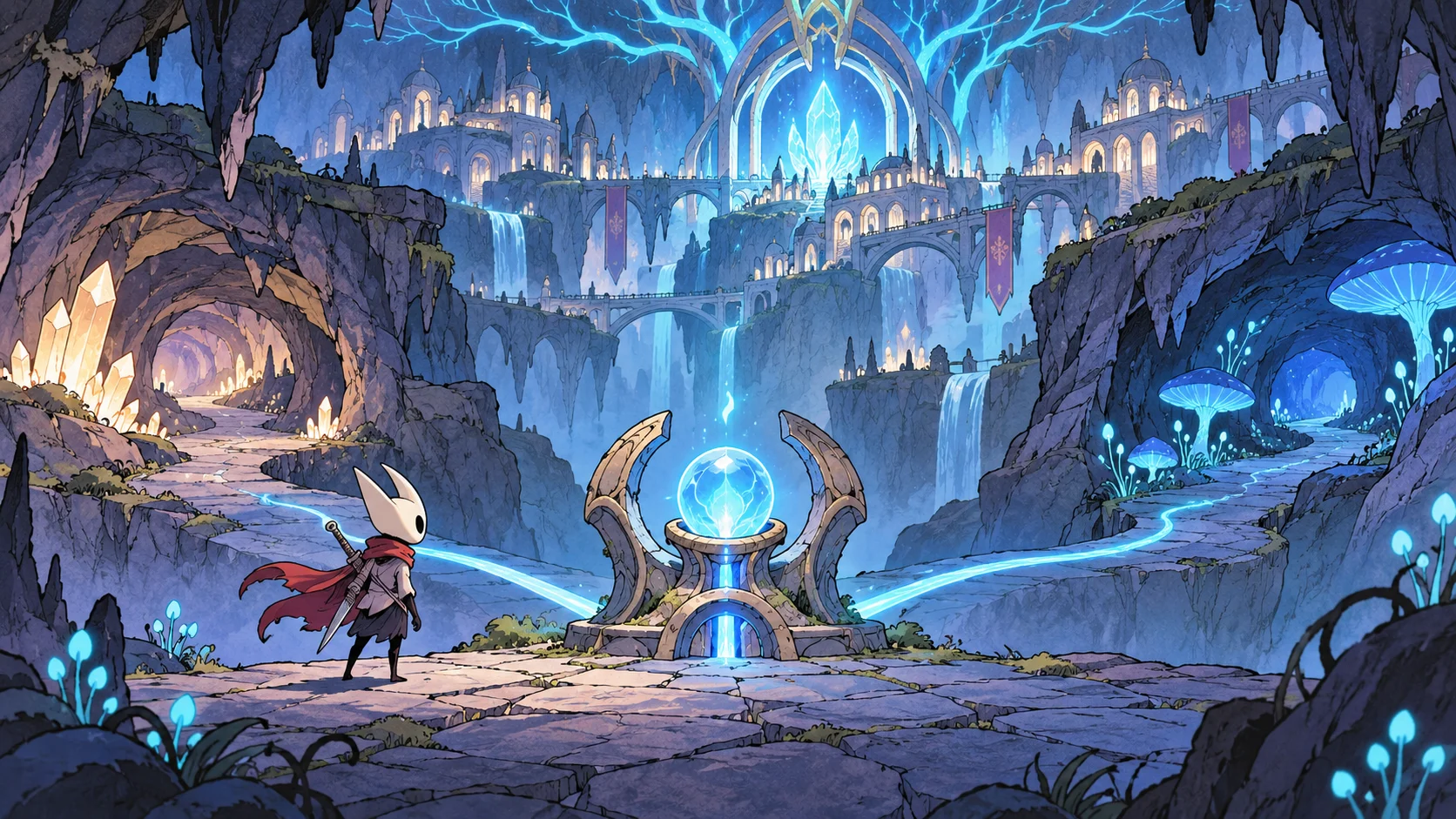
Make each new ability open a readable route for both partners and test how it changes exploration choices. Start with one bounded prototype, make its rules visible, and connect player choices to outcomes the team can observe. Expand the system only after the core loop works in a short repeatable test.
Map the cooperative movement baseline
Record the current movement verbs, shared gates, checkpoint rules, and places where partners wait for one another. Mark each route as required, optional, or a shortcut, then identify which abilities already support teamwork. This map prevents an unlock from becoming a disconnected collectible. The official It Takes Two listing describes a co-op platform adventure in which the protagonists gain different abilities across levels; that supports the genre context, while the route graph proposed here is original design guidance.
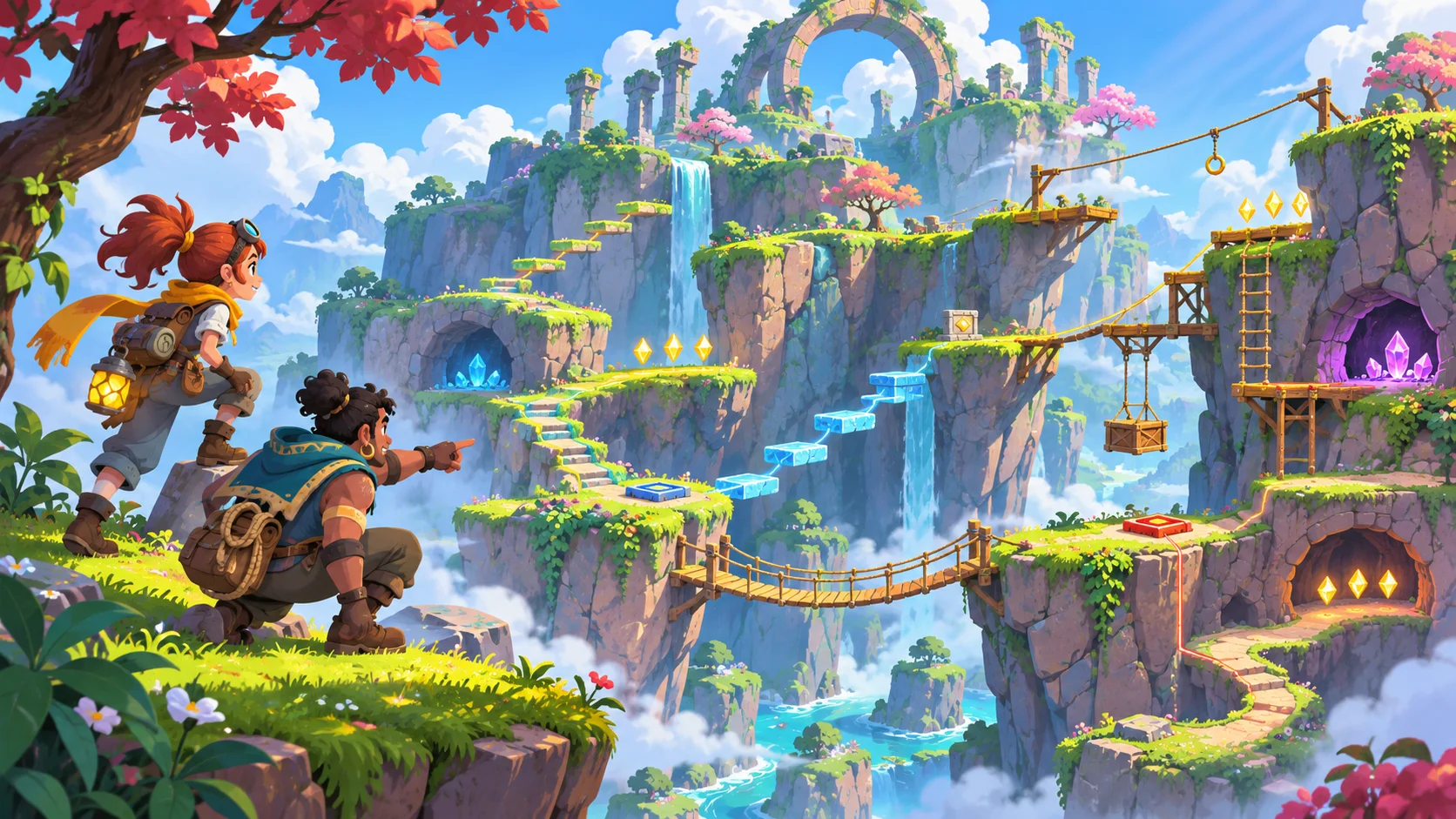
Choose one ability that changes where players can go, not only how quickly they cross a familiar space. A grapple point might connect distant ledges, while a shared lift tool could let one player reposition a platform for the other. Show the blocked route before the unlock and a clear visual cue after it changes. See the It Takes Two official Steam product listing for the scoped genre context.
Tie abilities to route changes
Define the unlock trigger and how both players receive or use it. If the ability is earned in a shared story beat, give both partners access at the same time; if mastery is asymmetric, make the complementary roles clear and let partners swap or assist. Test a route that uses the move alone and one that requires coordination.
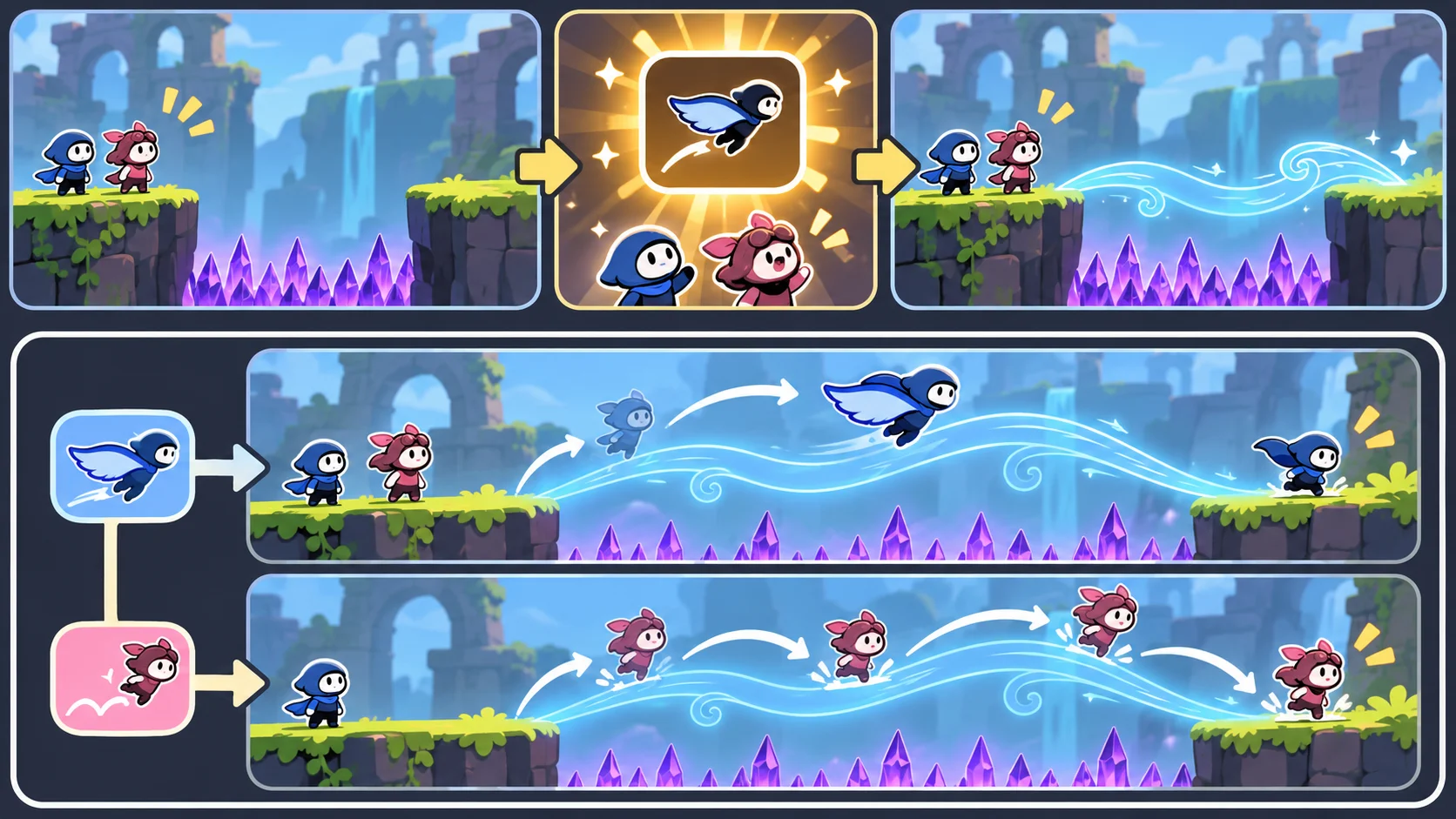
Separate access from execution difficulty. A new tool can open a side route without making the main path depend on a precision maneuver that one partner may struggle to perform. Provide a safe practice space, forgiving recovery, and a readable return path so experimentation does not strand the team.
Make unlocks work for both partners
Use a small route graph with prerequisites, optional branches, and return links. A new ability should connect at least two meaningful spaces or reveal a distinct approach, but avoid invalidating every earlier movement choice. Keep map markers and environmental cues consistent so players can recognize the new affordance without reopening a tutorial.
When one player activates a mechanism, communicate what changed for the other player: a bridge extended, a barrier moved, or a new anchor appeared. Let either partner inspect the result and regroup. This makes the unlock a shared world-state change instead of a private inventory flag that the other person cannot understand.
Test route access and teamwork
Run a short level with one old route and one newly opened path. Observe whether both players notice the ability, understand its use, and choose whether the detour is worthwhile. Repeat with players who have different movement skill, and check that a missed jump costs time without deleting progress or separating the team indefinitely.
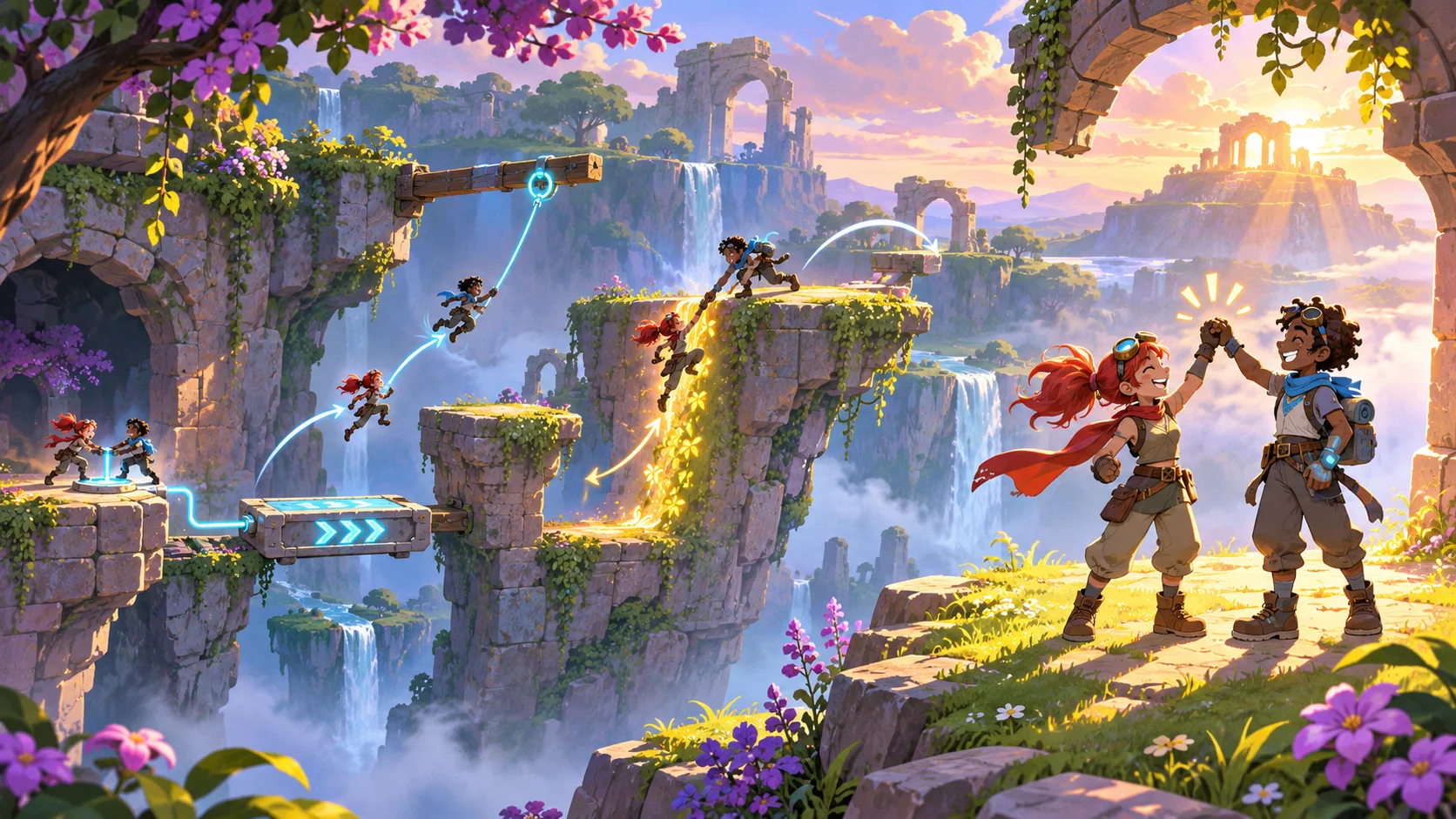
The acceptance case is a visible before-and-after route, an unlock both partners can use or support, and a main path that remains completable. Compare this progression idea with a co-op progression guide. SEELE AI can help brainstorm ability and route variants; movement implementation, accessibility tuning, and co-op playtesting remain necessary.
FAQ
How do ability unlocks change co-op platformer routes?
Ability unlocks can open a shortcut, reveal an optional branch, or let partners use a shared traversal route. Show the old barrier and the changed route clearly, then let players decide whether the detour is useful. Keep a main route available so an optional unlock does not unexpectedly block campaign completion.
How can abilities create cooperative platforming?
Give partners complementary ways to interact with the same space, such as moving a platform, creating an anchor, or crossing a gap. Make each player’s contribution visible and let either partner understand the resulting world change. Test both solo use and coordinated use so teamwork adds a choice instead of a compulsory bottleneck.
How do you keep route unlocks fair for both players?
Make access timing clear and avoid permanently assigning one player a required movement skill. If an ability is asymmetric, provide ways to assist, swap roles, or regroup. Include practice and recovery space so a difficult move does not repeatedly strand one partner or block the other from progressing.
What should you test after an ability unlock?
Test a before-and-after route with players who have different movement skill. Observe whether they notice the new option, understand its use, and can return to the main path. Check save persistence, checkpoints, partner access, and whether failure costs are proportional to the optional reward.