An alternative party leader can give a cozy RPG a fresh way to explore its world, but it can also affect quests, companion relationships, controls, gradual growth, and saved progress. Start from the existing game loop. Give the new leader one clear, low-pressure ability, reuse the current quest and relationship systems, and test the original path before expanding the feature.
This guide covers extending an existing cozy RPG, not building a new party system from scratch. The village, leaders, quests, saves, and outcomes are invented examples. No project code, save file, build, or gameplay was available, so the validation steps below are proposed, not reported results.
Capture the current cozy loop
Before changing files, create a clean commit or project copy. Trace what the current leader controls, how companions join, where relationship flags live, how quests start and finish, and how gradual growth is recorded. Note the input actions, dialogue state, daily schedule, and save fields connected to the player character. If the game cannot be run, separate source inspection from unverified runtime behavior.
Write down which parts of the experience are intentional and should remain familiar. A new role should not accidentally accelerate the daily schedule, make optional quests feel mandatory, reset companion bonds, or invalidate an existing save. Ask AI to map the files it actually sees and propose a change list before it edits anything.
| System | Baseline evidence | Protect by default |
|---|---|---|
| Leader control | Movement, interaction and selection flow | Existing input and camera rules |
| Companions | Party membership and relationship flags | Friendship, dialogue and recruitment |
| Quests | Availability, completion and rewards | Low-pressure pacing and optional paths |
| Growth | Skills, upgrades and milestone timing | Existing gradual progression |
| Saves | Leader ID, location and quest state | Old save compatibility |
Define a distinct but gentle ability
Choose a role difference that supports the existing cozy loop. The new leader might notice a seasonal garden trail, help identify a plant, carry a larger basket, or make a small repair interaction available. Define where it applies, how often it can be used, whether it advances time, and how the game communicates the result. Avoid turning an optional convenience into a gate on the main story.
In the fictional Willowmere example, the original leader knows the village and can ask familiar neighbors for directions. The alternative leader carries a field journal that highlights a hidden footpath near the greenhouse. It does not grant extra relationship points or skip quest steps. These are invented design rules, not results from a playable game.
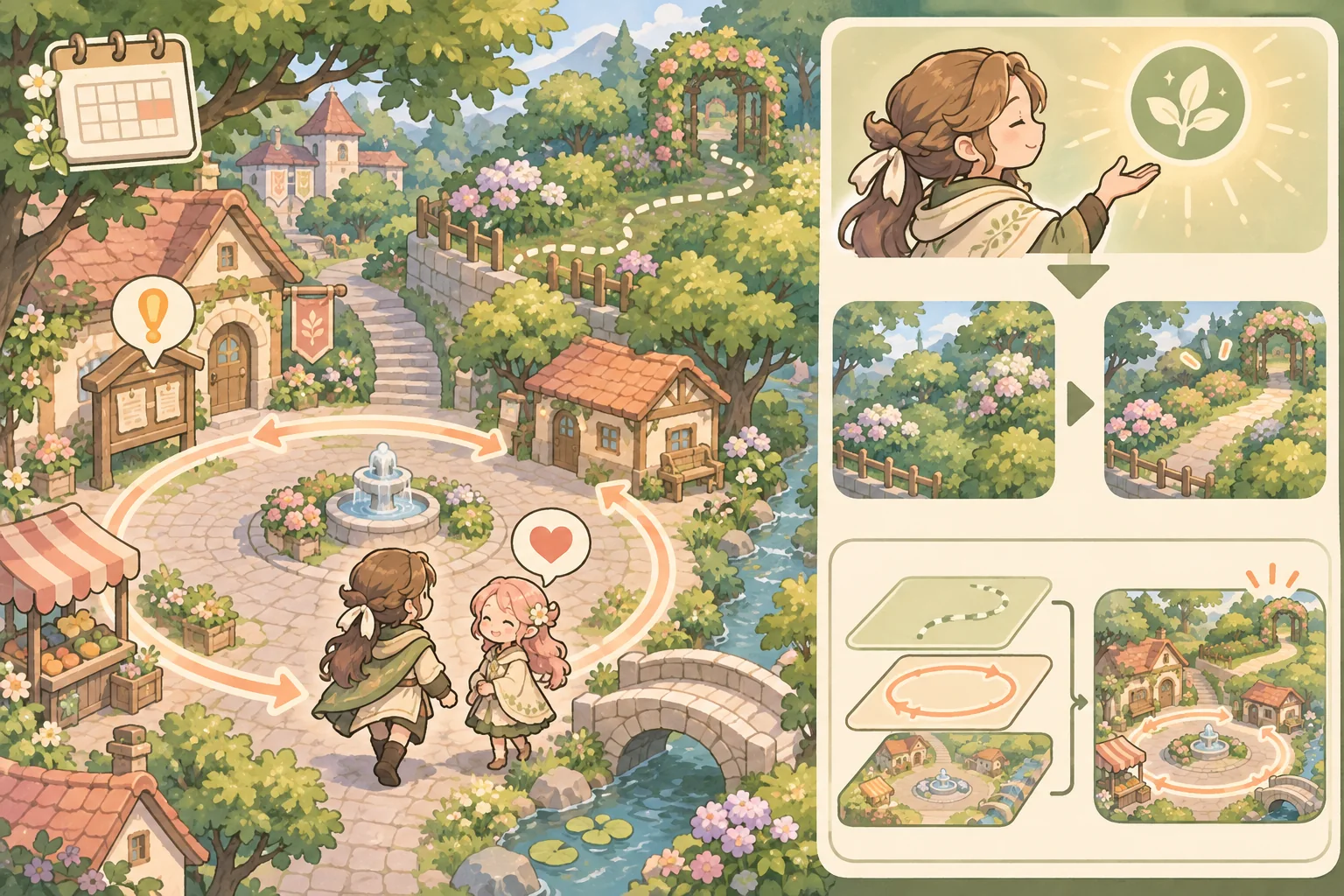
Keep the ability legible and optional. A player should understand whether it reveals information, changes a route, or alters an interaction. If the ability changes the world, define whether that state persists across days and whether the original leader can still reach the same destination through another route. The design can be distinct without making the previous choice feel wrong.
Separate leader identity from party continuity
Keep the selected leader separate from companion identities and relationship records. Changing the controlled character should not recreate companions, erase dialogue history, or make a completed quest appear new. Identify whether the project stores player state by stable character ID or by a single player node, then design the smallest adapter around the actual structure.
Godot’s InputMap documentation describes named actions configured through Project Settings or its API. That supports inspecting existing controls before adding a leader-specific action; it does not prescribe a control scheme for this game. Reuse an interaction action if the new role performs the same kind of interaction. Add a distinct action only when the player needs to understand a separate control.
Godot’s save-game tutorial demonstrates selecting persistent fields and serializing them in one engine-specific example. It does not establish how a cozy RPG should store relationships or leader changes. Follow the existing project’s save architecture. If old saves lack a leader ID, define a documented default and test it against a copied save before applying any migration to player data.
Make progression fit the existing pace
A new leader may need a small ability unlock or familiar growth milestone, but do not add a parallel experience economy without a clear reason. Decide whether the ability is available from the start, learned through an optional activity, or improved through the project’s existing gradual progression system. Keep the reward cadence and quest pressure aligned with the current game.
Reuse existing quest steps, journal entries, and relationship events where possible. If the leader has a unique dialogue branch, make its flags explicit and ensure the original leader still has a valid response. Do not attach friendship gains to an ability unless the game already defines and tests that rule.
Plan a small, reversible project change
Ask AI to produce a file-by-file plan before implementation. A first slice could add one leader profile, a selection option, one ability handler, a single optional village interaction, and focused tests. The existing quest engine, companion records, save reader, growth curve, day clock, and original leader should remain untouched unless code inspection shows a specific dependency.
Make an allowlist and compare it with the complete diff. If the patch changes every quest, rekeys all relationship data, or creates a second progression system, narrow the task. Keep a clean branch or project copy. If a data migration is needed, test it separately on copies and keep the old format readable until compatibility is confirmed.
| Slice | Possible edit | Reference to keep stable |
|---|---|---|
| Leader selection | One stable leader ID and display option | Existing save and continue flow |
| Ability | One optional exploration action | Common interaction and day clock |
| Quest link | One optional journal clue or branch | Existing quest completion flags |
| Companions | No relationship schema change | Recruitment and friendship records |
| Tests | Old save and leader-swapped route | Original leader baseline |
Test the new and original leader paths
Test the ability in its intended location and somewhere it should not work. Switch leaders before and after a quest transition, talk to the same companion, load an older save copy, and inspect the journal and relationship state. Verify that time advances according to the existing rule and that the ability does not silently complete a quest or grant an unplanned reward.
| Proposed check | Action | Evidence to record |
|---|---|---|
| Original path | Complete a known optional quest with the current leader | Build, quest ID, journal and reward state |
| Ability boundary | Try the new ability in and outside its area | Expected availability and actual response |
| Leader swap | Change leaders around a dialogue or quest event | Stable IDs and relationship flags |
| Day pacing | Use the ability during a daily activity | Clock change and schedule behavior |
| Old save | Load a copy from before the leader existed | Fallback and preserved progress |
| Rollback | Restore the baseline commit | Original leader and quest loop remain |
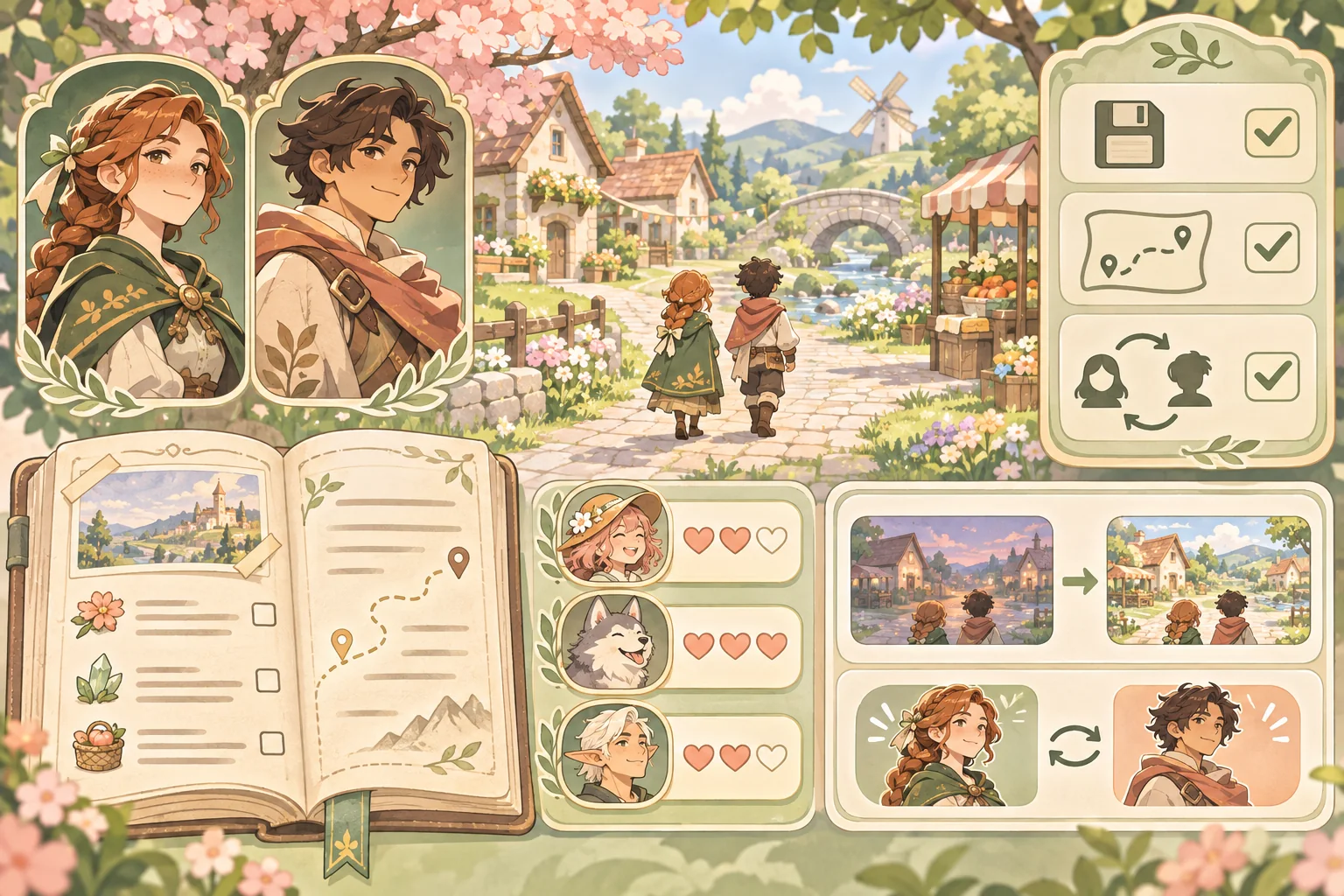
This table proposes validation; it does not report completed gameplay checks. When the project is available, record the version, save copy, selected leader, location, quest and companion IDs, expected result, observed result, and any mismatch. If a generated mock screen looks convincing, remember it still cannot show that the actual save or relationship graph is intact.
Keep the cozy tone and player choice intact
Review prompts, dialogue, and ability feedback for pressure. Avoid timers or scarce rewards unless the existing game already uses them. A leader’s ability can offer a hint, route, or convenience without making players feel they chose the wrong character. Keep the original path understandable and let the new role add possibilities rather than remove agency.
To explore a separate cozy RPG concept, try SEELE AI Game Maker. It is a concept tool, not an existing-project editor.
Frequently asked questions
What makes an alternative leader feel distinct in a cozy RPG?
Give the leader a useful, understandable ability that changes a small part of exploration or daily planning, such as noticing a hidden garden path. Keep its limits clear and preserve the relaxed pacing. Distinction should add a new choice without making the original leader feel obsolete.
Should a new leader have a separate quest and growth system?
Reuse the existing quest and gradual growth systems unless the project has a clear reason to replace them. A small ability hook can provide identity while familiar rewards and companion interactions continue to work. Test the original quest path before adding new progression rules.
How can I add a leader without breaking companion relationships?
Capture how the current leader, party membership, dialogue flags, and relationship events are stored. Keep companion identity separate from the selected leader, and test a copied save with both options. Do not assume that a new portrait or ability should reset friendship or quest state.
How should I test an alternative leader ability?
Try the ability where it should work, where it should not, after a quest transition, and after loading a prior save. Compare the same village route with the original leader. Record expected and actual results; a fictional walkthrough or mock interface is not a gameplay test.
Can AI safely add a party leader to my existing cozy RPG?
AI can inspect supplied files, suggest a limited change, and draft regression checks. It cannot verify the project or relationship continuity without the actual code and executed tests. Share a file allowlist, baseline save, expected ability, and rollback commit, then inspect every changed file.
Add a leader while keeping the familiar village loop
Record how the current game handles quests, companions, controls, and saves. Add one clear ability through a narrow leader-selection change, keep relationships and gradual growth intact, and test both the new and original routes on a project copy. Retain a baseline commit, and treat all proposed checks as unverified until they have been run in the actual build.