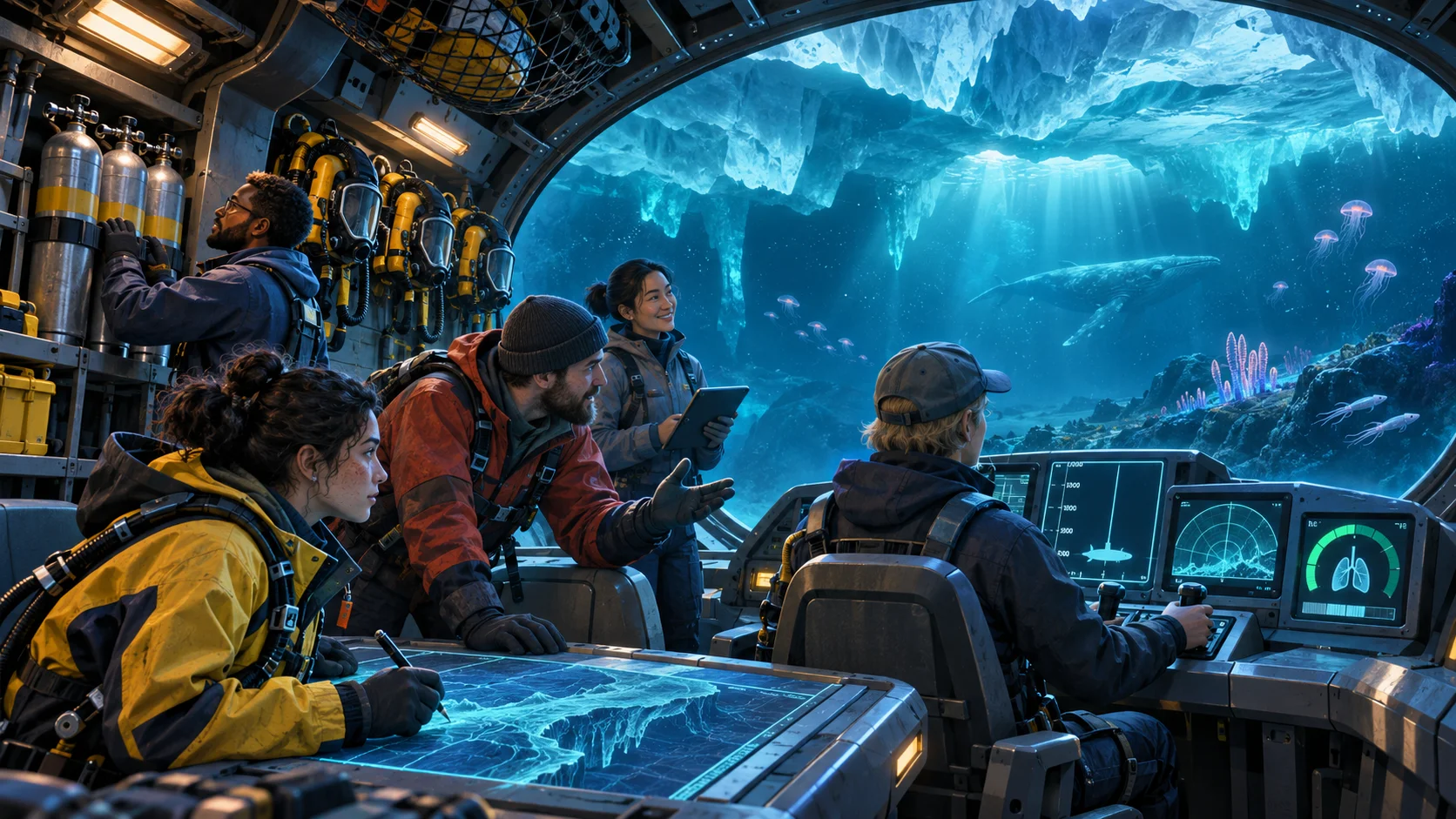
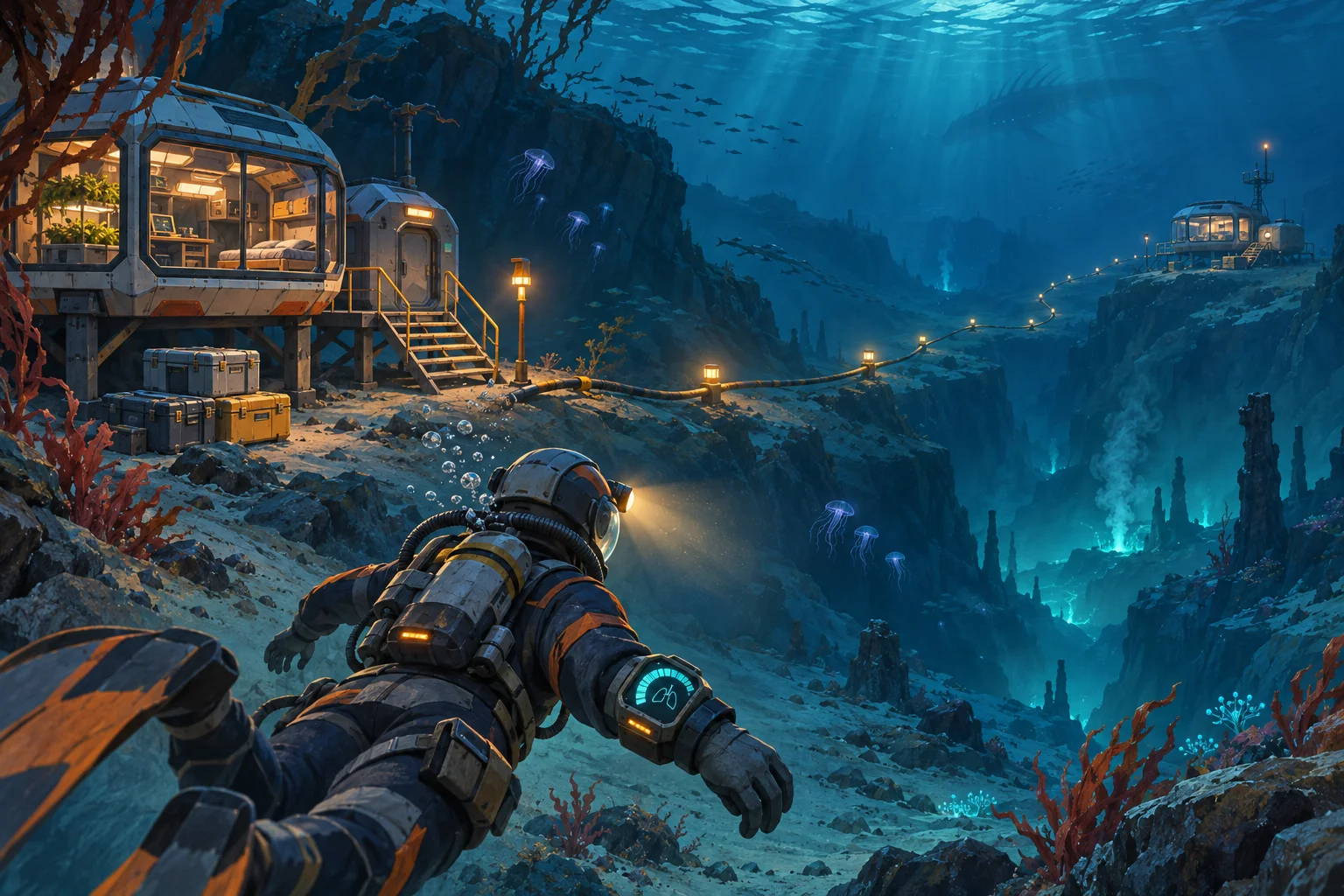
An expedition system becomes part of an underwater survival game when the trip changes what the player can build at base, and base development changes which trips are safe. The loop should make preparation matter: check oxygen, choose a depth, carry limited cargo, return before the reserve is gone, then invest what you recovered.
The routes, oxygen values, upgrades, and results below are fictional design math. They are not real diving guidance, a playtest, or a result produced by SEELE.
Keep the survival baseline visible
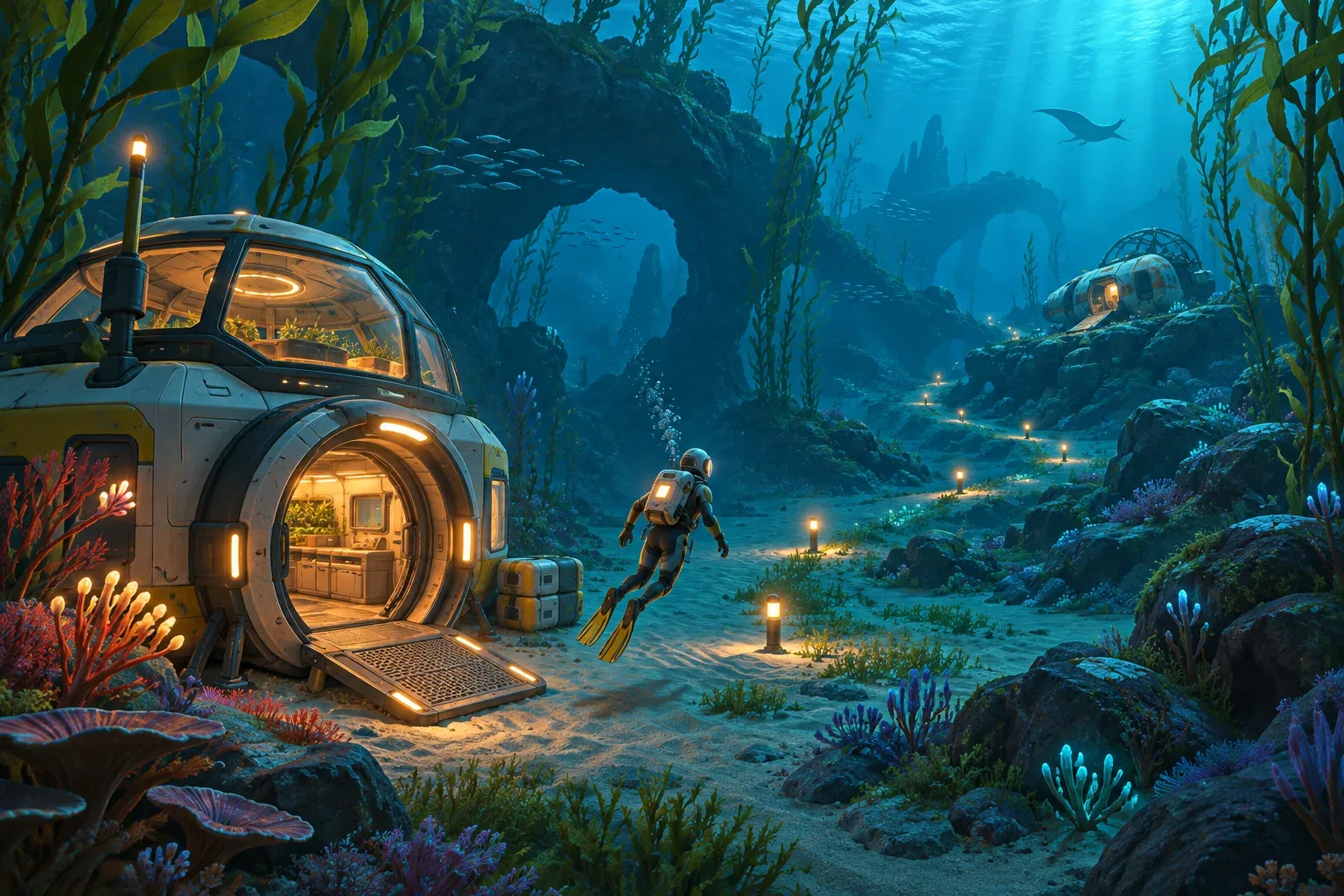
Write down the survival loop you already have before adding a mission board. Decide how the player replenishes oxygen, how time advances, what happens when a resource reaches zero, and whether the player can return automatically or must navigate back. An expedition should use those same rules instead of quietly bypassing them.
Keep four trip values separate: oxygen, depth hazard, elapsed time, and cargo capacity. Oxygen limits how long the player can stay away. Depth can change visibility or movement pressure. Time can advance threats or base needs. Cargo capacity limits the reward. If each system is shown independently, the player can understand why one route needs an upgrade.
Connect the expedition to base development with a clear exchange. A trip returns salvage; salvage pays for a specific base module; that module changes one future trip decision. For example, a compressor could shorten refill downtime between trips, while an upgraded tank could increase the oxygen reserve. Do not make every upgrade improve every expedition variable at once.
Model an expedition as a state machine
Represent the trip with named states: preparing, outbound, searching, returning, resolving cargo, and recovered. Each transition should have a reason the player can see. If oxygen reaches the return threshold while searching, the expedition moves to returning. If the player reaches the base, cargo is added and the result can fund the next upgrade.
| State | Player decision | System update | Visible feedback |
|---|---|---|---|
| Preparing | Choose route, equipment, and cargo limit | Check unlocks and starting oxygen | Route duration, depth band, and return reserve |
| Outbound | Continue or turn back | Advance time and consume oxygen | Distance to target and reserve forecast |
| Searching | Collect salvage or return now | Update cargo and hazard state | Remaining oxygen, capacity, and danger cue |
| Returning | Choose a safe path if routes branch | Keep consuming the same resources | Estimated return cost and current margin |
| Recovered | Repair or invest at base | Resolve salvage and unlocks | What changed and which route is now available |
Keep one rule consistent: an upgrade may change preparation, but it should not retroactively alter an expedition already in progress. Snapshot the selected equipment and base modifiers when a trip starts. That makes route outcomes easier to explain and prevents a mid-trip purchase from changing the oxygen budget.
Budget oxygen and depth before the trip
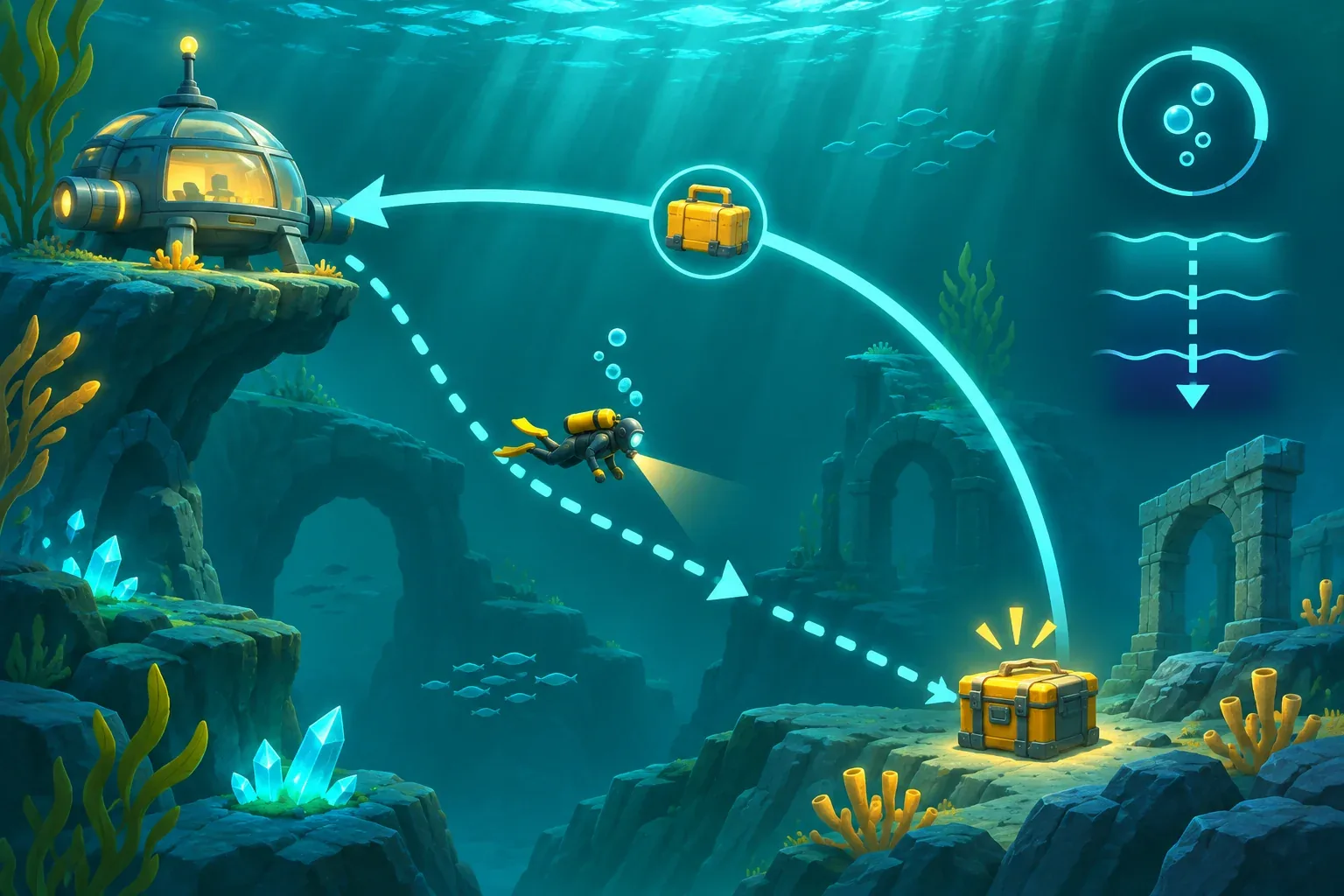
Use a simple equation for the first route: oxygen used equals modeled minutes away multiplied by oxygen spent per minute. In this fictional prototype, capacity is 100 units and the route model spends 10 units per minute. Reserve 20 units for the return leg and unexpected delay. These figures exist only to make the arithmetic easy to follow.
A shallow salvage route takes two minutes outbound and two minutes back. It uses 40 oxygen units, leaving 60 at the baseward end of the trip. The player can spend some of the remaining margin searching, but the interface should show how that choice reduces the return reserve. If the player spends another two minutes collecting, 20 more units are used and 40 remain for the return and contingency.
| Route | Outbound | Search | Return | Oxygen model |
|---|---|---|---|---|
| Shallow salvage, baseline | 2 min / 20 units | 0 min / 0 units | 2 min / 20 units | 40 used; 60 remain |
| Shallow salvage plus search | 2 min / 20 units | 2 min / 20 units | 2 min / 20 units | 60 used; 40 remain |
| Deep site, baseline | 4 min / 40 units | 1 min / 10 units | 4 min / 40 units | 90 used; only 10 remain, below reserve |
| Deep site with tank upgrade | 4 min / 40 units | 1 min / 10 units | 4 min / 40 units | Requires a capacity increase that preserves 20 reserve |
The deep-site row intentionally fails with the baseline capacity. A base-linked tank upgrade can open that route, but the editor should show exactly what changed. Do not describe a route as safe merely because its total is below capacity; subtract the modeled return cost and reserve first. These calculations are a fictional game-design example, not a claim about real underwater physiology or equipment.
Prompt for one connected expedition loop
When you use an AI game maker to explore the system, state the base loop and one route before requesting a whole ocean. SEELE's official AI Game Maker page describes building from text and refining a playable result. The expedition and upgrade rules below are a proposed design, not a documented product feature.
Create a compact fictional underwater survival prototype with a small seafloor base and one shallow salvage route. The player starts with 100 oxygen units; the design model consumes 10 units per minute and reserves 20 for return. The trip has prepare, outbound, search, return, and recovered states. The shallow route takes 2 minutes each way; show the cost before departure and warn when a search would use the return reserve. Add cargo capacity and one base upgrade: a tank module that unlocks a deeper route only when the oxygen budget preserves the same return reserve. Keep the compressor separate; it may shorten refill time but does not increase oxygen capacity or change underwater consumption. Show recovered salvage and the base upgrade it can fund. Do not add combat, multiple regions, or random oxygen rules yet.Review whether the returned cargo updates the base and whether the upgrade changes only the route it is meant to change. If the prototype gives oxygen back during a dive or allows a trip to end with a negative reserve, ask for that exact state transition to be corrected.
Test base upgrades and return safety
Use a fixed route, starting capacity, and collection action to compare versions. Record the expected oxygen after each state. A small table makes it easier to catch a mismatch between the route forecast and the live counter.
- Baseline trip: travel two minutes out and two minutes back. The model spends 40 units and returns with 60 before any search.
- Search choice: add a two-minute search. The model spends 60 total and returns with 40; the preview displays the remaining reserve.
- Return threshold: set oxygen to the 20-unit reserve during search. The trip stops collecting and switches to return mode.
- Deep-route gate: the baseline tank cannot start the deep trip if its forecast leaves less than the 20-unit reserve. The upgraded tank changes capacity explicitly.
- Base loop: recover one salvage item, buy the compressor, and verify that only refill downtime changes before the next trip.
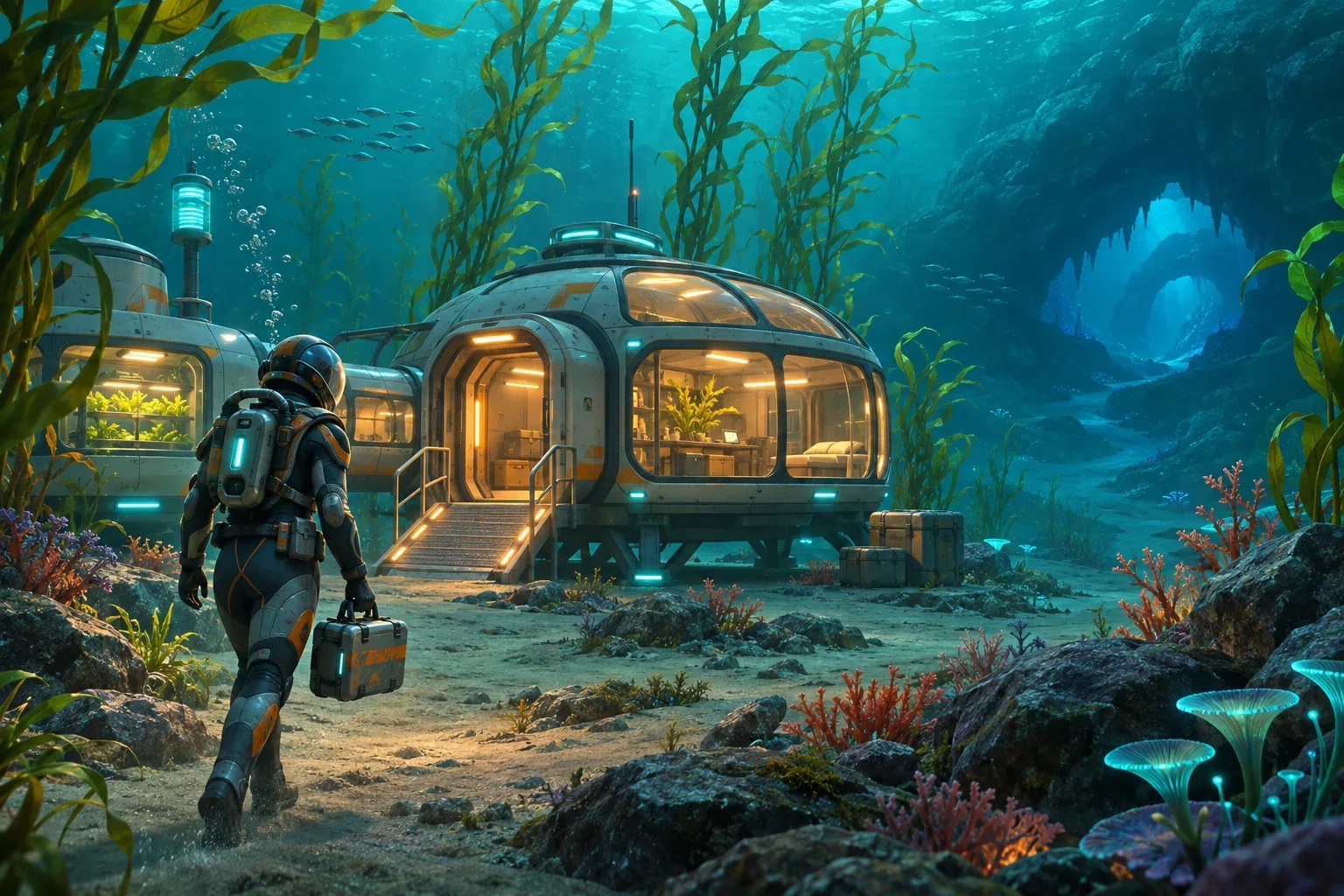
Once one shallow expedition works, expand one dimension at a time: a second route, a new cargo type, or an upgrade branch. Keep the return cost visible on every route. The base should make exploration more intentional, while the expedition still asks the player to manage a finite budget.
Underwater expedition system FAQs
What should an expedition connect to at base?
Start with a clear exchange: a trip returns one resource that pays for a named module, and that module changes one future route decision such as oxygen capacity or refill downtime.
Should an upgrade remove the need to return?
No. Keep the return cost in the budget. An upgrade can expand a safe margin or unlock a deeper route, but it should not make the expedition loop ignore resource limits.
How do I show oxygen use clearly?
Display the outbound estimate, expected search cost, return cost, and reserve separately. Update the forecast after each action so players can see how collecting more reduces their margin.
How many routes should I build first?
One shallow route is enough to test preparation, travel, collection, return, and base investment. Add a deeper route after the baseline budget and return warning are understandable.
Can base development change an active expedition?
Keep the selected equipment and modifiers fixed when a trip starts. Apply a new upgrade to the next expedition so the current route remains predictable.
Make your own underwater survival game
Begin with one safe route, a visible return reserve, and one base upgrade that changes the next trip. When that loop is easy to trace, add the next depth band or salvage choice. For a general game-creation starting point, explore the SEELE AI Game Maker and bring this oxygen-and-base plan into your prototype brief.