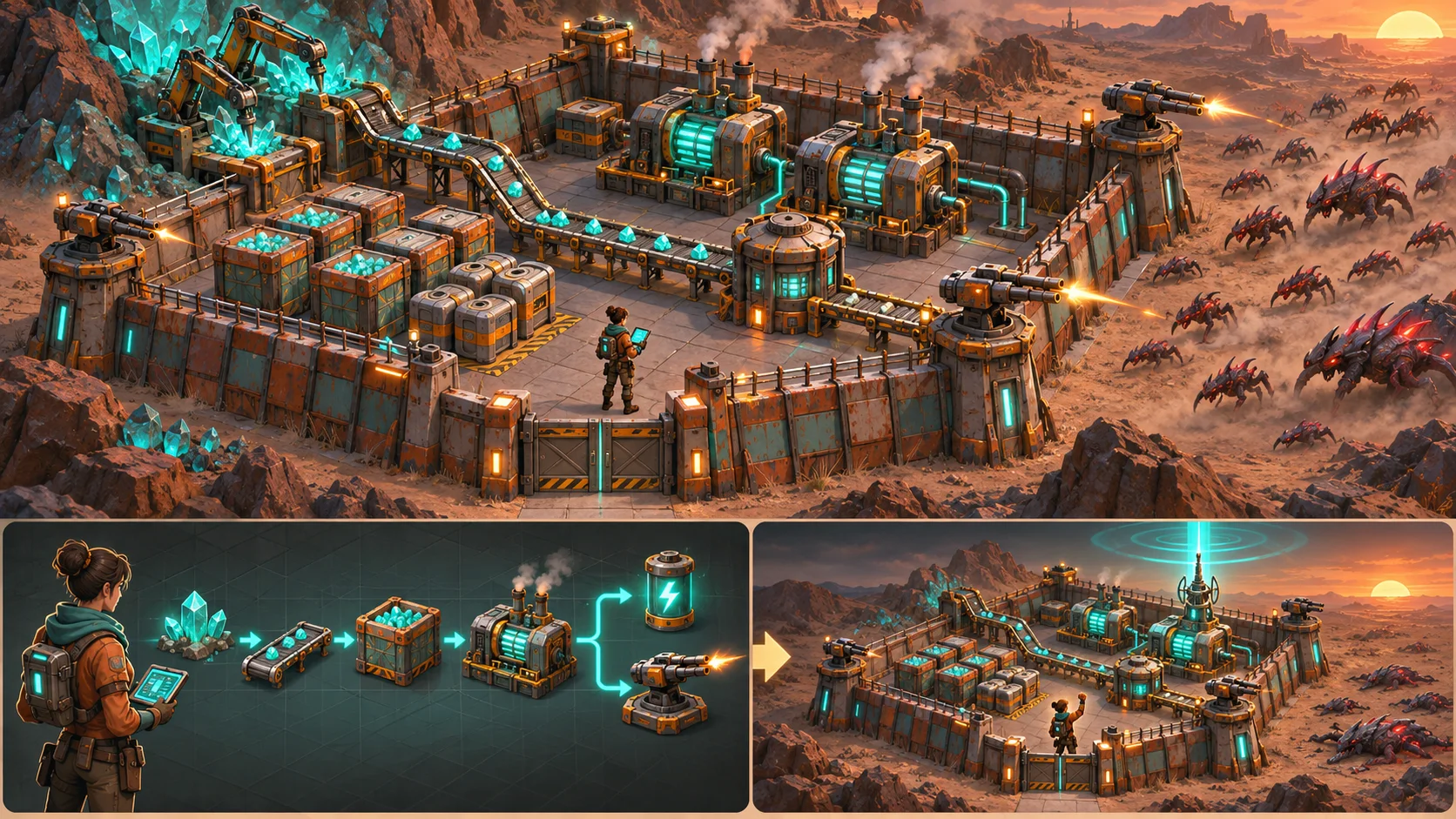
Add automation that changes the core player routine to your colony-management game with AI. Make trade-offs visible, preserve recovery, and test the system in a short repeatable scenario. Start with one repeated task and one exception before building a colony-wide automation layer.
Map the routine and repeated player tasks
List the tasks the player repeats each cycle: moving supplies, restarting a machine, assigning a worker, or responding to a recurring shortage. Choose one routine whose automation creates a new planning decision rather than removing every interesting action. Record the trigger, required inputs, expected result, and the conditions that should stop or redirect the process.

The official Oxygen Not Included listing from Klei Entertainment describes a colony simulation with resource allocation, automation, and duplicants whose needs and stress affect survival. It supports the colony-management context only; routine-changing automation here is original. Show the manual routine first so players can see which work the new system will change.
Choose automation boundaries and exceptions
Automate a well-defined chain, such as moving metal from storage to a machine when its buffer is low. Let the player set the threshold, priority, and destination, then show the work order in the colony view. Include a clear stop condition so automation does not consume every resource or keep running after its purpose is complete.

Plan for exceptions. A machine may pause when power fails, a worker may need food or rest, or a route may be blocked. Show the reason and let the player choose whether to reroute, wait, or override the rule. Automation should reduce repetitive labor while leaving the player responsible for priorities and recovery.
Show how settlers respond to changed work
When a rule changes a routine, explain which tasks settlers stop performing and which new work takes priority. A hauling route may free workers for repairs, but a shortage can pull them back to supply delivery. Make these changes visible through work queues or task markers so the player can understand why colony output changed.

Keep settler needs in the model. A worker can leave a production task for food, rest, or stress recovery, so the automation plan must account for human limits. Show when a task is delayed because a settler is unavailable rather than implying the automation rule has failed. The player can then rebalance staffing or reserve supplies.
Test automation under resource pressure
Run the same colony routine manually and with automation under normal conditions, then introduce a power outage, blocked route, or low stock. Measure player interventions, idle time, missed production, settler well-being, and how long recovery takes. Ask players to explain the automation rule and its current exception before they change it.
For related system planning, see a guide to visible resource bottlenecks and a guide to world changes caused by resource use. Pass when automation reduces repeated manual work without hiding shortages or settler needs.
FAQ
What should colony-management automation change?
Choose a repeated manual routine, such as moving supplies, restarting a machine, or assigning a worker, and define a clear trigger and stop condition. Automate a chain that creates a new planning choice rather than removing all player decisions. Show which tasks settlers stop doing and what work takes priority instead.
How can automation alter the player routine?
Let the player configure a threshold, priority, or destination, then show the automated work order in the colony view. When the chain runs, expose which repetitive task it replaced and what new planning decision remains. Include exceptions for power loss, blocked routes, or missing supplies so automation does not become a hidden failure.
How should settlers handle automation exceptions?
Show why a task paused, such as a worker needing food or rest, a route being blocked, or a machine lacking power. Let the player reroute, wait, or override the rule. Account for settler availability in production planning so the system explains delayed work instead of implying the rule has failed.
What should you test in colony automation?
Compare manual and automated routines under normal conditions and during a power outage, blocked route, or low-stock state. Measure interventions, idle time, missed production, settler well-being, and recovery time. Ask players to explain the rule and current exception before they change it.