Make a stealth boss test movement through readable space, giving players room to observe, route, evade, and create a safe opening. Prototype one short sequence first, then check whether the player can see the cause, consequence, and next choice. The system described here is original design guidance; the linked source is limited to the genre context in the first chapter.
Map movement and detection rules
Write down the stealth rules the boss encounter will test: sight cones, sound radius, cover, climbable surfaces, and the player’s escape options. A boss should make these familiar rules matter under pressure rather than invalidate them. Mark safe observation points and the positions where players can recover after a mistake. See Klei Entertainment for the limited context claim.
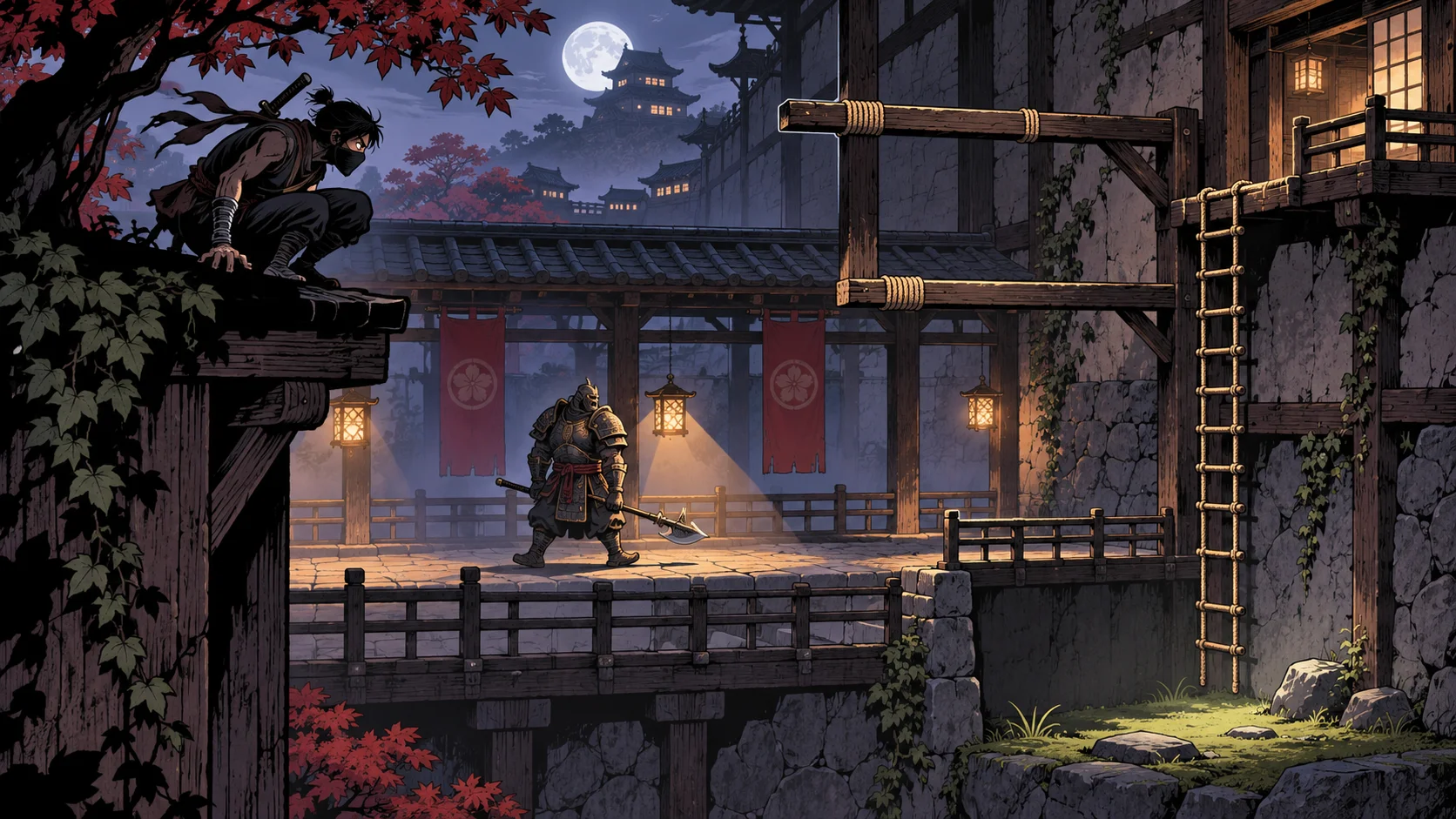
The official Mark of the Ninja listing describes stealth play that depends on agility and clever movement. This is context for movement-led stealth; the boss arena and encounters in this article are proposed designs. Start with one arena that can be read from the first screen and identify the boss’s patrol loop.
Build a readable boss arena
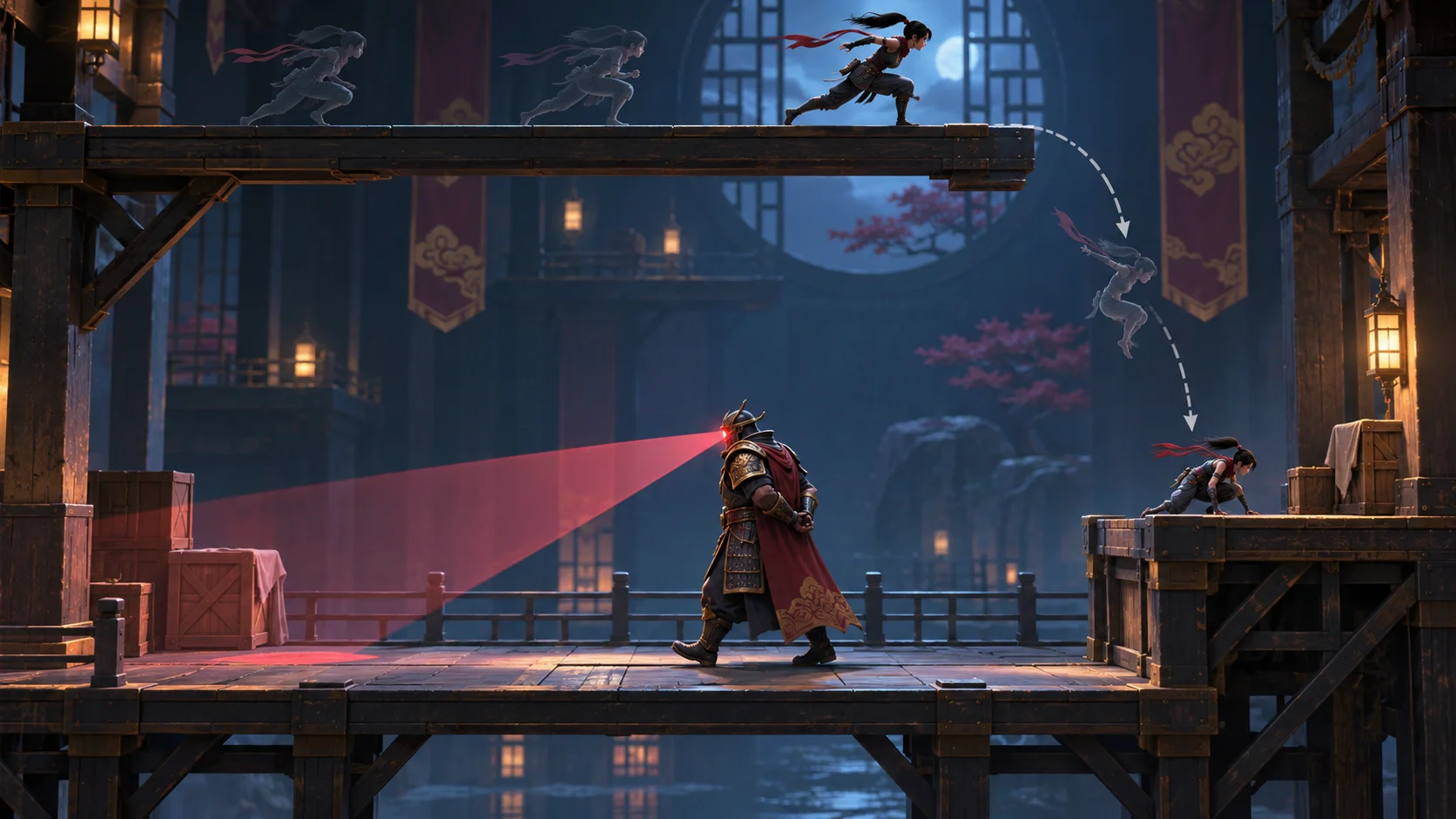
Build a space with more than one vertical and horizontal route. Place cover, ledges, drops, and narrow passages so each offers a different exposure or timing tradeoff. Keep landings and exits visible, and avoid jumps that require guessing an unseen collision boundary.
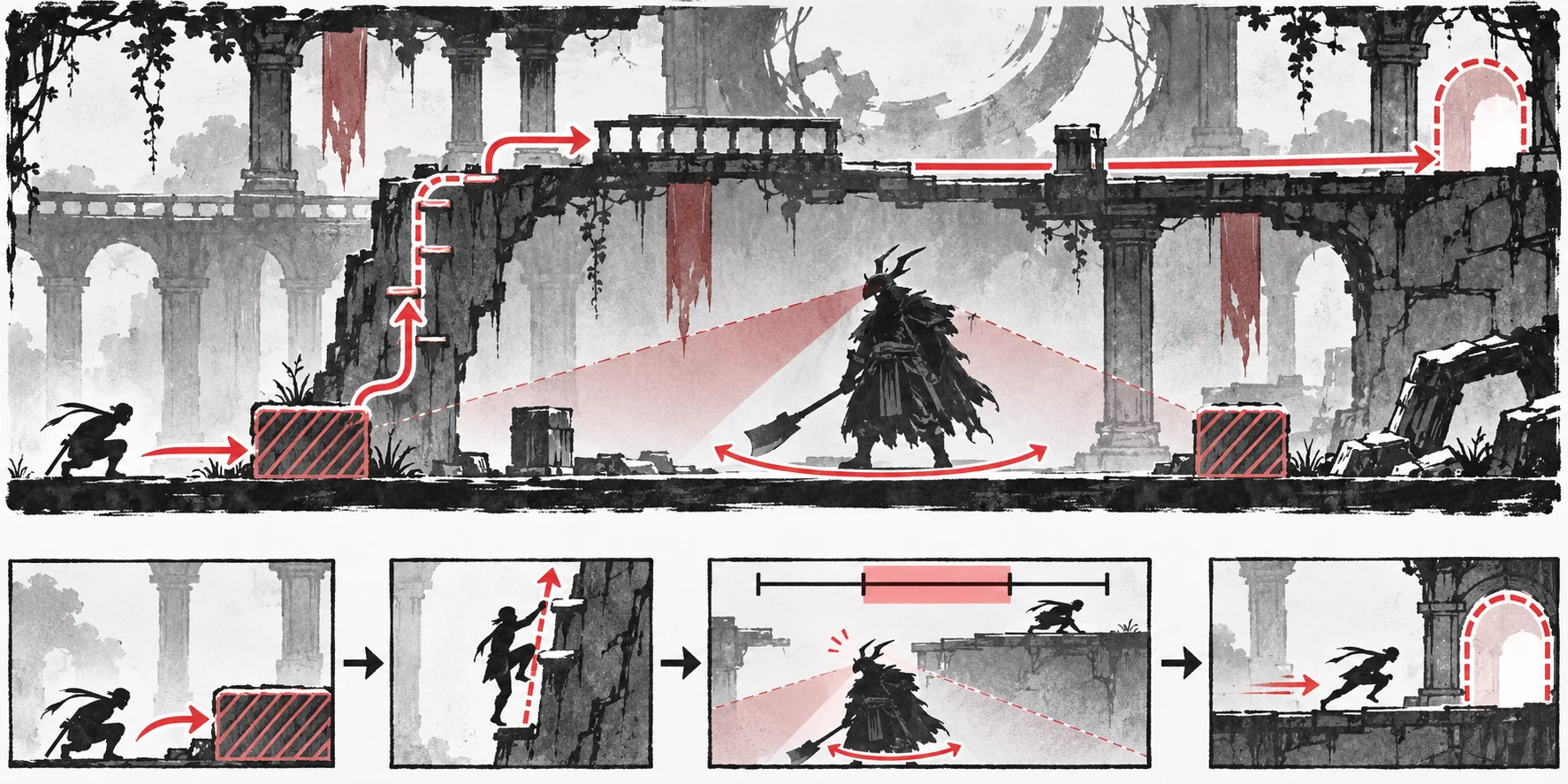
Give the boss an observable pattern with a tell, a search phase, and a recovery window. The player can then decide to wait, climb, cross behind the patrol, or create a distraction. Make detection feedback clear enough that a missed timing feels teachable.
Make routes create tactical openings
Reward movement mastery by creating openings rather than requiring damage. A route behind the boss might reveal an objective, disable a sensor, or provide a brief escape lane. Preserve at least two approaches so a player who misses one timing can adapt instead of restarting the entire encounter.
Make failures recoverable. Detection can raise pressure or reset the arena pattern, while a full alert returns the player to a nearby checkpoint. Communicate whether the boss has changed state and what movement options remain.
Test mastery without forced damage
Test the arena with players who have not seen its layout. Ask them to point out safe routes, predict the patrol, and describe why an opening appeared. Track falls, accidental detection, and time spent waiting without making the goal simply to minimize all risk.
For tactical patterns in a boss encounter, see a tactical boss design guide. Pass when players can use movement and stealth rules to create an opening, recover from mistakes, and explain the boss pattern.
FAQ
How can a stealth boss test movement?
A stealth boss can test movement by making players read sight lines, use cover, climb, drop, and time crossings to create an opening. Keep the boss pattern and safe routes visible enough to learn. Movement should offer a tactical advantage or objective progress, not just delay a forced damage exchange.
What should a stealth boss arena include?
Include multiple levels or lanes, visible landing points, recoverable falls, and cover that changes exposure. Mark the boss patrol’s reach and give players safe observation space. Vary route length or risk so players can choose between waiting, climbing, or crossing at a timing window.
How do you keep movement challenges readable?
Use clear silhouettes, stable patrol cues, and feedback when detection rises. Make collision edges and safe platforms readable. If a route is blocked or timing is missed, allow players to retreat or choose another approach rather than requiring a blind jump.
What should you test in a stealth boss fight?
Ask new players to identify safe routes, predict the boss pattern, and explain how they created an opening. Track accidental detection, falls, and unclear feedback. Include a recovery case and verify that mistakes teach a rule without forcing a full replay.