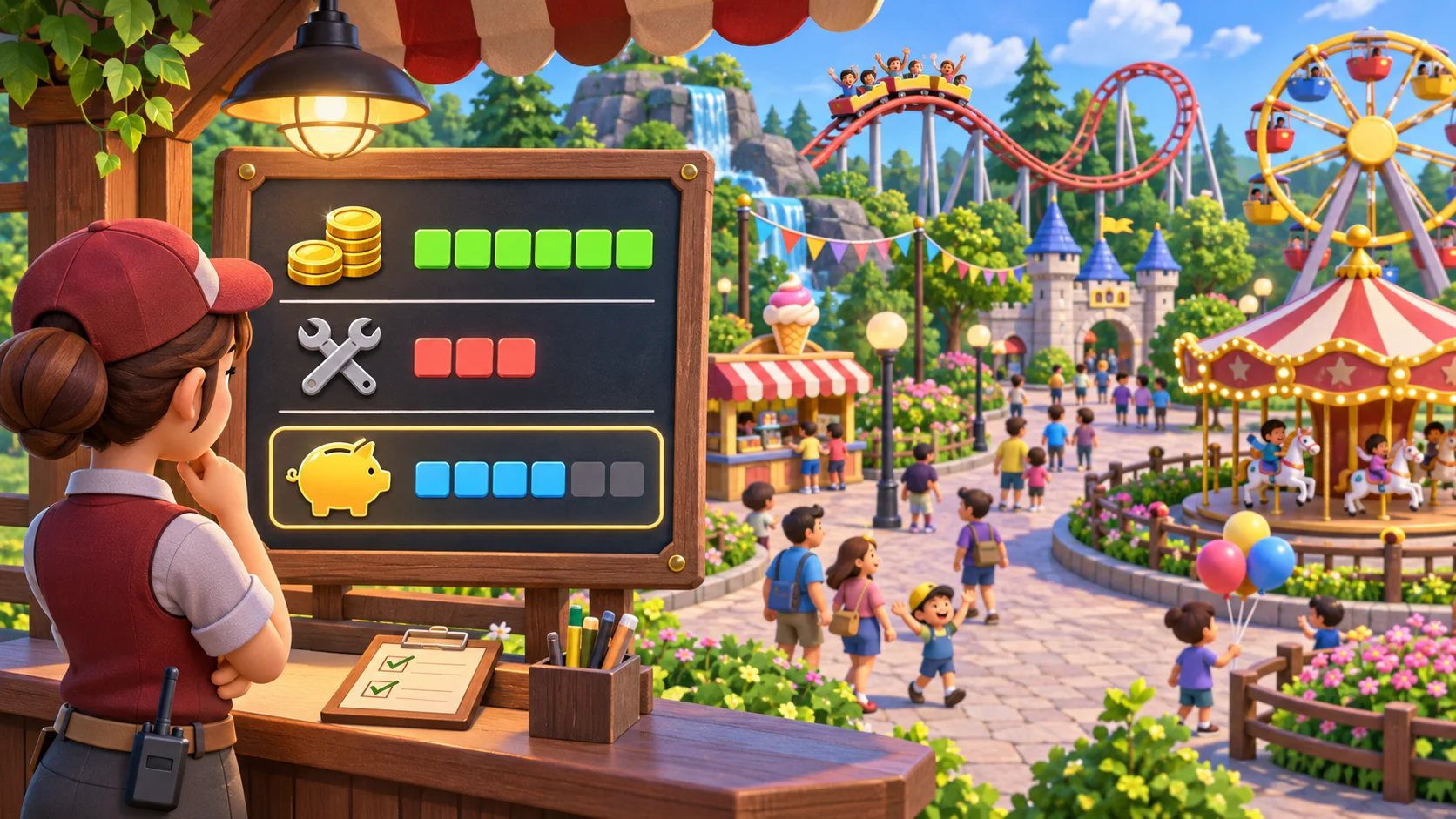
Use one transparent valuation model for buying, operating, and selling park businesses so players can compare cash flow with park impact. A compact prototype should connect one player action to clear feedback and the next decision before adding more content.
Map the theme-park business baseline
List the businesses a park can own: rides, food stands, shops, or service facilities. For each one, note purchase cost, operating cost, income, maintenance, guest effect, and any space or staffing requirement. This turns an acquisition feature into a readable management loop rather than a one-time price button.

The official Park Beyond listing describes theme-park management centered on finances and visitor experience, including the purchase of new land plots. This supports the management context only; the business acquisition and resale system described here is a proposed design. See the Park Beyond official Steam product listing for this context.
Set one acquisition valuation model
Use the same valuation model for both directions. A purchase price can combine expected income, upkeep, condition, and park fit. A resale value can apply the same inputs with a clearly stated depreciation or transaction cost. Avoid calculating a generous buy price from projected revenue and then an unrelated low sale price with no player-facing explanation.
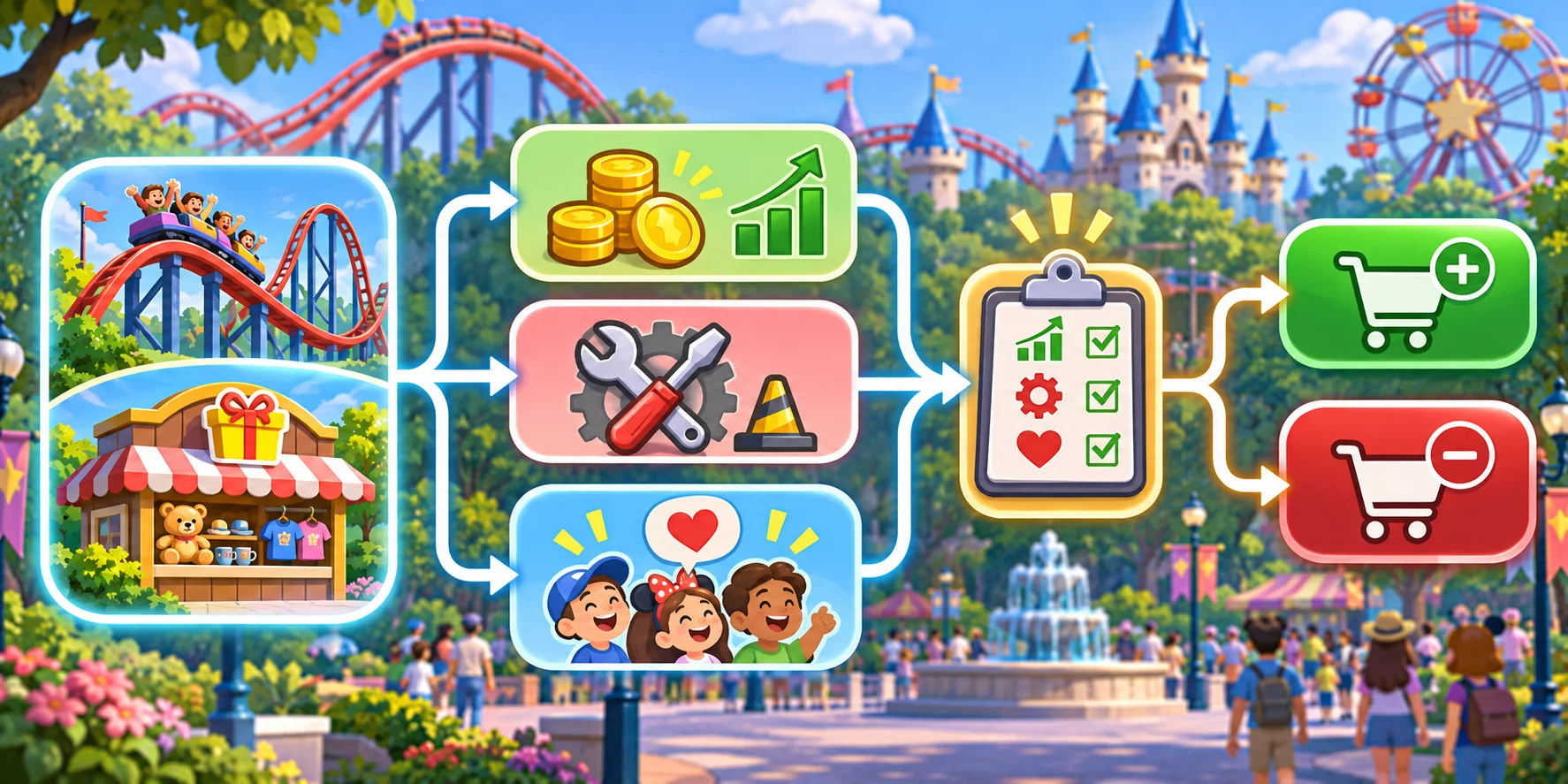
Separate market value from strategic value. An attraction may earn modest revenue but improve guest flow or unlock a route. Show financial return and park impact as separate signals so players can decide whether the acquisition suits their current goals.
Apply the same rules to resale
Make ownership transfer rules consistent. Define what happens to staff, maintenance, queues, reputation, and connected facilities when a business is bought or sold. If selling removes an attraction, warn the player about visitor effects and any contractual cost before confirming the deal.
Provide a preview of the next operating period: cash change, upkeep, expected income, and affected guest needs. If the estimate is uncertain, label it as a forecast and expose the factors rather than presenting a precise guaranteed outcome.
Test cash flow and park outcomes
Test the same asset through purchase, several operating periods, and resale. Compare the ledger against the acquisition formula and verify that no value is counted twice. Include an asset in poor condition and one with high guest value but modest income to ensure the model rewards more than one strategy.
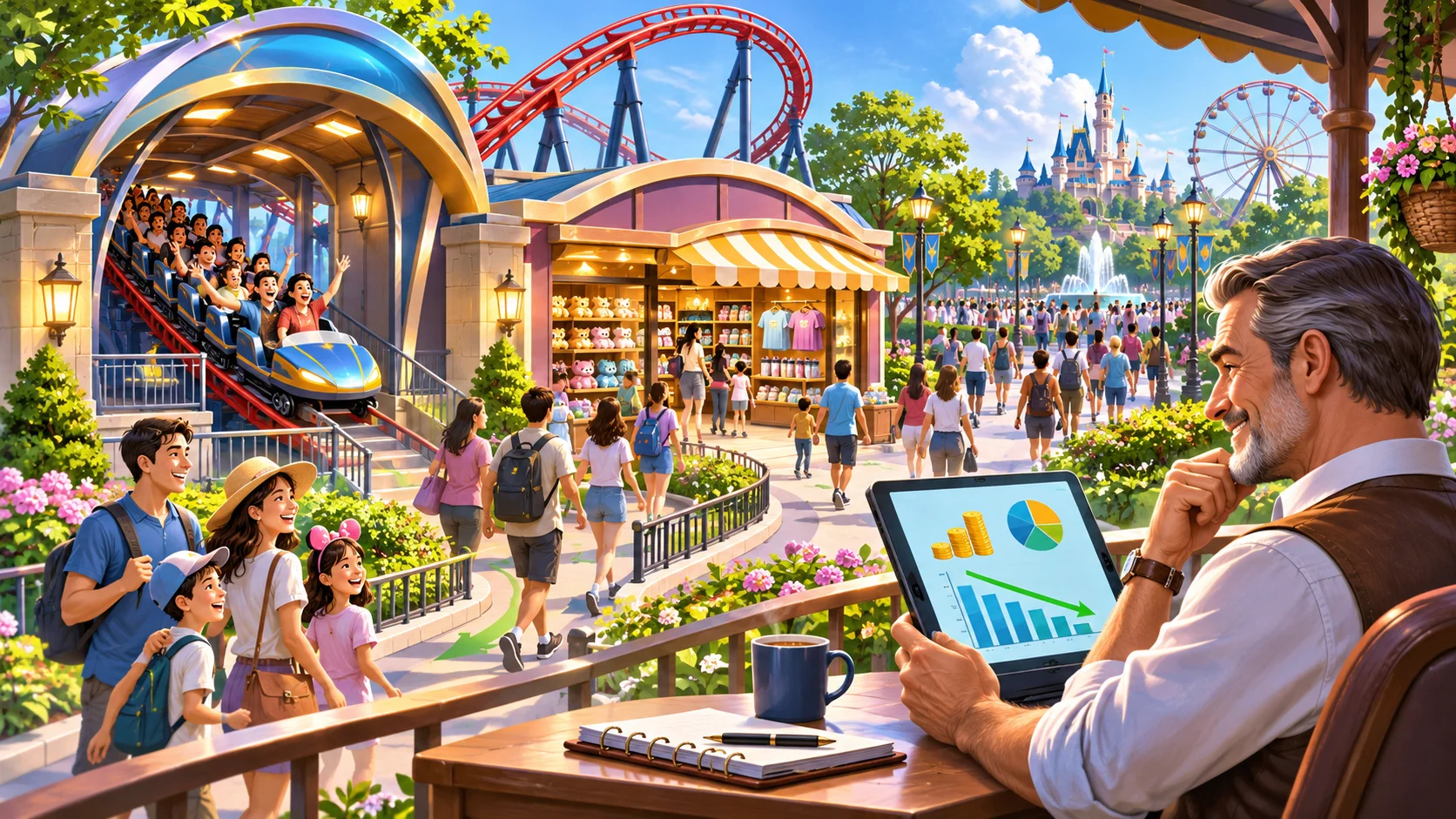
The a theme-park finance guide gives a broader view of theme-park cash flow. Accept the system when players can explain the purchase estimate, resale result, and operating tradeoff from the same visible rules. SEELE AI can help brainstorm business models; accounting rules and playtests need implementation.
FAQ
How should business acquisitions work in a theme-park game?
Treat each business as an operating asset with a purchase price, income, upkeep, condition, and effect on guest experience. Show the player what ownership changes and let them compare the acquisition with other park investments before confirming a deal within the park.
How can purchase and sale rules stay consistent?
Use the same asset factors in both calculations, then clearly identify any depreciation or transaction cost. A ledger should show purchase value, operating changes, and resale value so players can trace how the result was produced instead of encountering unrelated prices.
Which factors should affect a park business valuation?
Income potential, operating and maintenance costs, asset condition, staffing, space, and guest impact are useful inputs. Keep financial return separate from strategic value, such as improving visitor flow. Test assets with different strengths so the formula does not favor only high-revenue businesses.
What should you test in a park acquisition prototype?
Buy an asset, operate it through several periods, and sell it. Check the ledger against the formula, include maintenance costs, and test assets with different income and guest effects. Confirm that the player sees important consequences before accepting the deal.