Make competitor behavior react to a small set of observable player decisions, then show the market effect through jobs, prices, or reputation. Responses should be explainable, bounded, and useful for planning. Prototype one short loop first, then check whether the player can explain the relationship between their choice, the system response, and the next opportunity. The official source below supports genre context only; the system design here is original guidance.
Pick player decisions competitors can observe
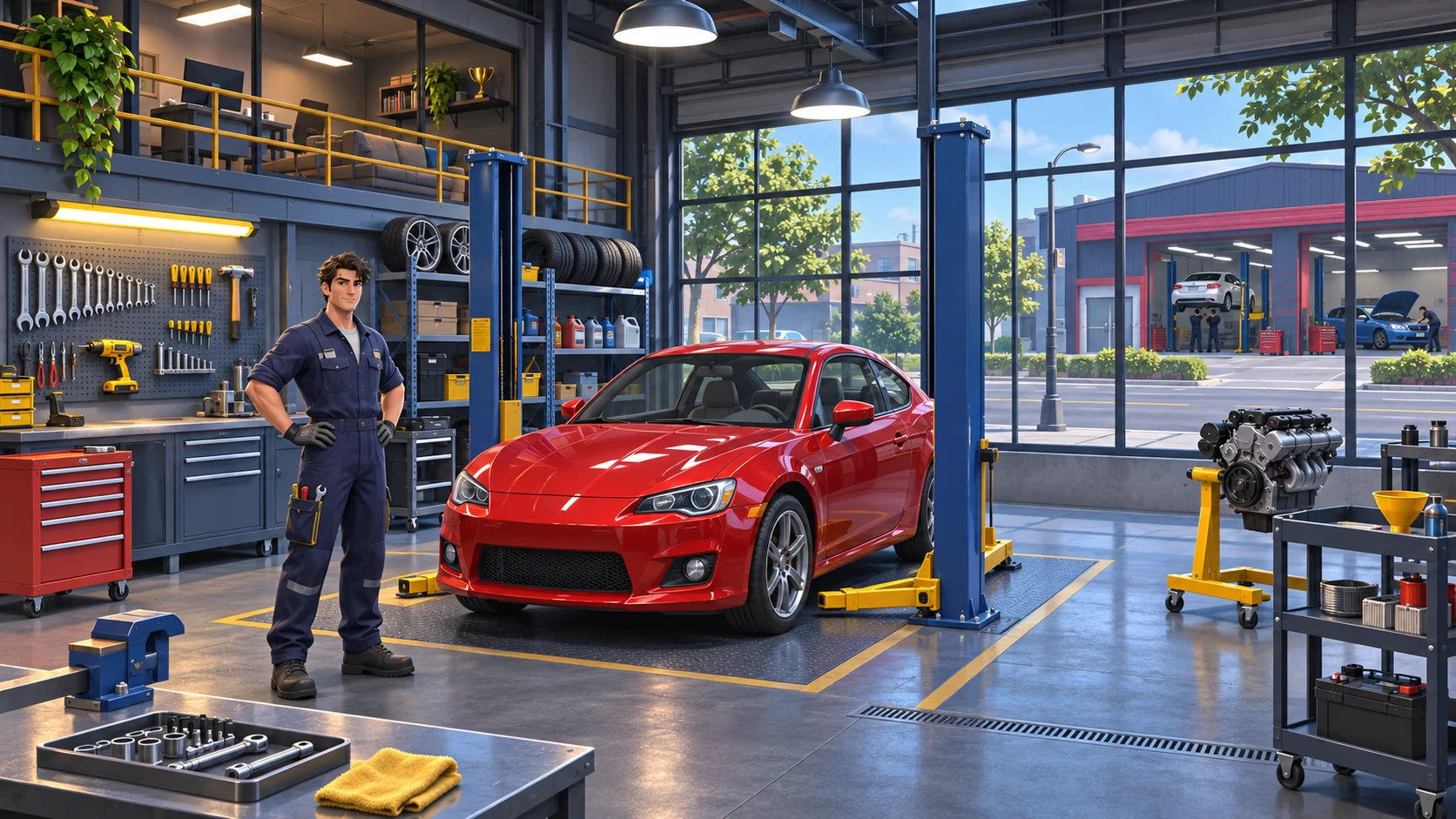
Choose a short list of player decisions a rival can plausibly observe: posted price, accepted job mix, turnaround time, service capacity, or visible quality. Avoid making competitors react to every click. The official Car Mechanic Simulator 2018 listing describes repairing, painting, tuning, and expanding a workshop; it supports the repair-business context only, while the reactive market model here is original. See Red Dot Games for the limited context claim.
For each signal, define a bounded response and a delay. A rival might lower a price after a full day, specialize in one job type when the player expands capacity, or advertise when the player’s queue grows. Delayed reactions make cause and effect readable and prevent the market from feeling like it changes instantly to punish success.
Model competitor responses with clear limits
Model competitors as a few understandable policies rather than all-knowing opponents. One may compete on low price, another on fast turnaround, and another on specialist work. Give each a capacity limit and a weakness. The player can then infer why a rival took an action and choose a counter such as emphasizing quality or choosing a different contract mix.
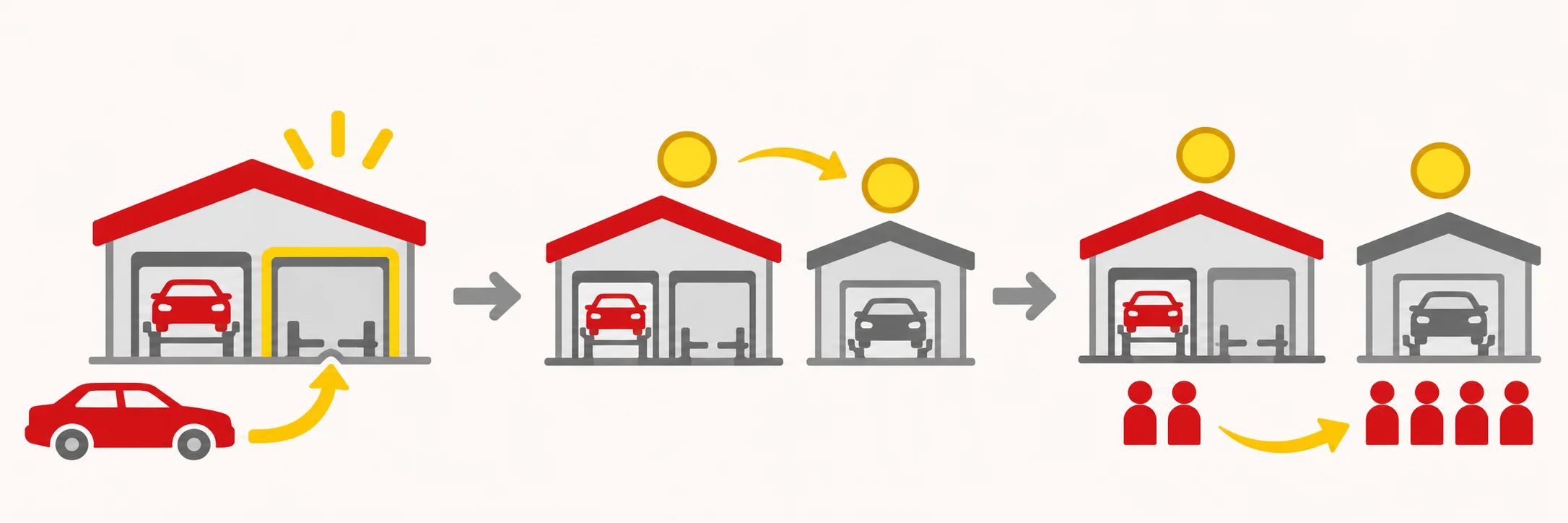
Use thresholds to avoid noisy behavior. A single small price change should not trigger a full competitor strategy shift. Require a meaningful sustained signal, then show a visual tell such as a new customer queue, a service banner, or a changed job offer. Keep a record of which event triggered the response so playtests can reproduce it.
Show market effects through workshop jobs
Translate market changes into workshop decisions the player can act on. A lower rival price might affect incoming jobs; a specialist rival could attract one kind of repair; a capacity shortage could leave rush jobs available. Do not remove the player’s entire demand because a competitor is stronger. Preserve multiple viable job types or customer segments.
Make each counter carry a cost. Lowering prices can raise volume but reduce margin, while adding a service bay requires capital and staff. Show the expected trade before the commitment and communicate when a strategy works. These consequences create planning decisions without simulating every customer as an individual agent.
Test fairness and counterplay
Test the same starting conditions with different player choices: raise price, accept many jobs, or invest in capacity. Record when rivals respond, what the player notices, and whether a counter is available. Also test a quiet market where no threshold is crossed to ensure competitors do not change for no reason.

For a related business system that connects employee roles with company operations, read a guide to staff roles and business loops. Pass when players can predict at least one competitor response, understand its effect on workshop jobs, and choose a counter without being locked into one strategy.
FAQ
How should competitors react in a workshop simulator?
Competitors should react to a small number of observable decisions, such as pricing, service capacity, turnaround, or job specialization. Give each rival a readable policy, a delay, and a limit. The player should be able to notice what changed and decide how to respond, instead of seeing the market shift mysteriously after every action.
Which player choices should affect rivals?
Start with decisions that alter the market in a visible way: lowering prices, expanding a service bay, prioritizing rush work, or focusing on a repair specialty. Avoid tracking hidden choices that a rival could not plausibly observe. A small signal set is easier for players to understand and easier for designers to tune.
How do you keep reactive competitors fair?
Give rivals limited capacity and different strengths so they do not dominate every job type. Make reactions delayed and triggered by sustained changes, preserve alternative customer segments, and let players counter with pricing, quality, speed, or specialization. Test strategies from the same starting state to check that the market stays competitive but recoverable.
What should you test in a competitor system?
Run repeatable tests where the player changes one variable at a time, such as price or bay capacity. Record the rival’s trigger, delay, player-facing signal, and resulting job mix. Include a no-trigger control case. Ask players what caused the response and what counter they would try, then revise any behavior they cannot explain.