Split information with a clear purpose
Give each player a different piece of information because the story requires both perspectives, not simply to force conversation. One may see a timeline, while the other has a witness statement or environmental detail. Each clue should be independently understandable and contribute something the partner cannot infer alone.
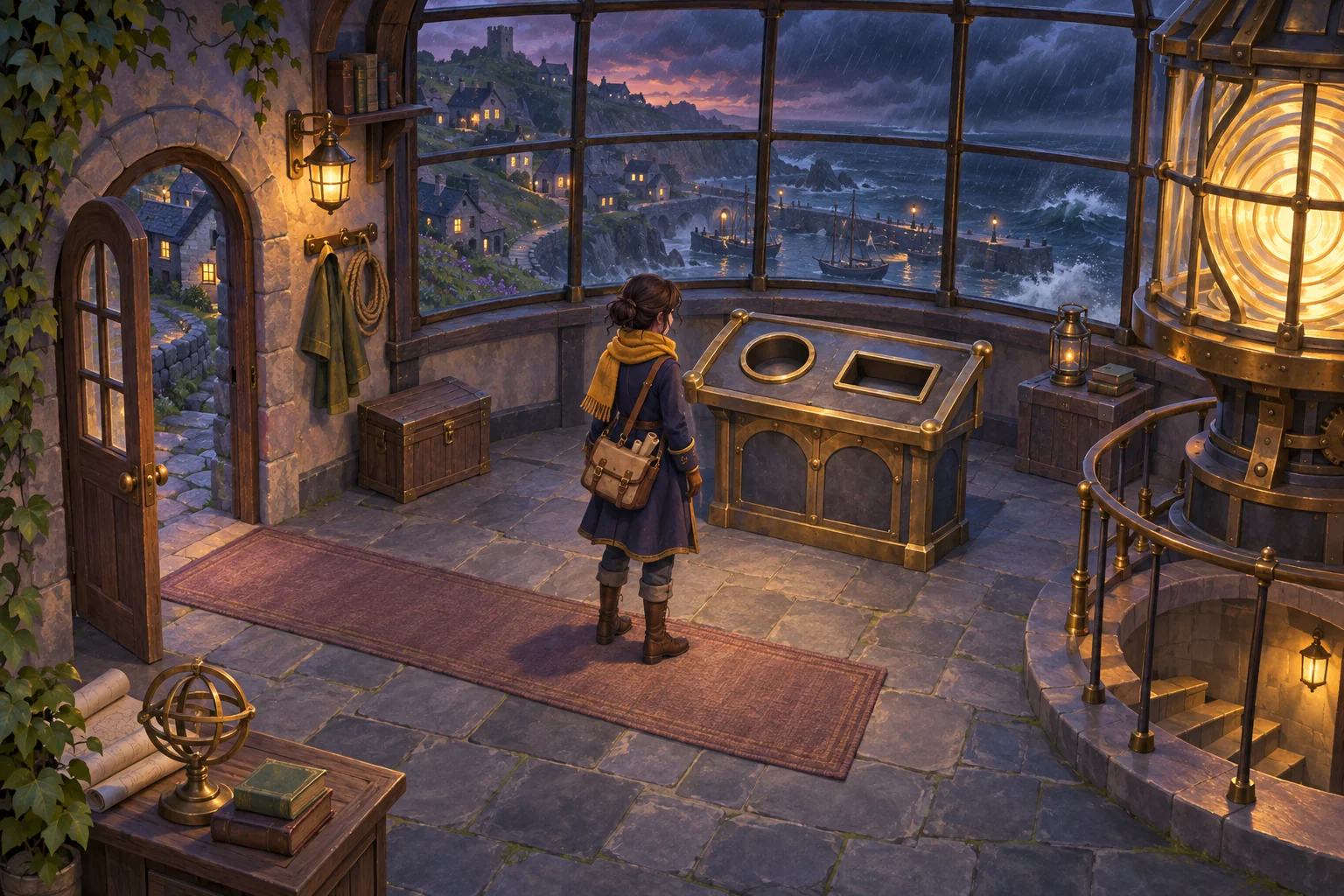
The official The Past Within Steam listing describes a co-op-only adventure where players experience different perspectives and communicate to solve puzzles. This supports the separate-perspective puzzle context only; the branching consequences in this article are original. Begin by mapping which player knows what before deciding how the pair will compare evidence.
Keep both players active. A clue holder might inspect a detail, ask a question, or make a recommendation; the other player can test a hypothesis in the scene. Avoid turning one partner into a passive reader and the other into the only decision-maker. The cover visual frames the clues as separate but connected.
Build a communication and verification loop
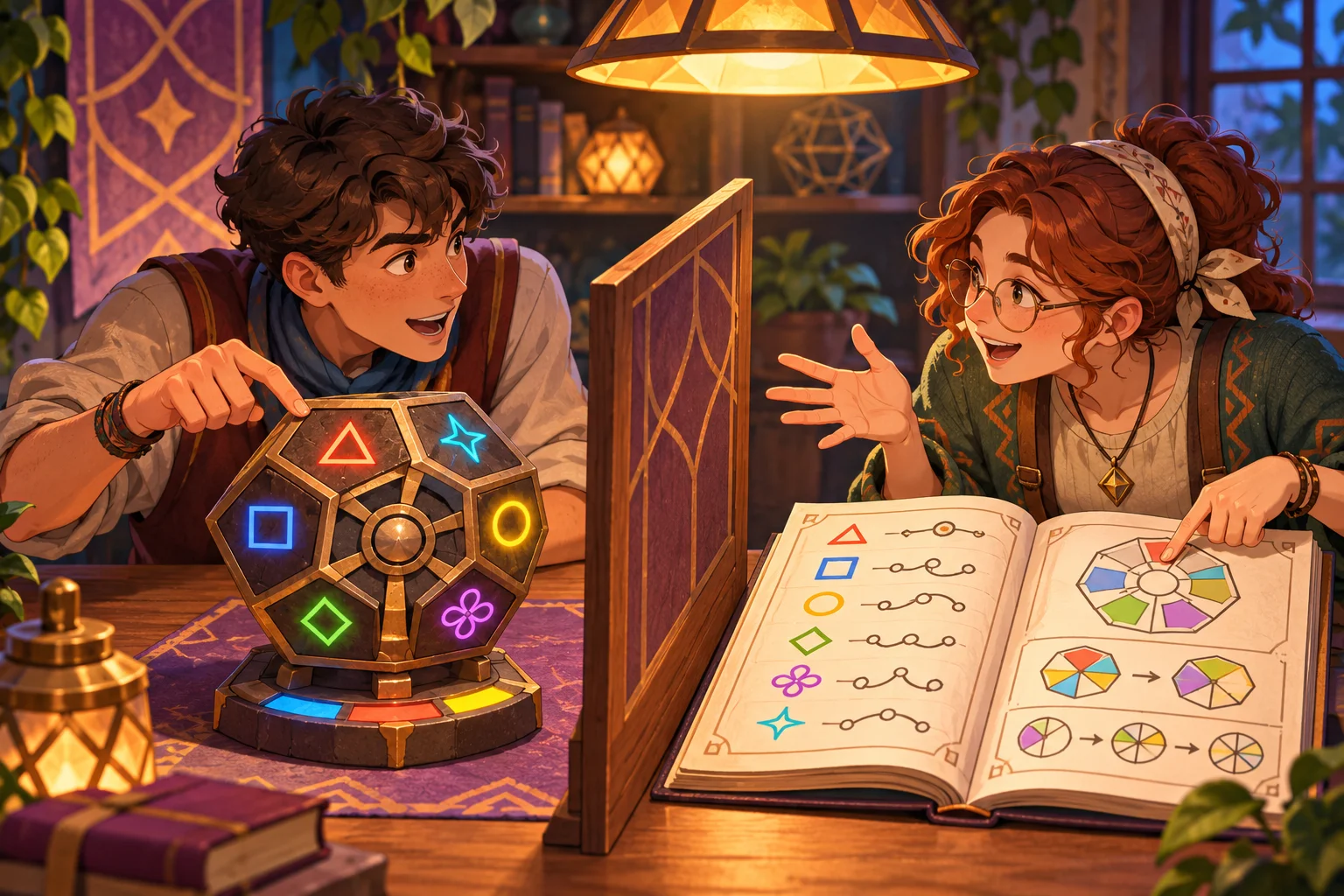
Give the pair time and tools to describe what they see, compare interpretations, and verify a conclusion. The puzzle can require a call-and-response, matching symbols, ordering events, or testing a shared hypothesis. Make the interaction support the story’s tone: a tense negotiation may invite disagreement, while an investigation can reward careful cross-checking.
Offer more than voice chat. Text, pings, adjustable timing, and repeatable clue views help players with different access needs and communication preferences. If one player can inspect a clue only briefly, provide a replay or note-taking option. The goal is to make information exchange meaningful without making a fast speech or perfect memory the hidden test.
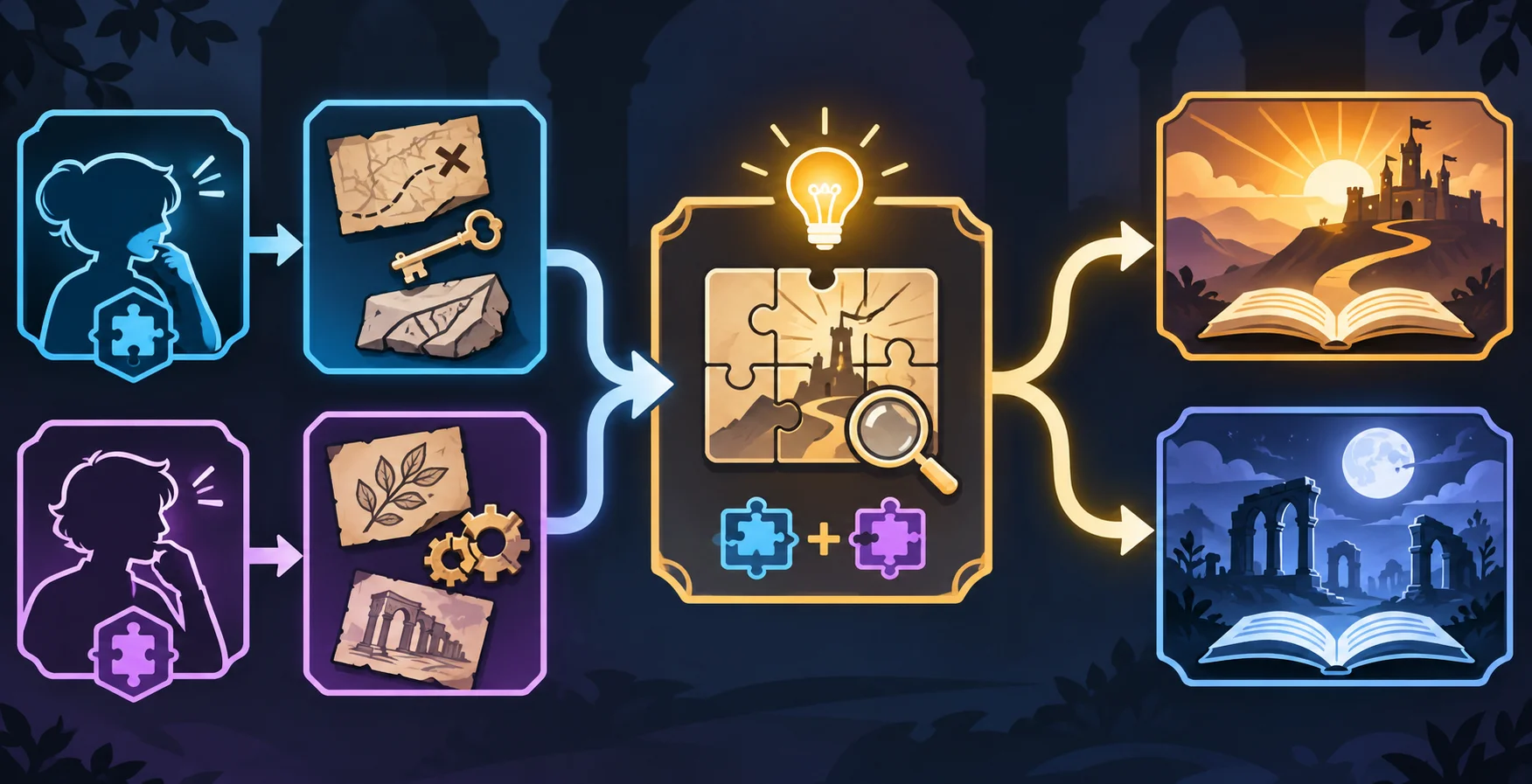
Use a checkpoint before the final action. The pair can restate the evidence or choose between interpretations, then see which information influenced the selection. This makes the challenge legible and gives designers a place to observe confusion. The mechanism illustration shows two clue streams becoming one shared interpretation.
Connect co-op decisions to story branches
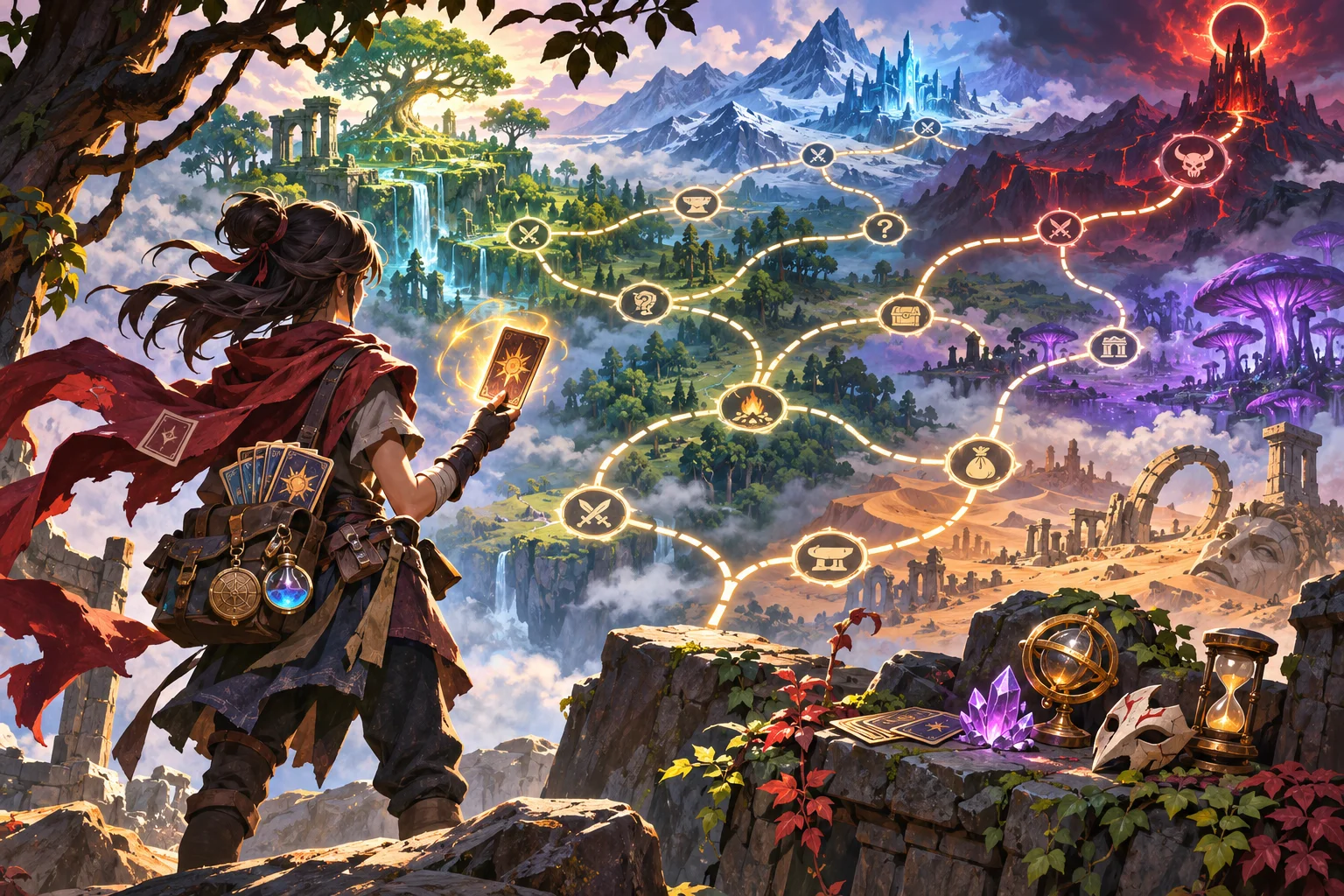
Record the pair’s conclusion as a story state that can affect dialogue, alliances, scene access, or a later callback. The consequence should follow from what players decided, rather than from a hidden correctness score. Let the narrative acknowledge uncertainty when that is the intended outcome.
Plan branch states and convergence early. A challenge may create a short-term relationship change while later scenes share a common location. Preserve a distinctive callback so players recognize that their joint choice mattered. Avoid multiplying every subsequent scene; a few well-supported variations can create continuity without making the story impossible to author.
Decide how to handle disagreement and missing clues. Players might record a disputed interpretation, request a hint, or choose which person’s evidence to trust. Make consequences clear enough to feel fair while leaving room for surprise. If a puzzle can be repeated, ensure retries do not silently rewrite a branch without player consent.
Test disagreement, missed clues, and continuity
Play with pairs who do not already know the answer. Observe who speaks, who acts, how often they verify a clue, and whether one player controls the decision. Test misread evidence, optional clues, interruptions, and different communication styles. Ask each person afterward what choice they believed they were making.
Check story continuity across all outcomes. Load a save after the choice, revisit a later scene, and confirm that dialogue and state reflect the pair’s action. Test hints and accessibility features alongside branch logic so a recovery path cannot accidentally set the wrong flag or remove the other player’s agency.
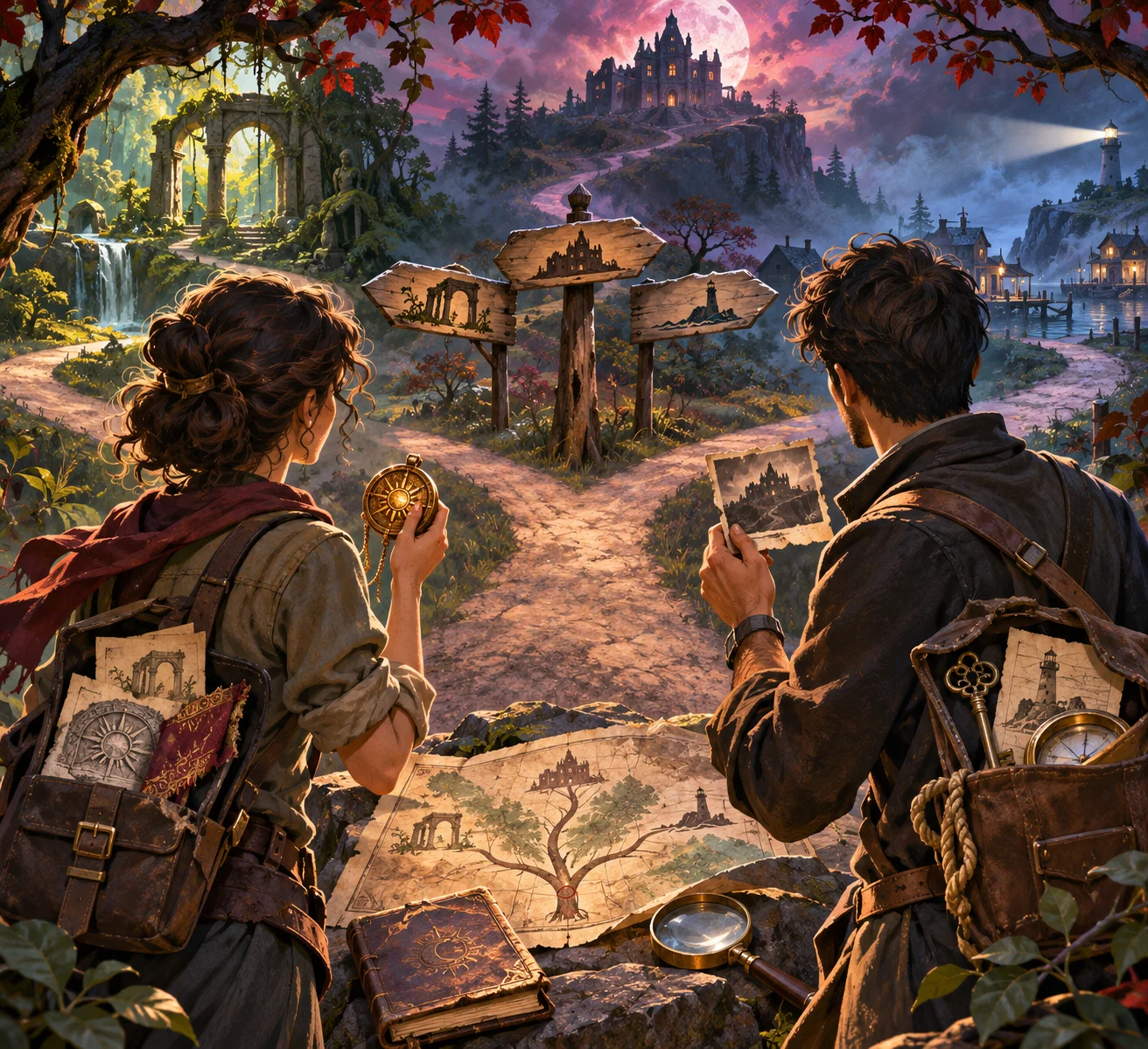
Accept the feature when both partners contribute information, players understand their choice, and later scenes honor the result. See the separate-information co-op puzzle guide. SEELE AI can help outline alternative clue sets, but narrative voice, co-op pacing, accessibility, and state continuity need implementation and pair testing. The outcome art depicts a shared choice opening a changed path.
FAQ
How do you design separate-information co-op challenges?
Assign each player clues that are individually understandable but incomplete. Give both a useful action, a way to communicate or review evidence, and a shared decision that uses both perspectives. Test with unfamiliar pairs to check that one person does not become a passive messenger.
How can both players stay active in an asymmetric narrative puzzle?
Let each player inspect, interpret, and act on their own information. Alternate who initiates a decision, give both a chance to verify clues, and measure idle time during playtests. Accessibility options should preserve participation without requiring voice-only communication. Repeat with a fresh pair and confirm the later branch still reflects their choice.
How should co-op decisions affect story branches?
Store a clear choice state and connect it to later dialogue, relationships, or callbacks. Plan where paths diverge and where they reconverge. Make the consequence visible enough that players can connect it to their shared decision. Repeat with a fresh pair and confirm the later branch still reflects their choice.
What should you test when players interpret clues differently?
Test disagreement, missed clues, hints, repeated interactions, and different communication styles. Verify that each route preserves continuity and that recovery does not erase player agency. Ask both partners what they thought the choice meant. Repeat with a fresh pair and confirm the later branch still reflects their choice.