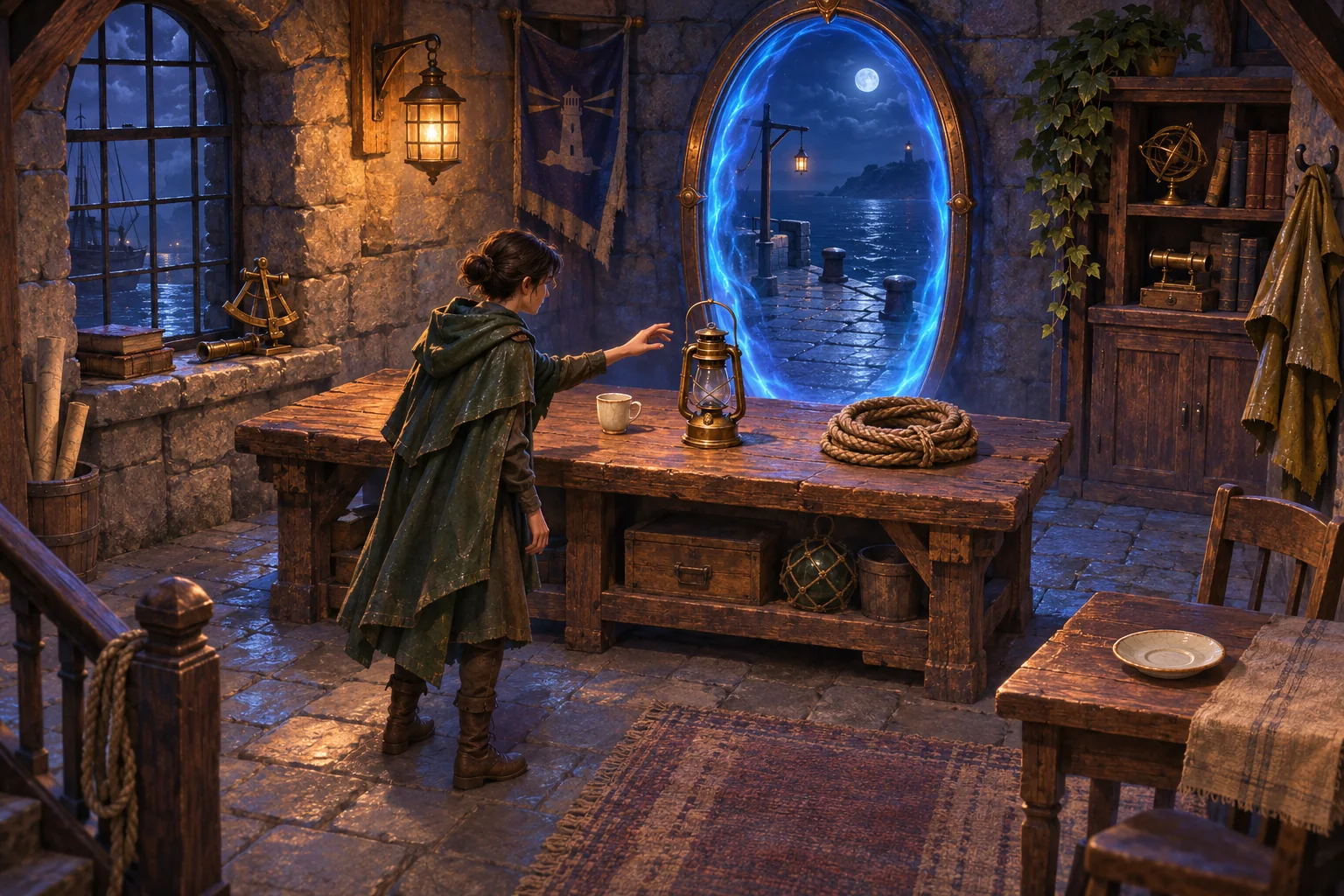
Your courier reaches a lighthouse with two slots in its console. One needs a route and the other needs a signal. At the harbor, you chose between reading the chart and asking the ferryman. Up the hill, you learned a signal from a notebook or from the keeper. The last action should make those choices useful. In the fictional game The Lantern Archive, start with two independent decisions and a finale that checks what the player learned from each.
Design the puzzle from the finale backward
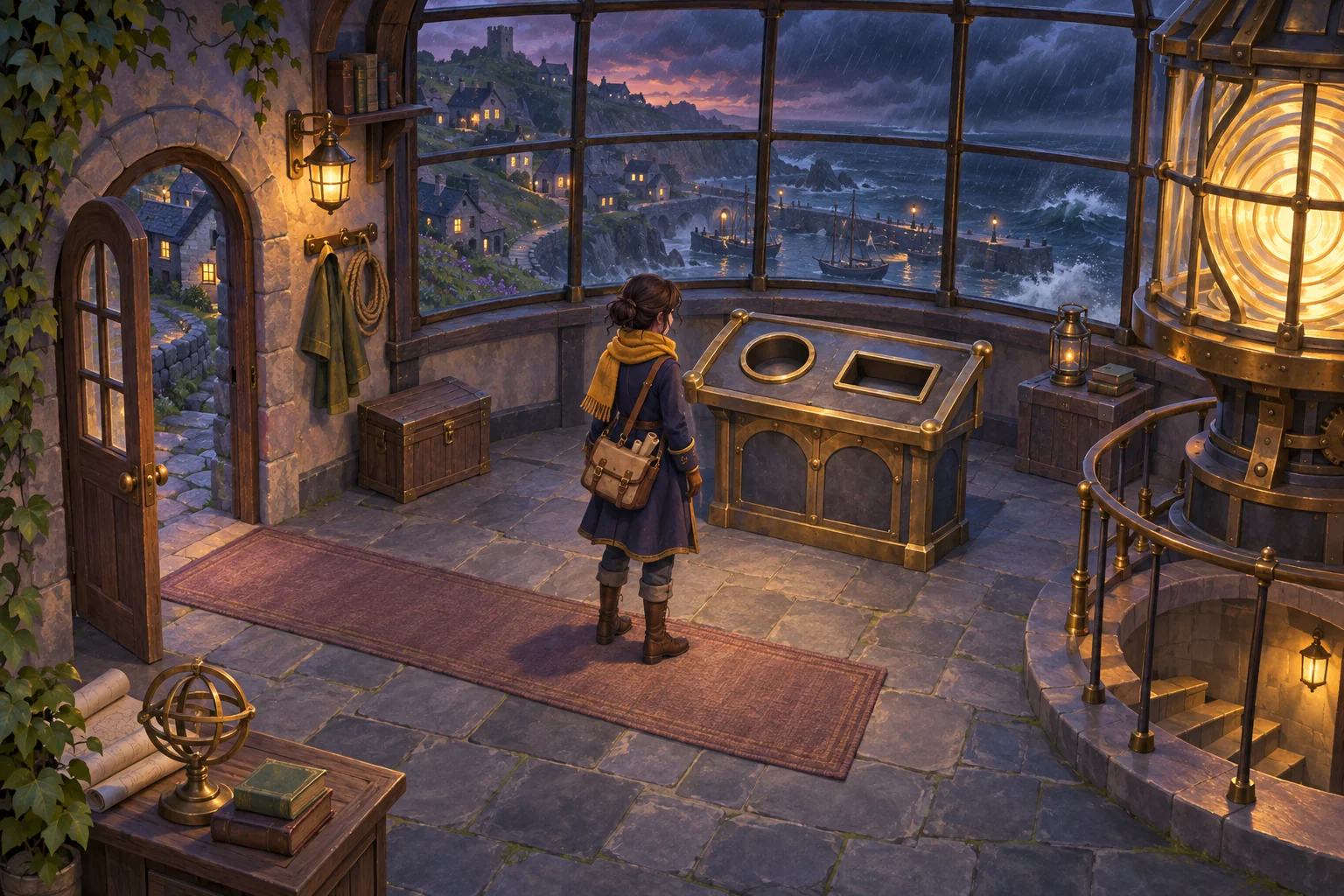
Write the finale's success condition first. To send the final lighthouse signal, the player must place one route token and one signal token they actually earned. Each earlier scene offers two sources for one role. Keep both ways through a scene valid and let the source matter in the final line.
| Scene | Player choice | Evidence role |
|---|---|---|
| Harbor | Read the chart or ask the ferryman | Route |
| Hill | Read the notebook or ask the keeper | Signal |
| Lighthouse | Place both pieces of evidence | Validate the assembled solution |
Make the four combinations small enough to write and check. The chart can produce a line about a marked channel, while the ferryman's route mentions harbor landmarks. The selected signal also changes the acknowledgment. A player should be able to identify their choices in the ending.
Save the evidence when a choice closes

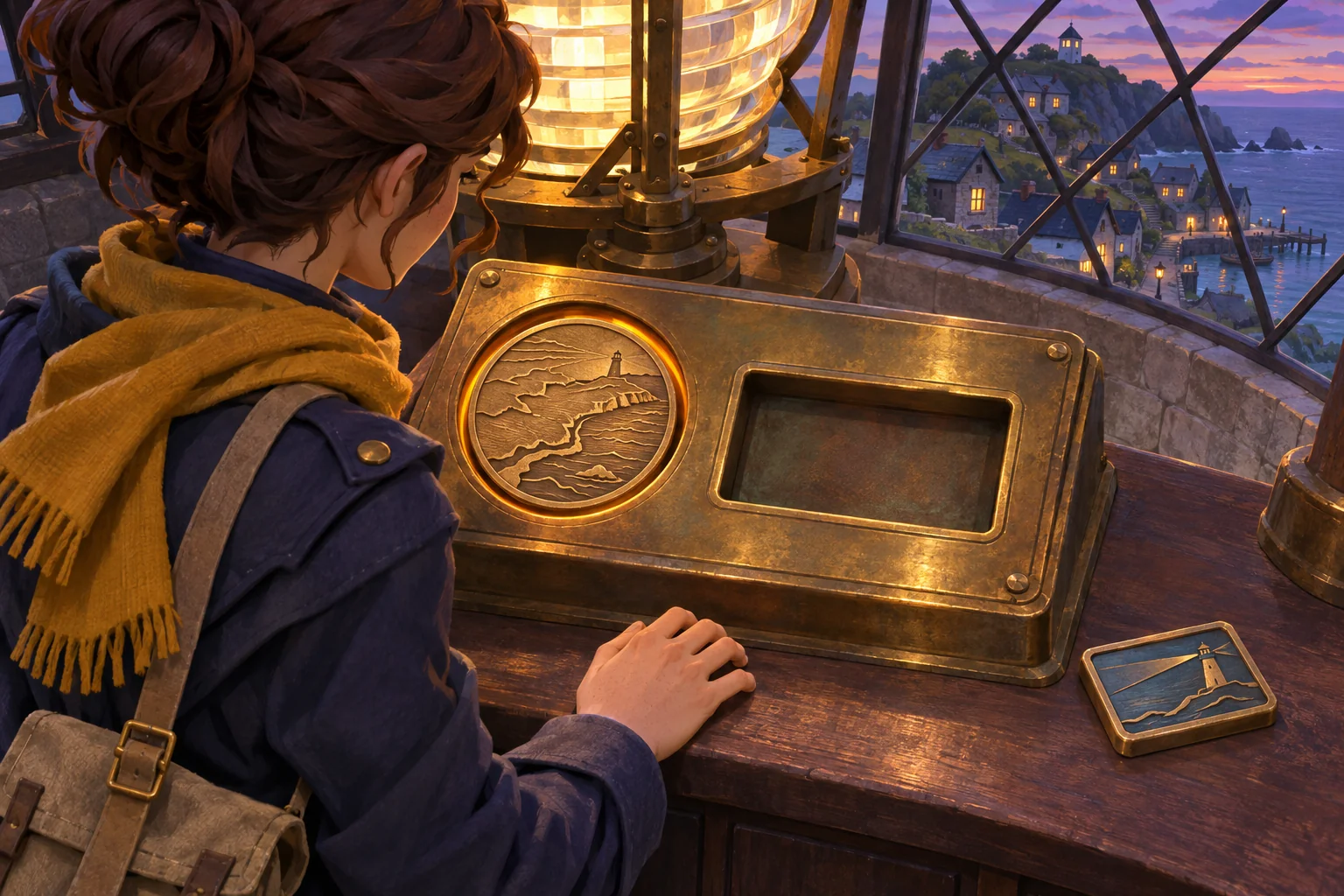
Give each token an ID, a role, a source scene, and a short journal line. Save the branch decision and the token together. At the console, let the player see the two roles, choose a journal item, and place or remove it. Validate both the token's role and whether the current save earned it. If a slot is empty, point to the relevant earlier chapter. Let the player review that chapter while keeping the other role's evidence. If they change the choice, replace its token and clear any stale selection for that slot.
Run all four paths through the same console
Our local command-line test restored the evidence for each possible path and tried both validators. The first version accepted the chart and notebook only. The revised version accepted any earned route token in the route slot and any earned signal token in the signal slot.
| Earned pair | Fixed pair | Role and ownership checks |
|---|---|---|
| Chart and notebook | Works | Works |
| Chart and keeper | Blocked | Works |
| Ferryman and notebook | Blocked | Works |
| Ferryman and keeper | Blocked | Works |
The revised rule accepted four of four earned pairs and produced four distinct source acknowledgments. A swapped pair, a missing signal and an unearned route still failed. This exercises the state rule. Use the playable scenes to see whether players know why a piece fits and remember where they found it.
Ask for the three-scene version
Use SEELE AI's prompt-led workflow to request the two choice scenes and the console before adding dialogue variants or extra locations. Read the journal after reloading the lighthouse and check whether the right pieces are still available. Test all four paths, then ask a reader to explain how their choices shaped the finale.
Make a short branching browser game called The Lantern Archive. At the harbor, read a chart or ask a ferryman for one Route token. On the hill, read a notebook or ask a keeper for one Signal token. Record each choice and its evidence together. In the lighthouse, let me place and remove journal items from a round Route slot and a rectangular Signal slot. Accept only earned evidence of the correct role. Name each source in the finale. Give a helpful response for an empty or wrong slot. Add a reset and a way back to either earlier scene.
Start your branching narrative prototype in SEELE
Frequently asked questions
What if one path should have a harder ending?
Give that path an extra step or a different cost, and show what will be required before the player reaches the console. Keep this first version equal in difficulty so you can verify each choice is carried forward. Then isolate the difficulty difference in another test.
Should I add a third evidence role?
Wait until players can explain what the two current slots need and where their clues came from. Adding one binary choice doubles the number of complete paths in this design. Write the extra row of constraints and plan to test inaccurate or missing evidence as well as valid combinations.
What happens if the player revisits a scene after placing its clue?
Treat a changed decision as replacing that scene's evidence. Clear only the corresponding slot and refresh the journal line. Let the player keep the evidence from the other scene so fixing one choice does not force them to replay the entire story.