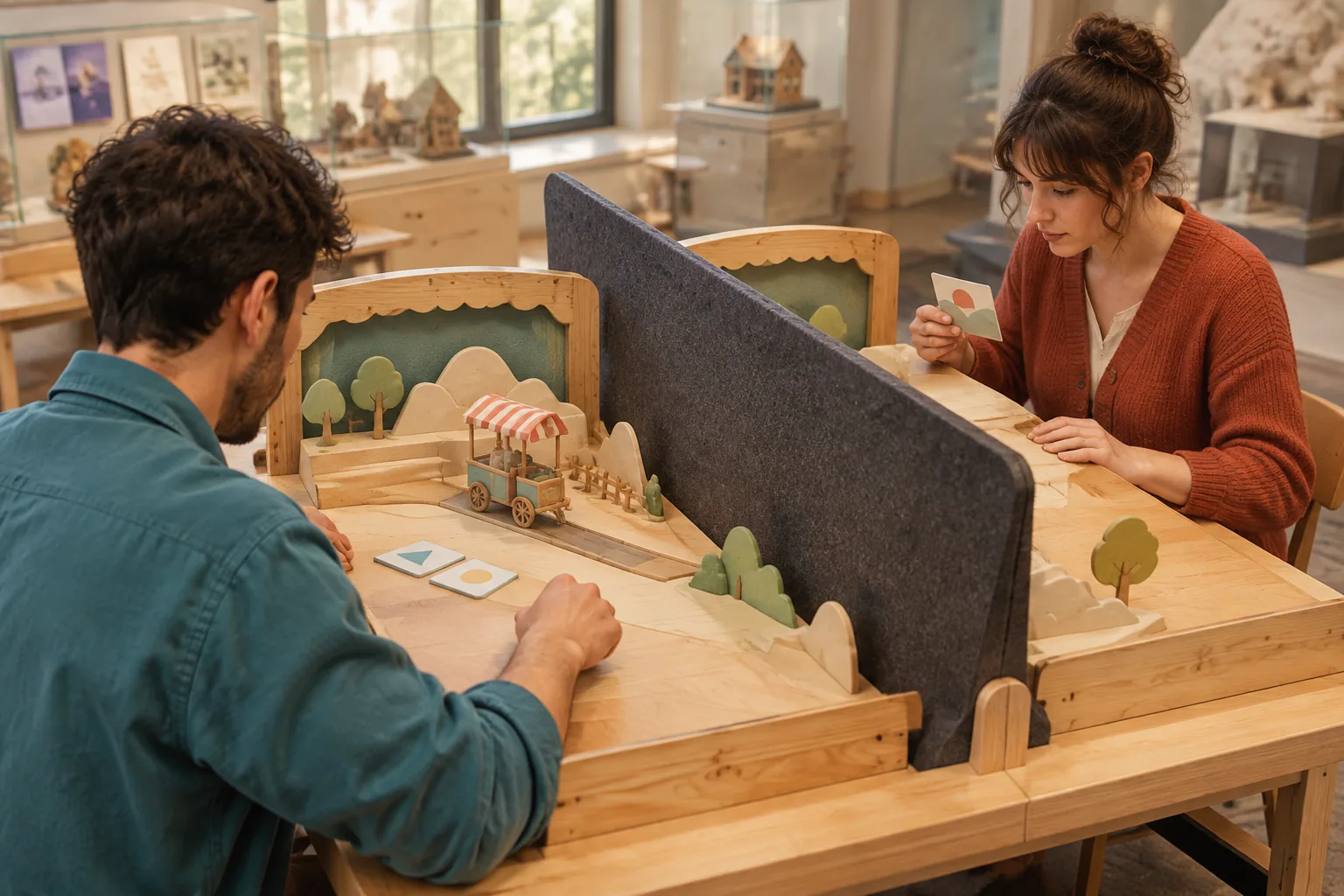
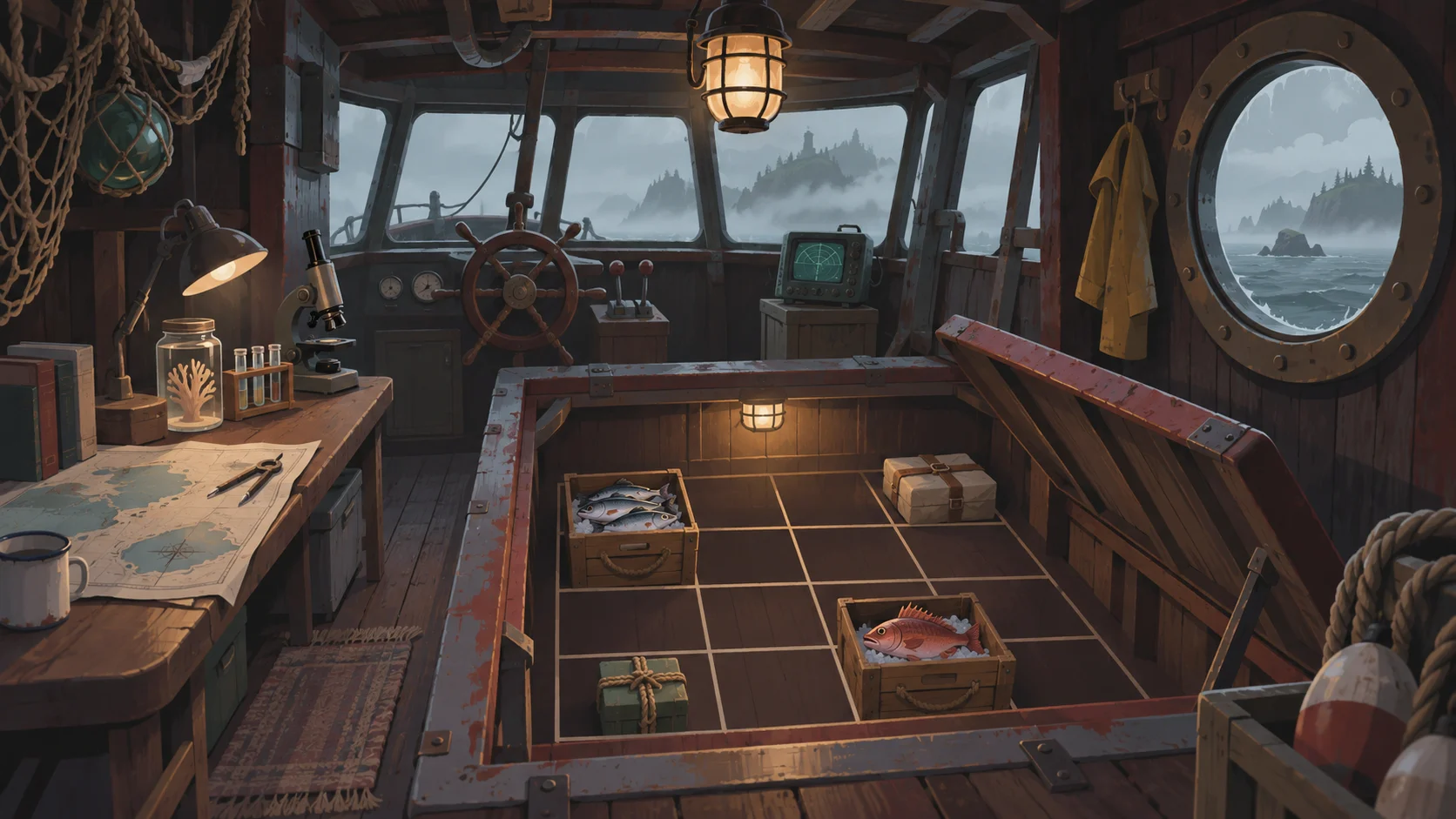
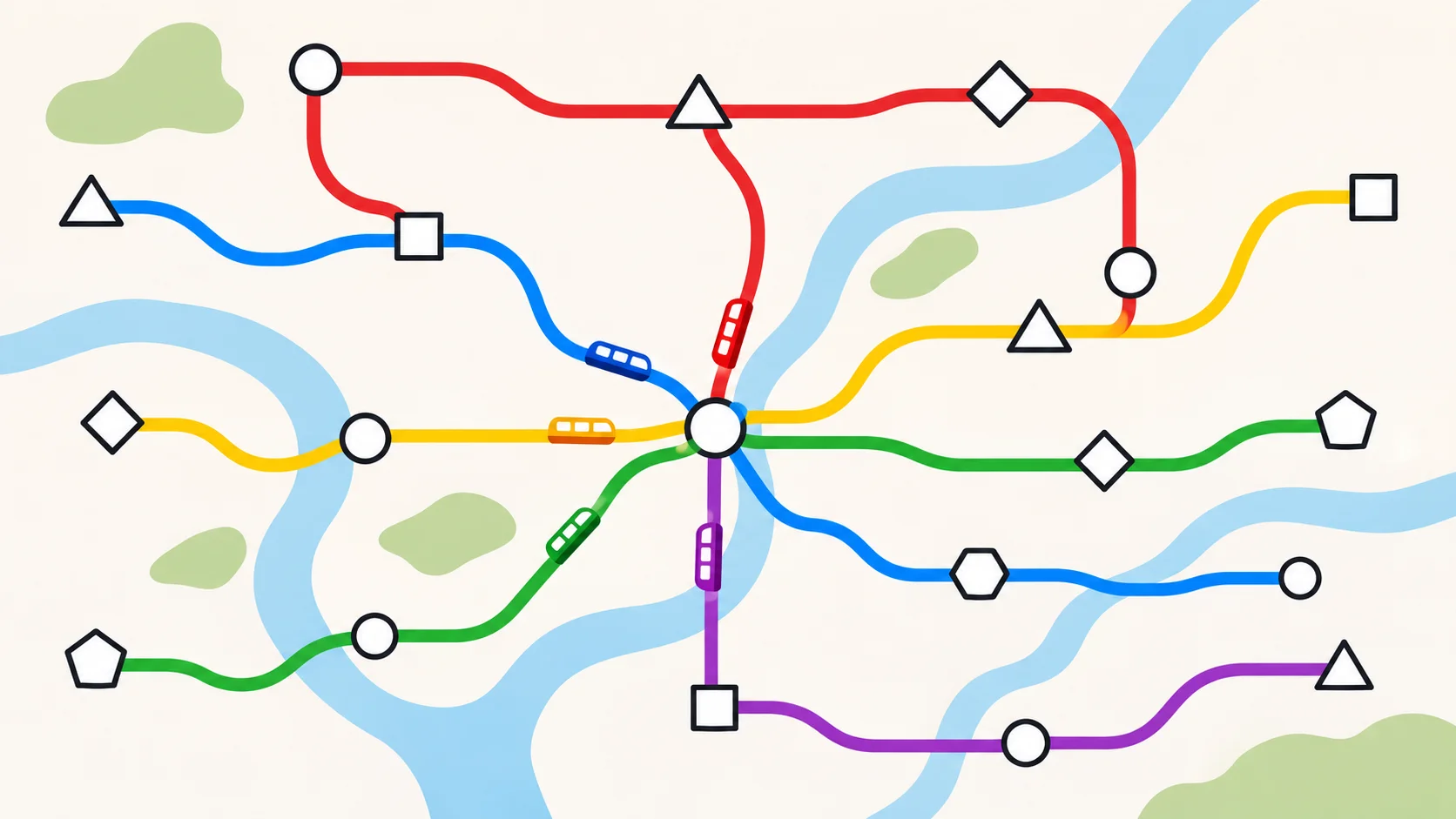
Separate-information puzzles depend on a simple promise: each player knows something useful, but the solution requires them to communicate. Steel Crate Games’ official materials describe Keep Talking and Nobody Explodes with a defuser who cannot see the experts’ manual. That role split is the factual reference here; the example device, vocabulary, communication protocol, and testing advice are original.
Define who knows what and when
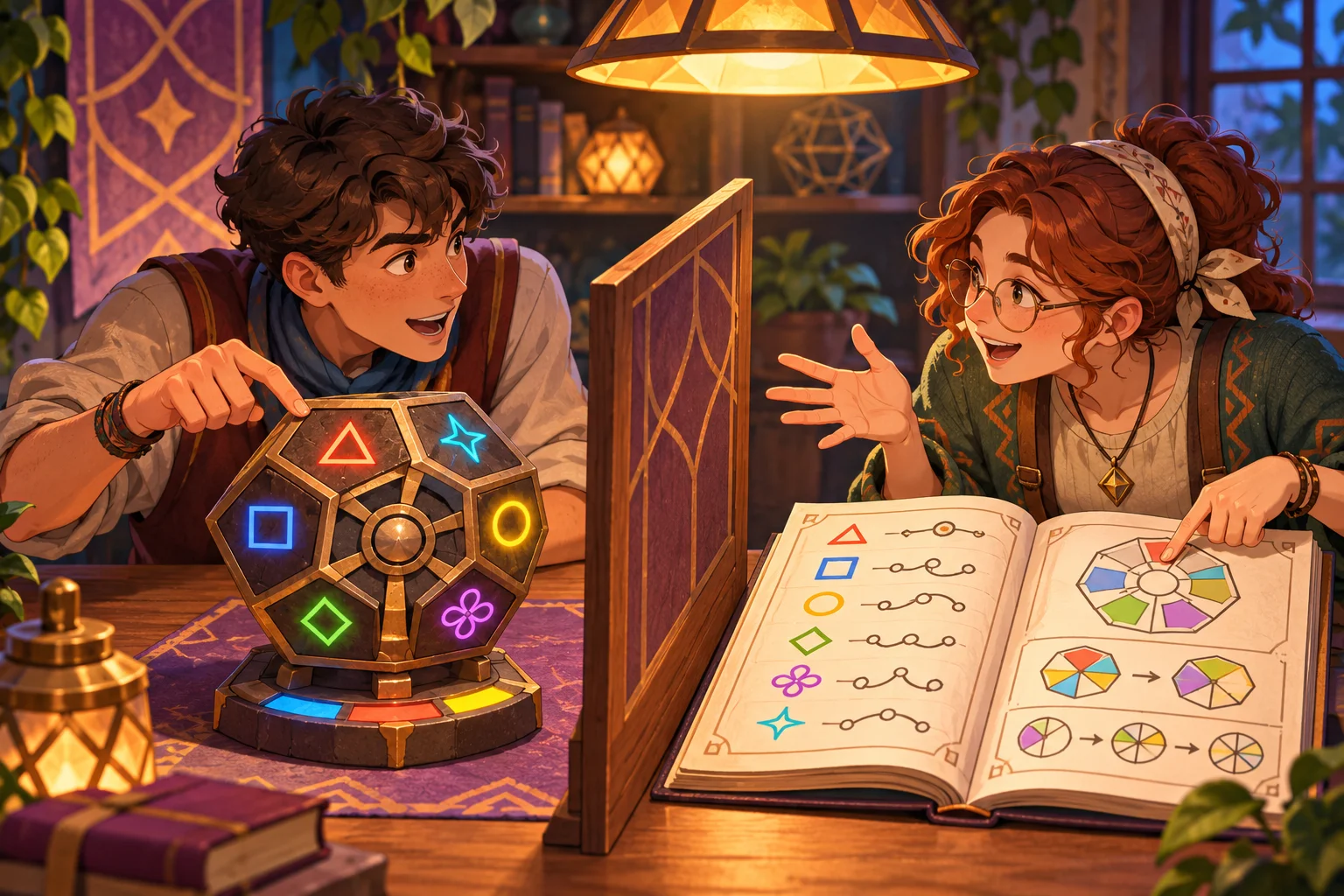
Write an information table before designing a puzzle. In an original three-symbol relay, the operator sees a panel with three shapes and a row of lights. The analyst sees a reference sheet that maps shape sequences to switch positions. Both players know the goal is to route a signal, but only the operator can touch the panel and only the analyst can read the mapping.
Give each role enough context to contribute. If the analyst has a large reference book but no idea which page matters, the task becomes document search. If the operator sees a symbol but cannot describe it with shared terms, the task becomes a guessing game. Provide names, indexes, or an example that helps players find the relevant clue without giving away the answer.
Decide what is shared, what is private, and what changes after each action. A status light might be visible to both, while the full sequence remains on the operator’s panel. After an attempt, the light changes to show whether the signal moved closer to its goal. This lets teams update their model while keeping role distinction intact.
Build a shared vocabulary and message protocol
Keep the vocabulary short and stable. Label shapes with plain names such as circle, fork, and wave. If orientation matters, define whether “top” means the player’s view or the device’s view. Avoid calling several different things “the left one” when players face different screens.
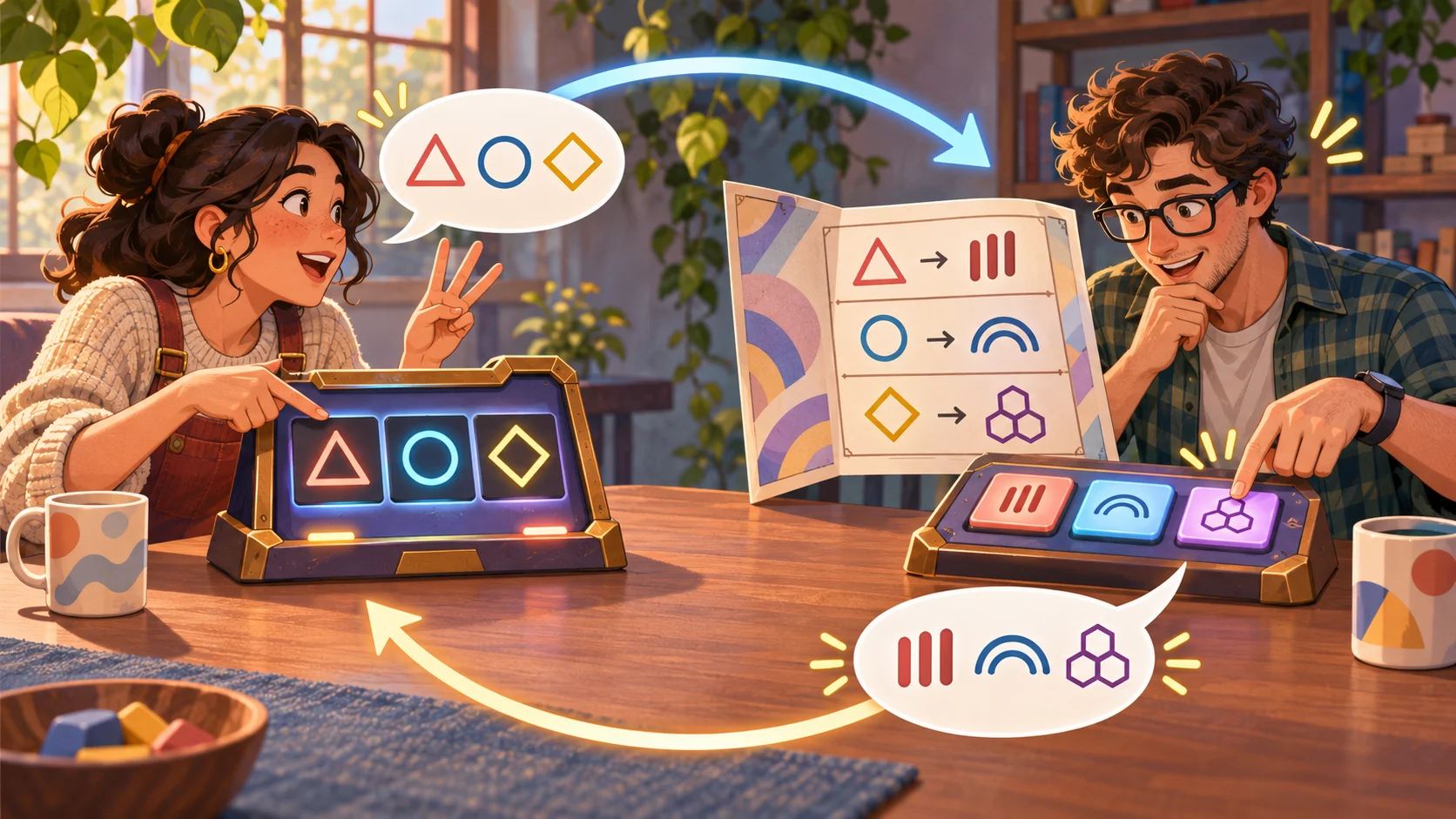
Offer a lightweight call-and-response pattern: the operator describes the first symbol, the analyst repeats the interpreted term, then gives one action. For a sequence, the operator can report symbols in order and the analyst can confirm the count before searching. This adds a small communication cost but catches transcription errors before they become expensive.
Make correction safe. A team should be able to say “I meant the striped circle” and revise a message before committing a switch. If the design includes a timer, tune it after the message protocol works without pressure. Time limits should test prioritization, not basic comprehension.
Make actions and feedback teach the system
After a receiver gives an instruction, let the operator perform one observable action. If the action is wrong, show a specific consequence such as a status light dropping or a safe retry token being used. Do not expose the analyst’s hidden reference screen through a global message; that removes the reason for the roles to collaborate.
Track the type of error. A missed symbol means something different from a correctly reported symbol paired with an incorrect rule lookup. A post-round recap can show the message, interpretation, and effect, helping the team learn without interrupting the live exchange.
Playtest the communication loop and revise
Test with pairs who have not seen the design. Ask each participant to explain what they believe their role can see and do. Observe the first description, how often the receiver asks for clarification, and whether the sender recognizes the interpretation. Record the point where teams stop exchanging useful information.
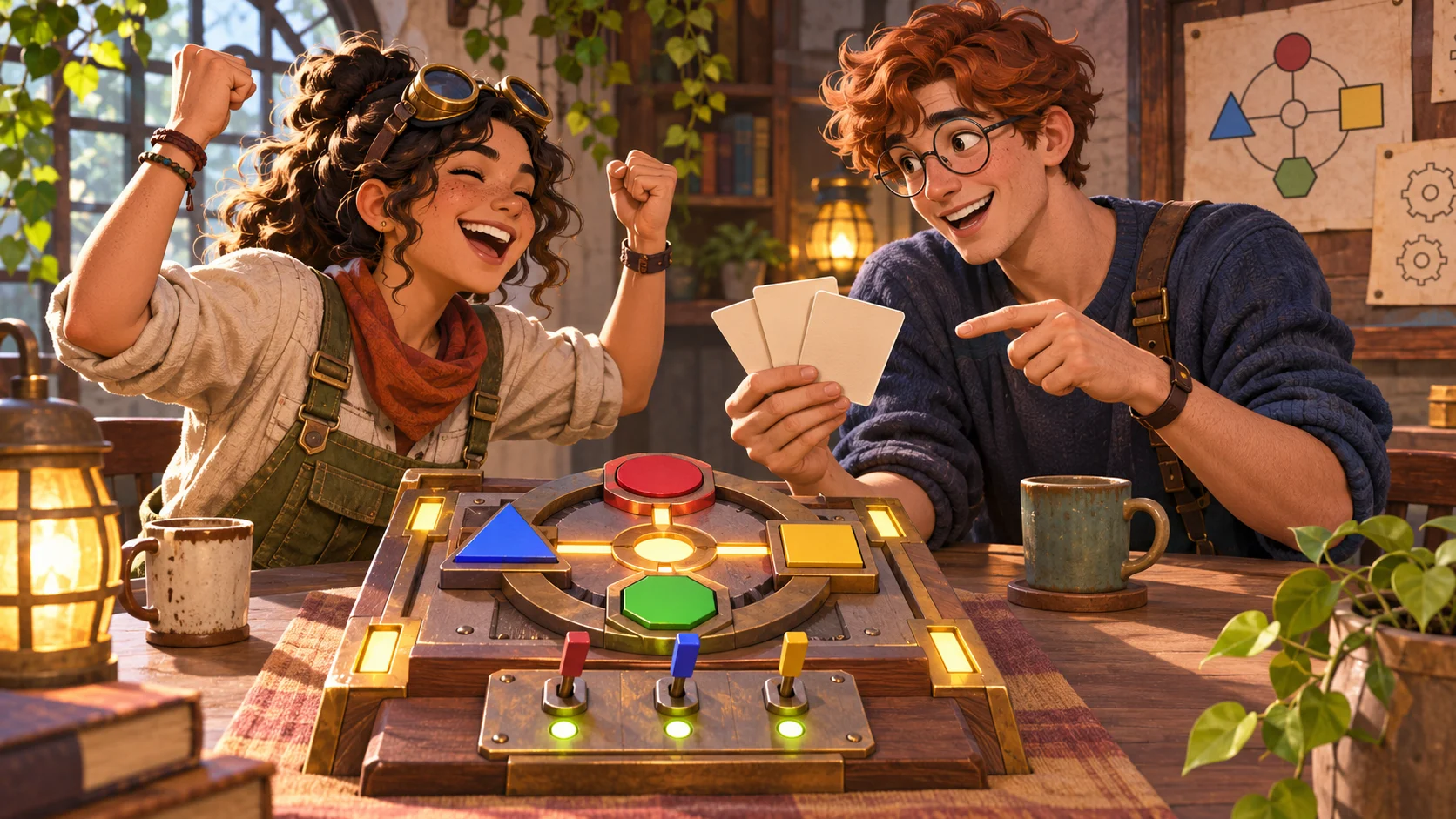
Change one variable per revision: information partition, term choice, reference layout, feedback, or time pressure. Then replay the same puzzle with another pair. A successful design lets players explain why they solved it and what each role contributed. If one person can solve the puzzle alone, increase the necessity of the other role rather than adding more noise.
Use SEELE AI to draft a co-op puzzle concept, then inspect whether the separate views, action handoff, and feedback are genuinely playable. For a broader original premise, read the asymmetric co-op guide. Prototype an original cooperative puzzle.
FAQ
How do you build separate information into a co-op game?
Give each player unique facts and a shared objective, then ensure neither role can solve the puzzle alone. Create a clear mapping from what one player observes to what the other can interpret. Start with a small puzzle, test whether communication is necessary, and provide feedback after the receiving player acts.
What makes an asymmetric puzzle fair?
Make each role’s tools and limits clear, ensure every required clue exists in someone’s view, and let teams recover from a reasonable mistake. The challenge should come from interpreting or coordinating information rather than guessing what the designer intended. Compare successful and failed attempts to ensure the same rule explains both.
How can a co-op game reduce communication confusion?
Teach a small shared vocabulary, use consistent names for colors and shapes, and let players confirm or correct a message before a costly action. Avoid terms that can mean two different things in a stressful moment. Test the vocabulary with people who have not seen the puzzle so familiar design labels do not hide ambiguity.
What should you observe in a co-op puzzle playtest?
Record what each player can see, which clues they share, how often the receiver asks for clarification, and what causes wrong actions. Note whether teams understand feedback and can recover. Compare teams using the same puzzle, then change one information split or term at a time and repeat the session.