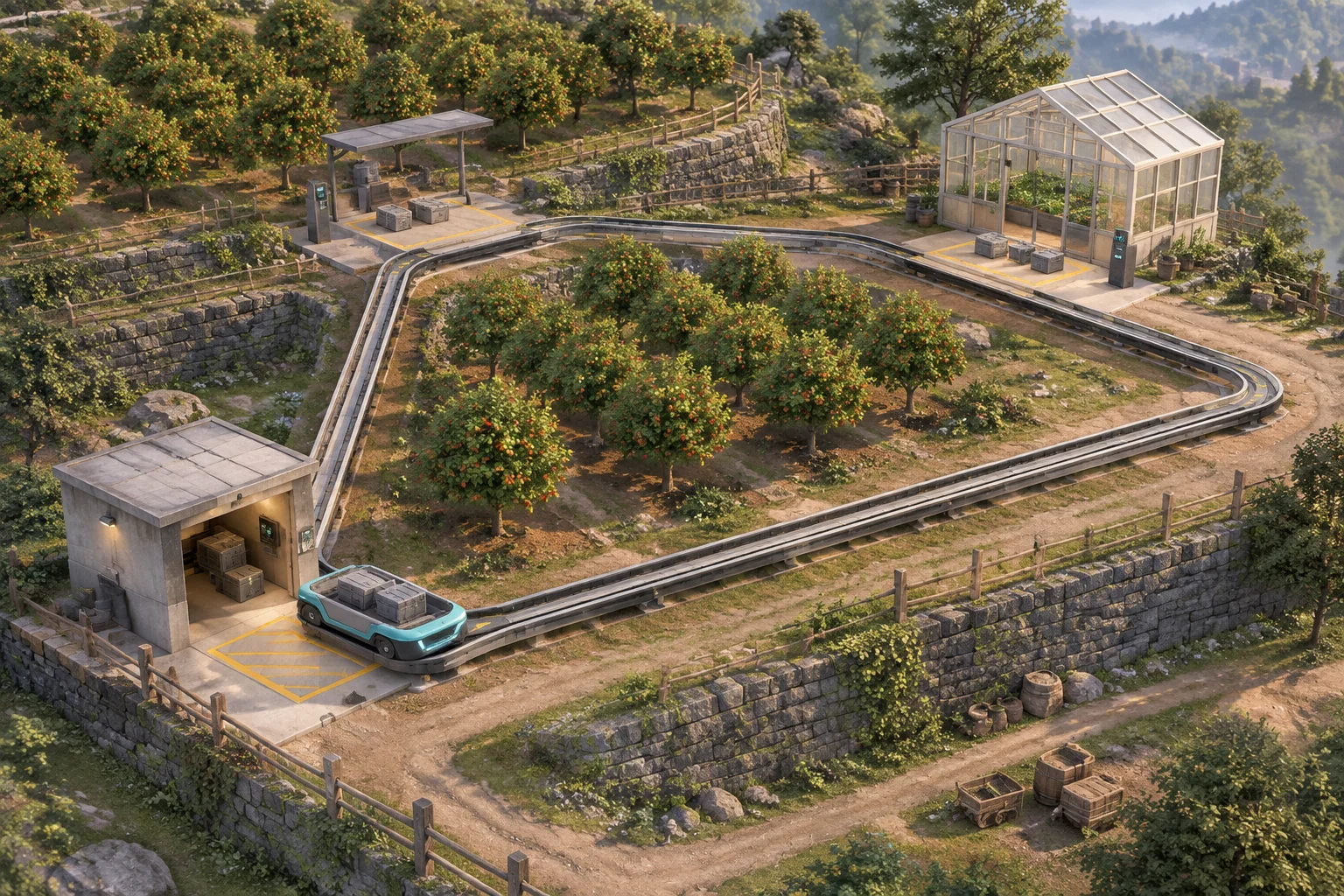
Network capacity is the relationship between how much demand arrives and how much service the system can provide. Dinosaur Polo Club’s official Mini Metro listing describes designing routes for a growing city, running trains between stations, redrawing lines as stations open, and managing limited resources. The capacity model below is original guidance for another transit puzzle, not a description of the reference game’s hidden formulas.
Model network capacity as load versus service
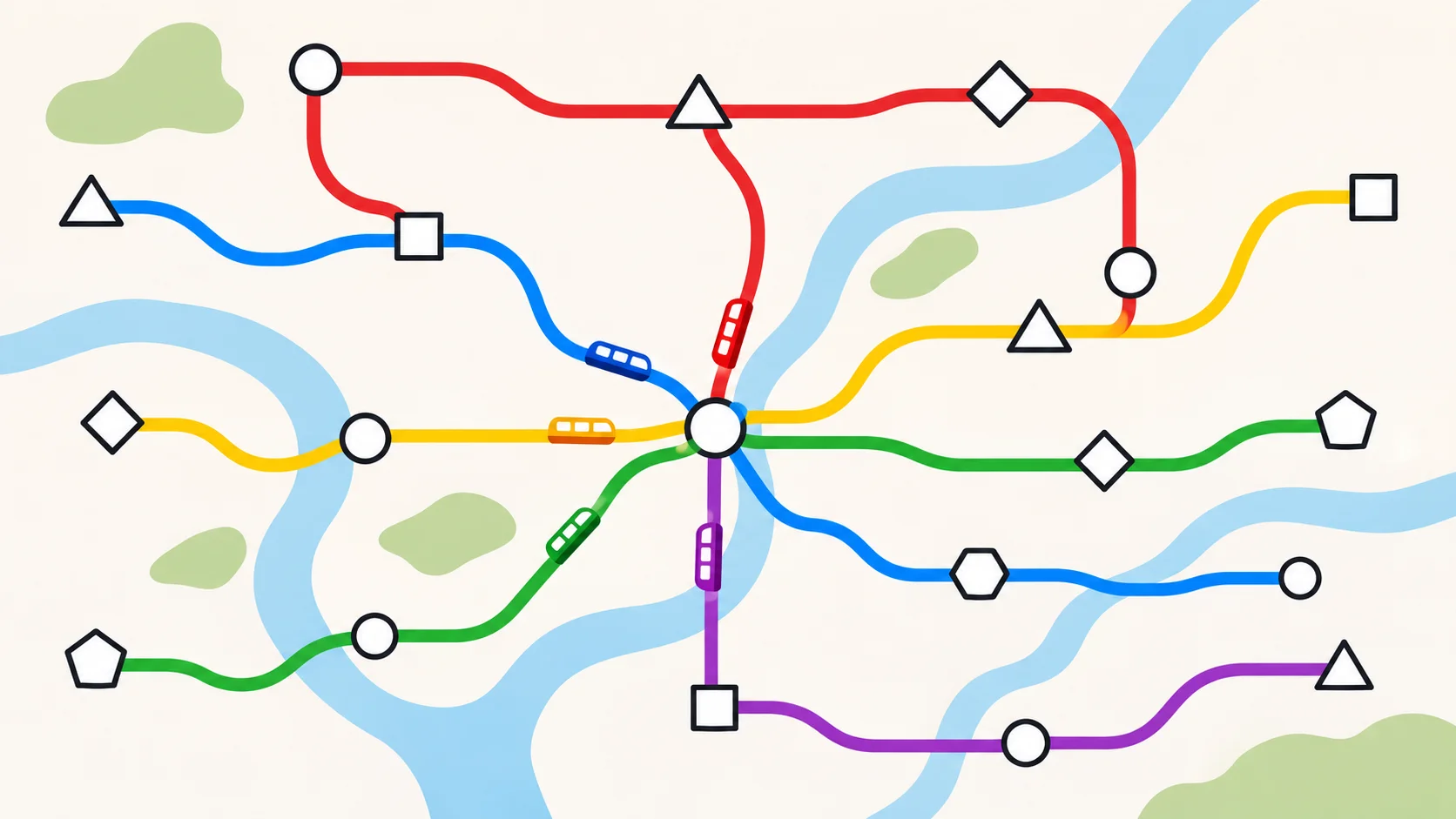
Represent the city as stations joined by route segments. Each station receives a stream of passenger demand; each train or route segment can carry a limited number of passengers. You can use exact counts in a strategy game or simple states such as quiet, busy, and overloaded in a minimalist puzzle. Keep the relationship consistent so players can learn from the map.
Define what happens at a transfer. Passengers may wait for a train on the next line, occupy platform capacity, or continue toward another station. Pick one rule and show its effect. A transfer should not silently teleport passengers or add hidden load to every neighboring station.
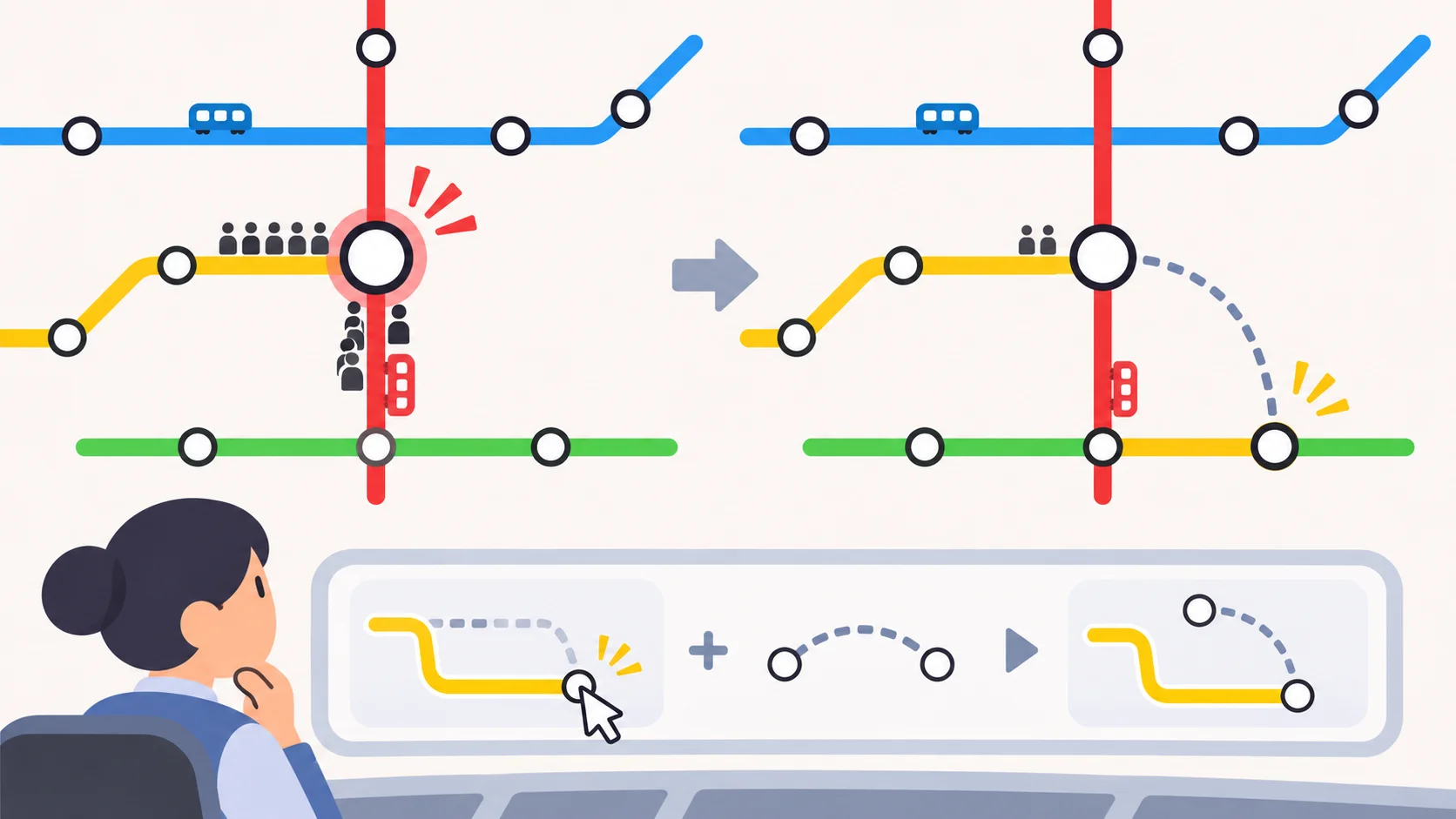
Use a small scenario to test the model. Suppose the central station receives six passengers per interval while its current train service clears four. A queue grows by two each interval. The player can add a vehicle, redirect one route, or connect a nearby hub. This is an original numerical example; tune values to your game’s pace and scale.
Find the bottleneck before adding capacity
Show queues where they form and make the cause inspectable. A crowded station might need a second route, while a busy segment might need more service. If all congestion appears as a red map-wide meter, the player has no way to diagnose it. Let them select a station or route and see a brief summary of incoming load, service, and the resulting wait.
Teach bottlenecks with a simple network before increasing demand. Add one more station, then a transfer, then a second line. After each change, show how the queue changes. This helps players separate a route problem from a service-frequency problem.
Include overload warnings before a hard failure. A queue can turn amber as it approaches its limit, then create a missed service or penalty only after the player has had a chance to respond. Warnings should not be purely decorative: they need to appear early enough for a route or capacity adjustment to matter.
Let upgrades change the network tradeoff
Offer a short list of interventions with different effects. Adding a train increases service on a line but consumes a limited vehicle token. A new transfer route can distribute arrivals but may create congestion at a second station. Extending a line reaches an underserved district while adding distance and maintenance. Describe costs in the same units as their outcomes whenever possible.
Make sure interventions solve different problems. If adding a train always dominates rerouting, then the route choice is not meaningful. If a new line creates no downstream load, it has no tradeoff. Test each option on a scenario where it helps and another where its cost matters.
Test resilience as the city grows
Increase demand gradually and observe whether the player can identify where the network is under pressure. Track queue length, wait time, service utilization, and unused capacity. A robust network does not need every station to stay empty; it needs players to understand the cost of letting a queue grow.
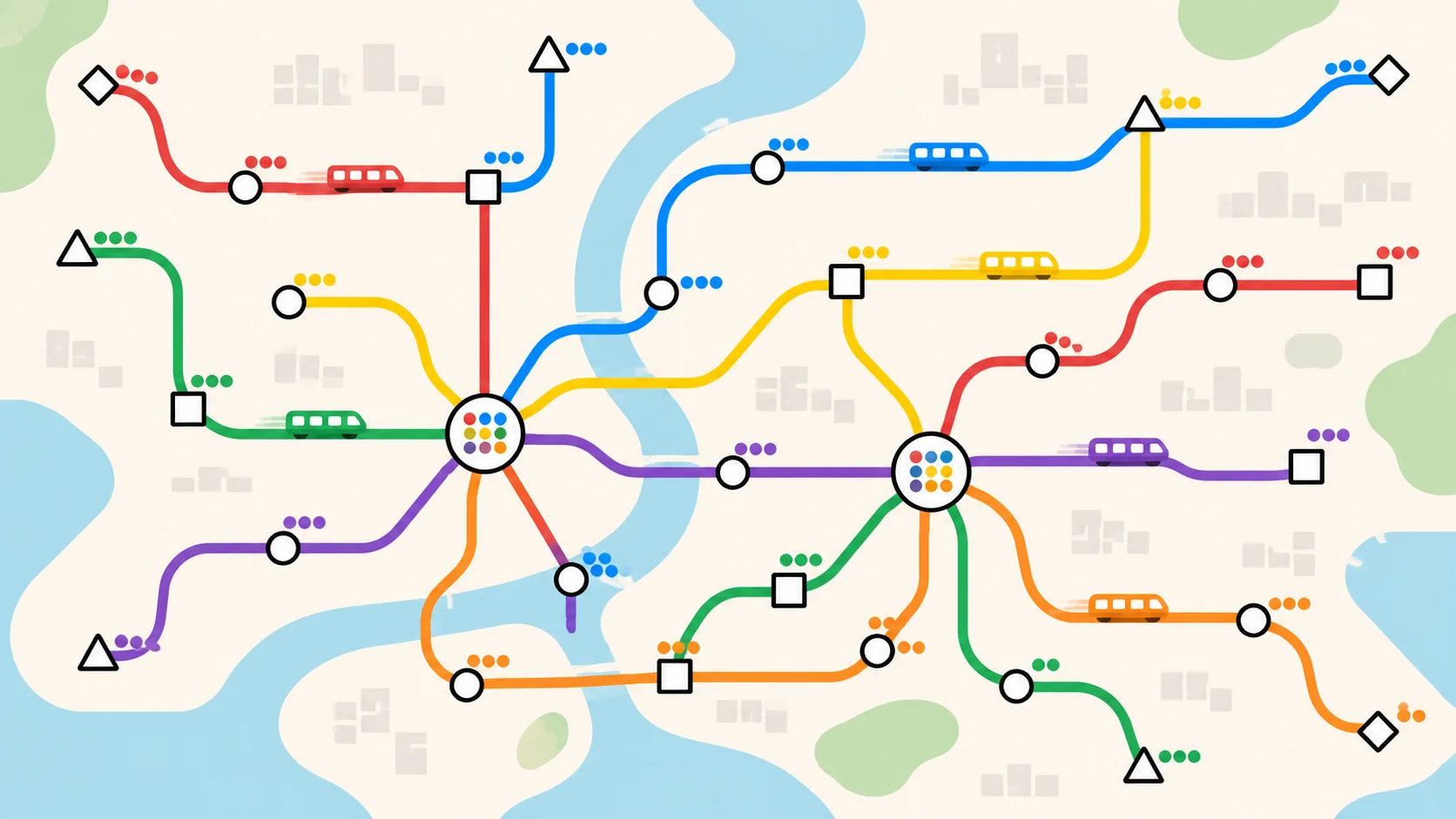
Test several route shapes under the same demand pattern. Ask players what they expect an upgrade to change, then compare that prediction with the actual result. If the player cannot explain the queue after a change, make the capacity rules or map feedback more direct before adding more stations.
Use SEELE AI to draft an original transit puzzle and inspect whether the playable result actually moves passengers through the network. Do not assume a generated map creates functioning queues or service limits. For a broader route-design example, see the original transit puzzle guide. Prototype an original transit puzzle.
FAQ
How do you build network capacity in a transit game?
Represent passenger demand and service limits at stations or route segments, then show queues when demand exceeds service. Let players add trains, create transfers, or redraw routes with visible costs. Start with a small network so they can see how a capacity choice changes load and travel before the city grows.
How should a game show a network bottleneck?
Show where the queue is growing and what connects to that point. A station may be overloaded because too many routes transfer there, or a segment may have too little service. Use consistent visual signals and let players inspect the upstream cause. Avoid a single global warning that hides the location of the constraint.
What is a fair way to increase transit capacity?
Offer a few interventions with distinct tradeoffs such as adding a vehicle, rerouting a line, or opening a transfer. Show the resource or added complexity each option costs. Balance them so one choice is not always best: a new line may relieve the hub but stretch staffing, while a transfer may shift rather than remove congestion.
What should you measure in a network-capacity playtest?
Track queue size, wait time, unused service, player response time, and whether testers can identify the bottleneck. Test multiple network shapes under the same demand. Ask players to predict what an upgrade will change, then compare their prediction with the result to find unclear capacity rules.