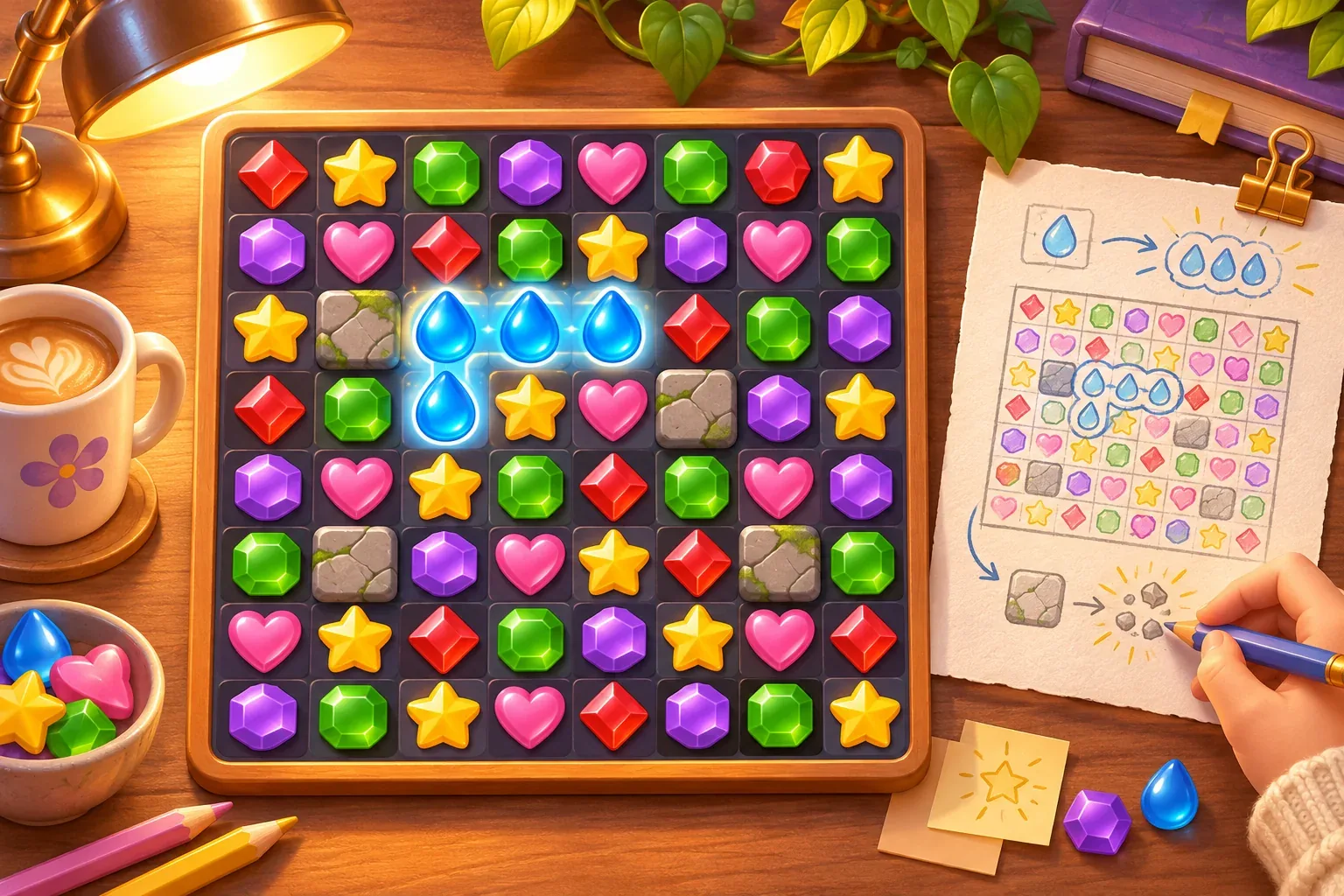
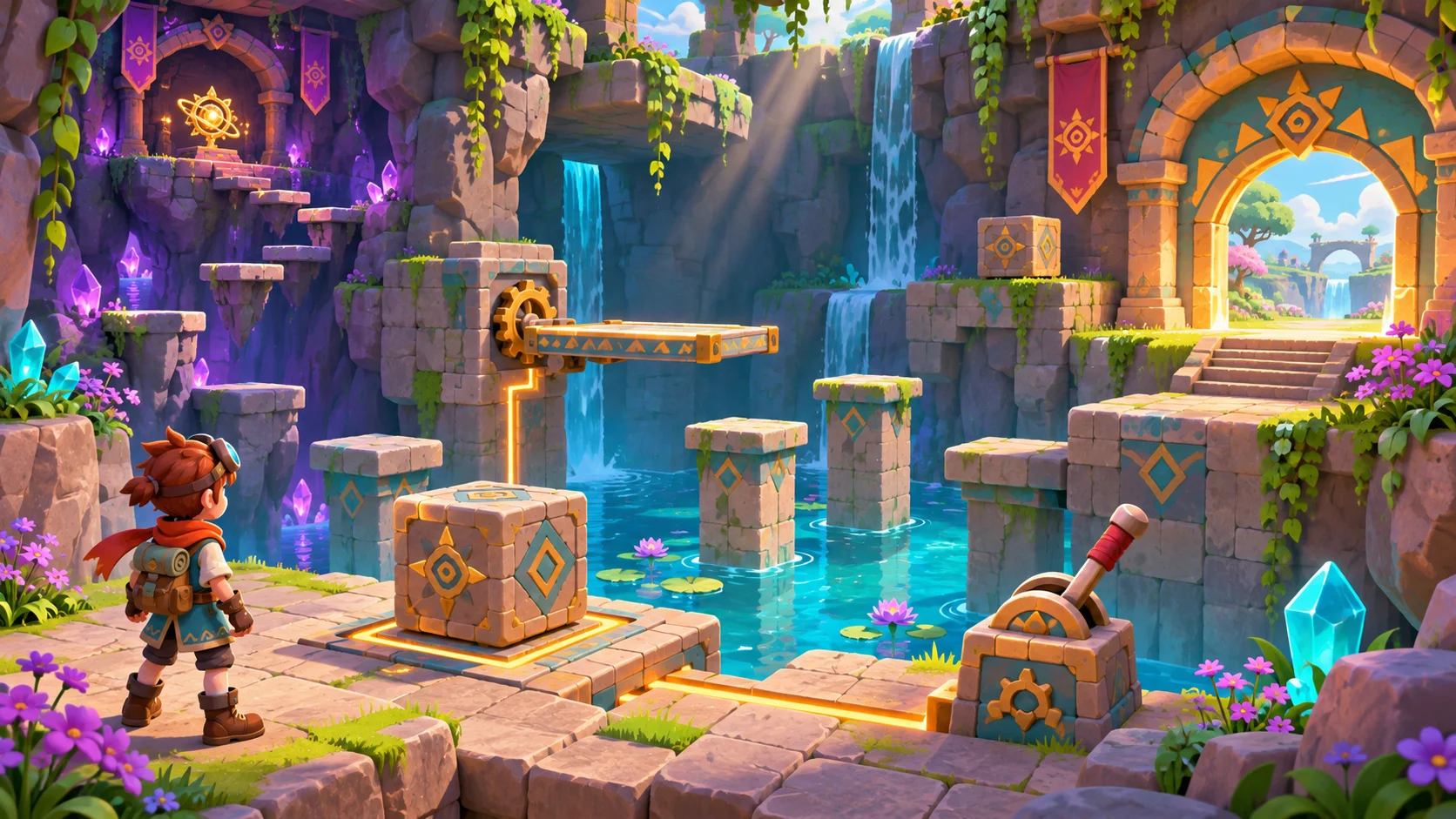
Give partners distinct clues and shared board actions, then verify that neither player can solve the challenge alone. A useful first prototype connects the player action, its feedback, and the next decision so the system can be tested as a complete loop.
Define what each partner knows
Start by listing the board state, clues, and actions available to each partner. A role should change what a player can infer or do, not simply rename the same set of moves. Keep the shared board visible to everyone, then decide which clue is private and how it can be communicated without ambiguity.
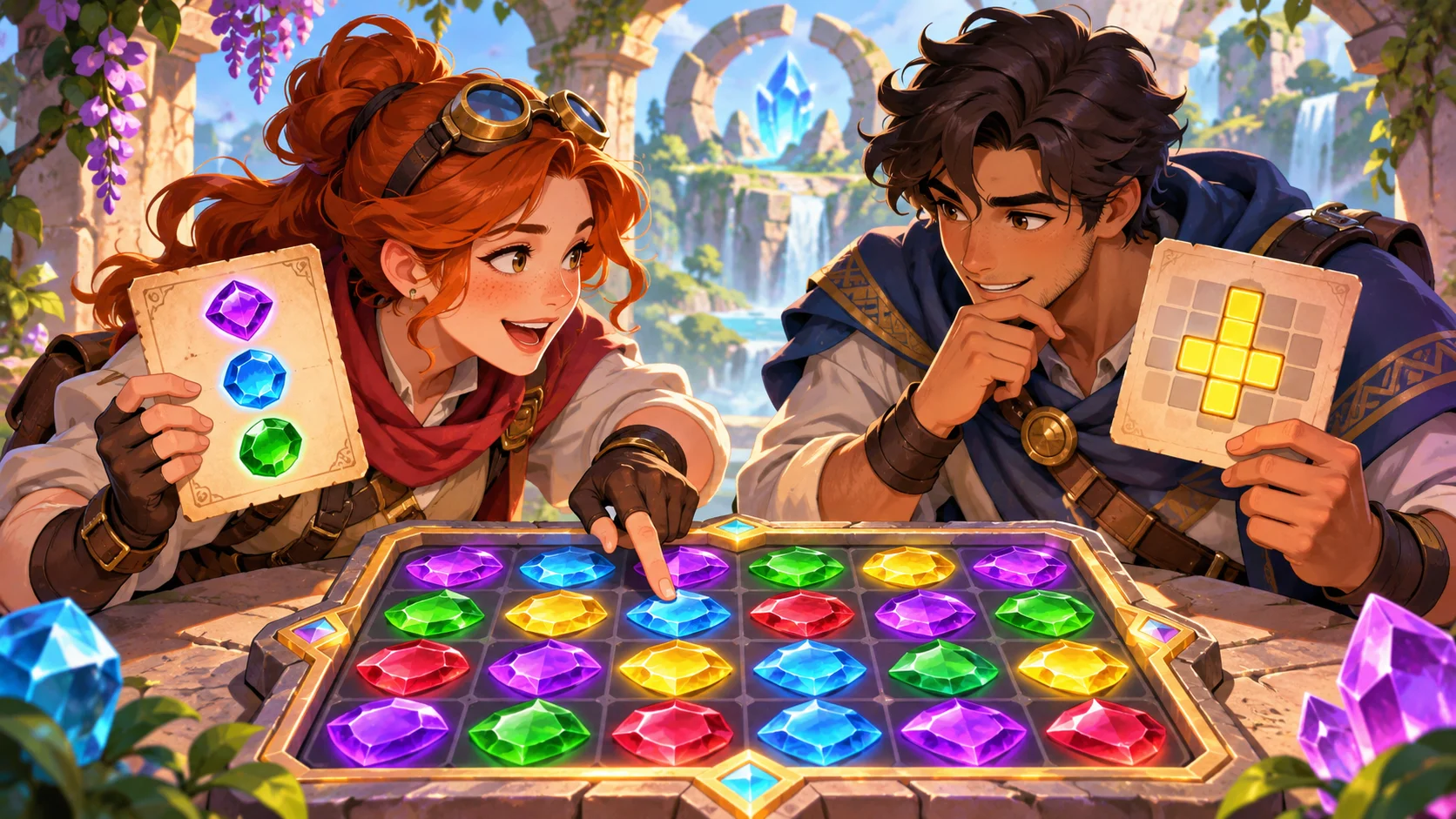
The official Parallel Experiment listing describes two-player puzzles in which separated partners discover clues needed on the other side, and it also lists a Match Three mini-game. That confirms the cooperative and match-three context; the board rules and level structure below are design proposals. See the official Parallel Experiment listing for this context.
Connect private clues to shared matches
Give each player a clue that narrows a different part of the solution. For example, one partner may know which colors are safe to clear while the other knows the target pattern. Let both clues point toward a shared move so players must explain and compare evidence before acting.
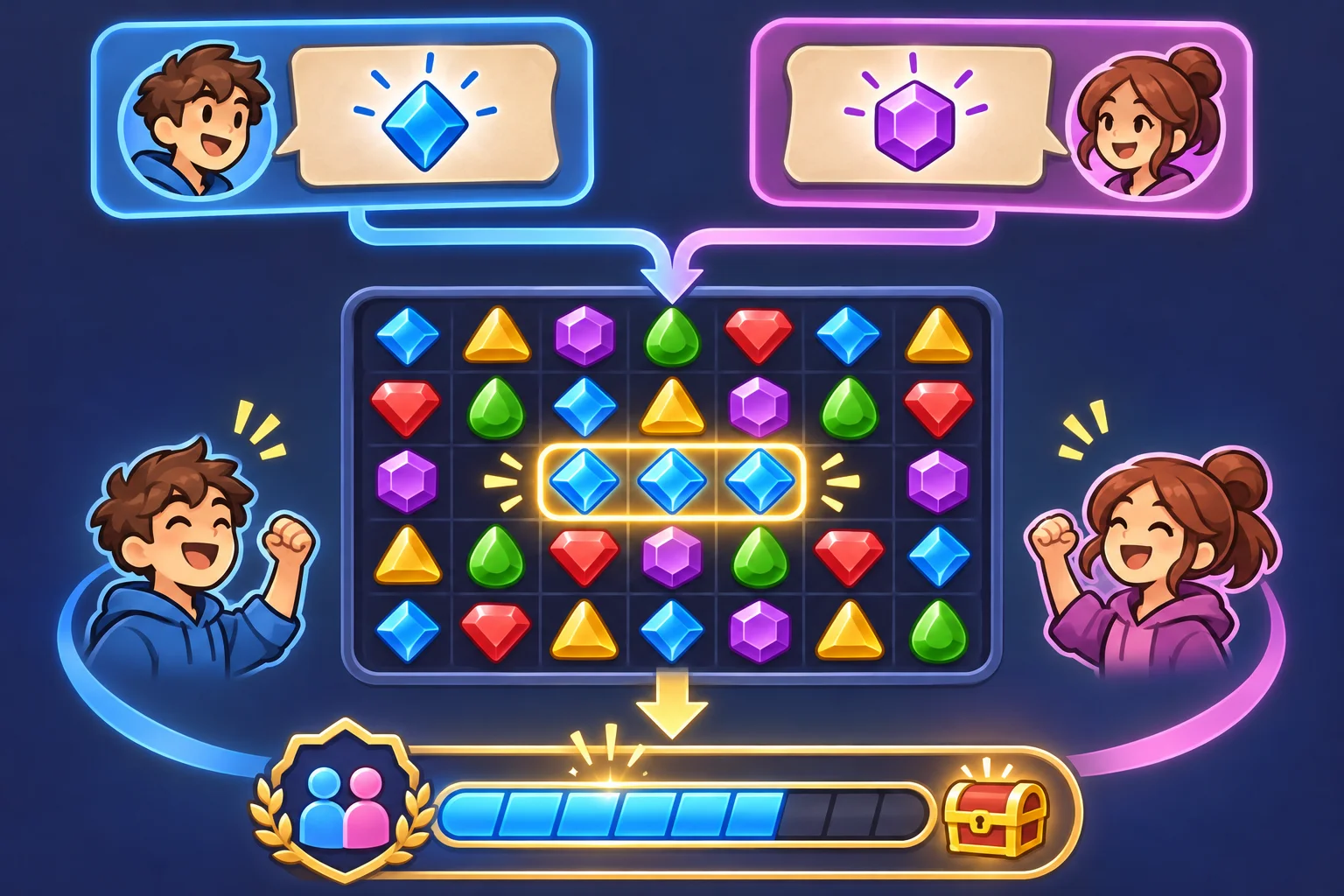
Use the same turn and match rules as the solo prototype where possible. Add team objectives as a thin layer: collect two symbol types, clear a path in a move budget, or coordinate a special piece. Avoid giving one role a private answer that simply tells the other what to do.
Add cooperative goals to the board
Teach the exchange in a short board where the cost of a wrong move is low. First show one partner a clue and let them describe it; then show the second partner how that information changes a legal choice. Feedback should confirm whether the team action worked without exposing every later answer.
As the system grows, vary one dimension at a time: clue format, board shape, move budget, or objective. Preserve a recovery route such as a limited reset or replayable clue, especially when the game does not guarantee voice communication.
Verify the challenge needs both players
Test with pairs who have not seen the level. Log which clues they share, whether each player contributes an inference, and when they spend a move without agreement. A strong acceptance case is a board where each player has a necessary clue, the shared objective is visible, and a documented sequence of exchanged clues leads to a valid win.
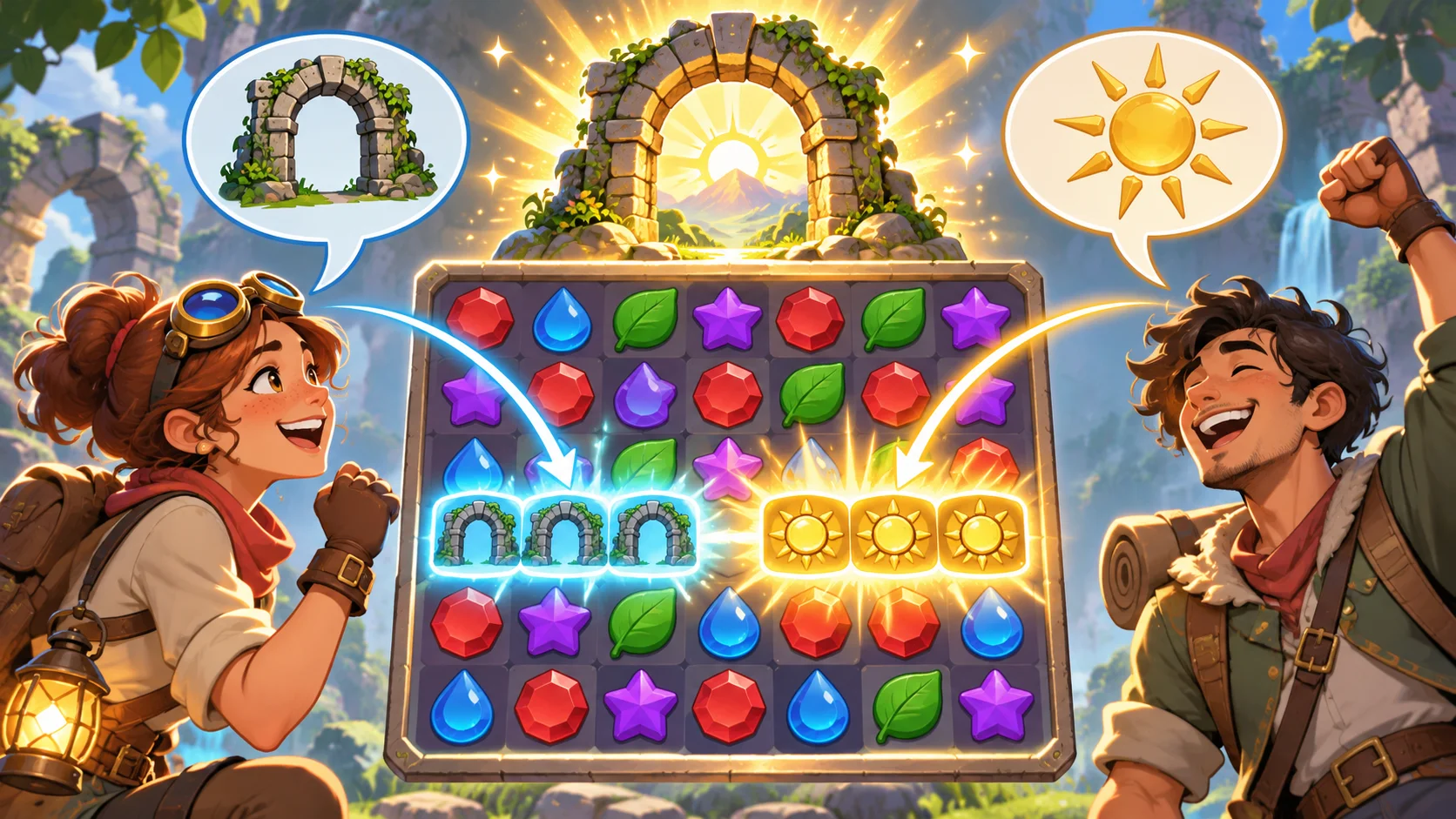
Compare the result with the solo baseline and record failure cases: one player can solve alone, clue language is hard to relay, or the shared goal is not understood. The related guide to a rule-teaching co-op progression guide can help stage new rules before combining them. SEELE AI can help brainstorm alternative rule variants; implementation and paired playtesting still need your team.
FAQ
How do separate-information match-3 puzzles work?
Each player receives a different clue about the same shared board. The team communicates both clues, combines them into a move choice, and sees feedback from the shared objective. The design succeeds when neither clue alone reveals the full solution and the interface makes each player’s information boundary clear.
How can a match-3 board support co-op roles?
Keep the core matching rules readable, then assign distinct information such as target colors, blocked cells, or a move constraint. Roles should influence reasoning or timing. A short tutorial board can demonstrate how two clues lead to one shared match before adding pressure or extra objectives.
How do you prevent one player from solving everything?
Give each partner evidence the other cannot access and validate the puzzle with solo playtests. If one player can infer the hidden clue from visible board patterns, add a meaningful second constraint or change what information is exposed. Avoid solving the issue by making controls frustrating.
What should you test in a cooperative match-3 level?
Test whether both players share the key clues, understand the shared goal, and agree on a valid move. Record unproductive moves, mistaken descriptions, and solo-solvable cases. Also try the level with limited communication tools so the puzzle does not depend on a channel your game cannot reliably provide.