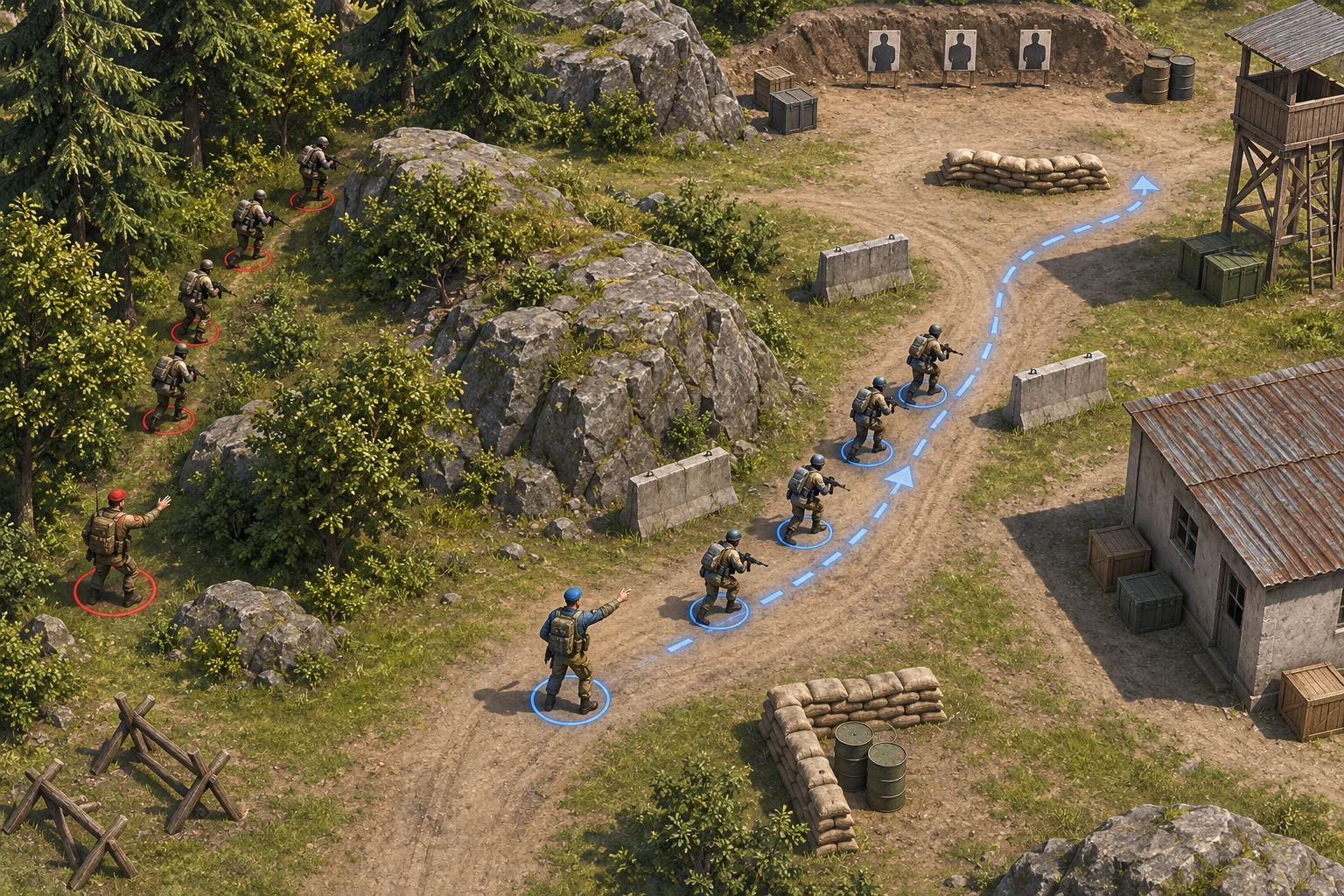
Co-op command roles give partners different ways to shape the same auto-battler round. Valve’s official Dota Underlords listing describes a strategic auto-battler and includes a cooperative Duos mode. That supports the broad genre and cooperative-match context only. The command powers, shared decision rules, and examples below are original design recommendations.
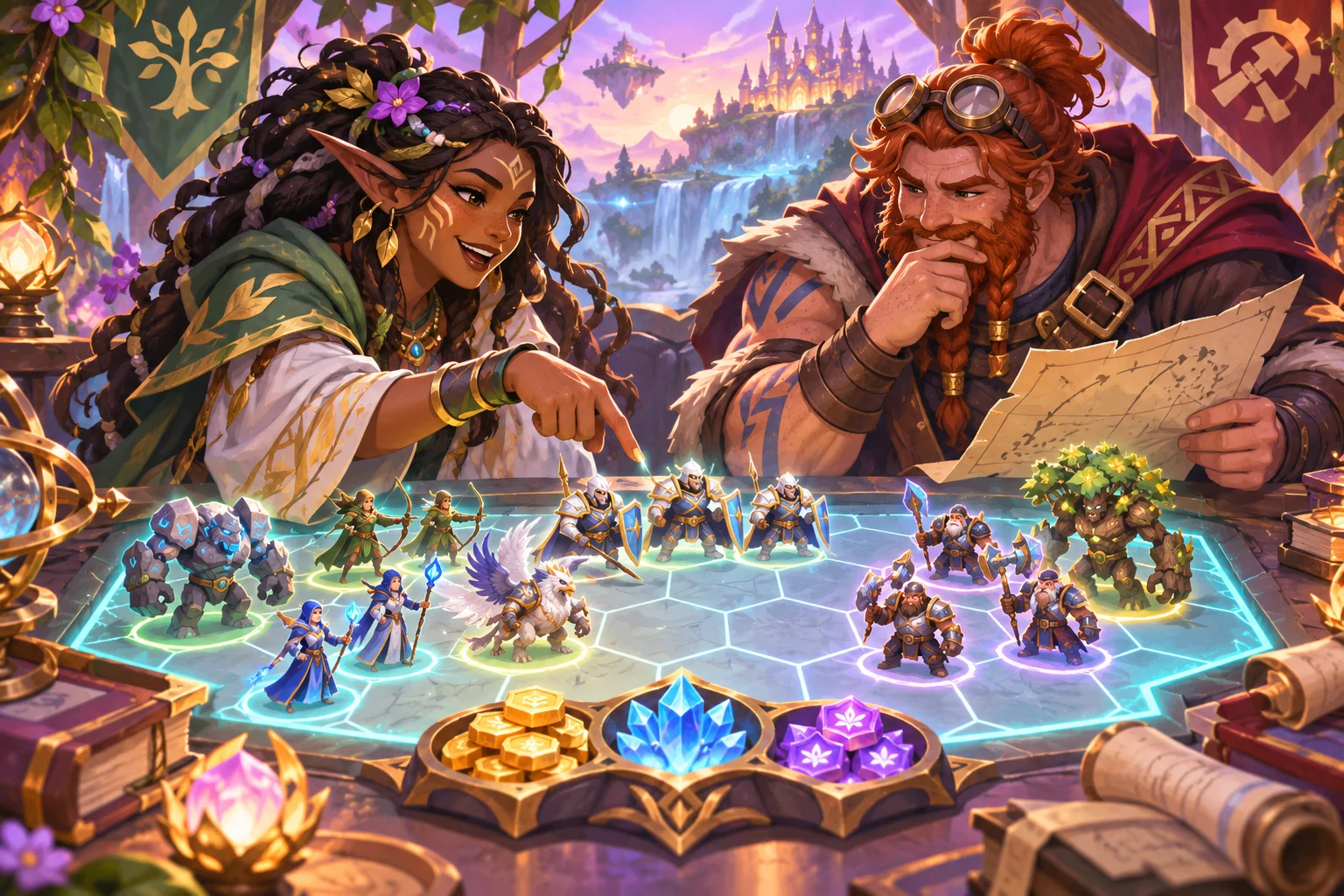
Define commands that affect the shared board
Begin with decisions already present in your round: recruit, spend, scout, place, upgrade, or reroll. A co-op command should influence one of those choices instead of creating a separate minigame. For example, a scout might reveal two shop options while a formation command reserves a slot for a unit. Both actions should change what the team can do next.
Keep the command list small. Three useful commands with clear timing will teach better than a large set of buttons that overlap. For each command, define when it can be issued, which player can trigger it, what information it reveals, and whether it consumes a shared resource. Show the expected result before confirmation.
Use shared resources to create discussion, not confusion. If both players spend from one pool, display the amount and any pending request. A command should not silently consume currency that the partner expected to use for another choice.
Give partners distinct information and authority
Roles can differ through information, timing, or control. One partner might inspect the next shop while another directs unit placement. A commander might request a reroll, while a partner confirms a costly purchase. These differences are meaningful when each role contributes to a shared outcome and can explain its effect.
Avoid a permanent “main player” and “assistant” split unless the game is intentionally asymmetric. Let players switch roles between rounds or assign them based on preference. If one role sees hidden information, give the other a way to ask questions or request a reveal so the team can reason together.
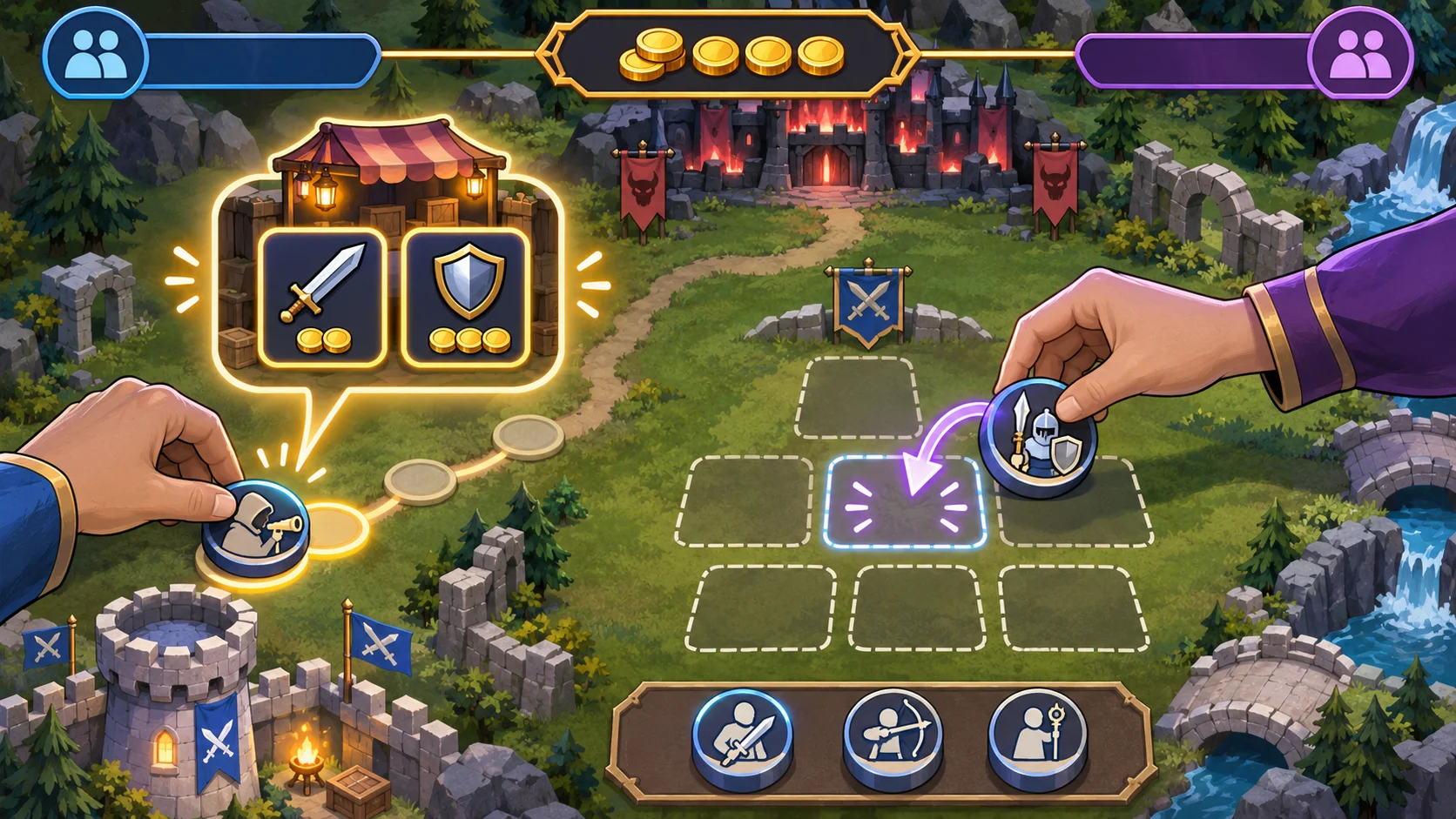
Make handoffs explicit. A role can prepare a recommendation, then pass the decision to the partner who owns placement or spending. Show which player has authority at each moment. That reduces accidental double input and prevents a command from feeling like a suggestion with no consequence.
Resolve command conflicts clearly
Choose a confirmation rule before multiplayer testing. A low-cost action might be controlled by one partner, while a large purchase waits for both to confirm. Another option is a leader role with a short veto window. Whichever model you choose, show whose response is pending and what happens when the timer expires.
Use a small, readable communication vocabulary. A request marker can say “scout,” “save,” or “place here” without forcing voice chat. Let partners cancel or revise requests before the round locks. Test delayed input, simultaneous choices, and one player disconnecting so the match can continue or pause predictably.
Resolve disagreements without turning every round into a negotiation screen. Limit how long a confirmation can block play, and give players a default outcome they can understand. If a command is rejected, explain why: insufficient shared currency, invalid slot, or confirmation timeout.
Playtest coordination and fairness
Watch pairs with different experience levels. Track which player issues commands, how often commands are unused, where resource disagreements occur, and whether both partners feel responsible for the outcome. Ask each person what their role contributed after a match. A high win rate does not prove the role split is enjoyable if one player felt idle.

Compare pairs who share a strategy with pairs who disagree. If one role dominates, adjust information or decision rights before adding more abilities. If rounds stall on confirmations, simplify the approval rule. If both players make the same decisions, give roles different but complementary information or actions.
SEELE AI can help outline an original cooperative auto-battler, but shared state, role commands, synchronization, and balance need implementation and multiplayer playtesting. For the core loop, read the auto-battler playable-build guide. Prototype an original auto-battler with SEELE AI.
FAQ
How do you add cooperative command roles to an auto-battler?
Identify decisions that already exist in the round, such as spending, scouting, placement, or rerolls. Give partners distinct ways to influence those decisions while keeping the board and resource pool shared. Start with a small set of commands, then test whether each role contributes useful information or action.
How can co-op roles stay fair?
Give each partner meaningful agency and make the effect of their command visible to both. Avoid a role that only watches while the other player makes every important choice. Track command usage and ask each player what they changed, then adjust authority or handoffs when one role feels passive.
How should a game handle partners who disagree?
Define the confirmation rule before a match begins. A purchase might require both players, or one player might lead while the other can veto before a timer ends. Show the shared budget and any pending command. Test disconnects and timeouts so the match does not stall indefinitely.
What should you playtest in a co-op auto-battler?
Observe communication, command frequency, unused abilities, resource disagreements, and whether both partners feel responsible for the result. Compare pairs with different levels of experience. If one player dominates, rebalance information, decision rights, or turn order rather than adding more command buttons.