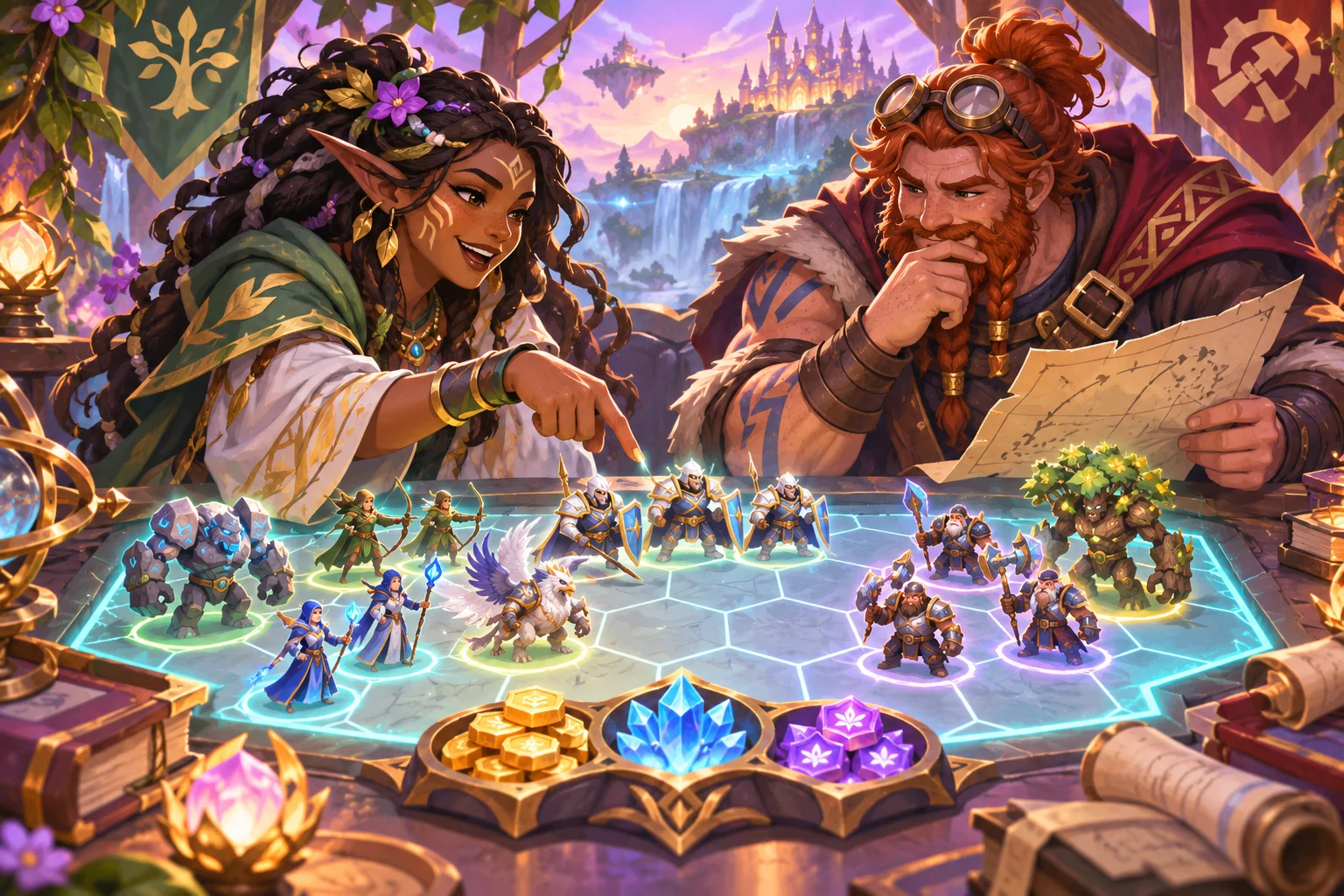
Split command work into complementary roles that let both players shape a live plan, then test whether orders stay clear under changing pressure. Start with one small scenario, make its cause and effect visible, and test whether a player can explain the choice they made. The recommendations below describe original design options; cited game material is limited to genre context.
Map command and squad responsibilities
Map what each player can observe and command during a live encounter: unit selection, destination, formation, ability timing, scouting, and pause or planning controls. The official SWAT Commander listing describes co-op, briefing, equipment planning, and directing a team. This supports the cooperative tactical context; the split command model below is original. See Red Mountain Games and Ritual Interactive for the limited source context.
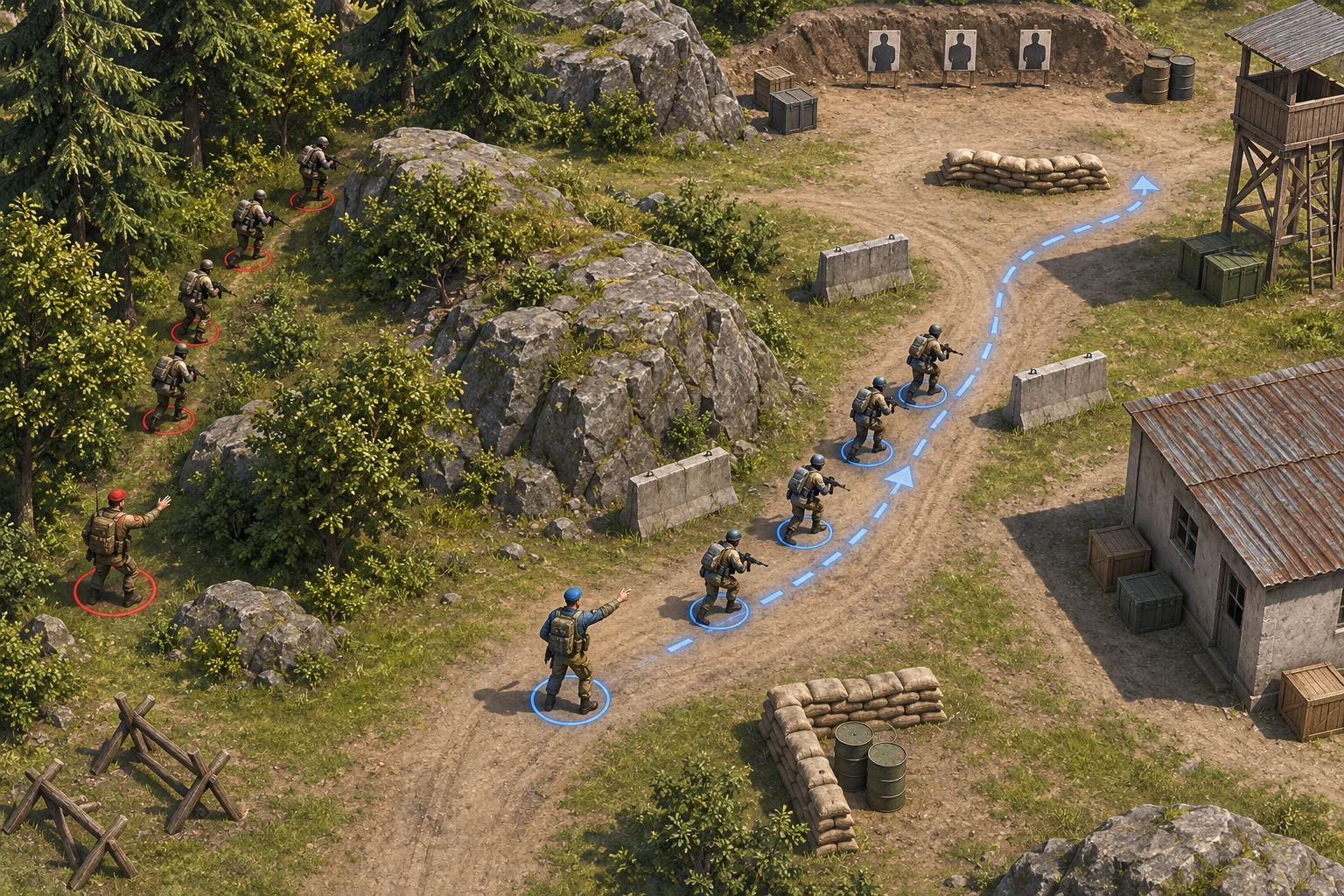
Assign responsibilities by decision type, not by screen region alone. One player might read the map and set movement intent while the other manages timing and squad abilities. Keep overlap for emergencies so a disconnected or busy partner does not make the team unable to respond.
Divide information and control
Give each role a clear input and visible effect. An order proposal should identify its squad, destination, and priority; the partner should see whether it is pending, accepted, or conflicting. If both players can issue orders to the same unit, define priority or confirmation rules before the action executes.
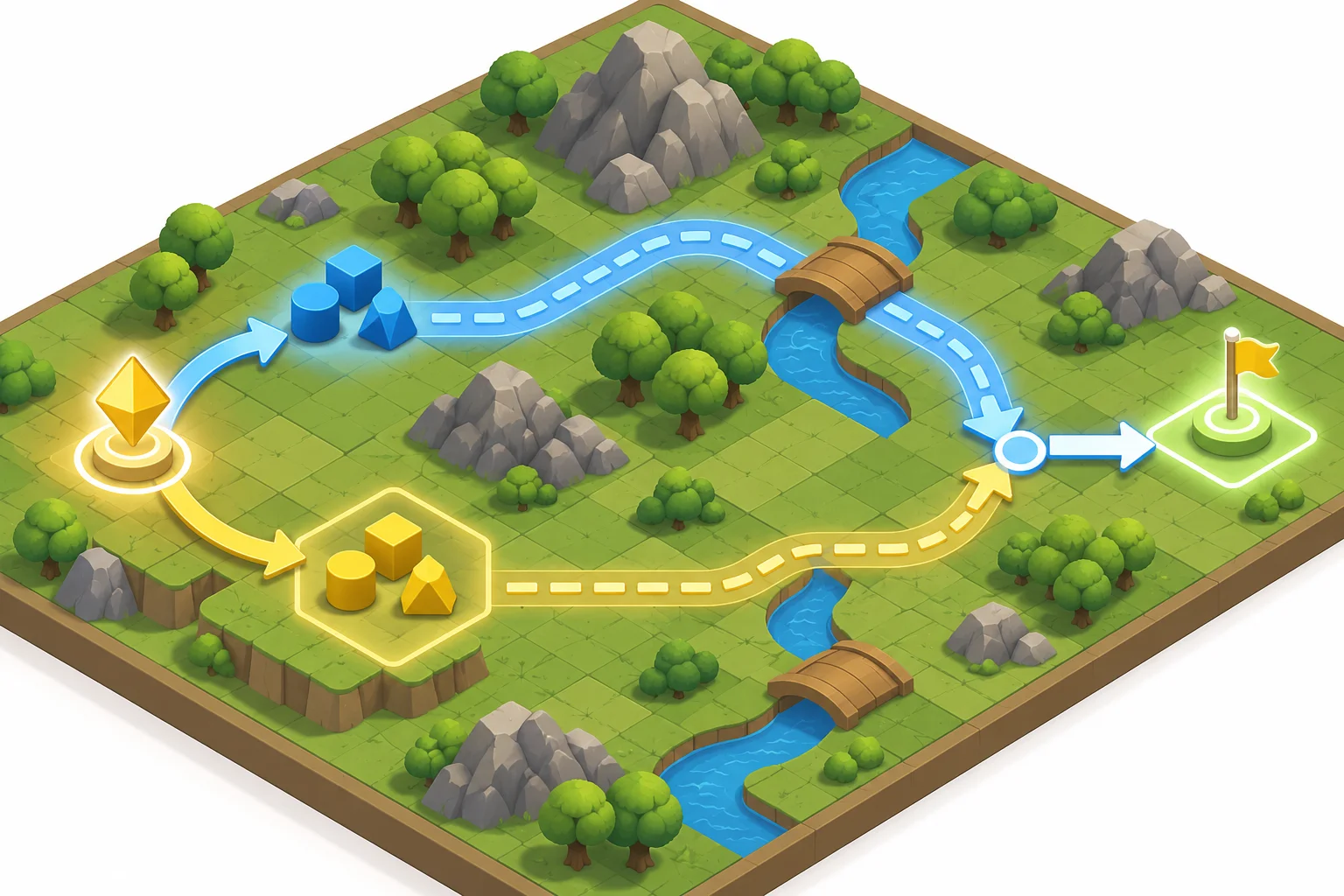
Share enough information to coordinate, but let each player contribute unique knowledge. One role might see a wider map while another sees squad readiness or local hazards. Test whether the information gap invites useful communication rather than forcing one player to wait for every action.
Resolve shared orders in real time
Resolve simultaneous commands predictably. A short command window, queued orders, or explicit priority can prevent conflicting destinations. When a live situation changes, show which orders were canceled, delayed, or replaced. Keep a simple fallback order available so the squad continues to react if players miss the coordination window.
Tune the pace around communication. Frequent high-stakes commands can make co-op tiring, while long automation can make one role feel unnecessary. Let players adjust command frequency or use clear quick orders, then test under the same encounter pressure to find where each player makes a consequential decision.
Test clarity under changing pressure
Run one encounter with an opening plan, a blocked route, and a new objective. Record command ownership, collisions, response delay, and moments when a player had no meaningful input. Repeat with roles swapped and with one player unfamiliar with the map.
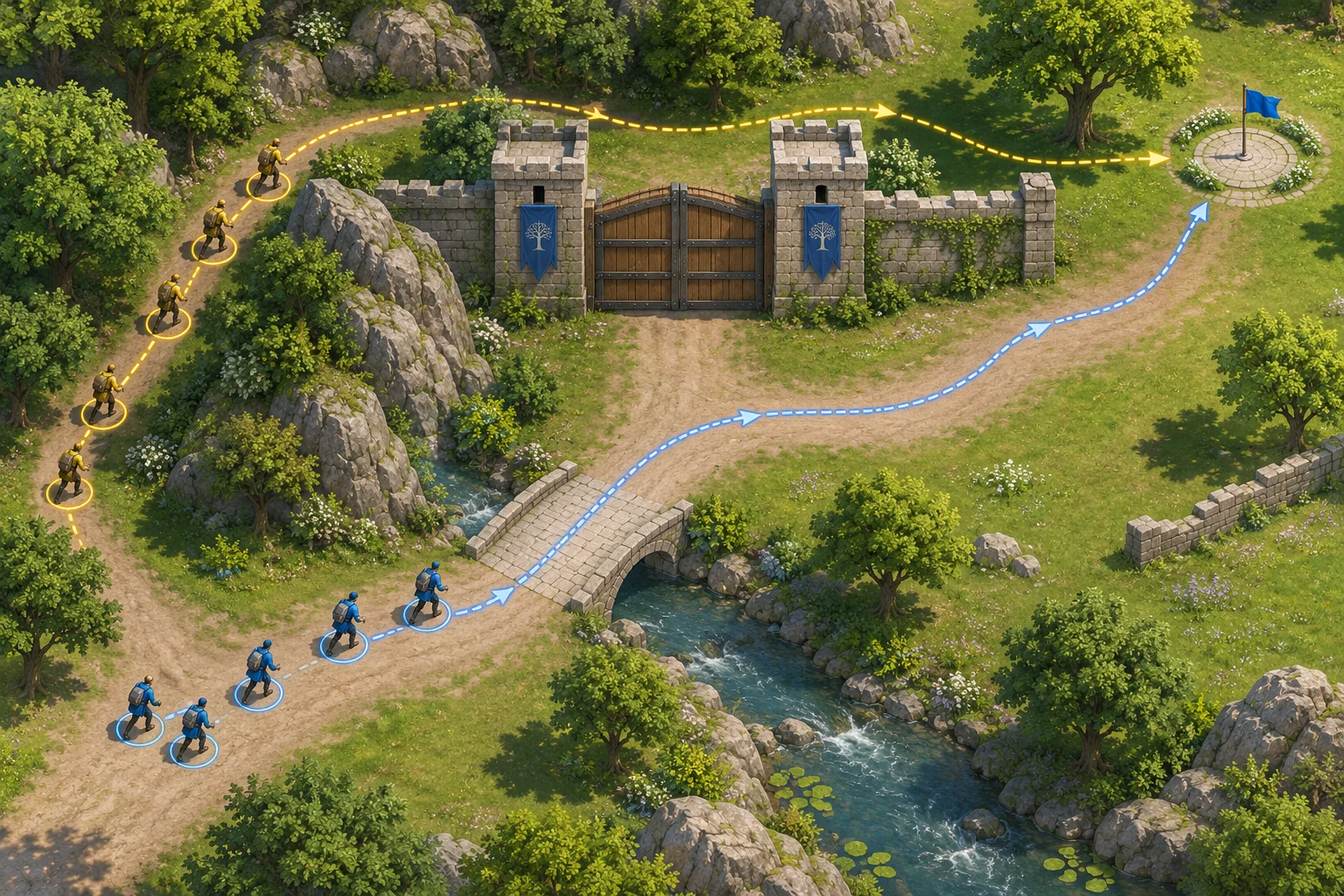
Use a co-op command-role guide to compare command responsibilities in a related team format. Pass when both roles influence the outcome, conflicting orders resolve legibly, and the squad remains responsive to changing conditions.
FAQ
What makes a cooperative command role useful?
A cooperative command role is useful when it owns a consequential decision, receives clear feedback, and coordinates with the other player. Dividing a map view alone is insufficient if one player still makes every order. Give each role an action that changes squad behavior or the team’s information.
How should players divide real-time command work?
Split by complementary tasks such as route planning, squad assignment, timing, or readiness management. Keep emergency overlap so either player can respond to a blocked route. Make pending orders visible and define who controls a unit when both players issue conflicting commands.
How do you prevent conflicting squad orders?
Use explicit order ownership, priority, and confirmation rules. A queue or short planning window can help, but show which order was accepted and what happened to the prior order. Give the squad a simple fallback behavior while the players resolve a conflict.
What should you test in cooperative tactics?
Test with an opening plan, a disrupted route, and an objective change. Swap roles and skill levels. Track whether both players act, whether commands collide, how long units wait, and whether players understand why an order was delayed or replaced.