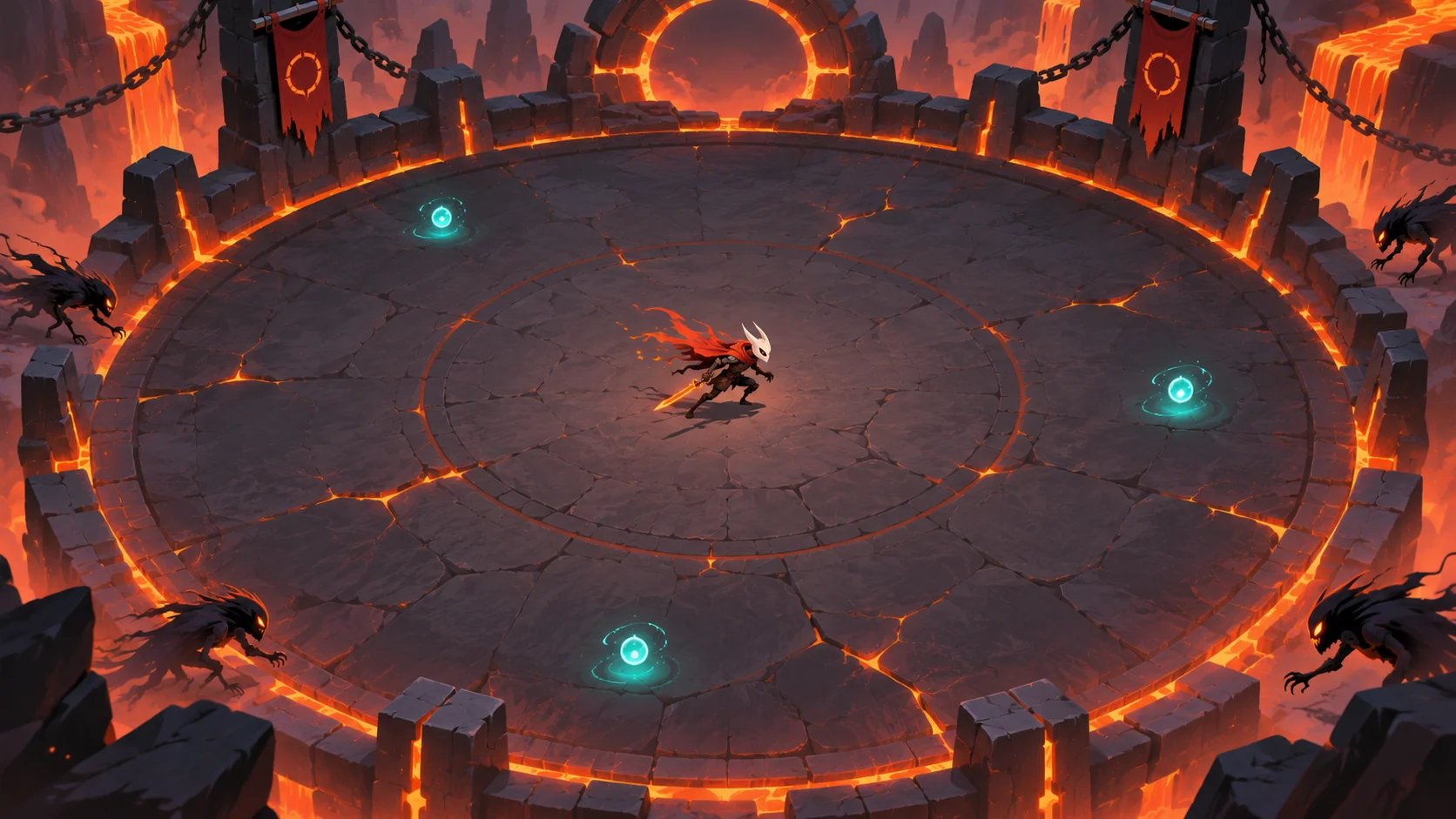
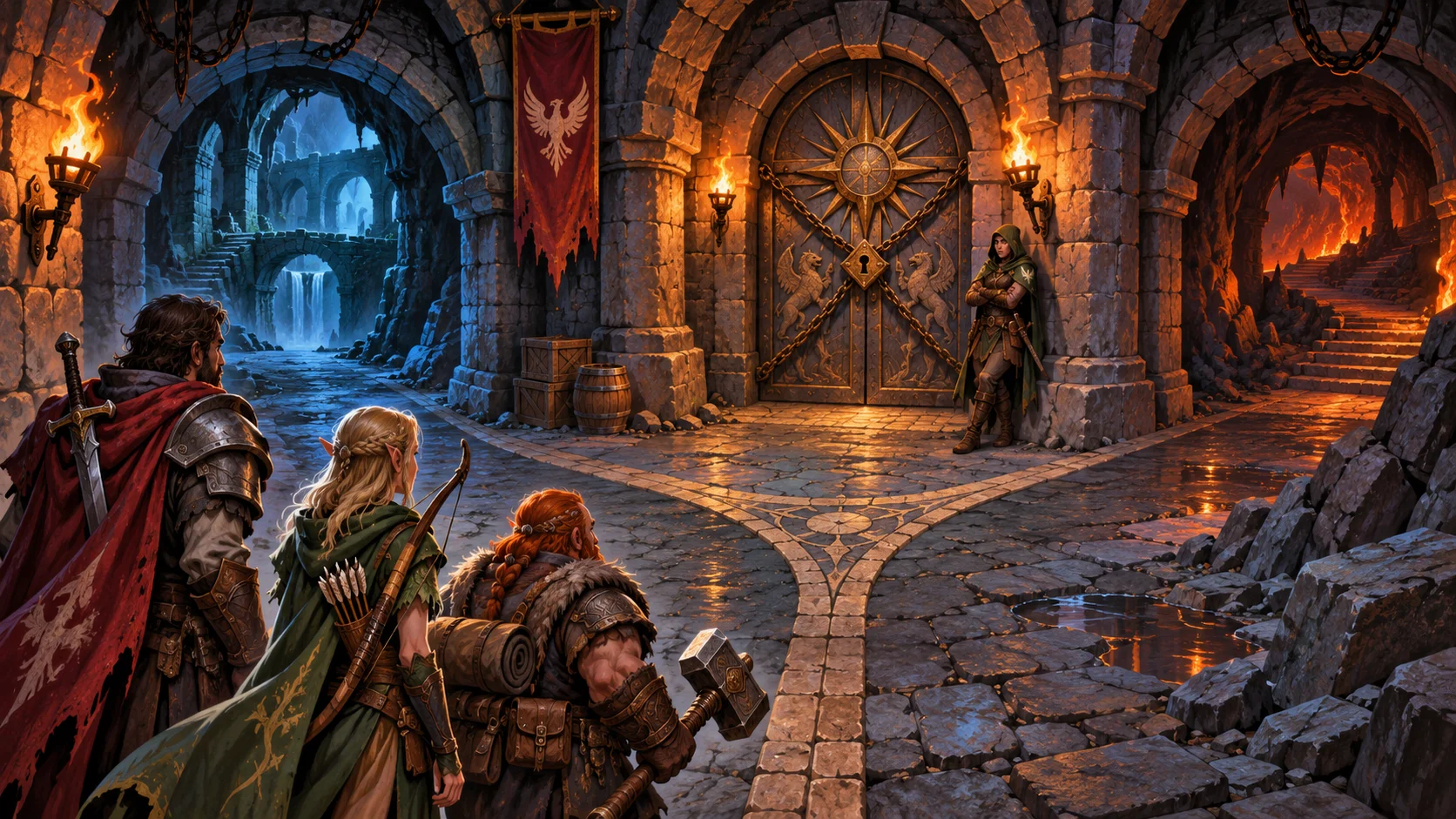
Co-op roles feel connected when each player can contribute alone, but an ally can turn that contribution into a new option. Start with one short arena encounter and define the team decision before expanding the roster. A useful prototype tests a handoff, shared pressure, and recovery after a mistake. The official Risk of Rain 2 listing from Hopoo Games supports the cooperative survival context only; the role rules below are original design guidance.
Define solo and team contributions
Write a role card with four fields: what the player can do alone, what changes for an ally, the cost or risk, and the signal that confirms the effect. Keep the solo action viable: a defender can interrupt a rush, while a striker can deal dependable damage. Their shared action might expose a weak point for a short window, creating a choice rather than a required combo.
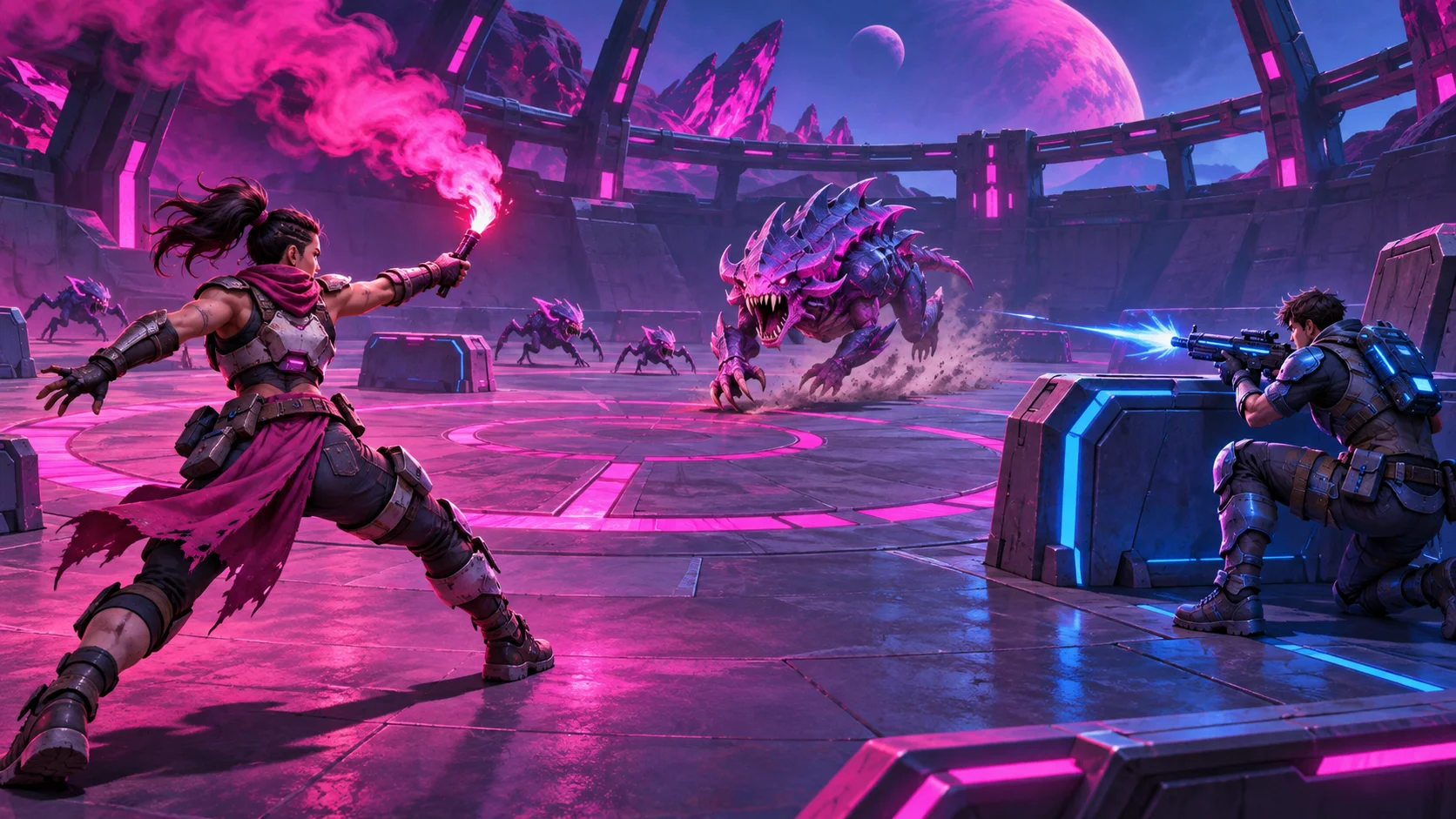
Prototype only two roles and one threat that can be answered in more than one way. Mark each ability’s range, cooldown, duration, and failure state. If one player can start a handoff but the other cannot recognize or reach it, the system has not communicated its promise. Add a clear animation, sound cue, or world effect before adding another role.
Make role abilities create useful handoffs
Model a handoff as a short state change: a player acts, the game exposes an opportunity, and an ally chooses whether to use it. For example, a defender draws a charging creature toward cover; a teammate can activate a shield field, cross the lane, and counterattack. Show the threat’s new target and the shield boundary clearly, and let the team continue through ordinary movement if the timing is missed.
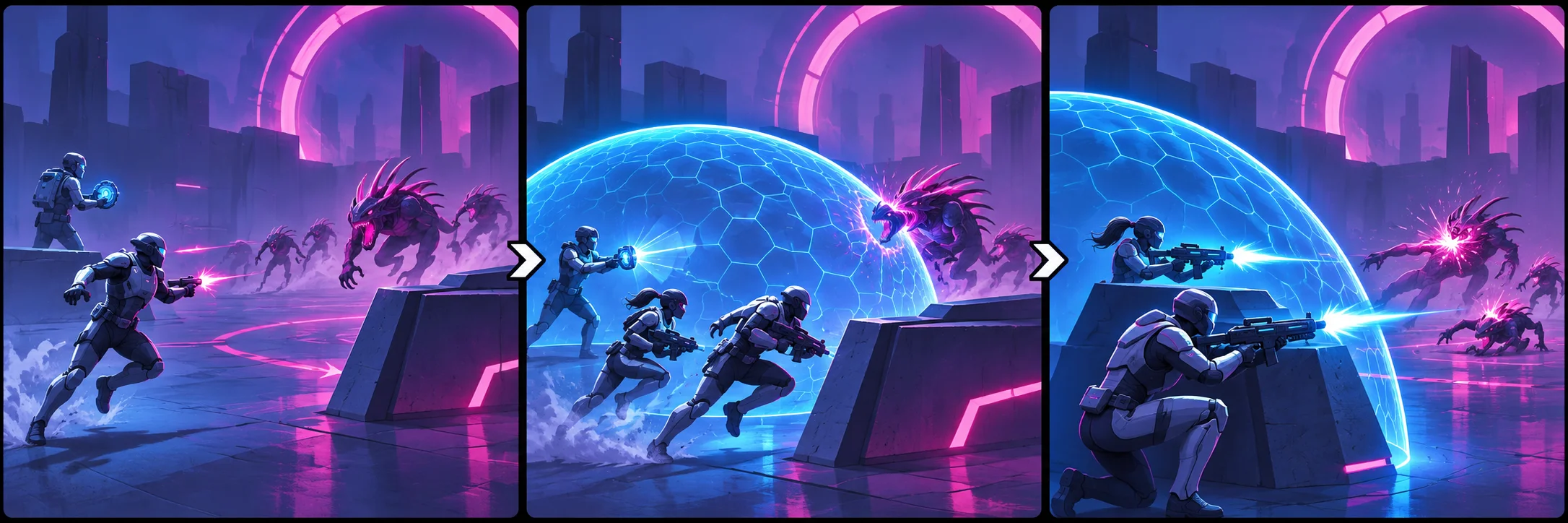
Keep the handoff legible under combat pressure. Use consistent colors or silhouettes for the initiating role, the affected threat, and the available response. Test the cue at typical camera distance and during overlapping attacks. If players need voice chat to understand the basic state change, strengthen the in-game feedback or simplify the interaction.
Balance shared threats and resources
Shared pressure makes coordination meaningful when the team chooses who handles a threat, who protects an objective, and when to spend a limited resource. Make those demands visible before they become emergencies. A wave might force a choice between using a shield charge to revive a teammate or saving it for a supply beacon, but preserve a slower fallback so one missed decision does not end the run.
Measure the consequences of each role in the same encounter: damage avoided, time gained, resources spent, and recovery opportunities created. Avoid tuning around damage alone. A support role should have visible outcomes such as safer crossings or fewer interrupted actions, while still leaving the player with active decisions. Rotate threat patterns so one role does not solve every wave by default.

Test team composition and recovery
Playtest a small matrix: each role paired with every other role, then repeat with one role missing. Track encounter completion, revives, resource spending, and how often one player waits for another. After each run ask both players what changed because of an ally’s action. Their explanation should match the cues and rules you intended.
Include a recoverable failure: a mistimed handoff, a separated team, or an ability on cooldown. Check that players can regroup and still make progress through another route or basic action. Once the two-role loop is understandable, add a third role only if it creates a distinct decision. For a related implementation pattern, see a related guide to cooperative role interaction.
FAQ
What makes cooperative roles complementary?
A complementary role has a useful solo contribution and a cooperative action that changes what an ally can do next. Define each role through its input, target, cost, duration, and visible result. Then check whether another role can exploit that result without becoming mandatory for basic survival.
How can roles support each other during a wave?
Give one role a way to create an opening and another a way to use it. A defender might redirect an enemy charge while a scout tags the exposed target, for example. Keep the handoff brief and readable, and let either player recover if timing or positioning goes wrong.
How do you avoid making one role mandatory?
Test encounters with every role absent in turn. If a missing role makes progress impossible, add another answer through positioning, a consumable, or a slower route. Preserve distinctive strengths while ensuring core actions such as damage, escape, and recovery remain available to the whole team.
What should you test in co-op role design?
Run the same short encounter with different team compositions and record damage, objective progress, resource use, revives, and time spent waiting. Ask players to explain when an ally changed their options. If a role is ignored or blamed for failure, revise its feedback, cost, or encounter interaction before adding more abilities.