Make optional challenges readable detours whose rewards add lasting value without making the main route feel incomplete. A compact prototype should connect one player action to clear feedback and the next decision before adding more content.
Map the exploration and collectible baseline
Map the main route, collectible placement, movement abilities, and current completion indicators. An optional challenge should be discoverable without looking like a required gate. Give it a clear start point, a readable goal, and a return path to the main exploration loop.
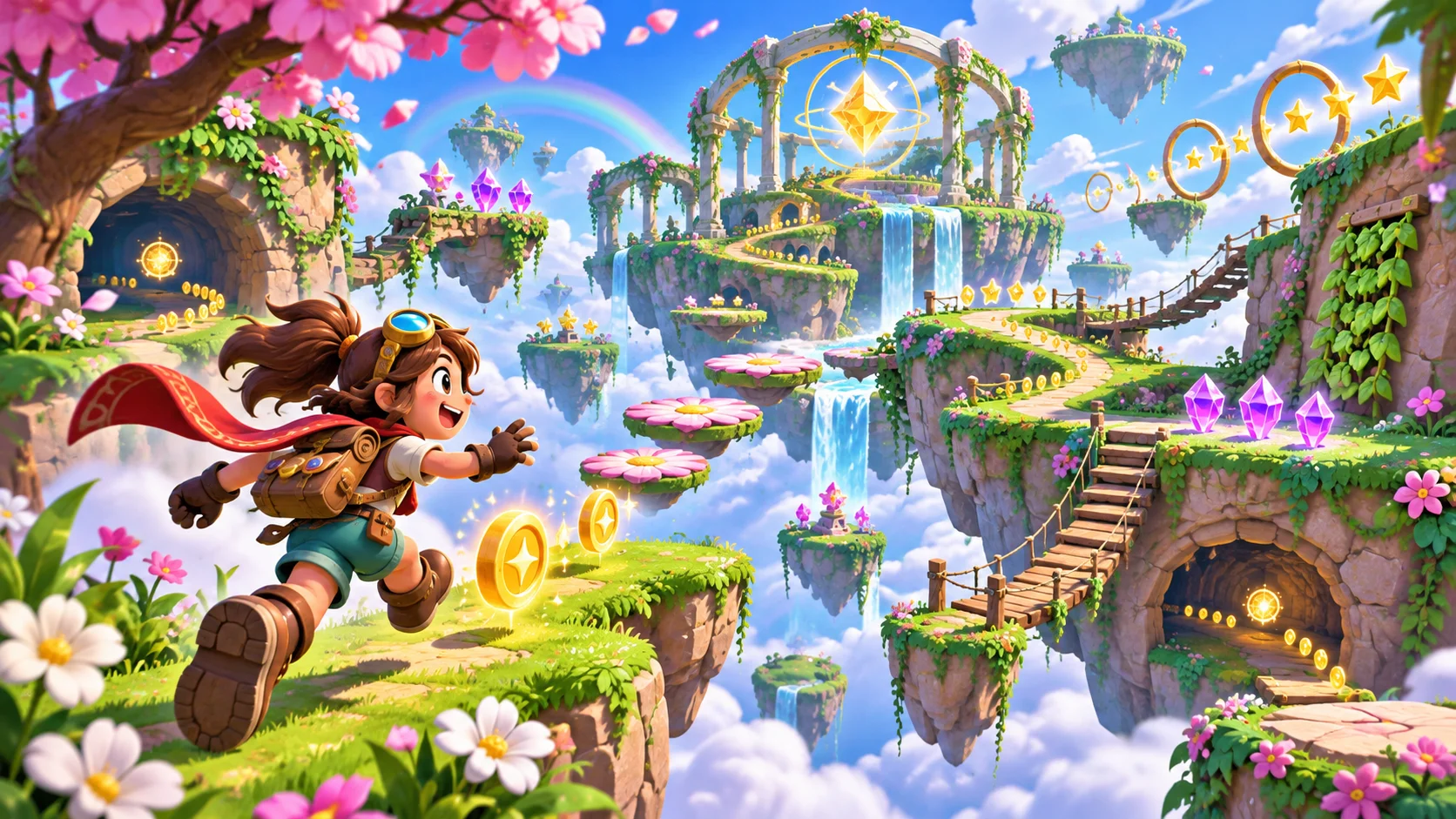
The official A Hat in Time listing supports a 3D platform adventure built around exploration and collectible play. Its developers also describe optional Death Wish challenges and unlockable rewards in official Steam event announcements. Those examples provide genre context only; the permanent reward system proposed here is original. See the official A Hat in Time listing for exploration context and the developer’s event announcement for optional challenge-and-reward context.
Make optional challenges legible
Keep the first challenge short enough to communicate its rule through play. It might ask players to reach a platform sequence, find a hidden route, or complete a timed traversal. Signal the challenge boundary and failure response before the attempt so the detour feels chosen rather than sprung on the player.
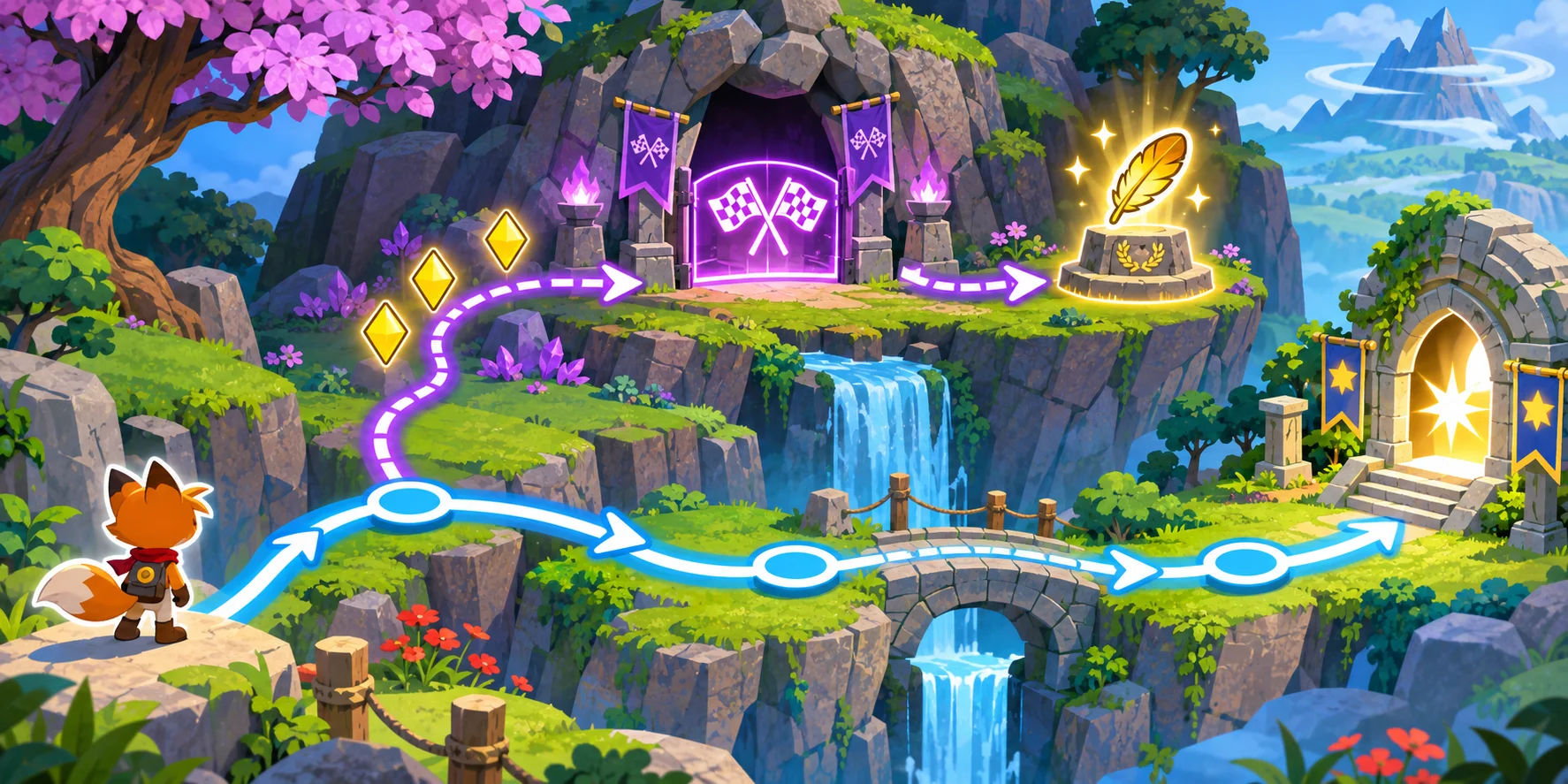
Choose rewards that keep mattering after the challenge: a traversal option, a cosmetic collection milestone, a shortcut, or a new way to interact with the world. Avoid making the reward mandatory for basic completion unless the challenge is clearly presented as part of the main progression.
Choose rewards that persist usefully
Separate permanent capability from temporary score. A lasting ability can open routes elsewhere, while a medal or time result can provide replay motivation without changing the main game balance. Show where a persistent reward applies and whether it changes movement, access, or collection tracking.
Let players return later if they lack the needed skill or equipment. Store challenge completion per save, show which rewards are already earned, and make replay optional. If a reward affects a later route, place a visible clue so players can recognize the connection.
Test detours and reward value
Test one main route and one side challenge with new players. Record whether they notice the optional branch, understand its goal, and can return to the main path. Then verify that earning the persistent reward changes a later route in a visible but non-blocking way.
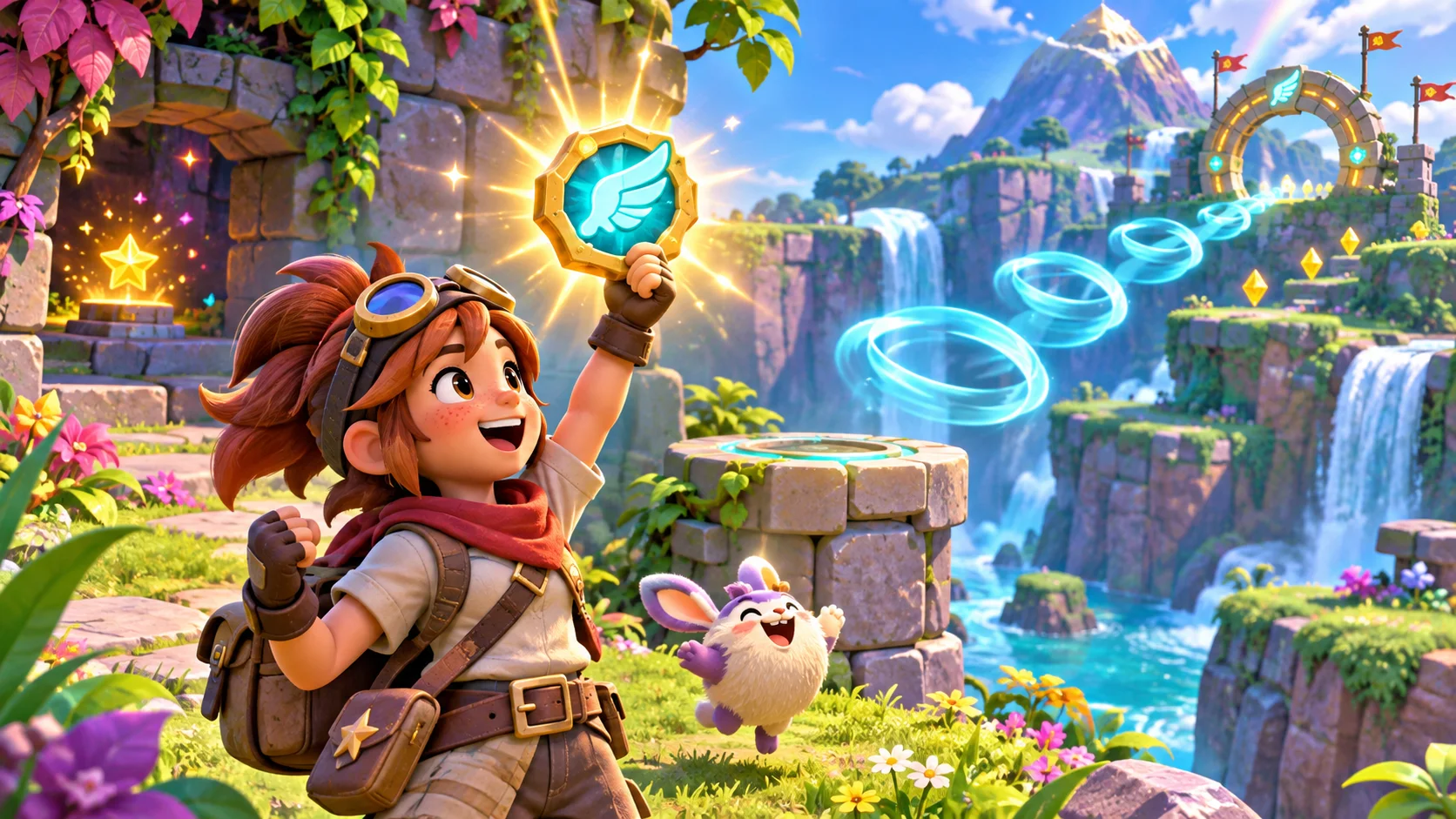
The an exploration-to-reward loop guide illustrates how exploration can feed into another system. A useful acceptance case lets a player skip the challenge, finish the main route, and later return to earn a reward that opens a meaningful optional possibility. SEELE AI can help brainstorm challenge variations; movement tuning and playtesting remain necessary.
FAQ
How do optional challenges fit a 3D collectathon?
Place them beside the main exploration route with a visible entrance, a clear goal, and an obvious way back. They can reward players who want a traversal or collection detour while leaving the core completion path available to players who skip it.
Which rewards should persist after a challenge?
A traversal ability, shortcut, cosmetic milestone, or new interaction can remain meaningful beyond the challenge. Choose a reward that supports the game’s exploration loop and explain where it applies. Separate permanent capability from temporary score if both are part of the design.
How do you keep optional challenges from feeling mandatory?
Keep the main route completable without the reward, label the challenge as a detour, and avoid placing an essential progression key behind an unexpectedly difficult task. Players can still receive a useful shortcut or new option without being forced to earn it.
What should you test in a collectathon challenge loop?
Watch whether players notice the branch, understand its objective, and find their way back. Check reward persistence after reloading and whether a later route responds to the reward. Also verify that skipping the challenge does not block main-route completion in the prototype.