Persistent staff development can make a theme-park management game feel more rewarding, but a new skill field may affect who can run an attraction, which shifts can open, and whether a saved park reloads consistently. Separate durable qualifications from today’s assignment and temporary shift state. Then connect one training path to the operations rules the game already uses.
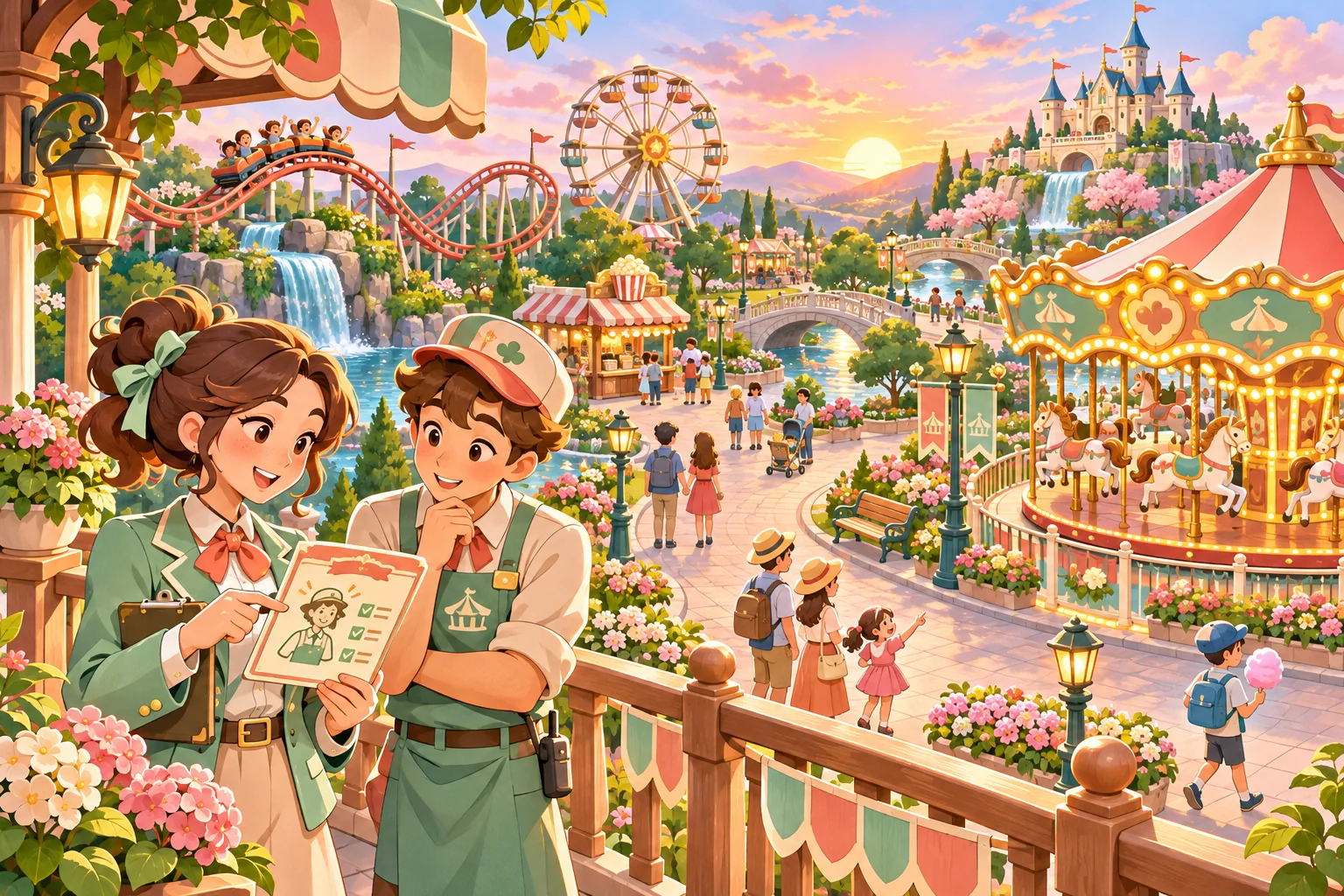
This guide assumes an existing park simulation with employees, shifts, and attractions. The park, staff, training cards, and outcomes are illustrative. Adapt each rule to the current game; no project or build was inspected.
Decide which staff state lasts
List the information attached to an employee and how long each value should live. Qualifications may persist between sessions. A current station assignment can change every shift. Fatigue or an unresolved incident may decay or clear after a rest period. If the game stores all of these under an undifferentiated “level,” players and systems cannot tell what changed or why a station is unavailable.
| Staff state | Possible lifetime | Design question |
|---|---|---|
| Qualification | Across shifts or the full save | Which training event grants it? |
| Role eligibility | Derived from qualification and role rules | What does this employee become allowed to do? |
| Shift assignment | Current schedule period | Can the manager reassign before opening? |
| Temporary condition | Hours, shift, or recovery period | What clears it and when? |
In the fictional Sunwheel Park, training grants a ride-safety qualification, which makes one role available. It does not automatically assign the worker to a shift or open every attraction. These are sample rules only. Keeping the steps separate makes it easier to explain why a ride remains closed.
Connect development to operations
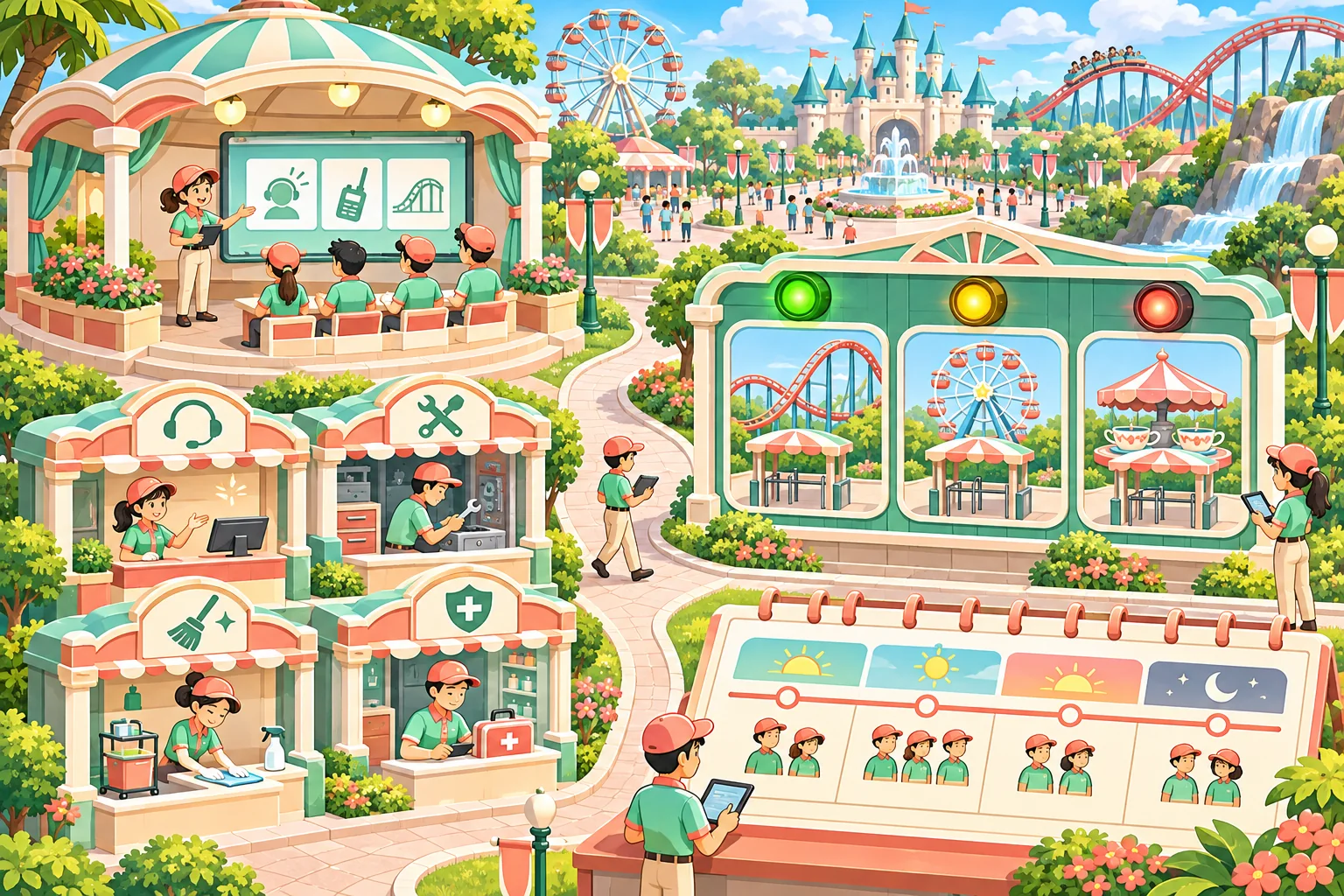
Trace how the game currently decides whether an attraction can operate: staffing count, role eligibility, schedule coverage, maintenance, and opening state may all play a part. Identify the owner of each rule before adding training. A qualification should update the existing employee record; role eligibility should be calculated by the current rules; the schedule should remain responsible for assigning that employee to a shift.
| Change | Expected link | Regression to guard against |
|---|---|---|
| Training completed | Qualification is added once | Repeat click grants duplicate progress |
| Role check | Eligibility reads current qualification | UI and simulation disagree |
| Schedule edit | Eligible worker can be assigned | Existing staffing limits are bypassed |
| Attraction opens | All required role and operations checks pass | Guest paths or maintenance state are ignored |
Do not assume every attraction benefits from every skill. Define explicit role requirements and show the player which requirement is missing. If a new qualification changes opening rules, also check staff shortages, attraction closures, guest queues, and any tutorial or progression gate tied to that attraction.
Use AI for dependency mapping before code changes
Give a coding assistant the employee data model, training flow, schedule owner, attraction readiness checks, save entry point, and the files that implement them. Ask it to map reads and writes before proposing a patch. Limit the first change to one qualification and one station role. Preserve attraction requirements, current shifts, staff IDs, guest movement, and existing save behavior.
Inspect the existing staff, training, schedule, attraction-readiness, and save systems before editing. Add one persistent qualification and connect it to one existing role requirement. Preserve employee IDs, staffing limits, schedules, attraction opening rules, guest paths, and save slots. First identify owners and files. Then propose the smallest reversible change, old-save defaults, and tests. Do not claim a simulation passed unless it ran in this project.
Review the diff for duplicated training writes, role checks copied into UI code, hard-coded attraction names, and save defaults that grant or remove qualifications unexpectedly. Require a file list, migration note, and rollback steps. SEELE’s catalog describes idea-led game creation and playable categories; it can help explore a separate park-game concept, but it does not establish that SEELE modifies an existing simulation codebase.
Preserve older parks
Test migration on a copy of a save created before the new qualification exists. Decide whether existing staff start unqualified, derive eligibility from older attributes, or receive a one-time conversion. Do not apply a new rule to every park without checking how it affects already-open attractions. Record old and new schema versions, field defaults, and what happens when a referenced staff ID no longer exists.
For Godot projects, the official save tutorial demonstrates selecting persistent information and serializing relevant fields. That is one engine’s example, not a staff-system design or a tested migration. Follow the project’s current save architecture and confirm the engine and platform versions before changing storage.
Test the shift and guest loop
A qualification is only useful if the player can understand and apply it. Test the complete path from training to assignment to attraction operation, then save and reload. Include an employee who is eligible, one who is not, and a schedule where staffing remains incomplete. These are proposed checks, not completed results.
| Scenario | Action | Verify |
|---|---|---|
| Training | Complete the qualification event | Progress is granted once and correctly shown |
| Eligibility | Assign trained and untrained workers | Only valid roles are offered |
| Shift change | Move staff before park opening | Schedule coverage recalculates as intended |
| Attraction | Open a station with required staff | Readiness and guest flow remain consistent |
| Reload | Save, close, and load the park | Qualifications and schedules reconstruct correctly |
| Older save | Load a copied prior-version park | Defaults preserve an understandable operation |
Record build, park ID, worker ID, qualification, role, attraction, shift, expected result, and observed result. If an attraction closes after the change, isolate whether the cause is training, eligibility, scheduling, or another readiness requirement before broadening the patch.
Frequently asked questions
What should persist in a theme-park staff development system?
Persist the worker attributes or qualifications the design uses across shifts, along with completed training and any role eligibility. Keep today's assignment, temporary fatigue, and unresolved shift events separate if they reset. Define how staff growth affects attractions before storing new fields.
How do I add staff training without breaking park operations?
Connect a completed training event to the existing staff record and role rules, then check the attractions that depend on that role. Preserve guest paths, opening requirements, schedules, and staffing limits. Test one employee and one attraction before extending the system to the whole park.
Should staff development affect every attraction?
Only when the game design supports that relationship. A qualification may unlock a role or improve a specific operation, while other attractions remain unchanged. Use explicit eligibility rules and feedback so players can see why an employee can or cannot fill a station.
How can AI help modify an existing park simulation?
Give the coding assistant the current employee, schedule, and attraction systems, then ask it to map dependencies before editing. Require a minimal patch, changed-file list, migration assumptions, and test plan. Review and run the actual project; a mock park board is not proof of integration.
What should I test after adding persistent staff growth?
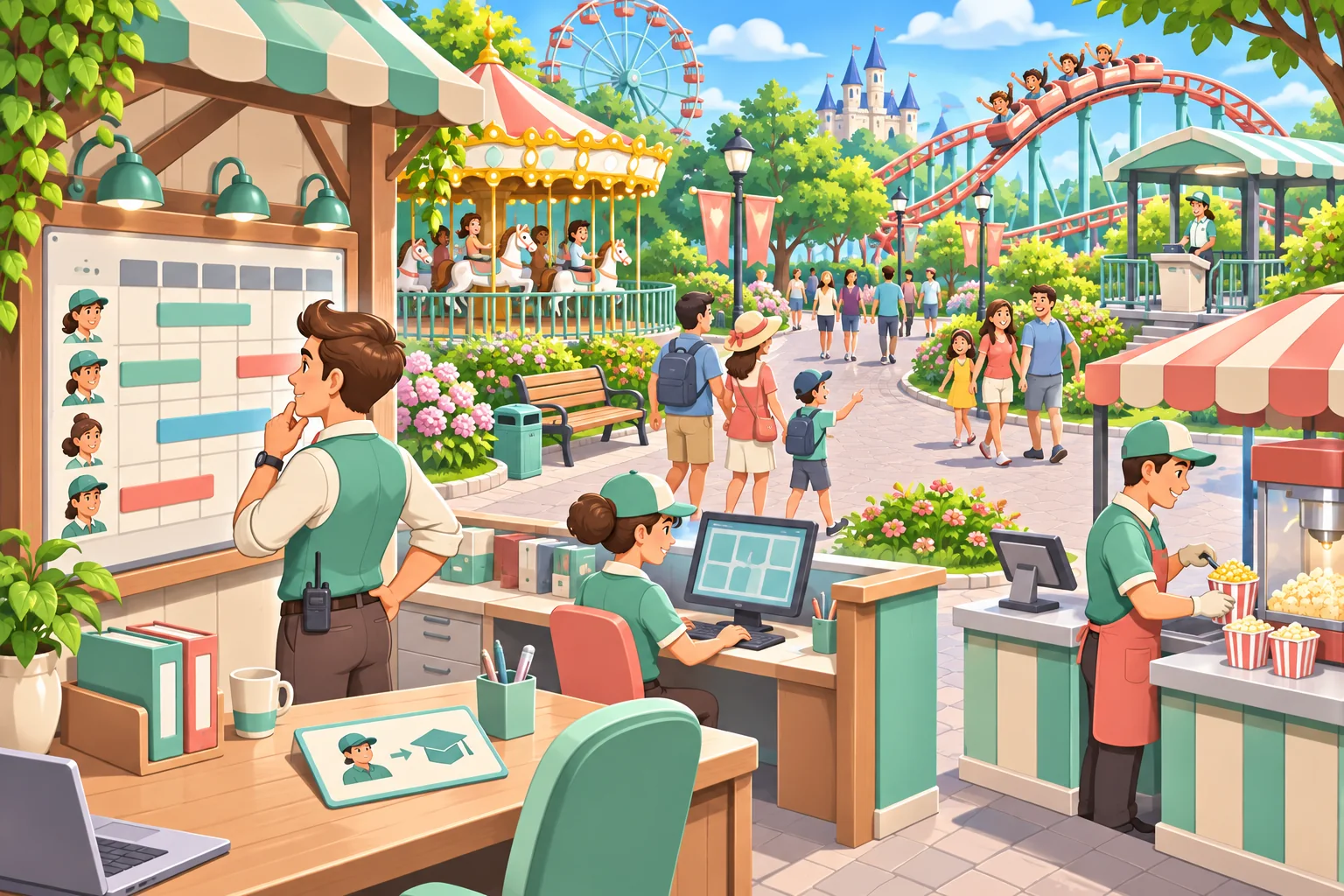
Test training completion, role eligibility, shift reassignment, attraction opening, save and reload, employee removal, and an older save. Record build, worker ID, role, attraction, and observed state. A fictional park scene can explain the workflow but cannot verify operational balance.
Grow skills without losing the operating picture
Keep long-term qualifications distinct from shift assignments and temporary conditions. Connect one training event to the existing role and attraction rules, preserve old parks with a documented default, and test schedules, reloads, and guest paths together. That makes staff progression useful without obscuring why operations succeed or fail.
To explore a separate playable park-management idea, try SEELE AI Game Maker. It is a concept starting point, not an existing-project editor.