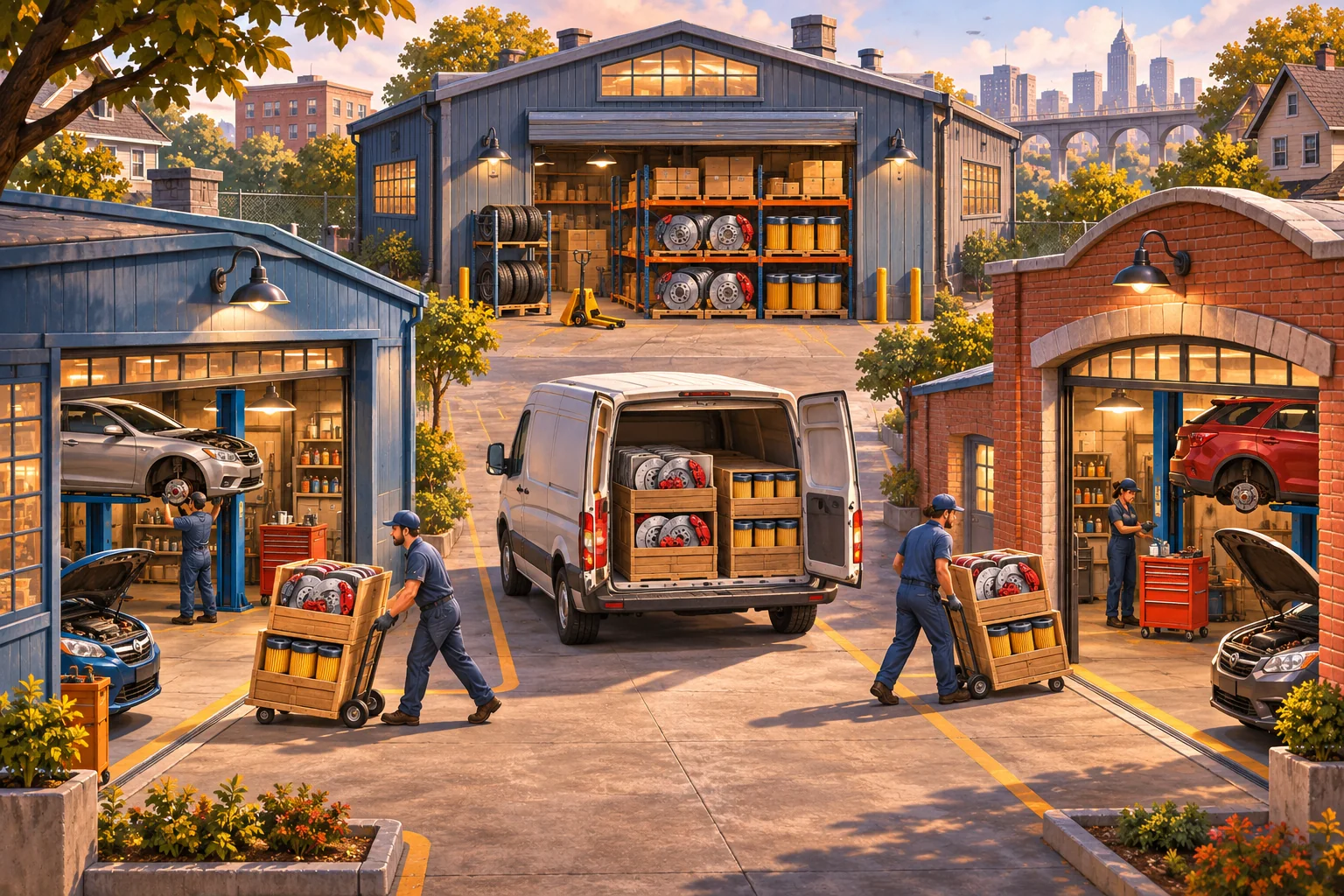
Two-player management can make a car-workshop simulator feel collaborative, but it also creates conflicts over work orders, bays, parts, and payments. Start by mapping the current job lifecycle and identifying who owns each state change. Give the two players complementary responsibilities, keep one source of truth for the workshop, and test simultaneous actions before expanding the feature to every system.

This guide proposes a co-management feature for an existing workshop game. The shop, mechanics, cars, parts, and outcomes below are invented. No source code, build, save, network session, or playtest was available. Treat the checks here as plans, not verified simulator behavior.
Map repair jobs before adding player roles
Trace a repair request from arrival through diagnosis, estimate, parts order, bay assignment, work, inspection, payment, and vehicle pickup. Find which system owns job status, vehicle condition, inventory, bay capacity, staff schedule, cash, and day progression. Note which actions can already be canceled or reassigned. Capture a baseline repair in solo mode and keep a copy of its save.
Identify transitions that must happen once. A job should not be billed twice because two players click complete. A part should not be consumed by two repairs. A bay should not become occupied by different vehicles in two clients. The current game may be single-player and have no explicit transaction boundary, so document where the authoritative state would live before adding collaboration.
| Workshop system | Baseline to record | Protect |
|---|---|---|
| Work orders | ID, status, assigned role, estimate | One lifecycle and completion owner |
| Vehicles and bays | Vehicle ID, bay, capacity, queue | No double booking |
| Parts | Stock, reservations, delivery, usage | Single inventory count |
| Staff and roles | Skills, schedule, assigned jobs | Existing work rules |
| Finance | Quotes, costs, payment, refund | One ledger and approval path |
Give players complementary permissions
Choose two roles that reflect the existing workflow. A service advisor can accept vehicles, record customer requests, prepare estimates, and assign work. A mechanic can claim an assigned job, perform supported repair steps, and request parts. If both players can perform every action, define which transitions still need explicit ownership or confirmation.
In the fictional Copperline Garage example, the advisor owns intake and approves purchases above a limit; the mechanic owns diagnosis and repair completion. Both can see the same job board and bay schedule. This is an illustrative arrangement, not a claim about any real simulator. The project may have different jobs, skills, or approval rules.
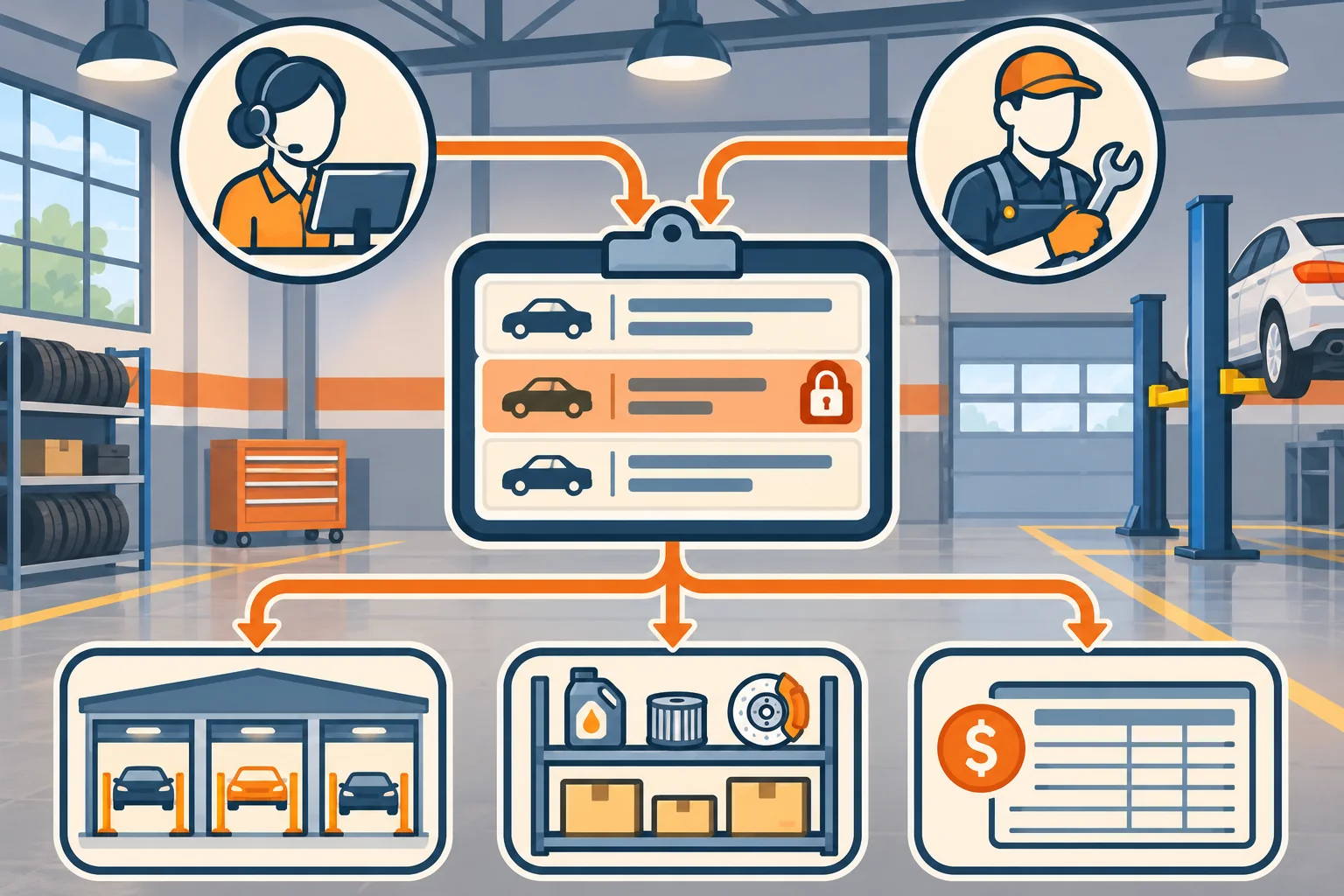
Keep one authoritative work-order state. The first player to claim a job creates a visible assignment; the other sees it update before making a conflicting change. If reassignment is allowed, define who can do it and whether current repair progress follows the job. Show who last changed an estimate or part request so a teammate can understand the result.
Keep bays, parts, and money consistent
Use the current inventory owner for every part count. If one mechanic reserves the last brake component, another player should see it as reserved rather than available. Define whether a reservation expires when its job is canceled. Keep the parts order attached to a work-order ID so the delivery can be reconciled after a reconnect.
Apply the same discipline to bays. A vehicle occupies one bay through one assignment transition. The game should reject a second request when capacity is full and explain why. If players can move a car between bays, keep the change atomic so neither bay remains occupied or both appear free during the move.
Decide how purchases and payment work. A role can request a part, but the existing economy service should validate the cost and record one transaction. A quote may need one player’s approval before work begins. Define how changed estimates are shown to the other player and whether customer approval is required before the job continues.
| Shared resource | Rule to define | Conflict test |
|---|---|---|
| Work order | Single claim and completion owner | Both players claim together |
| Bay capacity | Reserve, occupy, release | Two cars target final bay |
| Last part | Reservation and expiry | Two jobs request same stock |
| Estimate | Approval and revision history | Both edit price or scope |
| Payment | One commit after inspection | Retry completion message |
Choose the session authority and disconnect rule
If the game becomes networked, select a clear authority for job state, parts, bay assignment, and cash. Clients should request actions; the authority validates current capacity, job status, and cost before applying them. Godot’s official high-level multiplayer guide describes RPC authority modes and advises treating client input as untrusted, validating arguments, and keeping important decisions server-authoritative for competitive or persistent multiplayer. This is engine guidance only; it does not prove a target game’s security.
Define what happens when one player disconnects during diagnosis or repair. The job may remain assigned, pause, or return to an available state. Preserve already committed changes, but do not mark a repair complete until the existing completion requirements are met. If the host leaves, decide whether the session ends or the game has an explicit authority-transfer design.
Keep solo play supported. A player who starts alone should still use the original job board and workshop flow. A co-op session should not leave a save in a state the solo game cannot load. If both modes share progression, document which jobs or money changes carry over and test them on disposable copies.
Add one collaborative shift as a narrow change
Ask AI to inspect work-order, bay, inventory, finance, and current session code before suggesting a patch. Require a role-permission table and a list of changed files. A first slice can support two players, one repair job, one bay, and one parts reservation. Leave staff AI, campaign systems, customer generation, and all other repairs alone until that slice is stable.
Review the complete diff for duplicate job state, client-trusted payment, and changes to unrelated repair logic. Use an allowlist and a clean branch. Keep baseline saves and a documented rollback revision. If an older save needs new role or session fields, give them safe defaults and test the prior format before writing a converted copy.
Test conflicts, capacity, and recovery
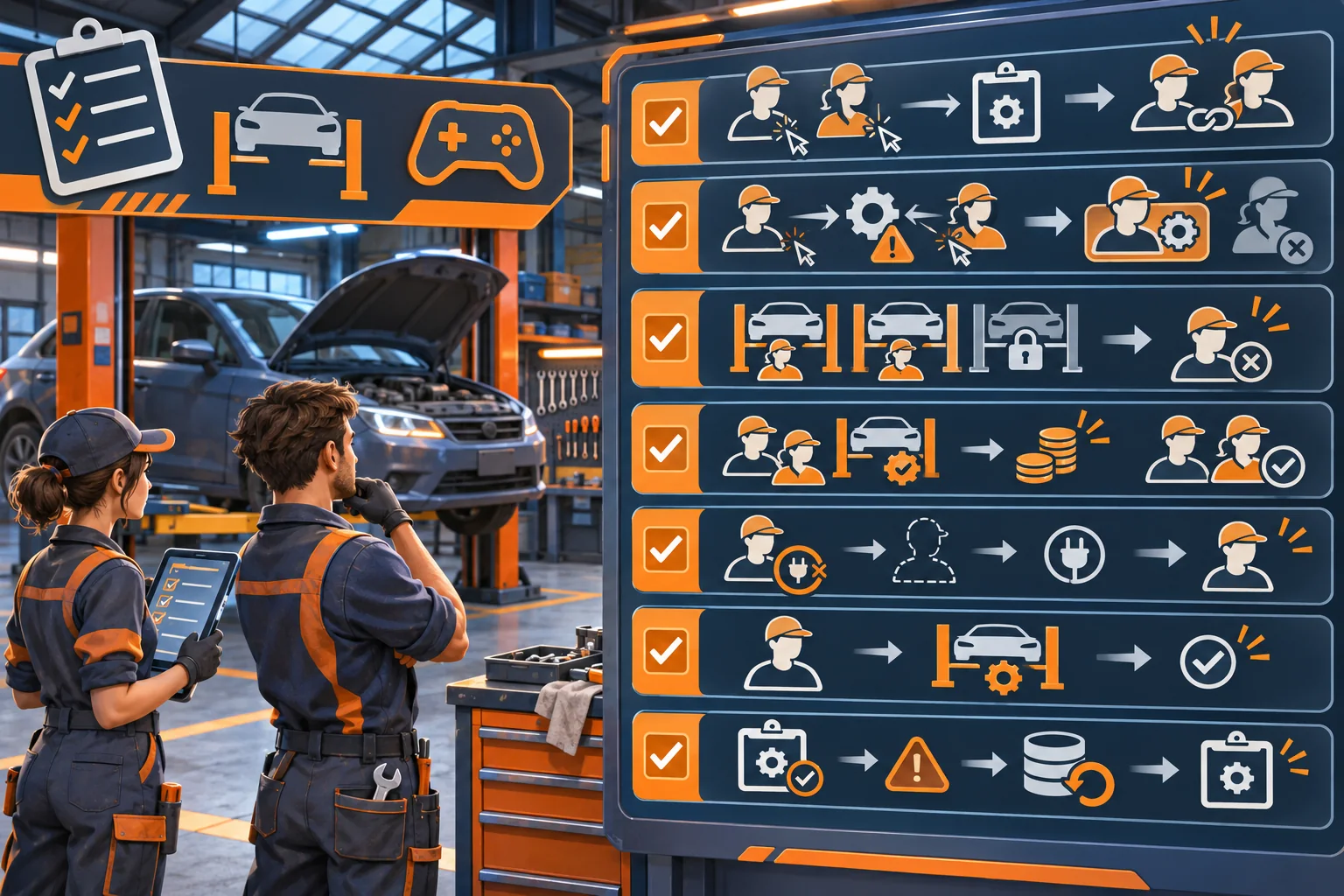
Test simultaneous job claims, two requests for the last part, two cars for the final bay, estimate edits, payment retries, and disconnects before and after a repair result. Verify both clients display the same job state. Run solo mode with the feature off and load old saves. Record the workshop state before and after every action.
| Proposed check | Action | Evidence |
|---|---|---|
| Job claim | Both players claim one order simultaneously | Single owner and consistent status |
| Bay capacity | Assign two vehicles to the final bay | One accepted assignment |
| Part reservation | Two jobs request last available item | One reservation and correct count |
| Payment once | Retry job completion after timeout | Single ledger entry |
| Disconnect | Drop player during an active task | Documented retained/released state |
| Solo fallback | Load save without co-op session data | Original shop flow intact |
| Rollback | Restore baseline revision | Original job and economy behavior |
This is a proposed matrix, not a test report. Record game version, session/peer IDs, work-order ID, bay, part count, cash, request order, disconnect timing, and expected versus actual behavior. Do not infer network correctness from an illustrative interface.
Make teamwork visible without blocking the shop
Show the current job owner, player role, bay, parts status, and pending approvals in one shared view. Notify the other player when an estimate, reservation, or assignment changes. Keep the next action clear and avoid hiding an approval request in a distant menu. Let players see why a task is locked and how to hand it off.
To explore a separate workshop-game concept, try SEELE AI Game Maker. It is a concept tool, not an editor for an existing project.
Frequently asked questions
What roles can two players share in a workshop game?
Start with responsibilities that already exist, such as assigning work orders, servicing a vehicle, ordering parts, or scheduling a bay. Define which actions each player can perform and whether either can approve spending or close a job. Roles should clarify coordination rather than duplicate the same task list.
How can two players avoid claiming the same repair job?
Give each work order one authoritative state and a clear claim or assignment transition. When one player accepts a job, the other should see its updated owner before starting conflicting work. Test near-simultaneous clicks, reassignment, cancellation, and reconnect so a job cannot be completed or paid twice.
Should both players share workshop money and inventory?
Use the existing economy and inventory owners, then decide whether players can both spend or whether one role approves purchases. Keep a single ledger for cash and parts, show which player initiated an order, and define what happens if both request the last part or exceed bay capacity.
What happens if one player disconnects during a repair?
Define whether the job remains assigned, becomes available again, or pauses with the session. Preserve the authoritative vehicle and work-order state, and do not commit payment until the existing completion conditions are met. Test reconnecting before and after the result event rather than assuming network recovery restores every task.
Can AI add two-player roles to my existing workshop simulator?
AI can inspect supplied job, inventory, bay, finance, and network files, propose one role-sharing slice, and draft tests. It cannot verify synchronization or economy safety without the actual project and executed sessions. Provide the intended authority model, edit allowlist, baseline save, and rollback revision.
Start with one shared repair flow
Choose complementary permissions, keep a single work-order owner, and route parts, bays, and payments through the existing systems. Test simultaneous requests, disconnect recovery, solo compatibility, and rollback on copies before expanding co-op. Treat Copperline Garage and its diagrams as planning examples, not evidence of a working multiplayer workshop.