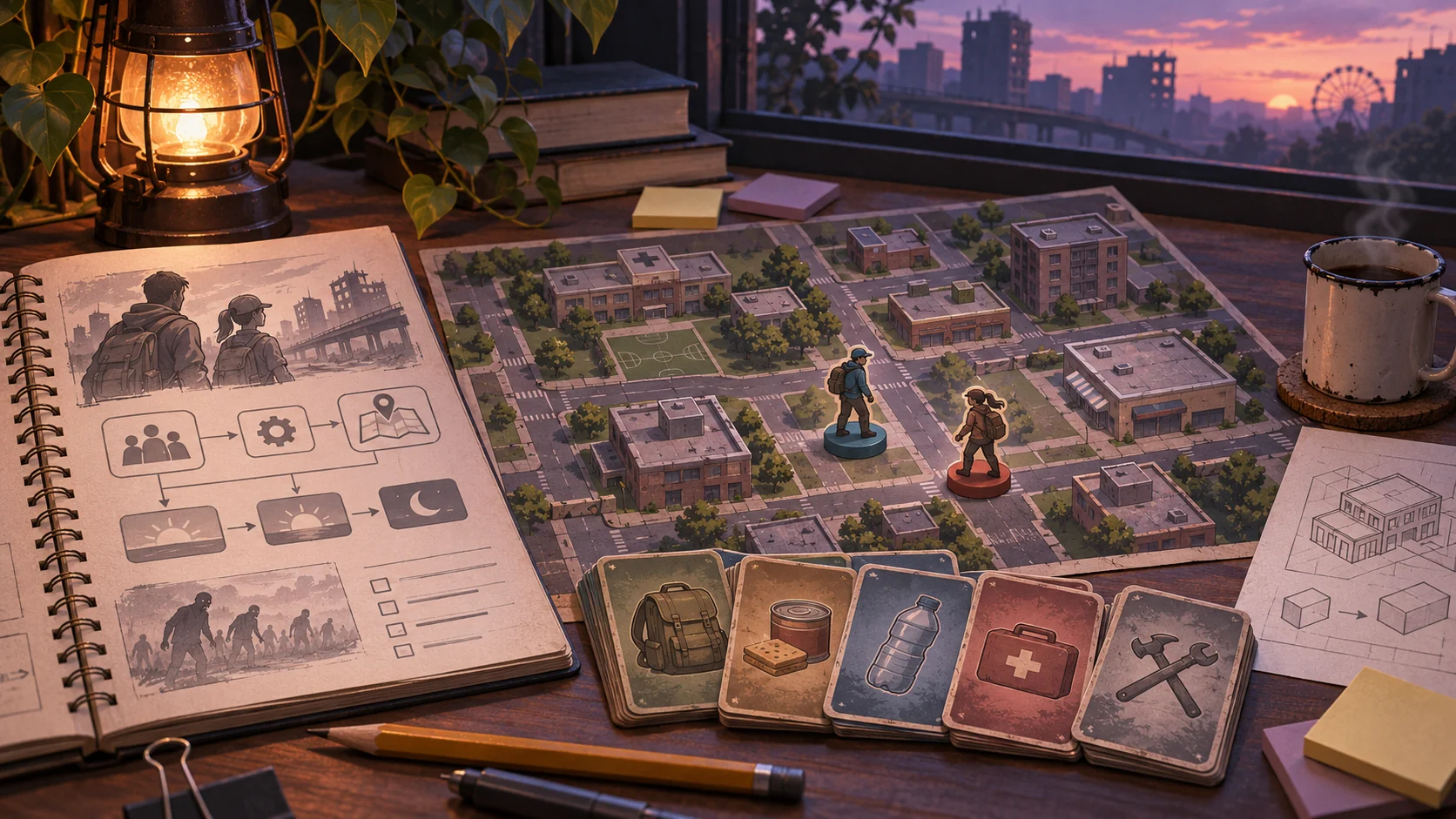
Give every weapon build a clear strength and cost so teams choose complementary loadouts instead of one universal best option. Start with one bounded prototype, make its rules visible, and connect player choices to outcomes the team can observe. Expand the system only after the core loop works in a short repeatable test.
Measure the co-op combat baseline
List the combat situations a loadout should answer: close pressure, distant threats, area control, resource recovery, or protection for a teammate. Record the current ammunition economy, movement speed, enemy durability, and team size. The official Back 4 Blood listing describes a four-player co-op campaign and a card-based build system; this is genre context only, while the weapon tradeoff model here is original.

Treat each build as a package of strengths and costs. A high-reach option might reload slowly; a mobile setup might have less sustained output; a support-focused kit might trade personal damage for team recovery. Keep these costs legible in play and avoid hidden penalties that only appear after a long mission. See the Back 4 Blood official Steam product listing for the scoped genre context.
Define strengths and costs
Balance on several axes rather than a single damage-per-second score. Compare time to defeat, safe engagement distance, reload exposure, ammunition pressure, mobility, and usefulness to allies. Use the same encounter scripts and starting resources when comparing builds, then capture both clear speed and how often teammates need to rescue or resupply one another.
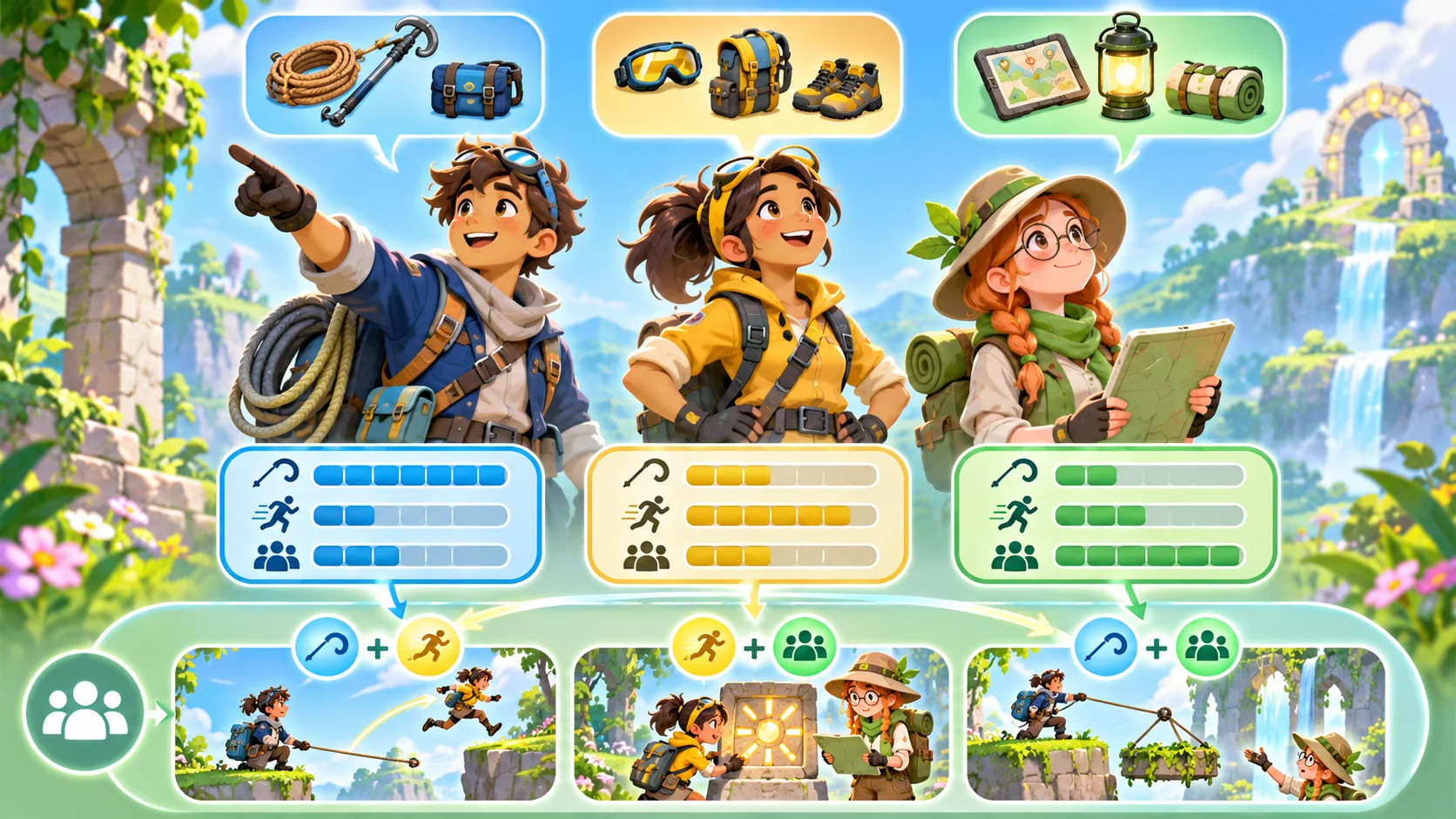
Set up a role matrix so every build has a use case and at least one counterweight. A specialist should create a decision, not become a mandatory pick. Provide overlap between roles so a team missing one build can still progress with a different plan, even if its tradeoffs feel sharper.
Build complementary team loadouts
Make team composition matter through complementary coverage. One player can handle distant targets while another controls a crowded lane, but either should retain a reasonable answer when the encounter changes. Offer safe staging previews that show role coverage, ammo, and equipment before the team commits to deployment.
Avoid tuning only for a full, coordinated party. Test solo companions, uneven skill, and players who choose the same build. If duplicate picks become weak, explain why and offer a respec or alternate item; if they become dominant, adjust encounter pressure or resource costs rather than adding arbitrary immunities.
Test threats and role coverage
Run the same encounter with at least three loadout combinations and record completion time, damage taken, resource use, and teammate support actions. Then swap one encounter variable, such as distance or target count, to see if the build still offers decisions. Do not let a single metric decide balance without qualitative player feedback.

The acceptance target is multiple viable team combinations with visibly different costs and advantages. Use a cooperative role design guide to consider how role ownership can support cooperation. SEELE AI can help propose build variants; weapon feel, encounter tuning, and multiplayer tests require implementation.
FAQ
What makes a weapon build meaningful in a co-op shooter?
A meaningful build has a clear strength and a cost that changes how the player approaches an encounter. Compare factors such as reach, reload exposure, mobility, ammunition, and support value. Test builds in the same scenarios and ensure multiple combinations remain viable instead of one option dominating every situation.
How should co-op weapon roles complement each other?
Give roles overlapping capability with different advantages, so teams can cover several threats without requiring a fixed party. One build might handle distance while another controls a crowded lane, but both should retain a backup response. Staging previews can help players identify gaps and choose equipment before deploying.
How do you avoid one weapon build dominating?
Compare builds across several encounter types and track more than damage output, including resource use, exposure, teammate support, and completion reliability. Test duplicate picks and uneven skill. Adjust costs, encounter pressure, and build flexibility based on results rather than making enemies arbitrarily immune to a strong option.
What should you test in a co-op zombie shooter?
Run the same encounter with several loadout combinations, then vary distance, target count, or resource availability. Record completion time, damage taken, ammunition use, and support actions. Include duplicate builds and an incomplete party, and ask players to explain which tradeoffs shaped their choices.