Define weather effects on colony systems
Choose a short list of weather conditions and decide what each changes: crop output, heating demand, water storage, visibility, or travel time. Keep the effects distinct and measurable. If every storm reduces all production and increases every danger, players may see weather as an unavoidable penalty instead of a planning system.
A Colonies of the Mist official development update describes weather and a day-night cycle affecting protection and travel choices, with scarce resources shaping preparation. That is context only; this colony model is original. Begin by documenting the normal resource loop and the conditions that should meaningfully alter it.
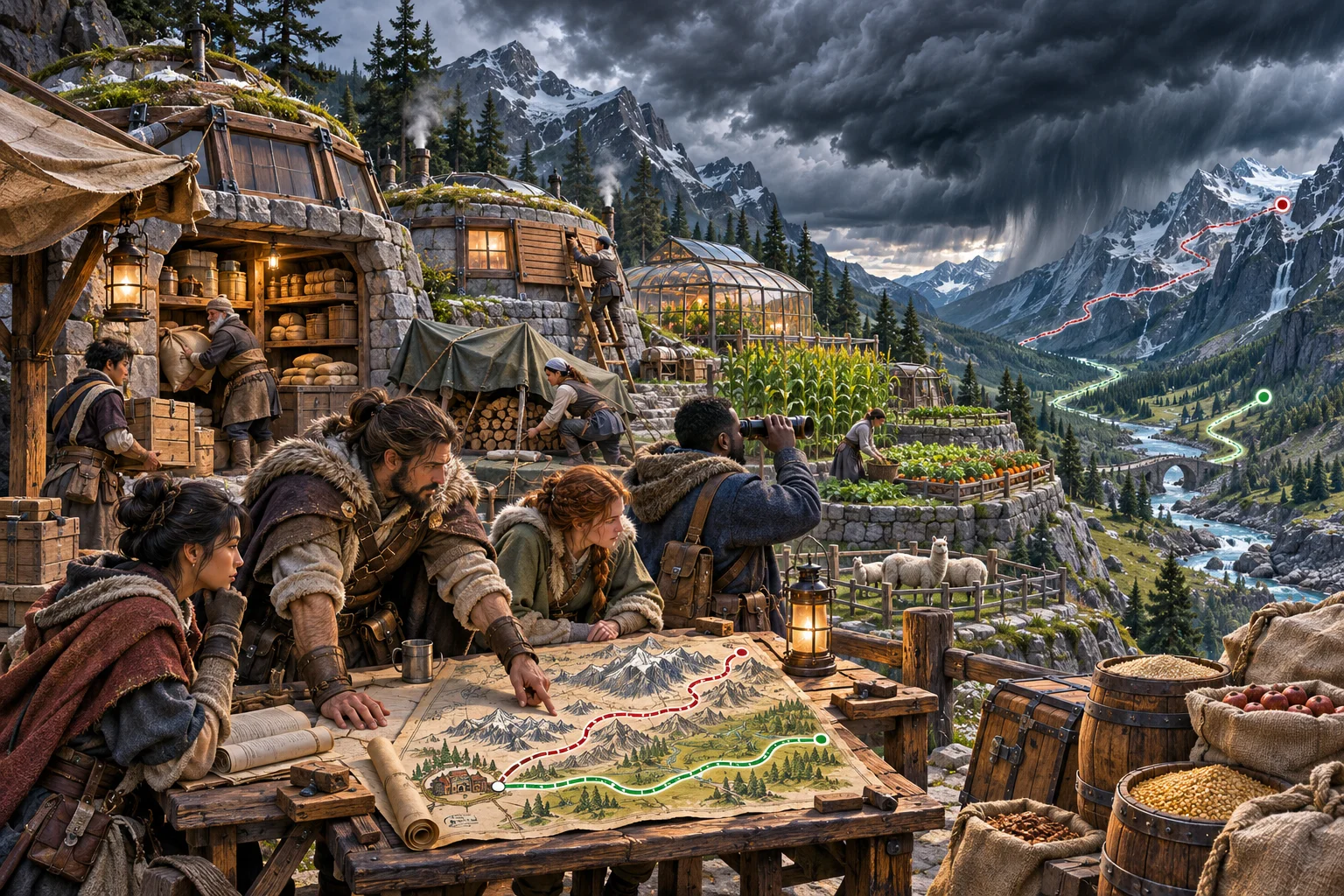
Separate forecast from current conditions. A warning might indicate likely rain, while the active storm controls travel and crop effects. Tell players when the forecast can change and what confidence means. The cover image shows settlers preparing stores and checking a route as weather approaches.
Make forecasts support preparation
Give players enough lead time to take useful action. They may stock fuel, secure crops, move a traveler, or delay a construction project. A forecast that arrives at the same moment as its effect offers little agency unless surprise itself is a core design goal.
Use a clear time horizon and show what will be affected. A forecast can identify a coming cold period, vulnerable fields, and exposed shelters without revealing every detail. Let players compare the cost of preparation with the risk of waiting, then record the choice for later review.
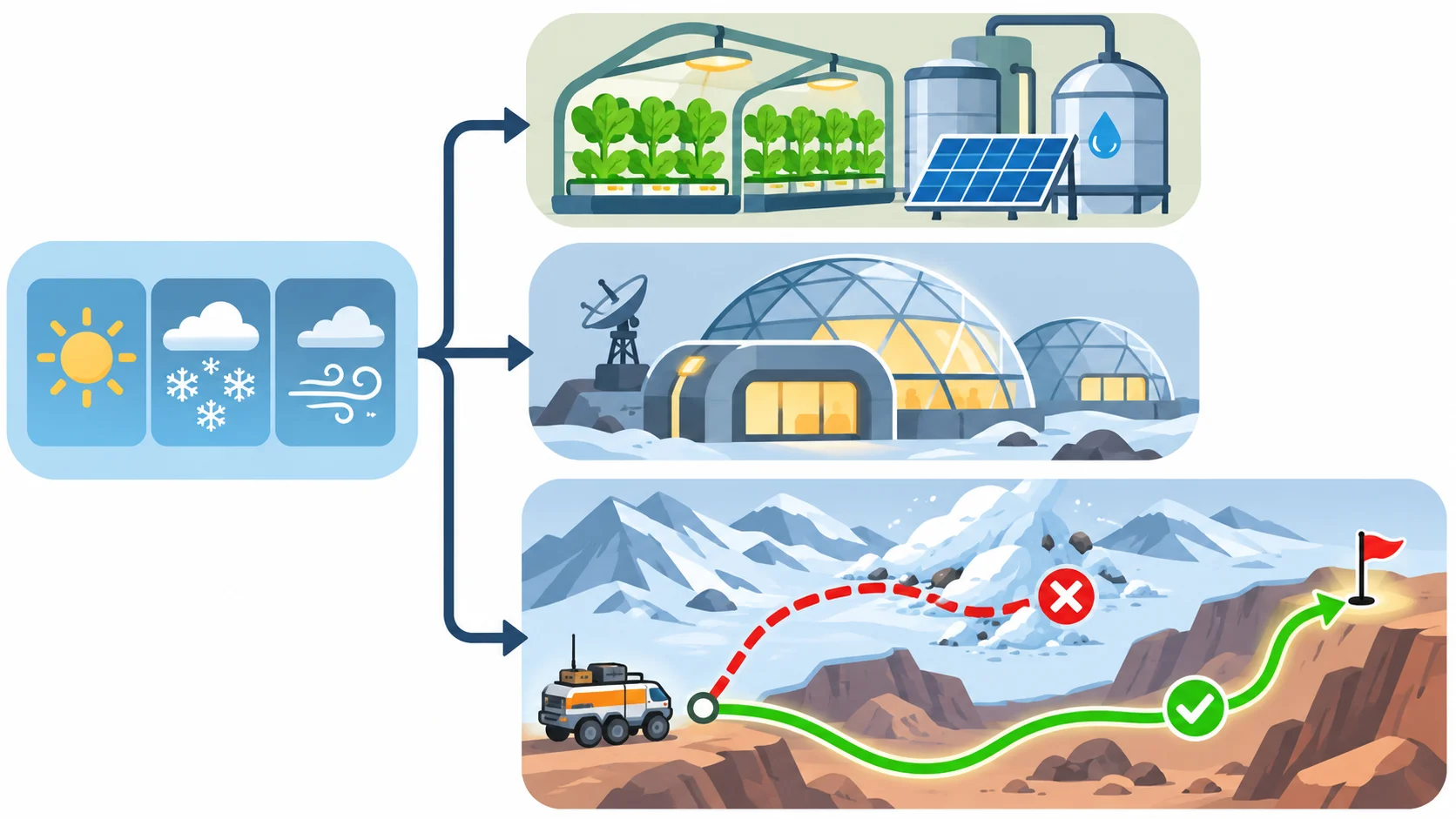
Weather can combine with other systems, but introduce combinations gradually. If rain floods a route while night increases travel risk, show both pressures and a safe alternative. The mechanism diagram links weather states to production, shelter, and travel rather than treating each as a disconnected event.
Connect weather to route choices
Let terrain and equipment change the consequences of a trip. A low crossing may flood while a longer ridge route stays open; insulated clothing may reduce cold exposure but add inventory weight. Show expected time and risk before departure so the choice is a plan rather than a surprise penalty.
Keep travel decisions connected to colony needs. A trip may deliver a scarce resource before a forecast worsens, or return with supplies that help protect settlers. Make the value of leaving and staying visible, and avoid forcing an expedition unless the story has clearly established an emergency.
Provide a fallback for a poor choice. A delayed expedition might shelter at a waypoint, consume extra supplies, or return by another route. Recovery should cost something without erasing the player’s entire plan. A warning marker and alternate route make the tradeoff understandable.
Test overlapping conditions and recovery
Replay production and travel under different weather sequences, including a forecast that changes and two conditions that overlap. Track stock levels, missed deliveries, shelter needs, travel duration, and injuries or setbacks. Ask players what the forecast led them to expect before revealing the outcome.
Test both prepared and unprepared colonies. A player who ignores a warning should face a consequence they could have anticipated, but there should be a way to stabilize the settlement. Check that the interface distinguishes weather effects from a separate shortage or pathing issue.
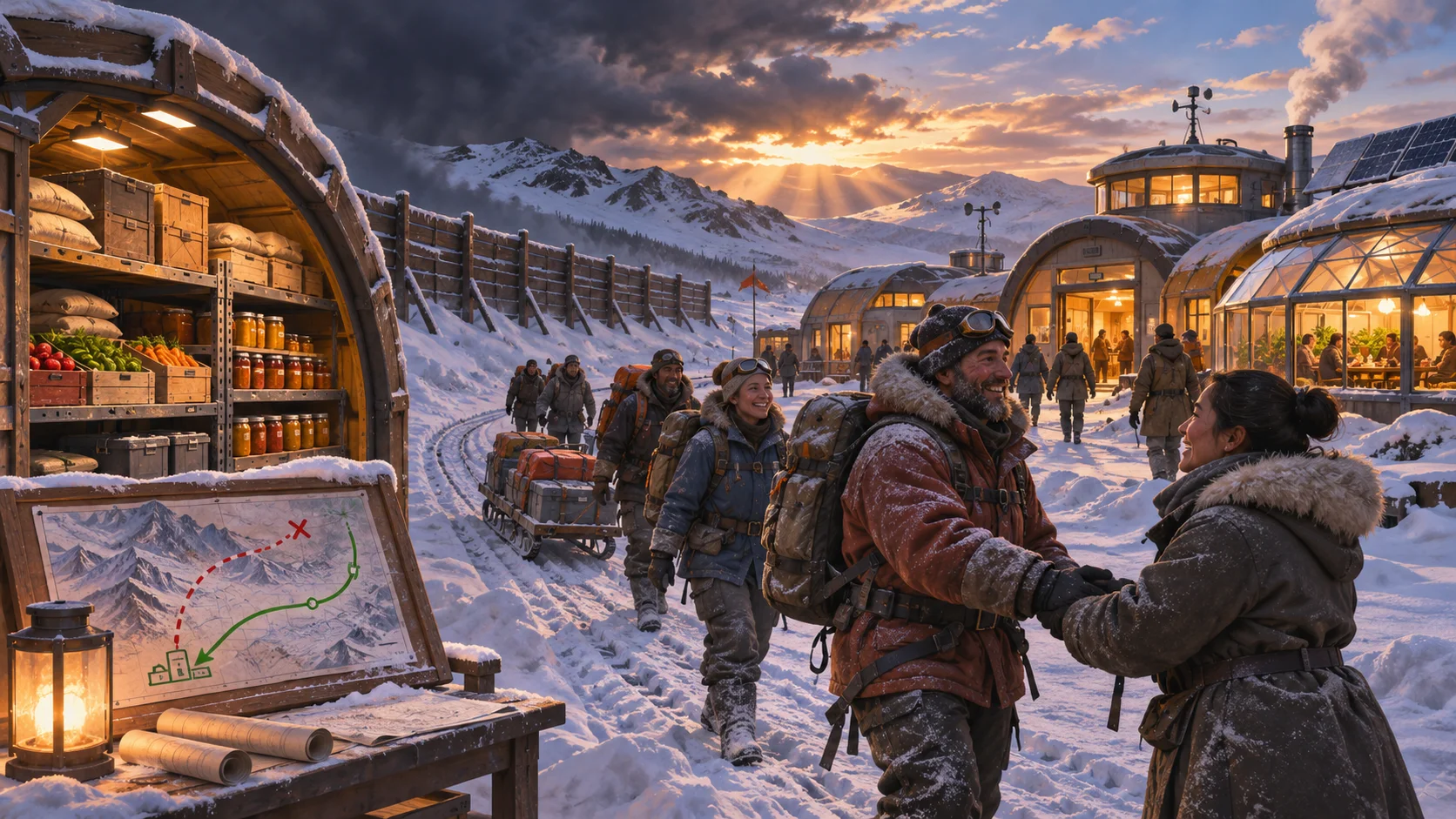
Accept the system when weather changes priorities, forecasts support informed choices, and a setback remains recoverable. SEELE AI can help outline weather event variants, but simulation tuning, route safety, and colony balance need implementation and playtesting. The outcome image shows a safe return after a team reroutes and protects supplies.
FAQ
How do you design weather for a colony-management game?
Choose a few conditions and connect each to specific production, shelter, supply, or travel effects. Define duration and warning time, then give players a useful preparation option. Test the condition against the normal colony loop before adding overlapping hazards. Compare the result with a fair-weather trip using the same supplies and route.
How can weather change resource decisions?
A forecast can alter production rates, increase heating or water demand, threaten stored goods, or make a resource trip more urgent. Show the expected effect and cost of preparation so players can compare stockpiling with using resources elsewhere. Compare the result with a fair-weather trip using the same supplies and route.
How should weather affect colony travel routes?
Let terrain, equipment, timing, and weather change the expected risk or travel time. Preview the affected route and any alternative before departure. A longer safe path can be a meaningful choice when players understand what they gain and give up.
What should you test when weather hazards overlap?
Replay several forecasts with prepared and unprepared colonies. Track stock, travel time, missed deliveries, and recovery needs. Verify that players can distinguish weather effects from unrelated shortages and have a way to stabilize the settlement after a poor choice. Compare the result with a fair-weather trip using the same supplies and route.